
Today, we're preparing a back-to-basics plain muffin recipe. The proportions used in this recipe have been tested to create muffins that are moist without being heavy, sweet but not cake-like, and sturdy enough to handle mix-ins without falling apart. We have just enough butter for richness and flavor, Greek yogurt for moisture and a tender crumb (as the acidity reacts with baking soda for a better rise), and the combination of both baking powder and baking soda to ensure a reliable rise. This is a balanced, back-to-basics formula that works.
However, what really makes this the perfect basic recipe for muffins is just how incredibly versatile it is. Want blueberry muffins? Fold in a cup of blueberries. Prefer chocolate chips? Stir them in. Like things simple? These plain muffins are delicious on their own with just butter and honey. The neutral base takes on whatever flavors you add in - vanilla extract, lemon zest, cinnamon, or even savory additions like cheese and herbs. And that means that with this recipe, you're learning one muffin recipe where the limits are your own imagination.
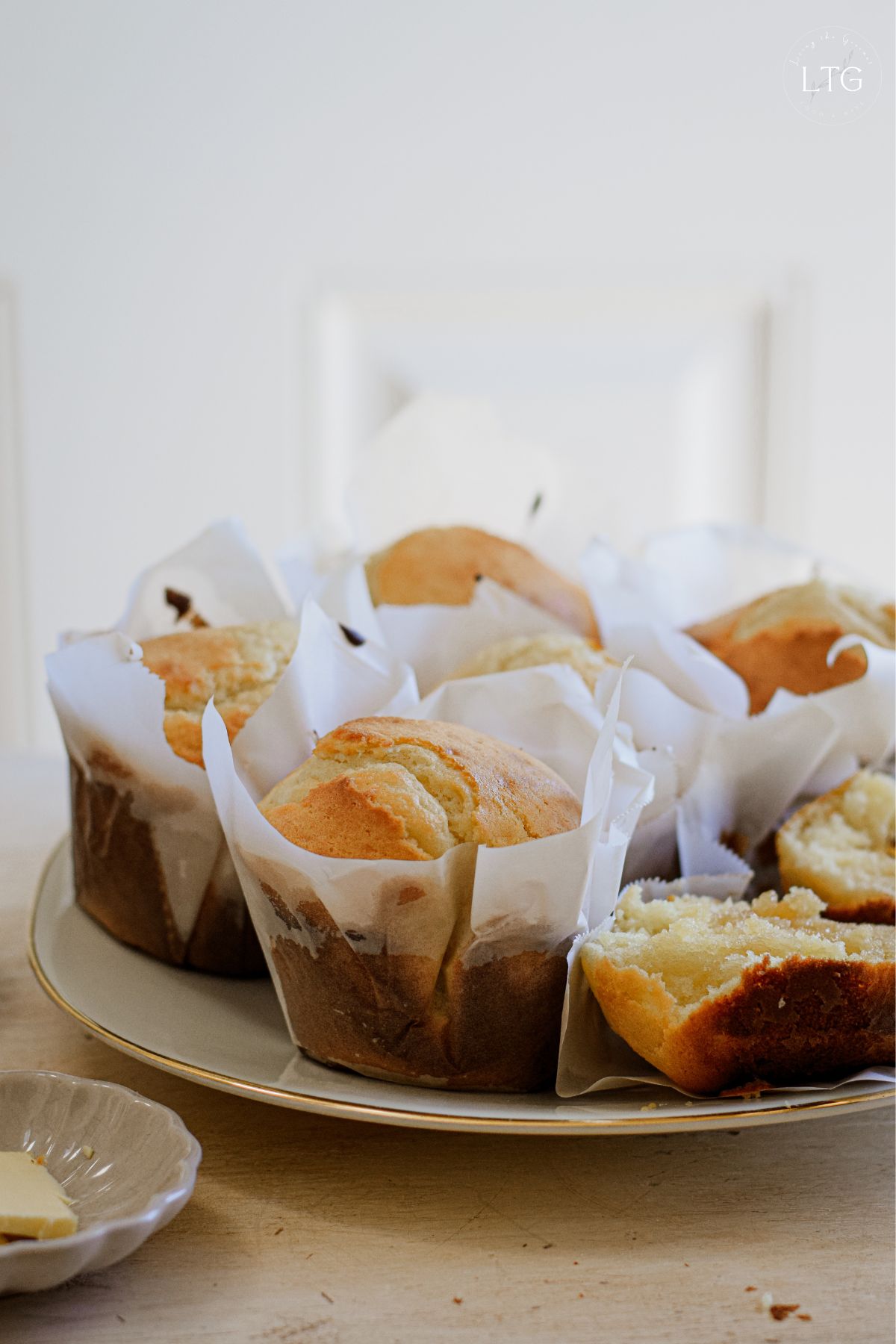
Ingredient Checklist - Basic Muffin Recipe
- ½ cup butter, softened
- Role: Provides richness, buttery flavor, and helps to keep the muffin's crumb tender. It also adds moisture to keep the muffins from becoming dry.
- Why Softened Matters: For this recipe, we want softened butter, not cold or melted. Room temperature butter (about 65-70 degrees F°) whips smoothly with the eggs and sugar, and this creates better structure than melted or cold butter in this recipe. Melted butter is preferable in recipes where maximal distribution is important, and cold butter is preferable in recipes where you want the structure to remain rigid through baking.
- How soft is soft? The butter should be soft enough to leave a print when pressed with your finger, but not greasy or melting.
- Limiting Gluten: Butter coats flour proteins, which in turn limits gluten development for tender, rather than tough, muffins.
- Browning: Butter contributes nicely to browning and that characteristic golden muffin top.
- Substitute: Coconut oil (melted and then cooled) is a fine dairy-free option for this recipe. Vegetable oil also works, but creates a denser muffin.
- 2 large eggs
- Role: Provides structure, moisture, richness, and helps to bind all of the other ingredients together in the dough.
- Why the Eggs Matter: The proteins in the eggs set during baking, which in turn help to create the muffin's structure, thereby preventing collapse once the muffins are removed from the oven.
- Eggs Bring Fat: Fat matters in muffins. The yolks bring richness and moisture, plus lecithin, which acts as an emulsifier.
- Large Eggs: It's a general rule that large eggs are standard for baking. Using medium or extra-large will throw off this recipe's intended proportions.
- Substitute: For egg-free muffins, I recommend 2 flax eggs (2 tablespoons ground flaxseed mixed with 6 tablespoons of water, then let sit for 5 minutes). The texture will be slightly denser but still acceptable.
- 1 cup granulated sugar
- Role: Sweetness. The sugar also contributes to the tenderness of the crumb, promotes browning, and helps the batter retain moisture through baking.
- Why this Amount: 1 cup of sugar for 2 cups of flour creates muffins that are pleasantly sweet without being cake-like.
- Gluten Interference: Sugar interferes with gluten formation (helping to make the muffins tender).
- Substitute: You can reduce the amount of sugar to three-quarters of a cup, but the muffins will be less sweet, will stale faster, and will be slightly drier.
- 1 cup plain Greek yogurt
- Role: Yogurt brings moisture, creates a tender crumb, and helps provide tang. The acidity in Greek yogurt reacts with the baking soda to help promote a better rise.
- Why Greek yogurt specifically? Greek yogurt is thicker than regular yogurt, so it doesn't make the batter too thin. Its higher protein content helps add structure. It's higher acidity reacts better with the baking soda.
- Tanginess: Greek yogurt's natural tang helps to balance the sweetness, which in turn adds complexity to the muffins.
- Substitute: Sour cream would be my go-to as it creates a similar tangy contrast and brings similar moisture. You could also opt for plain regular yogurt, though this will result in a slightly thinner batter. You can also use buttermilk, but I would reduce the amount to ¼ cup to account for the extra liquid.
- ½ cup whole milk
- Role: Adds moisture, helps create a smooth batter, and provides richness from the milk fat. Essential.
- Why add it slowly: We want to add the milk gradually while mixing to help allow the batter to come together without overmixing.
- Room Temperature: I suggest using room temperature milk, as it will incorporate more easily into the batter than milk fresh from the fridge.
- Substitute: We really do want the added fat from whole milk, but 2% will work well, though result in a slightly dryer, less rich muffin. Buttermilk will also work great, creating a tangier muffin with more rise.
- 2 cups all-purpose flour
- Role: Provides structure and body as the foundation of the muffin.
- Why All-Purpose Flour: All-Purpose flour features moderate protein content of 10-12%, creating the right balance of structure without toughness. Baking Flour would result in overly light muffins that would fall apart, while Bread Flour would result in dense, tough muffins.
- Mix Minimally: Flour contains gluten, and that gluten forms protein networks when mixed with liquid, creating the muffin's crumb structure. Too much mixing develops too much of the gluten, in turn creating dense muffins. Mix minimally for tender muffins.
- Precise Measurement: I strongly suggest spooning the flour into a measuring cup and then leveling off the flour with a knife. Do not scoop the flour directly from the measuring cup, as this compacts it and risks adding too much. Too much flour is far and away the number one cause of dry, dense muffins.
- Substitute: Your gluten-free flour of choice will work just fine.
- ½ teaspoon baking soda
- Role: Baking soda serves as a leavening agent. It reacts with acidic ingredients (in this recipe, that means the Greek yogurt) to create carbon dioxide. Those carbon dioxide bubbles provide lift, giving the muffins rise.
- Why are we using baking soda and baking powder together? Baking soda requires acid to activate, meaning it activates on contact with the acid in the yogurt. Baking powder, however, creates the initial rise in the bowl, and then the final rise in the oven to create those characteristic domed muffin tops.
- Substitute: There is no substitute for baking soda, and no, additional baking powder will not work. This is an essential ingredient.
- 2 teaspoons baking powder
- Role: This is the primary leavening agent that creates rise and helps give the muffins their fluffy texture.
- Why this amount: 2 teaspoons for 2 cups of flour is the standard ratio for muffins (1 teaspoon per cup).
- Double-Acting: Baking powder releases some carbon dioxide when mixed with liquid, and then more when heated in the oven. This creates the initial rise in the bowl, and then the final rise in the oven to achieve domed muffin tops.
- Substitute: Baking powder cannot be omitted without affecting the muffins' rise significantly. This is an essential ingredient.
- Pinch of salt
- Role: Salt works to bind and therefore enhance the other flavors while balancing the sweetness and strengthening the muffins' structure slightly.
- Why it matters: Salt is a flavor enhancer, and actually makes sweet taste sweeter and prevents baked goods from tasting flat or one-dimensional. Don't skip it.
- Substitute: Fine sea salt or table salt works best.
- Can I omit it? If you omit the salt entirely, the muffins will taste flat.
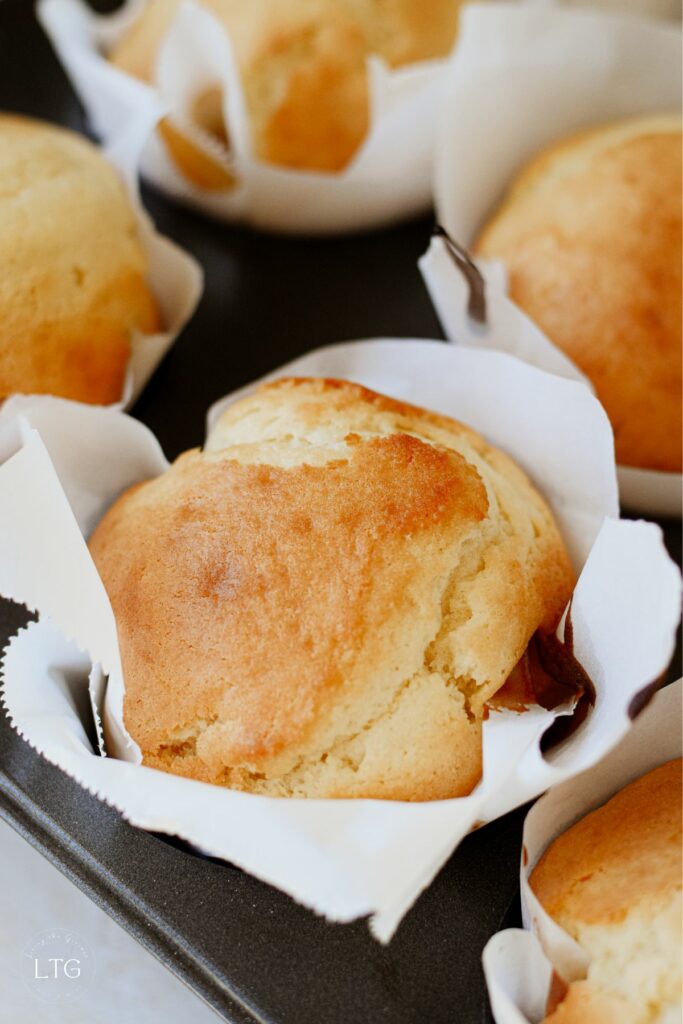
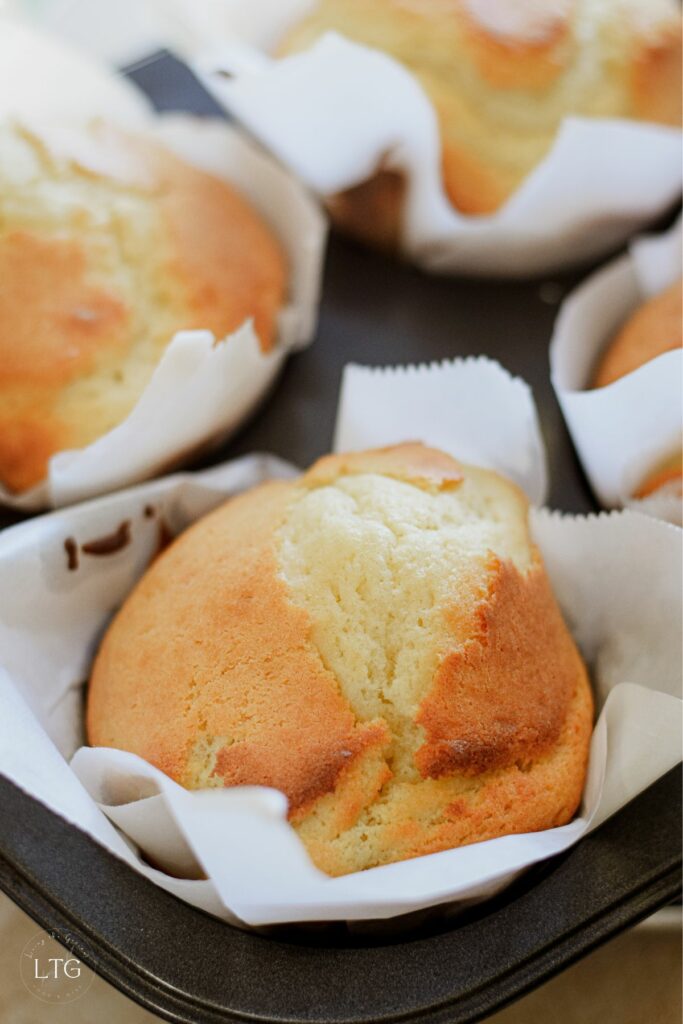
Equipment You'll Need to Make Muffins
- Muffin Tray (Jumbo 6 Cup)
- Jumbo Muffins: For those classic bakery-style muffins, we want a jumbo pan that will hold ¾ cup of batter. Of course, you can always use a basic, standard muffin/cupcake pan, with each muffin cup holding about 1/3 to ½ a cup of batter.
- Light Colored Pans: Darker baking pans absorb more heat and can risk overcooking the muffins.
- Parchment Paper Muffin Liners
- Why Parchment? Parchment liners allow muffins to release cleanly and with minimal cleanup. Parchment is simply the best non-stick solution, and makes the cleanup after baking quick and easy.
- Mixing Bowls (Large and Medium)
- Large Bowls: We need a large bowl for mixing the wet ingredients, as we need to account for whipping and mixing.
- Medium Bowls: For the dry ingredients, we need a single medium bowl. We then mix the dry ingredients directly into the wet.
- Material: Glass, stainless steel, or ceramic all work fine. Simply preference.
- Spatula or Wooden Spoon for Folding
- After the Flour: After you've added the flour, switch from a whisk/mixer to gentle folding with a spatula.
- Overmixing: A spatula helps to prevent overmixing, which develops too much gluten.
- Silicon: I recommend using a silicon spatula for scraping down the sides of the bowl.
Tips for the Perfect Muffins
Don't Overmix - Crucial
After adding the flour to the wet ingredients, mix just until you can barely see dry flour, and then stop. The batter should look lumpy and rough. We do not want a smooth-looking batter for muffins. Yes, there are recipes that require a smooth batter - but muffins are not one of those recipes. If you mix until the batter is smooth, you have overdeveloped the gluten, and that will create tough, dense muffins. This is the absolute, number one tip I can give. For more information, see our post on muffin vs cupcake batter differences.
Use Room Temperature Ingredients
For muffins, we want to use room temperature ingredients. You want to let your butter, eggs, yogurt, and milk sit at room temperature for about 30-60 minutes before baking. I say this because room temperature ingredients combine more smoothly and evenly, creating better texture and a more consistent rise. Cold ingredients, by contrast, don't emulsify properly. Cold butter won't whip with eggs, and cold yogurt will make the batter look curdled.
Fill Muffin Cups about ¾ Full
I recommend using one-third of a cup of batter per standard muffin cup, filling each only about three-quarters of the way full. I say this because this allows room for the rise without overflow, while still creating nice domed tops. For extra-tall bakery-style muffin tops, fill cups nearly to the rim and use the high-heat technique, which I explain in our guide on how to make bakery-style muffin tops.
Test for Doneness at 20 Minutes
Generally, muffins are done when the tops are golden and spring back when pressed on lightly. The tried and true toothpick test is always a good option for testing doneness. Insert a toothpick into the center of the muffin should come out clean, or with just a few moist crumbs. I recommend that you start checking at 20 minutes.
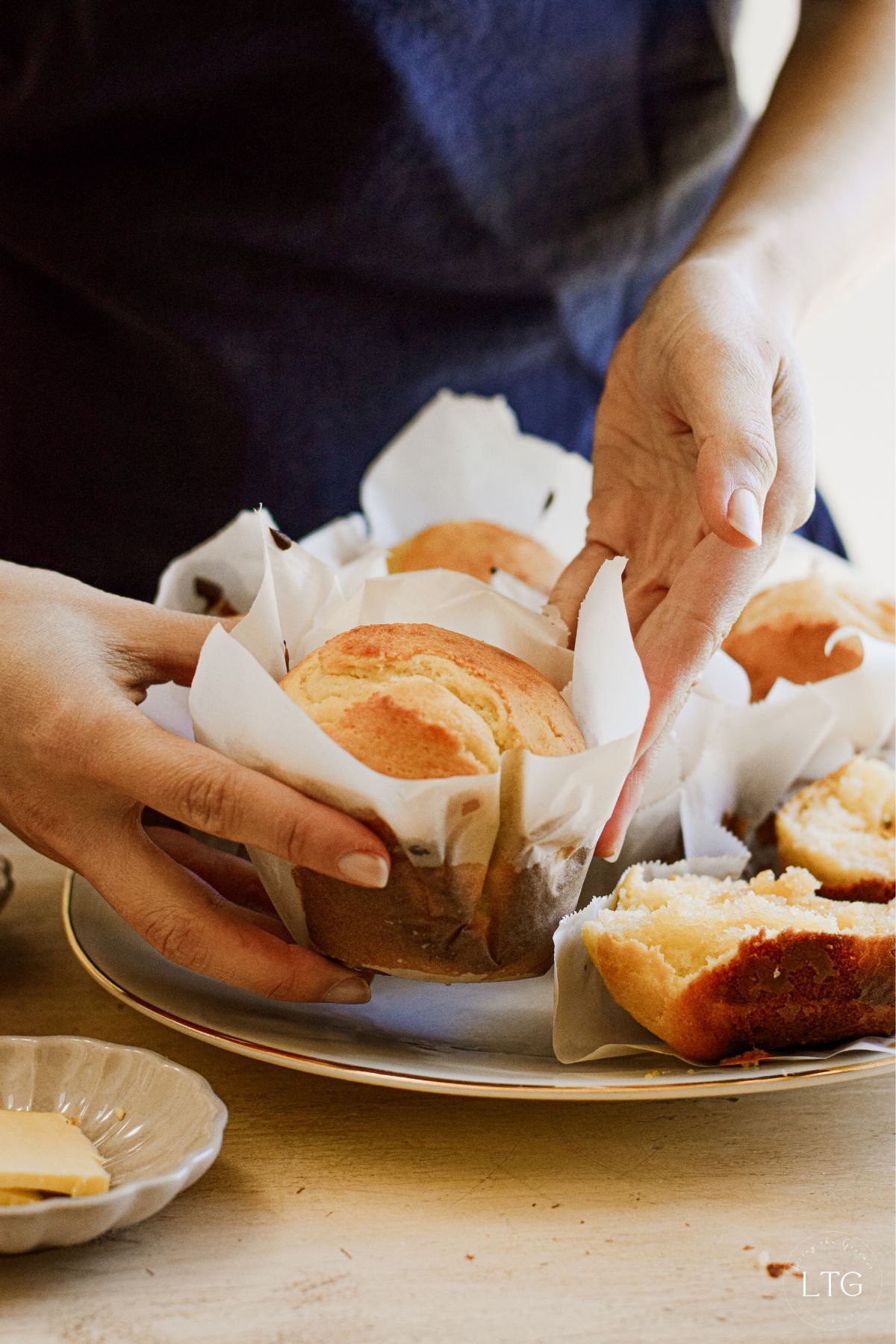
How to Customize This Muffin Recipe
Fruit Add-ins (1 to 1½ cups)
Blueberries, raspberries, diced strawberries, bananas, or chopped peaches will transform these plain muffins into classic bakery-style fruit muffins.
Mix-Ins (3/4 Cup to 1 Cup Total)
Chocolate chips (semi-sweet, dark, milk, or white all work) and chopped nuts (walnuts, pecans, almonds) are classic additions. You can also mix and match them, but I would strongly recommend keeping the total mix-ins to about 1 cup maximum, or the batter will become too heavy, and the muffins won't rise properly. Also, be sure to fold them in gently at the very end to avoid overmixing. Don't worry about proper distribution; just a few gentle folds are all you need.
Flavor Enhancements
1-2 teaspoons of vanilla extract is a simple enhancement. You could also add in 1 tablespoon of lemon zest, or 1-2 teaspoons of cinnamon, and maybe a quarter teaspoon of nutmeg. These additions won't affect batter structure, so experiment freely. You can also consider combining flavors, such as lemon zest with blueberries, or cinnamon with apples and walnuts, or vanilla with chocolate chips.
Streusel Topping
For a bakery-style crumb topping, simply mix a third of a cup of flour with a third cup of brown sugar and 3 tablespoons of cold butter (diced into chunks) with a half teaspoon of cinnamon. Rub this mixture together until crumbly, and then sprinkle it over the muffins just before baking.
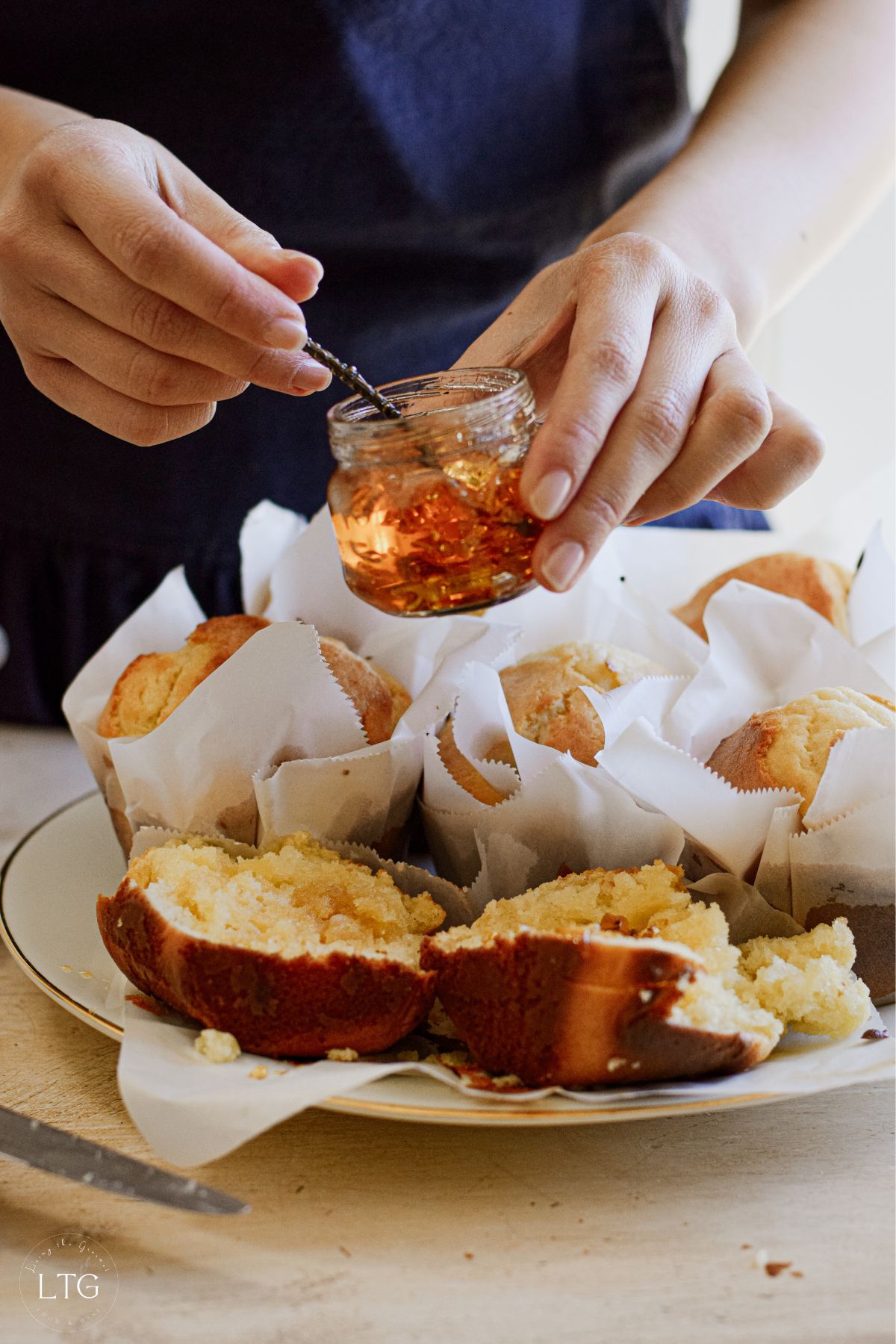
Troubleshooting Common Muffin Problems
Dense, Heavy Muffins with Tunnels
This almost always means overmixing. Dense muffins that are heavy and have tunnels through the crumb are evidence of overdeveloped gluten, which is the result of overmixing the batter.
Fix: Super simple. Mix only until you can't see any dry flour (about 20 gentle folds). The batter should look lumpy and rough, not smooth. Switch from a mixer to a spatula once the flour goes in.
Flat Tops Instead of Domes
This is most often a sign of expired leavening agents, which rapidly lose potency as they near their expiration date. Baking powder and baking soda usually only last 6-12 months once opened.
Fix: Test your baking powder and baking soda. To do this, add half a teaspoon of baking powder to hot water. It should fizz vigorously. Add baking soda to vinegar. It should bubble immediately and vigorously. If the reactions are weak, replace them.
Dry, Crumbly Muffins
Overbaking. Overbaking is the most common cause of dry muffins, as well as muffins that don't hold together after baking. Muffins continue cooking after leaving the oven, so you want to pull them out just when they are done or even a minute before. Another common cause is too much flour - often from scooping measuring cups directly into the flour bag, which compacts the flour.
Fix 1: Start checking for doneness at 20 minutes using the toothpick test. Insert a toothpick into the center of the muffin. If it comes out clean or with just a few moist crumbs, the muffins are done.
Fix 2: Measure your flour properly. I cannot stress enough how many kitchen issues would be solved if we all just measured properly. Spoon your flour into the measuring cup, and then level it off with a knife. Simple.
Muffins Stick to the Pan
Inadequate greasing is the most common culprit, along with removing muffins while too hot. Muffins need to cool slightly in order to set, and then they will release cleanly.
Fix 1: Use parchment paper. Seriously, instead of butter or spray, use parchment paper. It works better than any other non-stick solution and makes clean-up easier.
Fix 2: Let the muffins sit for about 5-10 minutes before attempting to remove them from the pan. This allows the muffins to set, and that enhances their structure, allowing them to be removed from the pan without collapsing.
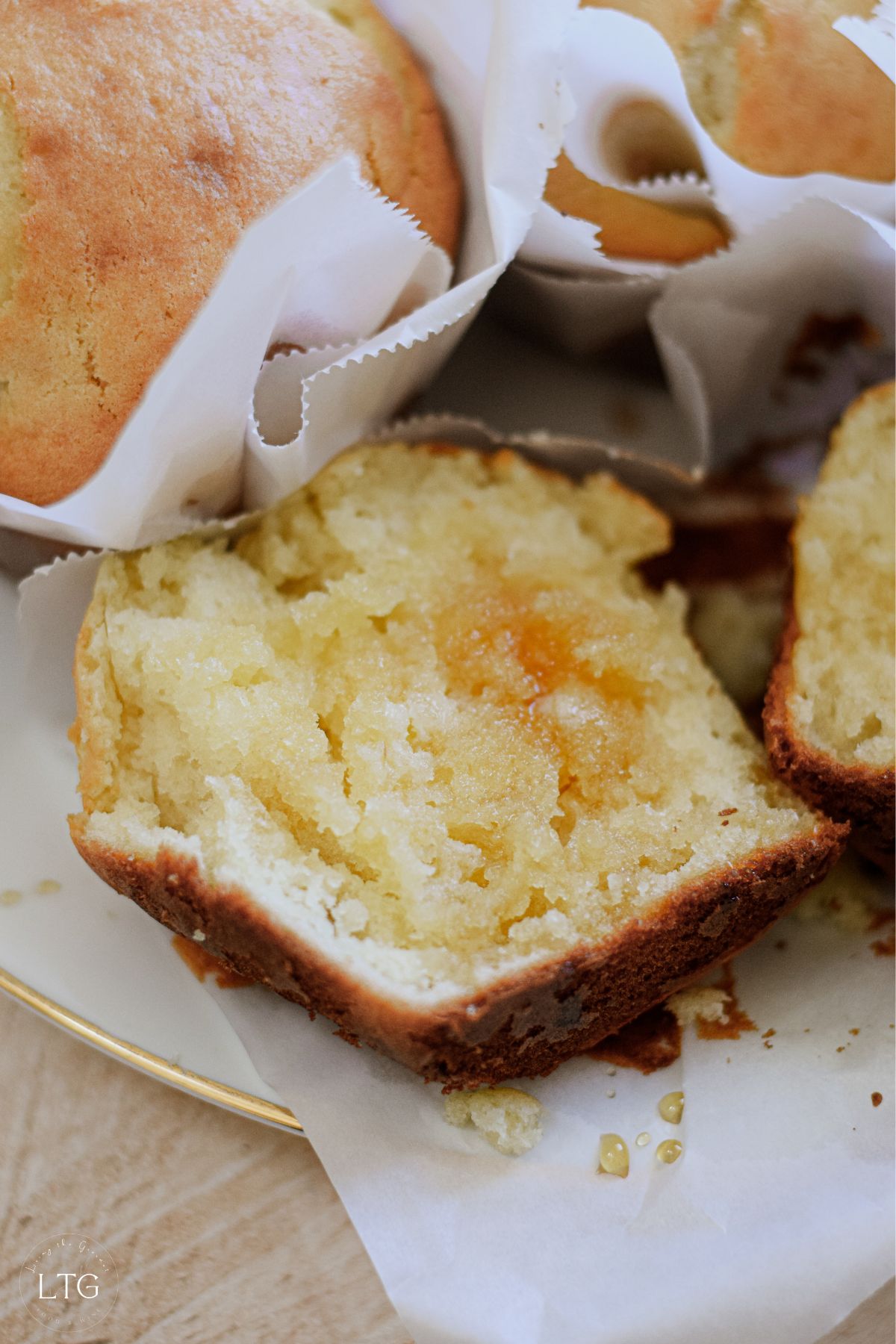
Frequently Asked Questions
No. Muffin batter is best baked immediately for optimal rise. You can refrigerate it for up to 24 hours if needed - but I do not recommend doing so. The leavening agents start working as soon as they come into contact with liquid, and so the batter loses rising power as it sits. Instead, I strongly recommend using your muffin batter as quickly as possible. If you must set the muffin batter aside, seal it in an airtight container in the fridge, but for no more than 24 hours. Be aware that the batter will experience less of a rise.
Yes. These muffins freeze beautifully for up to three months. Let the muffins cool completely, then wrap them individually in plastic wrap, set them in a freezer-safe bag with the air removed, and then into the freezer they go. To thaw, leave them out at room temperature for a few hours.
The mixing method creates completely different textures. Muffin batter uses the "muffin method," which is minimal mixing of wet and dry ingredients to create a dense, bread-like crumb. Cupcake batter uses the creaming method - extensive beating to create a light, fluffy cake-like texture. Muffin batter should look lumpy and rough. Cupcake batter should be smooth. For a complete comparison, see our post on muffin vs cupcake batter.
Underbaking is the most common culprit. If the structure of the muffin hasn't fully set before being taken out of the oven, the muffins will collapse as they cool. Here again, use the toothpick test to check for doneness before removing them from the oven. This can also result from too much leavening. If the muffins rise too rapidly, the excessive rise cannot be supported by the structure of the muffins, causing them to sink. Muffins will also collapse if you open the oven door too early (before about 15-20 minutes), which releases heat, interrupting the formation of the muffin structure, and causing them to sink.
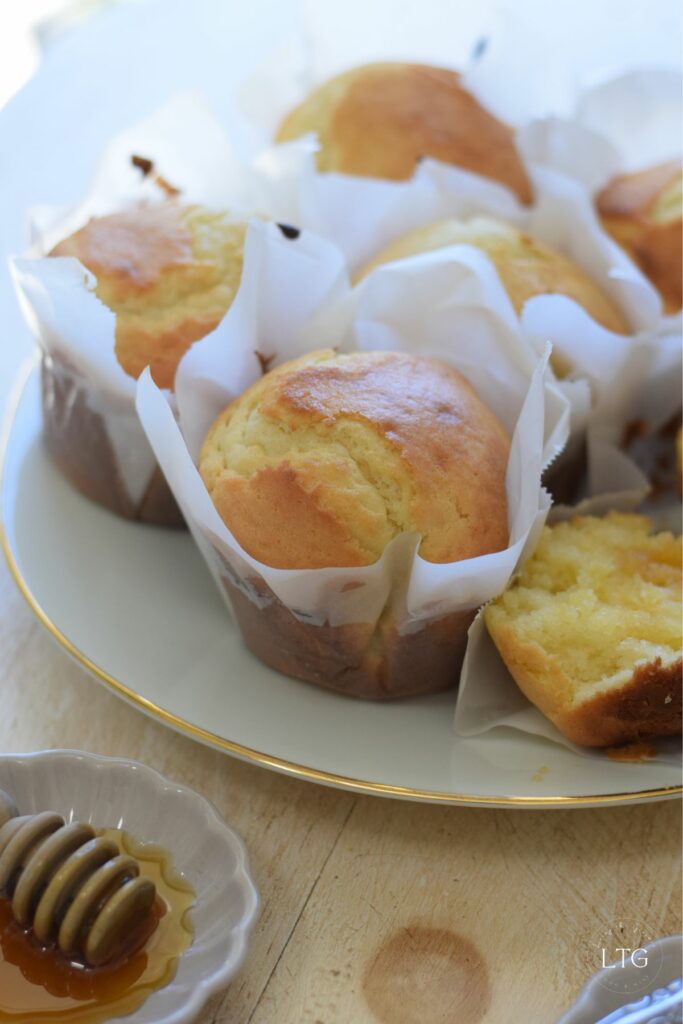
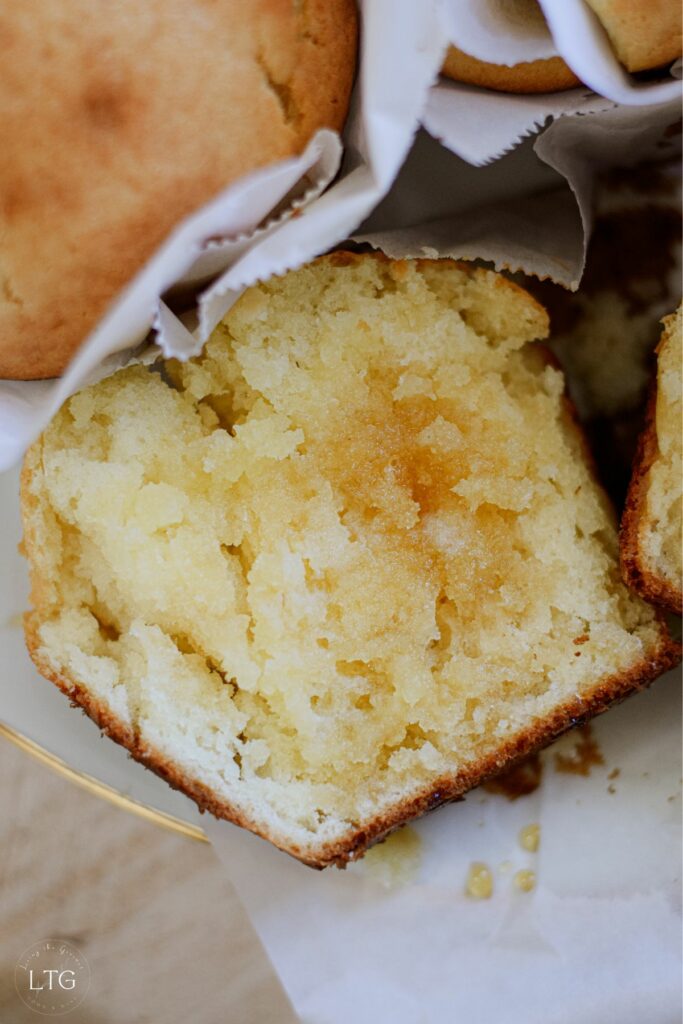

Plain Bakery Style Muffins
- Total Time: 40 minutes
- Yield: 6 jumbo muffins 1x
Description
These Plain Bakery-Style Muffins are moist, tender, and just sweet enough for a perfect morning treat with coffee or tea.
Ingredients
- 1/2 cup butter, softened
- 2 large eggs
- 1 cup granulated sugar
- 1 cup plain Greek yogurt
- 1/2 cup whole milk
- 2 cups all-purpose flour
- 1/2 teaspoon baking soda
- 2 teaspoons baking powder
- Pinch of salt
Instructions
- Preheat oven to 350 degrees F° and line a muffin tray with parchment paper. Set aside.
- In a large bowl, whip butter, eggs, and sugar.
- Add yogurt and whip again until smooth.
- Add the dry ingredients and mix until half incorporated.
- Slowly add the milk, mixing on low until a thick, smooth batter comes together.
- Divide the batter evenly between the prepared muffin tray.
- Bake for 25-30 minutes, depending on the range of your oven and the size of your muffin pan (I used a large muffin pan). The muffins will be golden, and the cake tester will come out clean.
- Remove and let rest on a wire rack to cool.
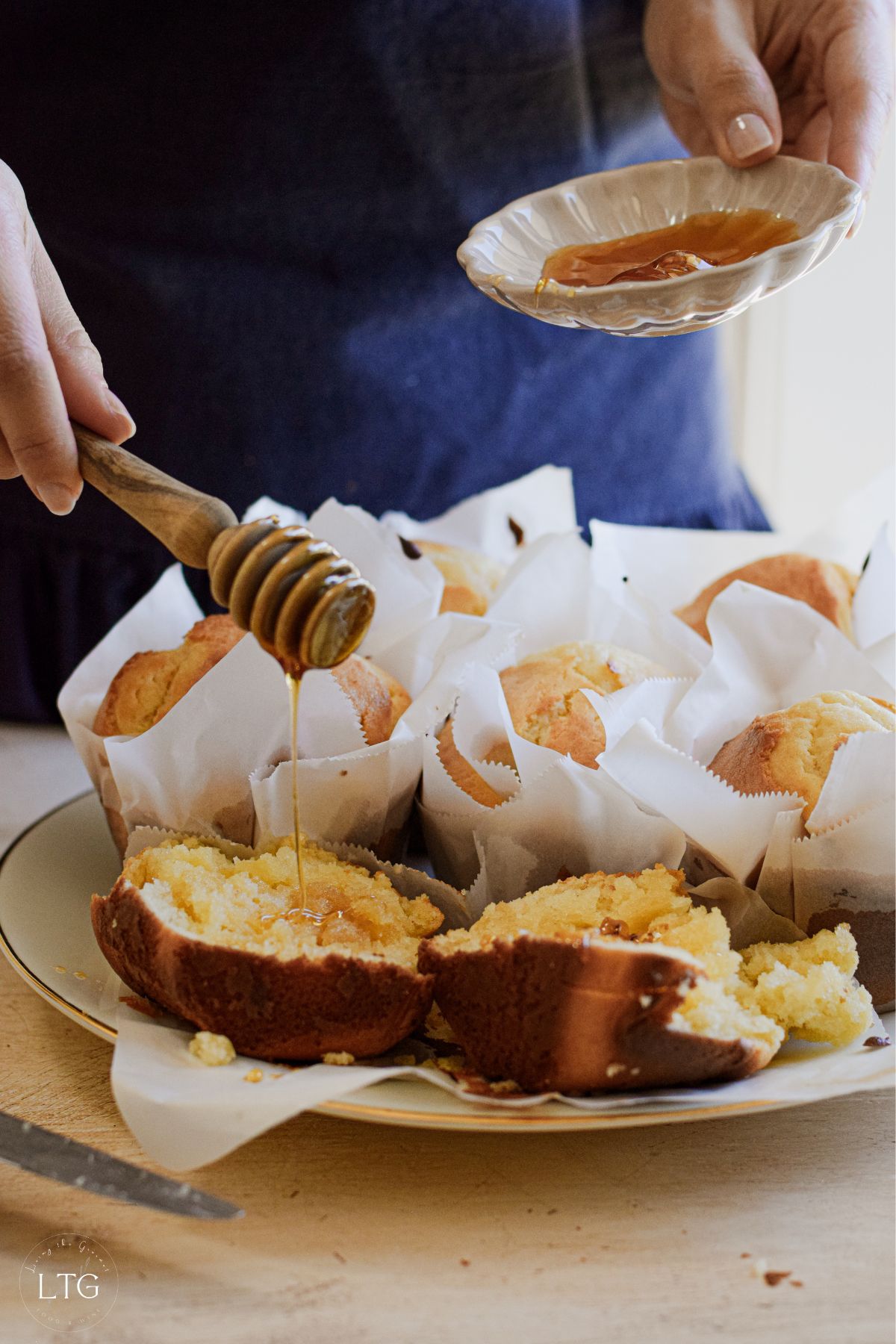
- Serve with your favorite jam, a pat of butter, or a drizzle of honey. Enjoy!
- Prep Time: 10 minutes
- Cook Time: 30 minutes
- Category: Bread
- Method: Bake
- Cuisine: American
And that's our back-to-basics recipe for plain muffins. If you enjoyed this recipe, or have any questions or suggestions, be sure to let us know in the comments below. We always love hearing from you!
Happy Baking!
**Note: If you buy something through our links, we may earn an affiliate commission, at no cost to you. We recommend only products we genuinely like. Thank you so much.





Catalina says
I tried this recipe and it worked perfectly. Soft, fluffy muffins that are easy to customize!
Angela says
So moist without feeling heavy and just the right level of sweetness. The texture comes out soft and tender with a really nice rise.
Ben says
I'm bookmarking this. Until I found your recipe, I had never been able to make really good muffins.
Terri says
This is a great resource for beginning bakers, BUT it's also an amazing recipe for experienced ones. Tasty.
Beth says
These muffins are so good, and the best part is that they're so easy. Such a winner.