
This post has been sponsored by Andria's Food Group. All opinions expressed are my own.
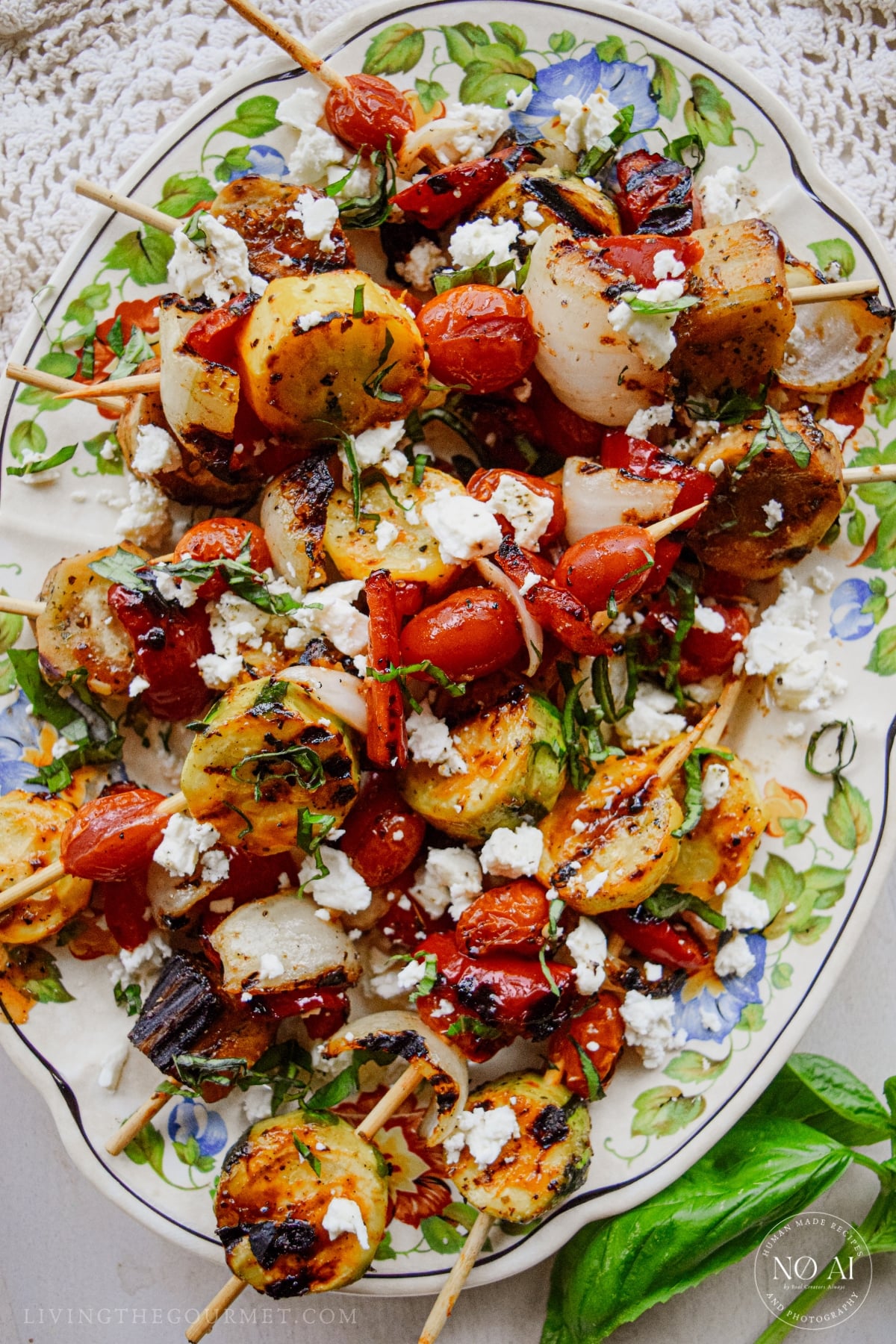
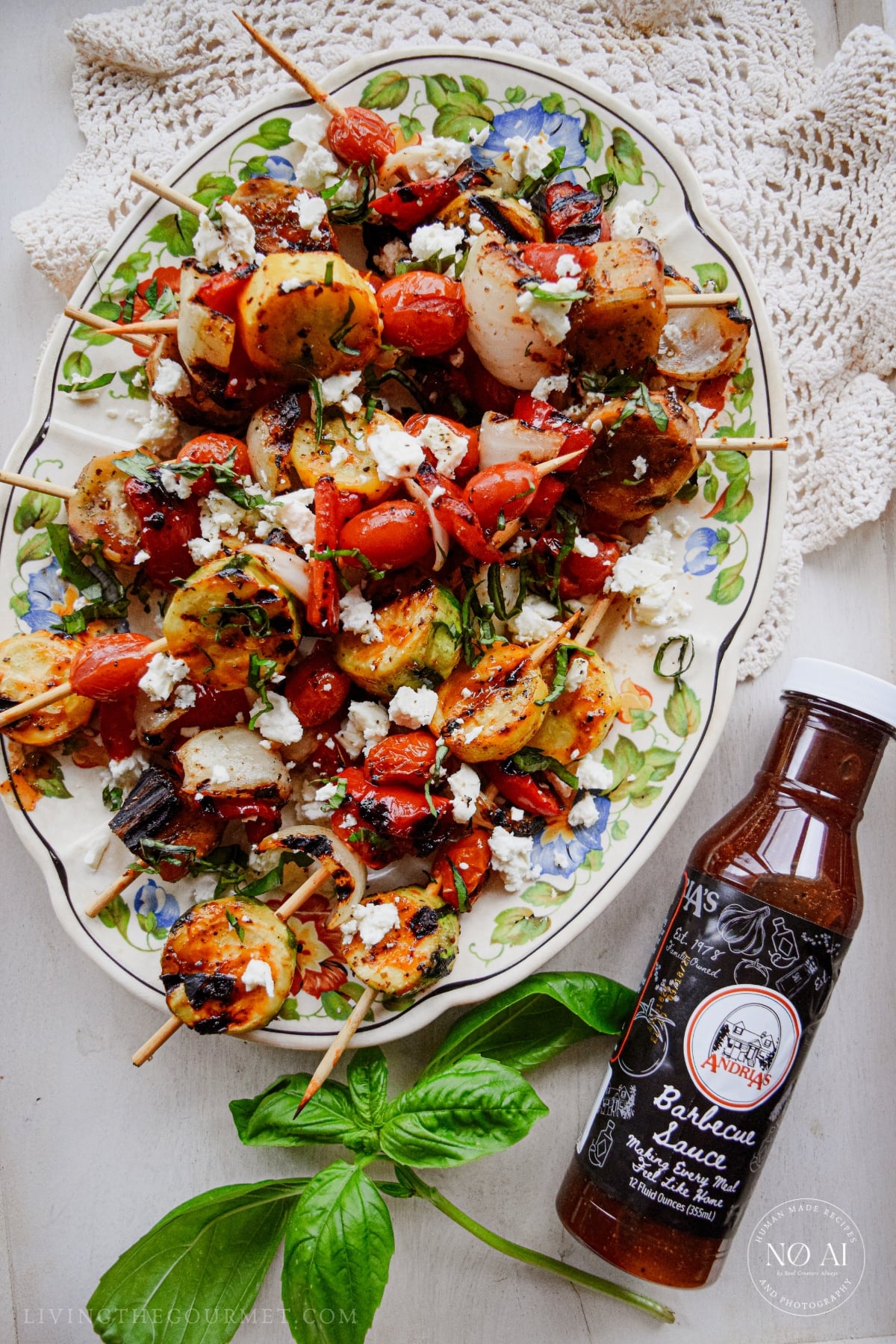
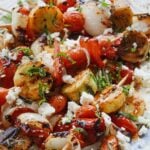
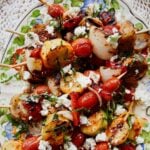
A plate of Mediterranean Vegetable Skewers, glistening with olive oil and lemon, and glazed in Barbecue sauce, is all it takes to make a weeknight feel a little bit more like a celebration. However, what I love most about this recipe is that there's no need to fire up an outdoor grill or barbecue. Instead, a flat-top grill or a decent stovetop griddle is all you need to achieve a caramelized exterior, a nice char, and a tender, almost silky interior.
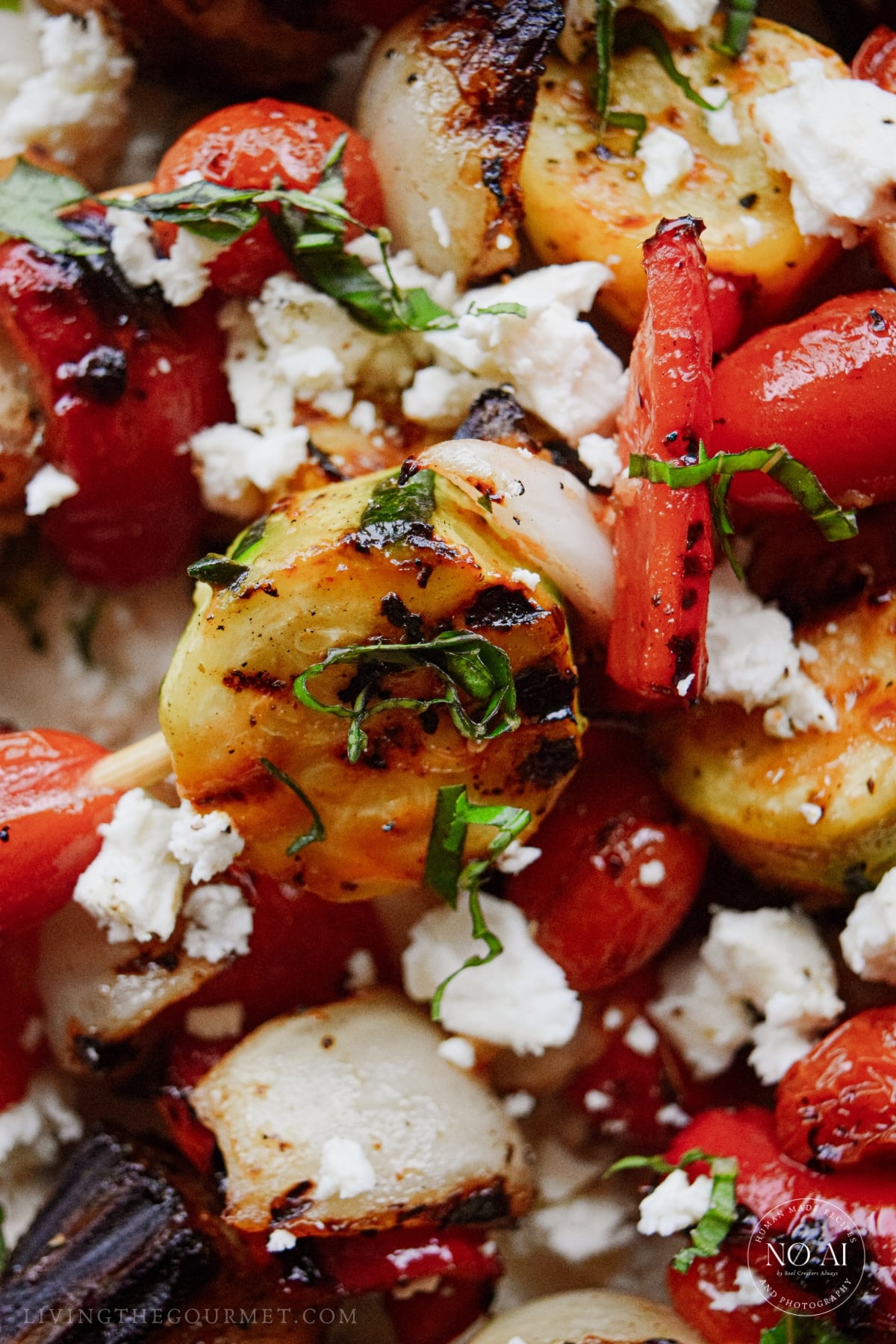
For these skewers, we're using the vegetables I reach for again and again all summer long - zucchini (a personal favorite for any occasion), yellow squash, eggplant, sweet onion, grape tomatoes, and bell peppers. These veggies, in particular, come off the griddle beautifully charred and caramelized; brushed with Andria's Barbecue Sauce (more on this delicious sauce below), and then we finish the platter with marinated feta and a generous sprinkle of fresh garden basil.
These vegetable kabobs are a delightful side dish that play well with almost any main course. My go-to pairings are grilled chicken, salmon, or grilled burgers.
Now, without further introduction, let's make some vegetable skewers.
Jump to:
- Why You'll Love These Griddle Vegetable Skewers
- The Best Vegetables for Griddle Skewers
- Ingredients for Mediterranean Vegetable Skewers
- How to Prepare the Vegetables for a Flat-Top Griddle
- How to Make Griddle Vegetable Skewers
- Why You Should Add the BBQ Sauce at the End
- Tips and Tricks for Perfect Vegetable Skewers
- How to Keep Vegetable Skewers From Getting Soggy
- Griddle vs Outdoor Grill for Vegetable Skewers
- Frequently Asked Questions
- Griddle Vegetable Skewers Recipe with Marinated Feta
Why You'll Love These Griddle Vegetable Skewers
My stove-top griddle is honestly one of my favorite pieces of kitchen equipment, and this recipe is a good example of why. It provides a broad, even surface for grilling the veggies with gorgeous browning in much the same way an outdoor grill might, but without the hassle and with no risk of the vegetables slipping through grill grates or tumbling through the sides and into the coals. Because the surface of a stovetop griddle is a solid slab of iron, you also avoid the flare-ups that come when oil and marinade drip into a barbecue's open flame. Also, the skewers are much easier to rotate on a stovetop.
In terms of flavor, we've got all the Mediterranean heavy lifters like fresh lemon, roasted garlic, and oregano, which combine to give the kabobs a bright, citrus-forward herbal profile. Meanwhile, the marinated feta adds creamy texture and a briny flavor contrast against the sweet and smoky vegetables. Beautiful.
The Best Vegetables for Griddle Skewers
Good skewers start with choosing the right vegetables, and that means veggies that can stand up to high heat and that hold their shape through cooking. Here are my top picks:
- Zucchini and Yellow Squash: Naturals for the griddle. They're mild, quick to caramelize, and brown beautifully. The trick with these is to cut them into sturdy chunks rather than slicing them thin. Both are high in water content, so temperature and spacing matter; be sure to give them room to release steam and brown.
- Eggplant: Japanese or Chinese eggplant is the ideal choice. The slender shape, thin skin, and low seed count make them less bitter and allow for more even cooking. Whether you peel or leave the skin is entirely a preference, but I do recommend cutting them into sizeable chunks so that they stay on the skewers through cooking. Slice them too thin, and they risk falling apart.
- Bell Peppers: For a pop of color. Bell peppers char beautifully and give the skewers a nice, natural sweetness. Mix and match bell pepper types to give the skewers color.
- Onion: A favorite for skewers and kabobs of all kinds, and veggie skewers are no exception. Onions reliably stay on the skewer and add rich aroma. Also, the onions become caramelized as they cook, mellowing their bite and bringing out their natural sweetness. I recommend using sweet onions, but if you prefer a little more oniony bite, opt for red onions.
- Grape or Cherry Tomatoes: I'm using grape tomatoes for this recipe, but you can substitute in cherry tomatoes. Their small size makes them the most delicate veggie on the skewer, but a little blistering and bursting is exactly what you want from them. You can, of course, use hardier tomatoes, which I would recommend cutting into thick wedges rather than thin slices.
- Other Vegetables You Can Add: Mushrooms are a great addition, bringing a meaty texture and reliably holding their shape through cooking. Red or purple onions are kabob staples. Really, any sturdy veggie that can stand up to high heat is fair game for a skewer.
Ingredients for Mediterranean Vegetable Skewers
Here is everything you will need to prepare these vegetable skewers. Full measurements are in the recipe card below.
For the Vegetable Skewers
- Zucchini
- Yellow Squash
- Chinese Eggplant or Japanese Eggplant
- Sweet Onion
- Bell Pepper
- Grape Tomatoes
- Olive Oil
- Fresh Basil
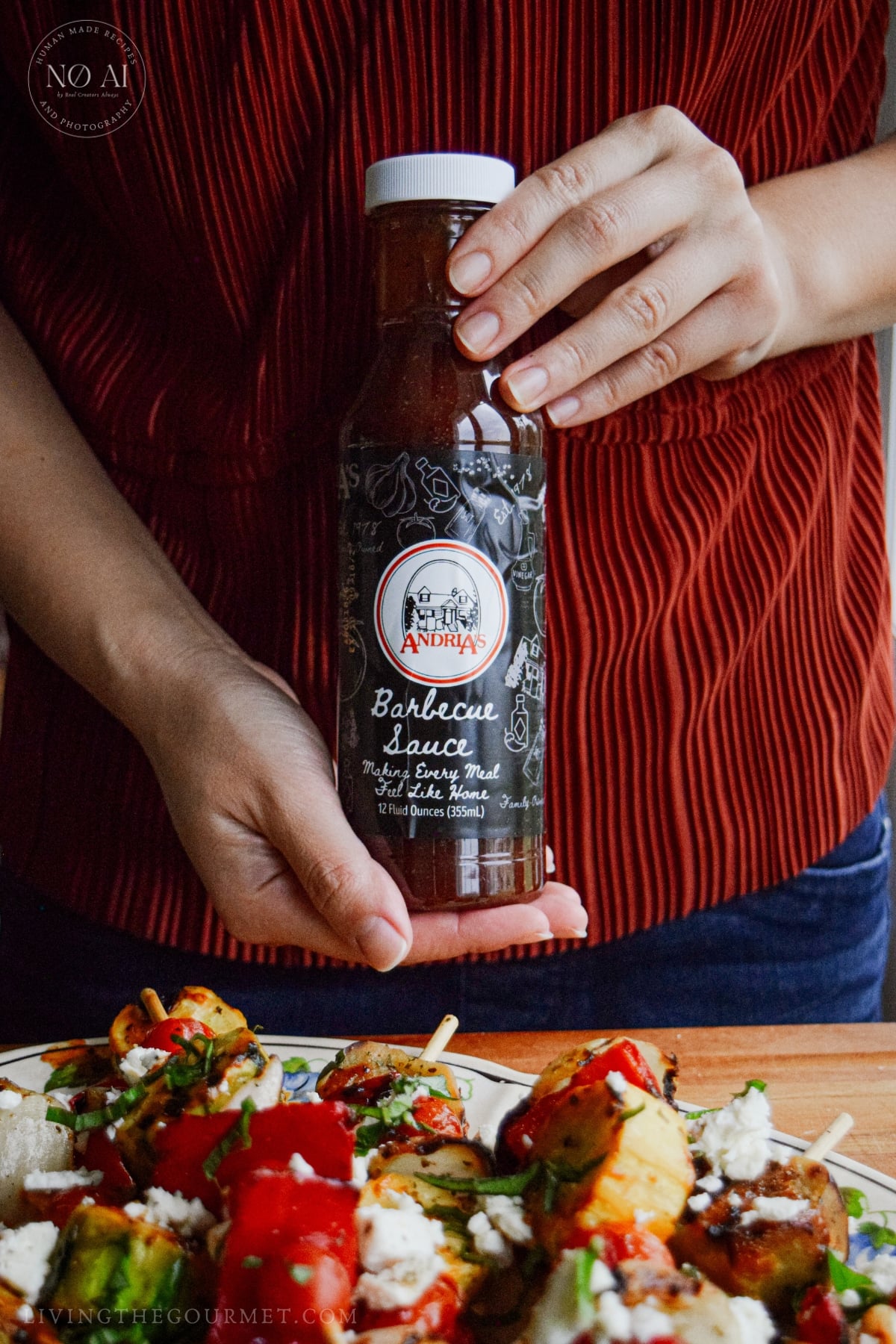
- Andria's Barbecue Sauce
- Marinated Feta
Secret Ingredient: Andria's Barbecue Sauce is bold and smoky, decadently thick, and slightly sweet. It's perfect on everything from grilled beef to roast pork to - you guessed it - vegetable skewers. Andria's line of sauces and salad dressings enhances every recipe they're a part of, and for these veggie kabobs, it brings a delicious blend of sweet and savory, while being pleasantly thick and smoky.
For the Vegetable Marinade
- Roasted Garlic
- Fresh lemon juice
- Olive Oil
- Dried Oregano
- Black Pepper
- Salt
- Sugar
For the Marinated Feta
- Feta Cheese
- Olive Oil
- Lemon Juice
- Black Pepper
- Salt
Pro-Tip: Do not skip marinating the feta. This is a small, effort-free step that has a big flavor payoff. A quick dip in the olive oil, oregano, and fresh lemon mix works to soften the cheese's sharp edge while echoing the same flavor profile running through the vegetables.
How to Prepare the Vegetables for a Flat-Top Griddle
And this is where a stovetop griddle recipe truly begins to part ways with a recipe formulated for an outdoor grill or barbecue. Here is where I recommend slowing down and taking a moment for technique.
Cut the Vegetables into Uniform Chunks
When using a flat-top griddle, uniform chunks matter more than simply making everything "bite-sized." Over an open flame, this is less of an issue as the flame itself provides uneven heat. For a griddle, we have a broad slab of roughly even heat (hot spots notwithstanding). Thus, since the entire surface is in play, that means every veggie chunk is cooking on roughly the same heat at the same time. That means if your veggies aren't uniform in size, they will cook unevenly. That said, avoid overly large chunks lest the outside burn before the middle has time to soften, and avoid overly thin slices that overcook before large pieces have browned.
Create Flat Contact Surfaces
Round vegetables will only touch the cooking surface at an angle or at a single point, which limits browning to a small, uneven area, while the rest of the veggie chunks are left undercooked or un-browned. Not good. Wherever possible, try to give your zucchini, squash, and eggplant chunks a few flat sides so they sit evenly on the griddle.
Don't Marinate Too Long
Toss the veggies into the marinade, mix, and then cover and refrigerate for about 30 to 60 minutes. High-moisture vegetables like zucchini, tomatoes, and yellow squash will soften and turn to mush if they marinate too long. 30 to 60 minutes is the sweet spot for flavor without sacrificing texture.
How to Make Griddle Vegetable Skewers
Prepare the Vegetable Marinade
In a bowl, combine the roasted garlic (mashed), fresh lemon juice, dried oregano, ground black pepper, salt, and sugar with olive oil. Whisk until it's well combined. We want a loose, even, fragrant marinade. No chunks or clumps.
Marinate the Vegetables
Place your prepped veggies in a large bowl, and pour the marinade over them. Then toss until the veggies are evenly coated. Cover and pop in the fridge for 30 to 60 minutes. Resist the urge to let the veggies marinate for any longer, as they will soak through and become mushy.
Prepare the Marinated Feta
While the veggies are in the fridge marinating, chop or crumble the feta as directed in the recipe card. Combine the fresh lemon juice, olive oil, oregano, black pepper, and salt, and then gently mix in the feta. Cover and let it sit in the fridge to marinate.
Thread the Vegetable Skewers
If you are using wooden skewers, soak them in water before using them, or they'll scorch on the griddle. Metal skewers work just as well, but allow you to avoid the soaking. Thread the vegetables onto the skewers, making sure to alternate colors and textures so that the skewers look as good as they are sure to taste. Avoid packing the pieces too tightly, as you want to leave room between them so that the heat can circulate and each side has a chance to brown.
Preheat the Griddle
We want medium-high heat, or roughly 365 to 400 degrees F. A properly heated griddle is what delivers that immediate sear, so give it time to heat before setting the skewers down.
Cook the Vegetable Skewers
Set the skewers on the preheated griddle, leaving an inch or two of space between each one. Turn the skewers every two to three minutes, rotating them to a fresh side as opposed to rotating them back and forth. This allows each surface to have contact with the griddle, ensuring even browning and caramelization.
Add the BBQ Sauce at the End
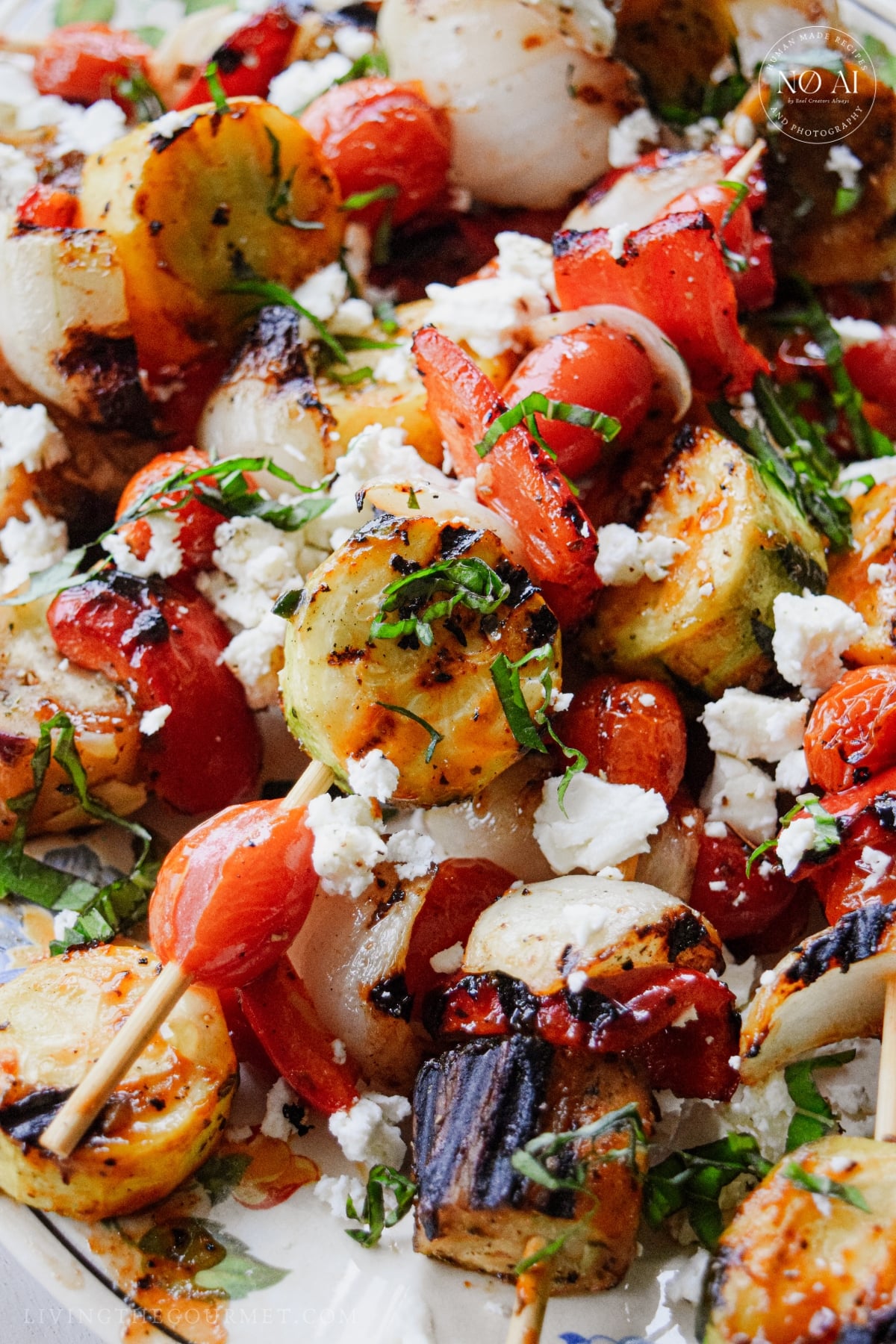
Once the vegetables are nearly finished browning, begin brushing them with Andria's Barbecue Sauce after each turn or rotation. Do not coat the skewers from the start; otherwise, the sauce will scorch on the griddle. Instead, brush the sauce on the skewers in thin layers towards the end of the cooking time. We want a sticky, glossy, caramelized coating, not scorched sauce.
Garnish and Serve
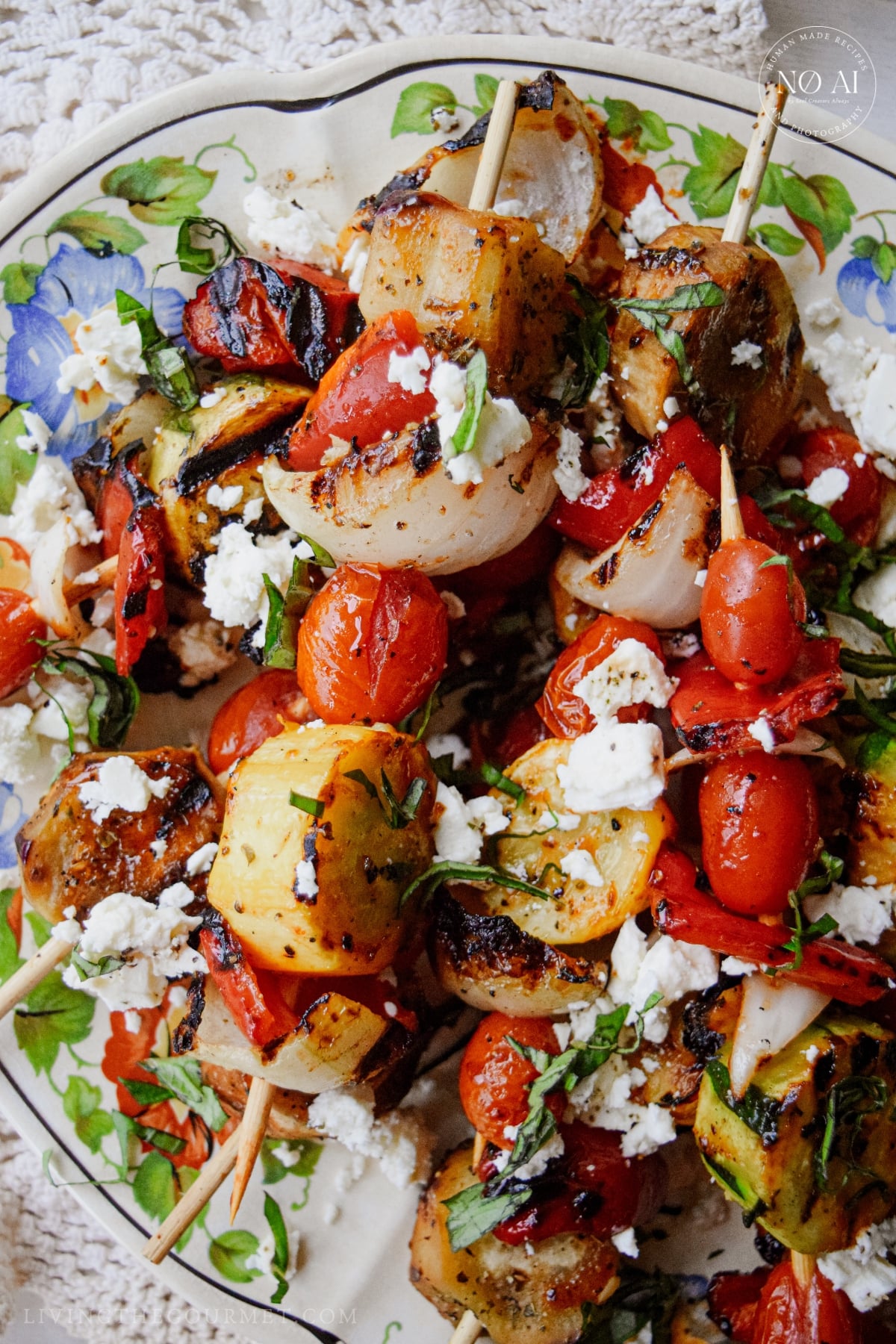
Set the skewers on a serving platter, and top with the marinated feta and a dusting of fresh basil. Serve immediately, while the edges are still crisp and the feta is fresh from the marinade.
Why You Should Add the BBQ Sauce at the End
If you only take one prep tip from this entire post, let it be this one - add Andria's BBQ Sauce at the end. Here's why.
Sugar Burns Faster than Vegetables Cook
It's really as simple as that. The BBQ sauce has sugar in it, and sugar burns quickly when it meets the griddle. That means if we brush it on too early, the sauce will burn on the exterior of the vegetables before the vegetables have had a chance to cook.
How to Get a Caramelized Glaze
This is entirely a matter of timing. Let the vegetables cook most of the way through with just the lemon and olive oil marinade. This will allow the veggies to brown beautifully. Afterward, apply the sauce in thin coats rather than one heavy layer, giving each coat a moment to set against the heat before you turn and brush them again. Applying the sauce in layers allows it to build a glossy, sticky glaze that caramelizes onto the veggies rather than burning against the griddle.
Griddle Tip: Keep the BBQ sauce for the final few turns. The vegetables need time to develop a nice sear before the sauce is applied.
Tips and Tricks for Perfect Vegetable Skewers
Soak Wooden Skewers
If using wooden skewers, give them a quick but thorough soak. This prevents them from burning and splintering when exposed to heat. Optionally, you can use metal skewers. Metal skewers don't need to be soaked and are reusable.
Don't Pack the Skewers Too Tightly
A little space between the veggie chunks is a must. It lets heat move around each vegetable rather than trapping the heat as steam, which in turn encourages even cooking and browning.
Alternate Textures and Colors
Thread the skewers with a mix of colors, flavors, and textures to help make the platter gorgeous and the skewers delicious. Resist the urge to group all of your tomatoes in one place, or to keep all of your peppers or eggplant in one place.
Adjust the Seasoning
Taste as you go. Taste the marinade. Taste the feta. Adjust to your preference. That said, feta is salty and briny, and different brands have differing levels of salt and brine flavor. So be sure to taste the feta before you begin mixing the marinade to adjust the salt and seasoning level as needed.
How to Keep Vegetable Skewers From Getting Soggy
The one big pitfall of veggie skewers is that they can turn out soggy if not prepared properly. The good news is that sogginess is perfectly avoidable if you manage the moisture at four key points in the recipe. Here's what to do.
Don't Over-Marinate High-Moisture Vegetables
In most recipes, a longer marination means more flavor - such as with steak or salmon. However, with these vegetable skewers, the opposite is true. Zucchini, yellow squash, and tomatoes are mostly water, and the acid from the lemon juice will break down their structure the longer they sit in the marinade. So, be sure to stay within the 30-to-60-minute window that I advised above, and they will hold their shape and firmness on the griddle instead of collapsing into mush.
Give the Skewers Room
Overcrowding the griddle prevents a good sear. When skewers sit crowded on the griddle, the moisture released from all of those vegetables has nowhere to go, and so it hangs beneath them as steam and poaches the veggies rather than allowing them to brown. As such, leave one to two inches of space between each skewer as they cook. That breathing room lets the moisture evaporate and gives the veggies a chance to caramelize.
Don't Keep Moving the Skewers
Resist the urge to fuss with the skewers while they cook. I understand the urge to fuss with food that's over heat, but constant motion prevents searing. Each side needs uninterrupted contact with the surface of the griddle to brown and then release cleanly. That caramelized browning is where the flavor and texture come from. Set the skewers down on the griddle, then leave them for 2 to 3 minutes before turning them onto a fresh side. Resist the urge to move them.
Control the Griddle Temperature
Medium-High heat is the target. We want the griddle hot enough to sear the exterior of the vegetables and drive off surface moisture, but not so blistering that they scorch before cooking through. If you see the tomatoes softening too fast, or the BBQ sauce starting to darken before the vegetables are tender, lower the heat. A steady, controlled heat is what gives the moisture in (and on) the vegetables time to escape rather than pooling inside, which will make them soggy.
Griddle vs Outdoor Grill for Vegetable Skewers
Why a Flat-Top Griddle Works
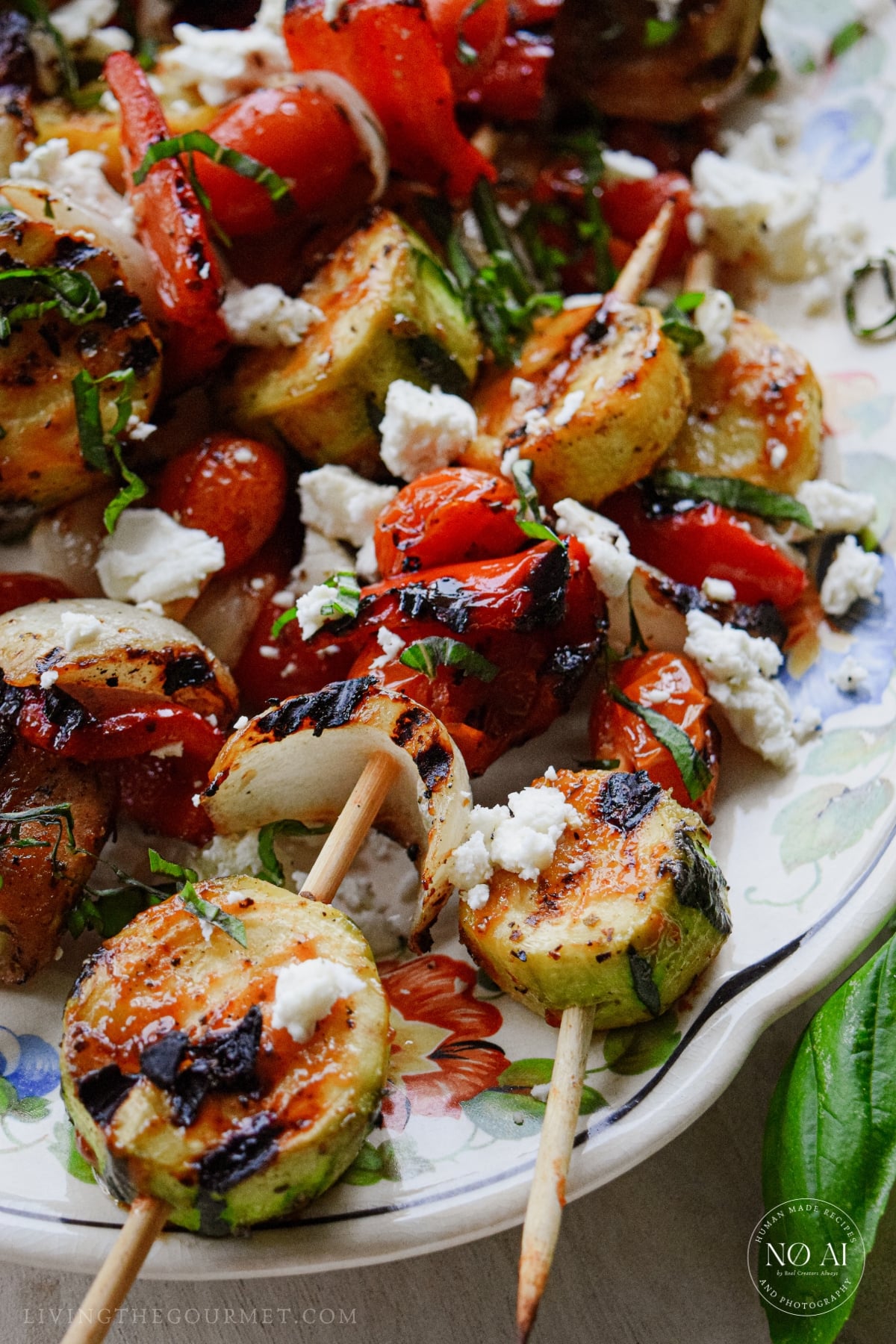
The benefit of a flat-top griddle is maximum surface contact, which means better, more even browning than open grates. Nothing will fall through, the temperature is easier to control, and small, delicate veggies are easier to manage. This is simply a more reliable way to prepare the skewers and makes it easier to achieve even caramelization.
Can You Make This Recipe on an Outdoor Grill?
Yes, absolutely. Use medium-high heat. The same vegetable prep directions and marinade rules all stay the same if prepping this recipe on an outdoor grill. That said, the cooking time may change a little depending on the open flame, and I recommend keeping a closer eye on the skewers.
Frequently Asked Questions
Zucchini, yellow squash, eggplant, onions (any type, really), mushrooms, bell peppers (most peppers, including spicy peppers, all work great). The common thread through all of these veggies is that they are sturdy enough to hold their shape on the skewer through cooking, and that they can stand up to high heat.
Yes. A stovetop griddle is ideal for this recipe. Again, the key is managing the heat so it maintains a steady medium-high temperature.
Roughly 375 to 400 degrees F. Adjust based on how hot your particular griddle runs. If things are browning too fast or too slow, adjust accordingly.
Yes. As a matter of food safety, you must soak wooden skewers before using them; otherwise, they risk burning or splintering. If you prefer to skip soaking your skewers, then use metal skewers.
For this recipe, I recommend marinating your veggies between 30 and 60 minutes. I do not recommend marinating the veggies for this recipe longer than an hour, as they will become soggy.
Absolutely. My go-to vegetables for kabobs are red onions, mushrooms, any type of pepper or spicy chili, and other sturdy, high-heat-friendly vegetables. Really, this recipe is basically a template for you to get creative with.
Slide the vegetables off the skewers first, and let them cool completely. Then, store them in an airtight container in the refrigerator. To bring back some of the caramelized texture, you can reheat on the griddle or in a skillet. I do not recommend using a microwave to reheat them. With that said, I strongly recommend enjoying vegetable skewers fresh. Do not attempt to freeze them, as that will largely ruin the texture of the zucchini and tomatoes.
Griddle Vegetable Skewers Recipe with Marinated Feta
- Total Time: 50 minutes
- Yield: 4-6 1x
- Diet: Vegetarian
Description
Griddle Vegetable Skewers prepared with marinated feta. Caramelized Mediterranean veggies on a flat-top griddle, no outdoor grill needed.
Ingredients
For the Skewers:
- 1 zucchini, peeled or unpeeled and sliced into chunks
- 1 yellow squash, peeled or unpeeled and sliced into chunks
- 1 Chinese or Japanese eggplant, peeled or unpeeled and sliced into chunks
- 1 sweet onion, sliced into chunks
- about 5 oz. of grape tomatoes
- 1 bell pepper, any color, sliced into chunks
- Fresh basil leaves for garnish
- Marinated Feta Cheese for garnish
- Andria's Barbecue Sauce
Marinade for the Veggies:
- 3-4 cloves of roasted garlic
- 1 tsp. dried oregano, crushed
- 2 tbs. fresh lemon juice
- 1/2 tsp. coarse ground black pepper
- 1 tsp. salt
- 1 tsp. sugar
- 4 tbs. olive oil
Marinade for the Feta cheese:
- 8 oz. feta cheese
- 2 tbs. olive oil
- 1 tbs. fresh lemon juice
- 1/2 tsp. coarse ground black pepper
- 1/2 tsp. salt
- 1 tsp. dried oregano, crushed
Instructions
- Wash and pat dry the veggies. You may leave the skin on the veggies or peel them; it is up to your preference.
- Cut the veggies into uniformly sized, bite-sized chunks for even cooking.
- Place the veggies in a bowl and add the marinade mixture; cover and refrigerate for 30 minutes or up to one hour. If you leave the veggies for a longer period of time, they risk turning mushy.
- Thread the veggies on well-soaked kabob sticks.
- Prepare the feta cheese in the marinade and refrigerate.
- Heat a griddle to medium-to-high heat and place the kabobs on the griddle, turning every 2-3 minutes to ensure even cooking.
- Brush the veggie kabobs with Andria's BBQ sauce after each turn.
- Place the veggie kabobs on a platter and garnish with the marinated feta cheese and fresh basil leaves.
- Serve and Enjoy!
- Prep Time: 10 minutes
- Inactive Prep Time: 30 minutes
- Cook Time: 10 minutes
- Category: Side Dish
- Method: Grilling
- Cuisine: American
And those are our Griddle Vegetable Skewers with Marinated Feta, brought to you by our longtime friends over at Andria's Steakhouse. If you enjoyed this recipe, or have any questions or suggestions, be sure to let us know in the comments below; we always love hearing from you.
And, of course, be sure to grab a bottle of Andria's Barbecue Sauce; you won't be disappointed, I promise. It's absolutely delicious.
Happy Cooking!
This post contains affiliate links, and I may earn a commission if you purchase through these links with no additional cost to you.

Leave a Comment