
This post has been sponsored by Kyoord and contains affiliate links. All opinions expressed are my own.
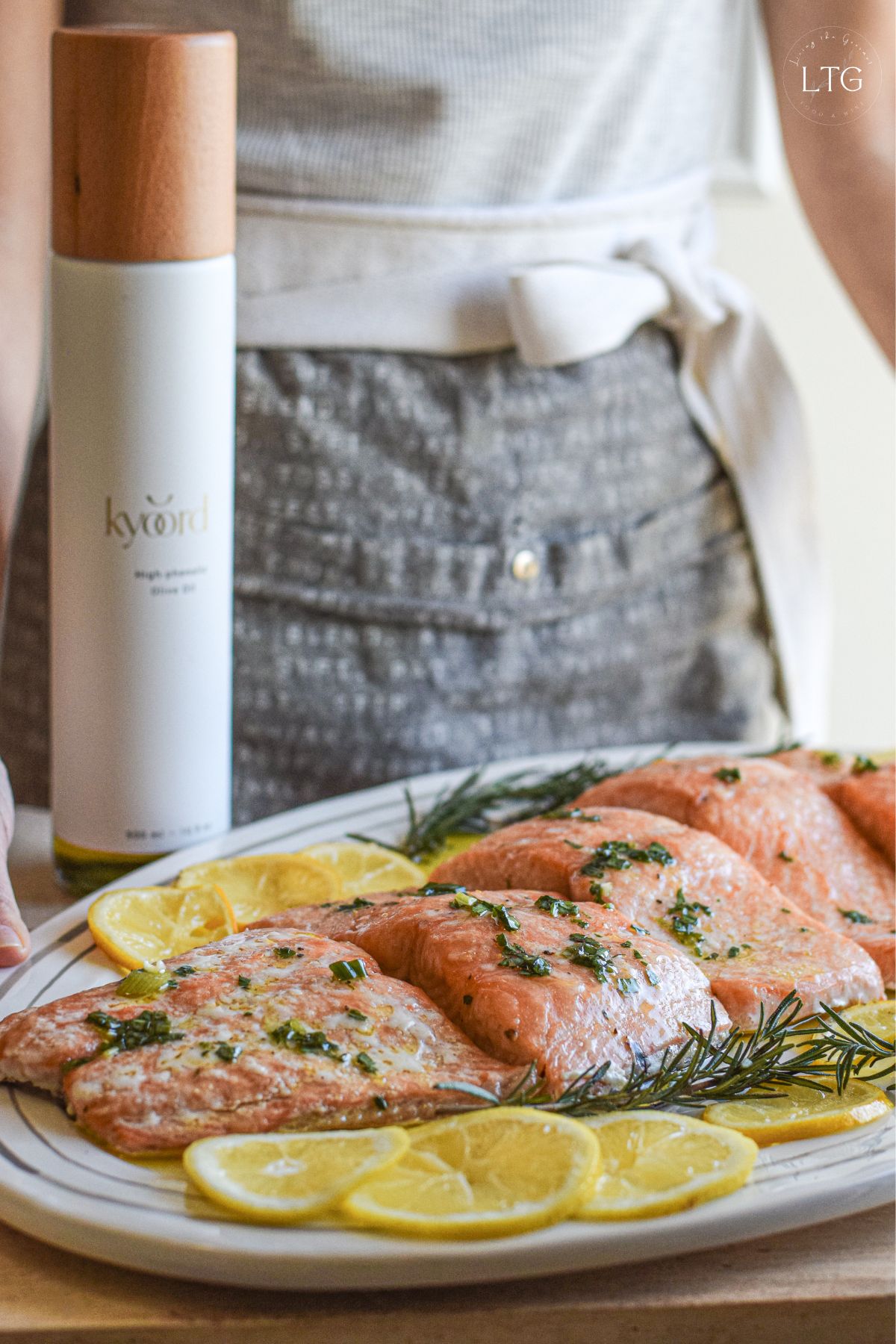
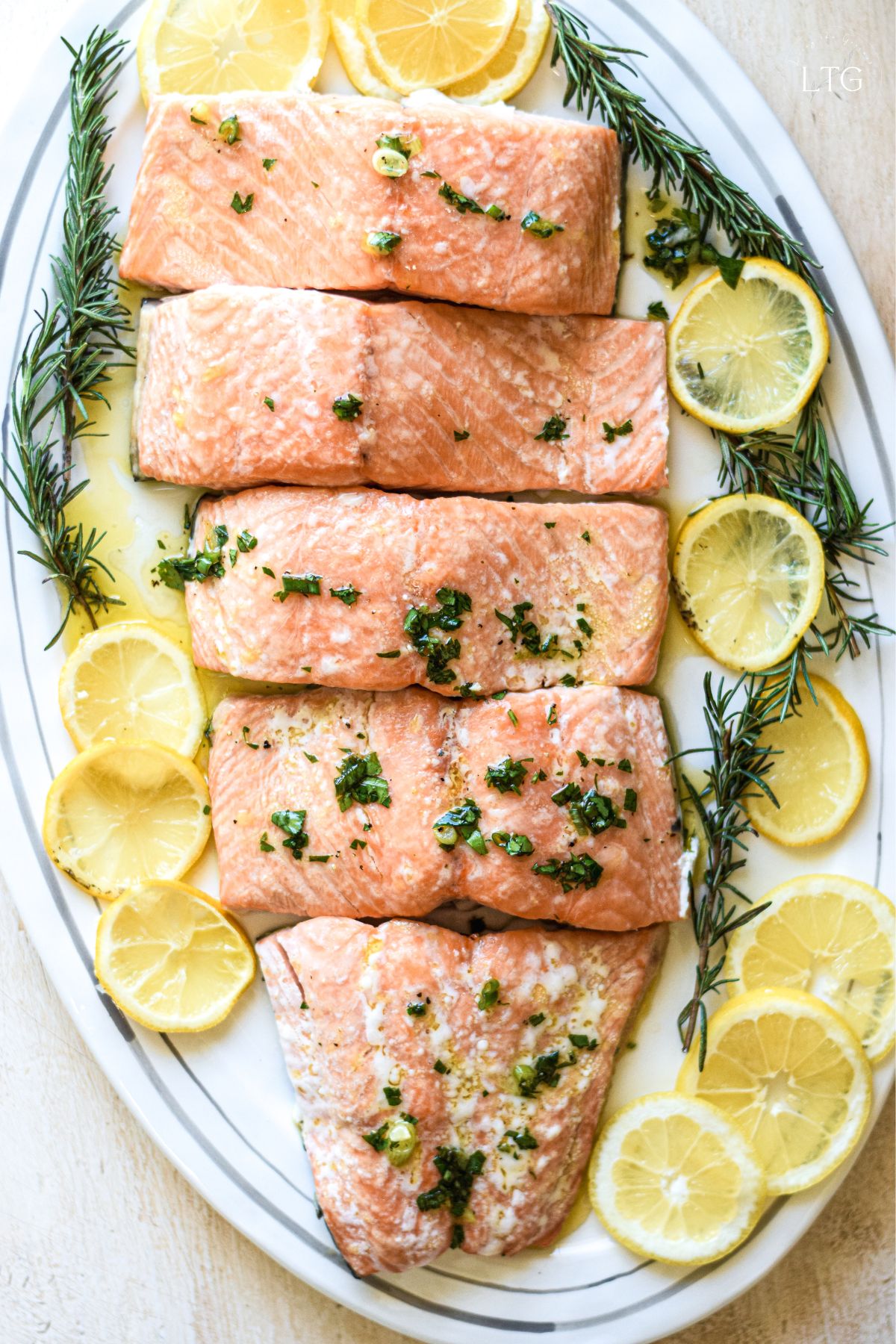
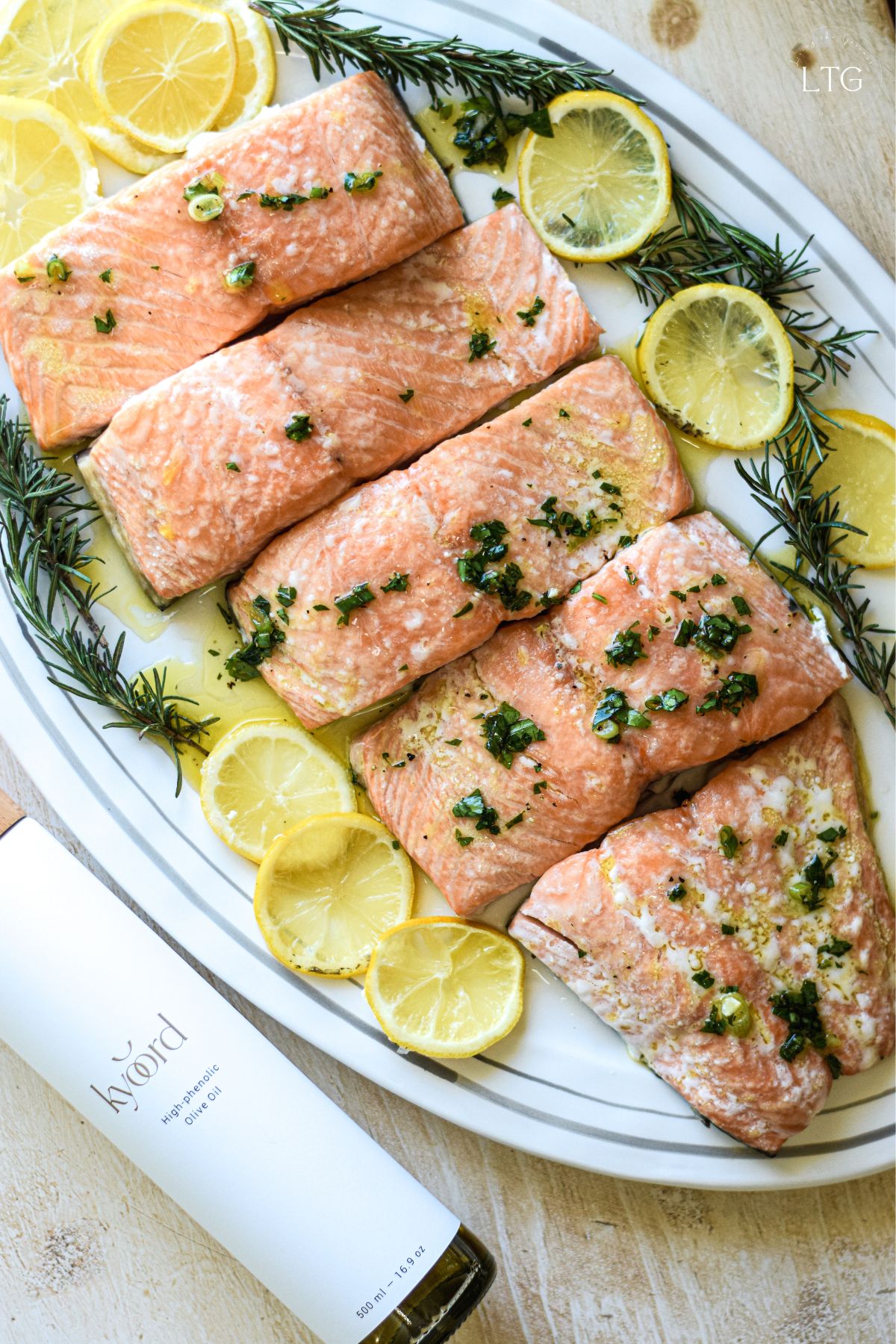
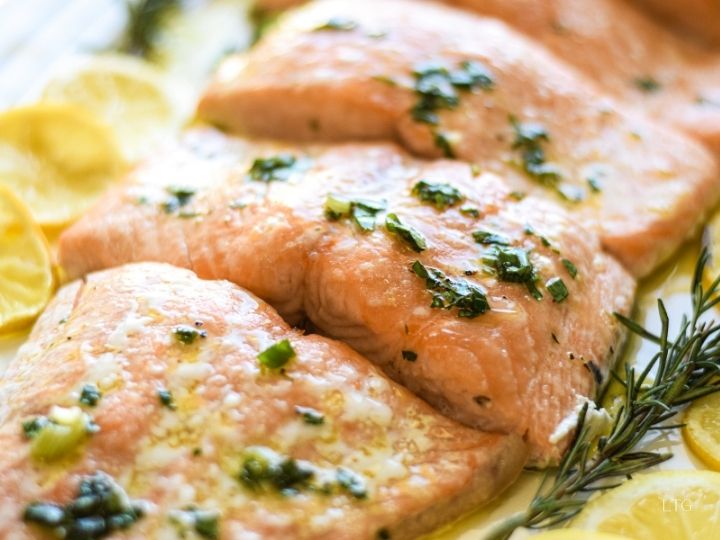
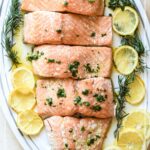
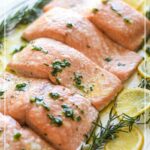
Today we're preparing slow-roasted salmon, prepared on a bed of rosemary and lemon, and then finished with an olive oil, herb, and lemon drizzle. The end result is a deliciously moist and tender piece of salmon, rich with bright citrus and herbal notes.
The star of this recipe, aside from the salmon itself, is Kyoord High-Phenolic Olive Oil. This extra virgin olive oil has been prepared with early harvested, cold-pressed olives to preserve its phenolic content, which are antioxidant molecules. In addition, however, I have to say that this olive oil from Kyoord simply tastes delicious, featuring a lusciously clean mouthfeel, rife with fruity notes and a lasting peppery finish, which works absolutely beautifully with the salmon.
The best part of this recipe, though, is just how simple it is to prepare. It takes only about ten minutes of hands-on prep time, followed by another 20-30 minutes of roasting and resting. This makes it a great recipe for busy weeknights or relaxed weekend dinners.
Now, without further delay, let's make some slow-roasted salmon.
Why Slow Roast Salmon
Slow roasting salmon at 275 degrees F., rather than roasting at the more common 400 degrees F., produces a fundamentally different result: the flesh stays silky and barely opaque throughout, rather than flaking dry at the edges. The collagen doesn't tighten. The fat renders gently. This results in a deliciously moist piece of salmon with a deliciously silken, buttery texture.
Slow Roasted Salmon - Recipe Overview
Taste and Texture
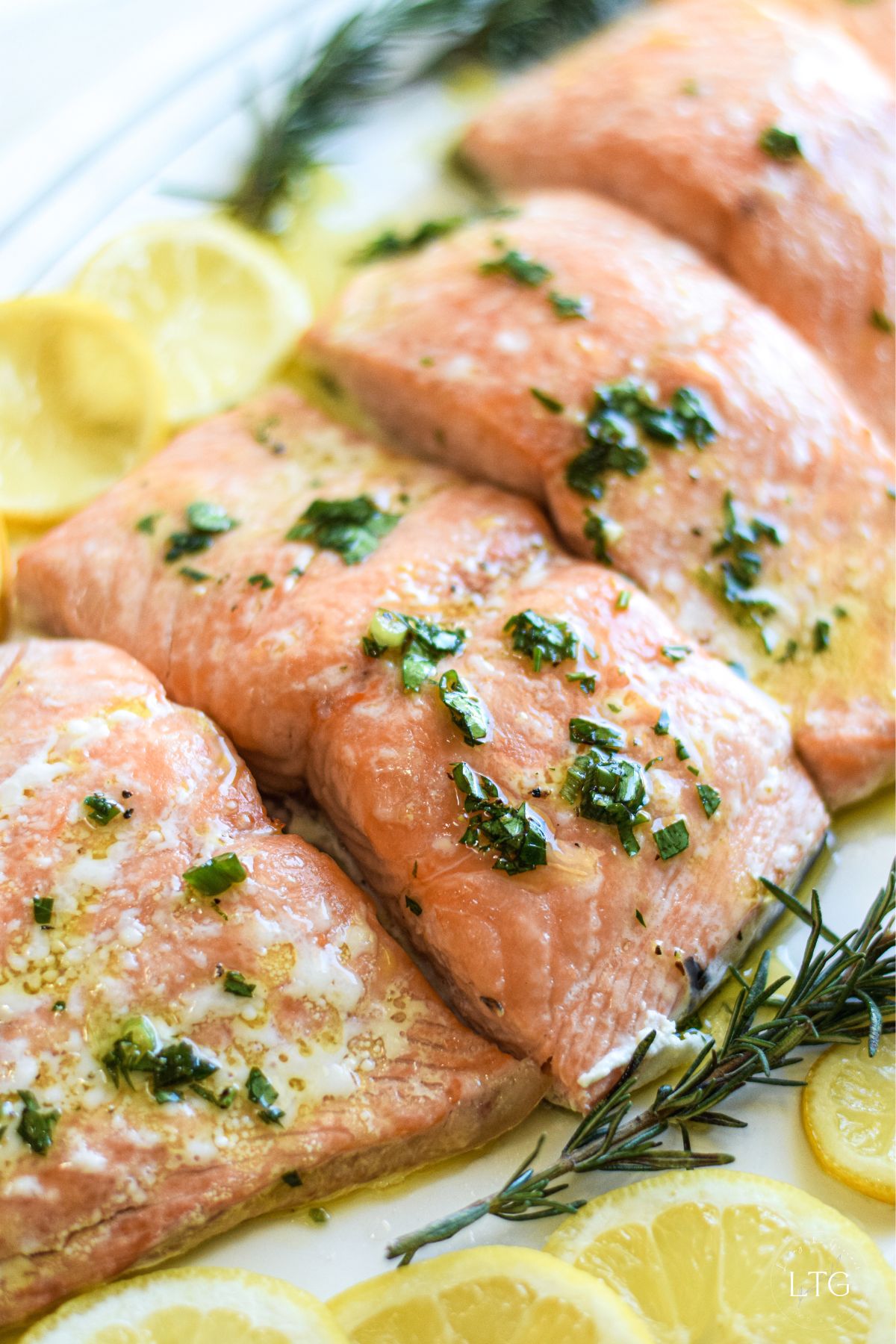
The texture is where slow-roasted salmon really shines. The texture is delicate and buttery, and almost silky, and thoroughly moist. If you've ever lamented fish that's dry and dense, I urge you to try slow roasting. Roasting at a low 275 °F allows the salmon to cook evenly from the edge to the center, thereby preserving its natural oils and creating a silky, luxurious texture. In terms of flavor, we're preparing the salmon on a bed of thin-sliced lemon and fresh rosemary, and drizzling the top with Kyoord high-phenolic olive oil, which adds fruity, peppery notes, and a golden richness that truly enhances - rather than masks - the salmon. The lemon brings bright citrus notes, while the rosemary plays excellently with the salmon's natural fats.
Difficulty Level
This is a beginner-friendly recipe, and I'll say it's definitely one of the easier ways to prepare salmon. With minimal effort and a relative handful of ingredients, you get truly impressive, restrained quality results. Furthermore, the low and slow roasting method is incredibly forgiving - unlike high-heat methods where a minute or two makes the difference between perfect and overcooked, slow roasting at 275°F gives you a generous window of doneness. Even if you leave the salmon in a few minutes longer than the 25-30 minutes I recommend in the recipe card, the gentle heat prevents it from becoming dry or rubbery.
Preparation Process
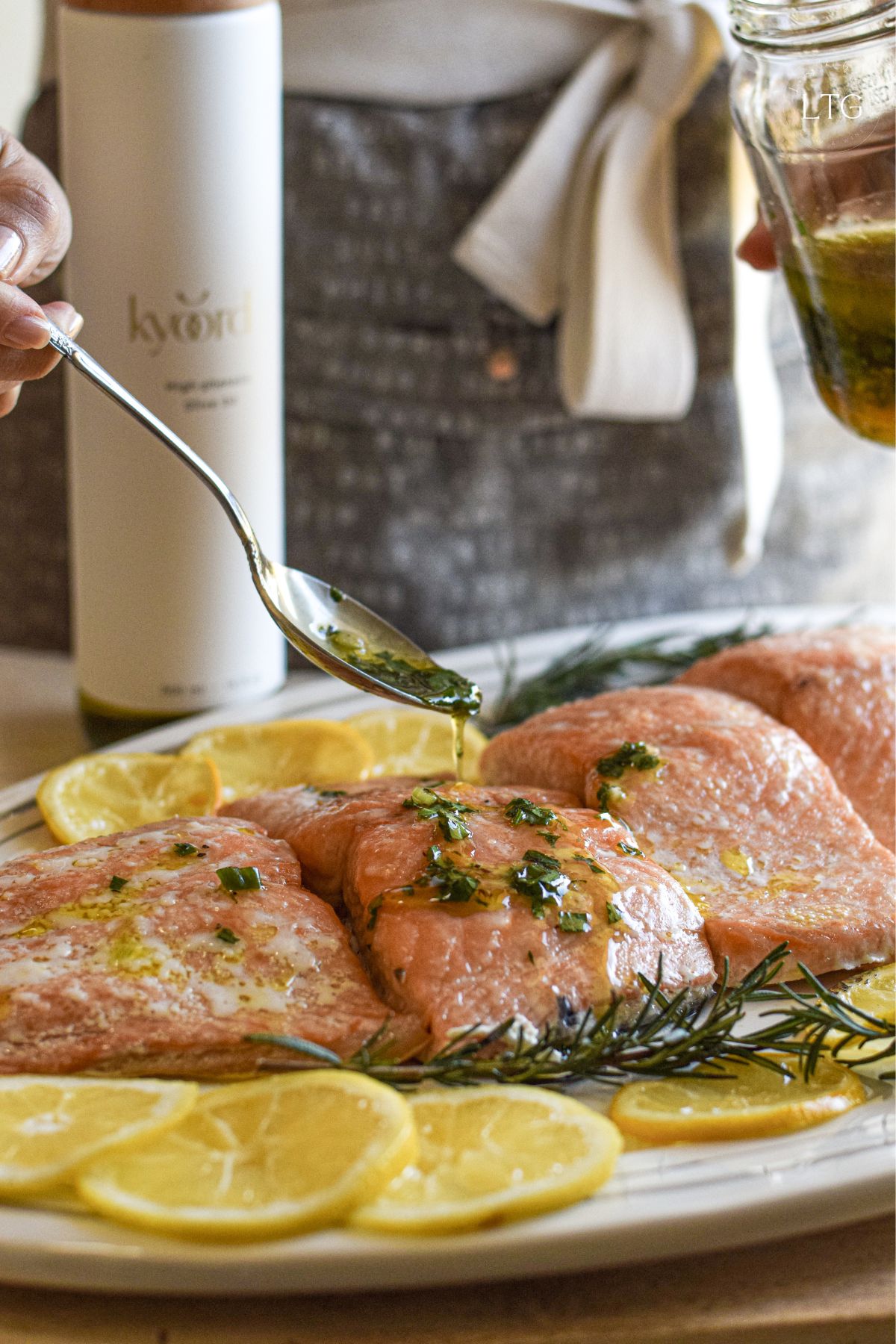
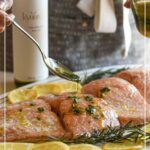
This recipe takes approximately 40 minutes in total, with only about ten minutes of active hands-on work. We start by preheating the oven to 275 degrees f. The low temperature is crucial. We then line our baking sheet with parchment paper, followed by sliced lemon and fresh rosemary sprigs. From there, we prep the salmon by rubbing the entire filet (front and back) with Kyoord olive oil and salt. We then set the salmon down on the lemon slices and rosemary sprigs. After that, we roast the salmon. The cook time depends on the thickness of the salmon and your preferred level of doneness. Thinner fillets (1 inch thick) will be done closer to the 25-minute mark, while thicker fillets (about 1 and a half inches) may need the full 30 minutes. For medium doneness, which is the sweet spot where salmon remains somewhat opaque with a slightly translucent center, aim for an internal temperature of 125-130 degrees F. I recommend testing the salmon with an instant-read thermometer for accuracy. Once the salmon is done, remove it and immediately drizzle with the lemon and herb Kyoord olive oil mixture. It is very important that this initial drizzle happens while the salmon is fresh from the oven.
More Salmon Favorites
- Miso Marinated Salmon: Our Miso Salmon features a delicious blend of savory and spicy flavors, with rich umami depth. The marinade uses a base of soy sauce and miso paste, mixed with ginger and garlic as aromatics, and soy sauce for umami depth, mixed with sesame oil and Korean red pepper.
- Salmon en Papillote: This is a nearly foolproof way to ensure your salmon cooks up deliciously moist and lusciously flavorful. This recipe uses a simple mix of green beans, cherry tomatoes, fresh herbs, and a drizzle of olive oil.
- Teriyaki Salmon Filets: This recipe features salmon fillets prepared with a teriyaki and garlic rub that's citrusy, savory, and just a touch spicy. The end result is a beautifully moist and flavorful piece of salmon that's simple to prepare, yet has all of the flair and flavor needed to be your next favorite 'Fusion' creation.
- Honey and Sesame Salmon: This recipe is a delightful combination of sweet and savory, featuring a luscious honey and sesame marinade, prepared with a mix of fresh scallions, basil, brown sugar, and plenty of garlic.
- Fig and Herb Marinated Salmon: This is one of my favorite salmon recipes, prepared with a mix of fresh lime juice, figs, garlic, herbs, and olive oil, and then roasted in the oven until moist and flaky.
Slow Roasted Salmon - Ingredient Checklist
For the Salmon
- 3 lbs salmon filets, with skin
- Center cut: The center cut offers the most even thickness, which in turn helps to ensure even cooking.
- Skin on: The skin helps the salmon stay moist during cooking by acting as a protective barrier and source of fat.
- What to look for when choosing salmon: You want bright, firm flesh with no fishy smell. Instead, salmon should smell like ocean water. I would opt for wild-caught salmon such as sockeye, king, or coho, as it tends to have more flavor. Farmed Atlantic salmon is milder and somewhat fattier.
- How much salmon per person?: As a rule, 6-10 ounces per person, depending on individual appetites.
- 1 lemon, sliced thin
- Sliced into 1/8 rounds: We want maximal contact with the salmon. Arrange the lemons so that they create a thin bed of citrus on the parchment to place the salmon on.
- One medium lemon: A single medium lemon should create about 8-10 slices.
- Citrus: The primary role of the lemon is to bring a bright, citrusy flavor and aroma to the fish.
- Substitute: My go-to substitute would be thinly sliced orange. Again, the primary role here is the citrus, not necessarily the acid.
- Fresh rosemary sprigs
- 4-6 sprigs: We need enough rosemary to complete the bed of herbs and citrus along the parchment on which to place the salmon.
- Place directly on the lemon slices: For the best arrangement and maximal coverage, place the sprigs directly on the lemon slices.
- Perfect match: Rosemary loves fatty proteins, and salmon is no exception. Rosemary has a woody, deeply herbal, resinous aroma that simply adores well-marbled proteins, and salmon's natural fattiness makes it an ideal match.
- Substitute: Fresh thyme would be my go-to, but rosemary is really a key ingredient for this recipe, so I wouldn't recommend substituting it out.
- Kyoord Olive Oil
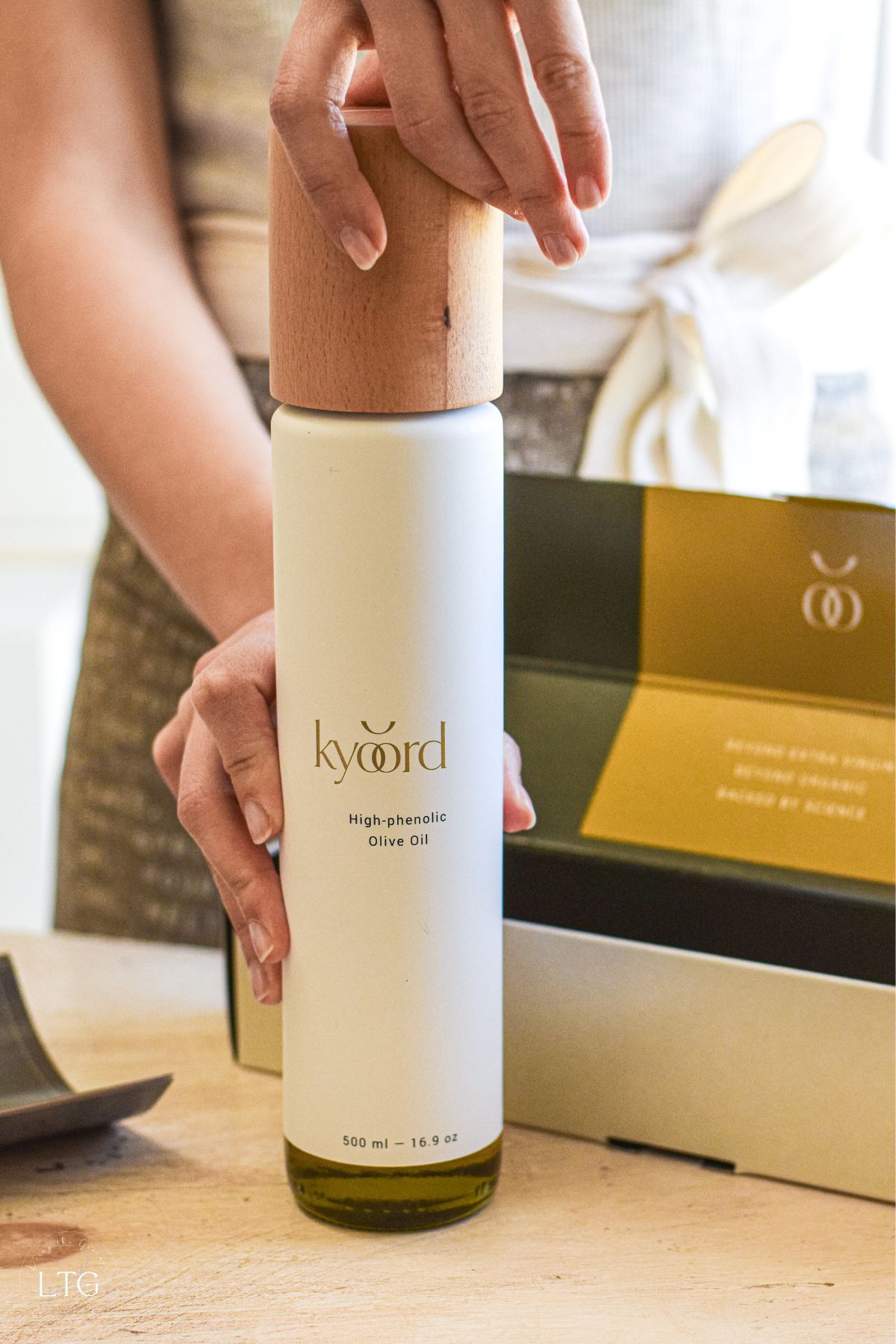
- Key ingredient: Kyoord high-phenolic olive oil has a robust, blissfully clean, and brightly fruity flavor with a rich, peppery finish. High-phenolic olive oil contains more antioxidants and beneficial compounds than standard oils, meaning that Kyoord not only tastes great, but it's an olive oil that you can feel great about adding to your food.
- Coating: The olive oil creates a light coating that promotes gentle browning while imbuing the salmon with its rich flavor.
- 1 teaspoon salt
- Fine sea salt or Kosher salt: What's more important than the salt you use is even distribution. We want the salt evenly distributed over the salmon. Beyond that, your choice of salt will work just fine.
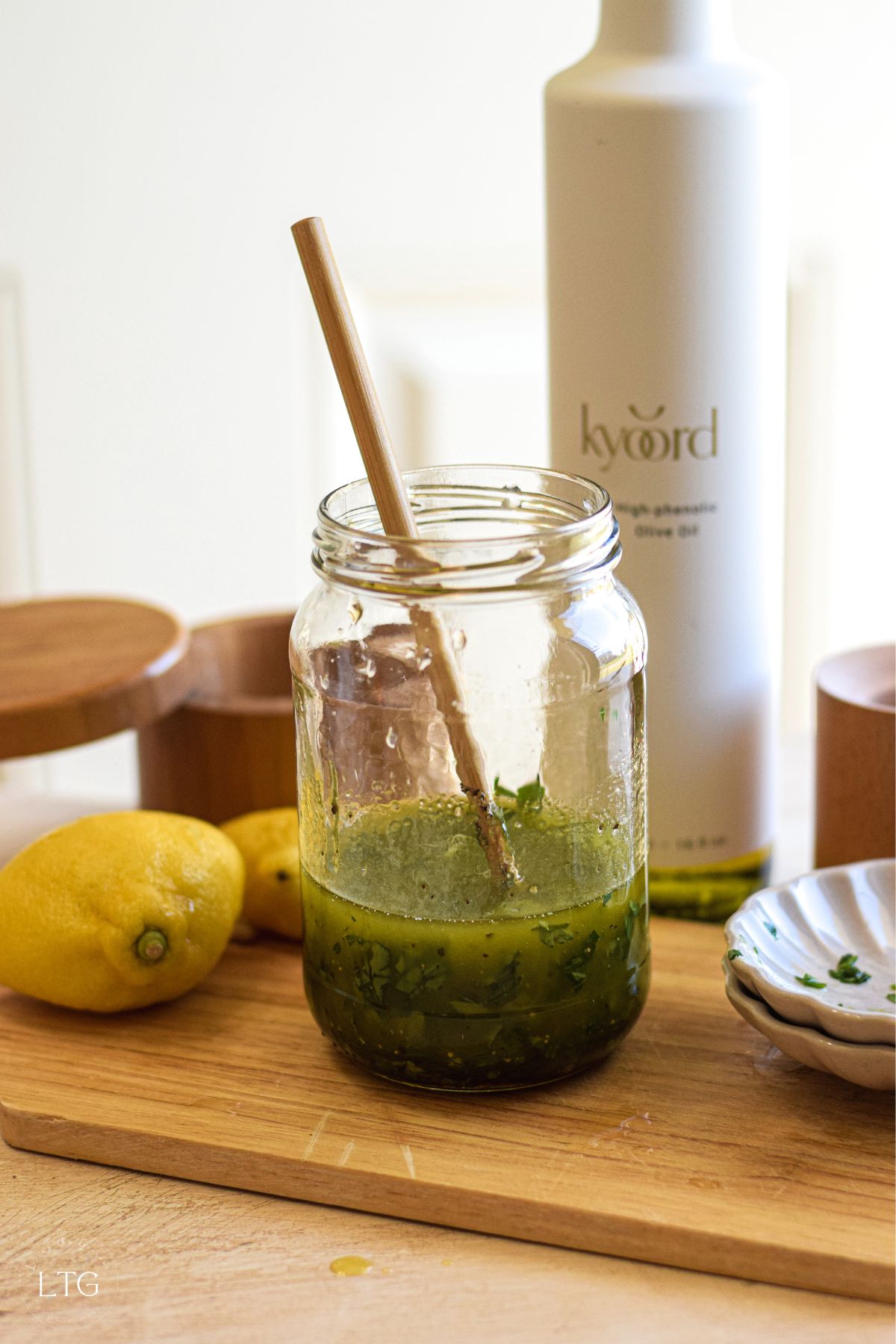
For the Lemon Herb Drizzle
- 3 tablespoons fresh lemon juice
- Use fresh: We want lush citrusy notes, and that means using fresh lemon juice, which has a more potent citrusy flavor and richer aromatics than does bottled.
- ¼ teaspoon salt
- Fine sea salt: For the drizzle, I recommend using a fine grain salt as it will more readily dissolve.
- ½ cup Kyoord Olive Oil
- Raw: I have to say that this olive oil really shines when consumed raw - as in this drizzle - because its natural flavors and texture are allowed to shine.
- Prepared with care: From how they cultivate the olive trees, down to the milling, storing, and shipping, every step of the production process is designed to preserve Kyoord Olive Oil's phenolic content. That means that this is an antioxidant-packed olive oil that tastes delicious.
- Greek Olive Oil: Kyoord Olive Oil is sourced from Greece.
- 3-4 Tablespoons Fresh Italian Parsley, chopped fine
- Flat leaf: You want flat-leaf Italian parsley for this recipe.
- Why not curly leaf?: Curly leaf parsley is almost exclusively used as a garnish, and has very little flavor and very little aroma. As a rule of thumb, only ever use curly leaf parsley if a recipe specifically calls for it.
- Chop fine: For this recipe, we want to chop the parsley up fine. About half a bunch of parsley, chopped fine, should yield the 4 tablespoons we're using.
- 2-3 Tablespoons Honey
- Which honey to use?: Your preferred honey will work just fine here. Personally, I'm using raw honey.
- Start with 2 tablespoons: I would recommend blending in the first two tablespoons into the drizzle, tasting, and then seeing if you want more. Honey adds not only sweetness, but also viscosity, so adjust the amount based on how thick you want the drizzle.
- Room temperature: I cannot stress enough how important it is to begin with room temperature honey for the sake of being able to mix the drizzle.
- 1 Scallion, Chopped
- White and green: We want both the white and green parts for the drizzle.
- Chop fine: Chop the scallions up as finely as possible, as shown in the pictures.
- ¼ teaspoon coarse-ground black pepper
- Freshly ground: For the best aromatics, I suggest using freshly ground black pepper.
- Coarse ground: For slight texture and visible pepper flakes in the drizzle, I recommend using a coarse grind.
Recommended Equipment
- Parchment paper
- Ultimate kitchen hack: I say this every chance I get. Parchment paper is my number one kitchen tip. Nothing makes cleanup easier and quicker than parchment paper, and absolutely nothing prevents sticking better than parchment paper.
- Lining the baking sheet: For the recipe, we're lining the baking sheet with parchment paper and using that to bake the salmon.
- Substitute: Aluminum foil lightly greased with olive oil. You could also simply oil the baking sheet.
- Sheet pan or baking sheet
- Standard size: For this recipe, we're using a standard-sized baking sheet of 13 x 18 inches.
- Rim is a must: The baking pan or sheet pan must have a rim to contain any juices that release during roasting. I would recommend a rim of no less than one inch.
- Instant-Read Thermometer (optional but recommended)
- For perfect doneness: An instant-read thermometer makes achieving perfect doneness
- Target temperature: We're targeting a temperature range of 125 degrees F to 140 degrees F, depending on your desired doneness, more on that below.
- Mixing Bowl and Whisk (for drizzle)
- Simple mixing bowl: Rather than mixing in the jar or bottle, I recommend whisking the drizzle thoroughly in a small bowl with a whisk.
Salmon Doneness Chart
Temperature Chart
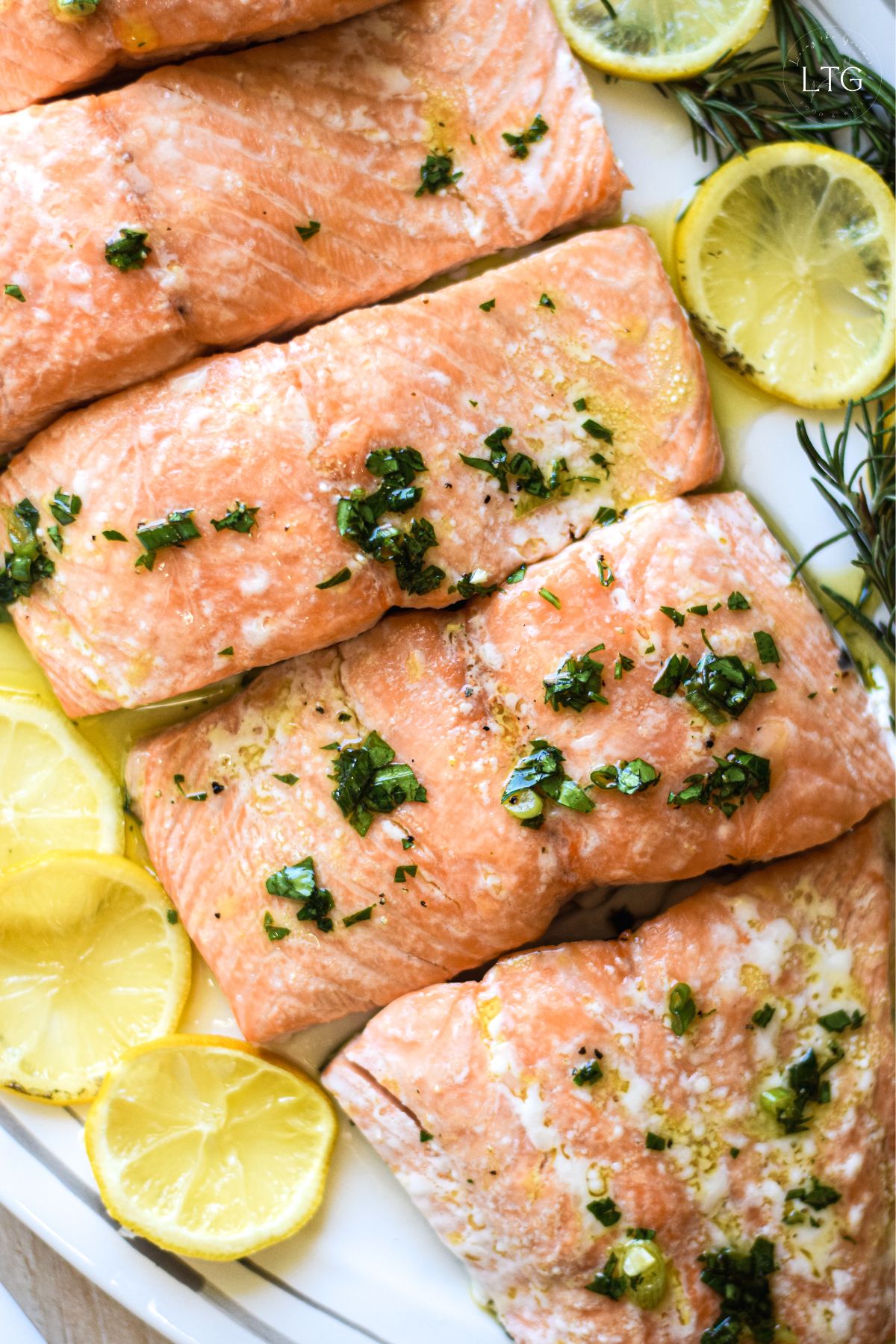
- Rare to Medium-Rare (125°F)
- Texture & appearance: Center is translucent and deep pink/orange; very soft and buttery texture; flakes gently but holds together; very moist throughout.
- Best for: Sushi-grade salmon; those who prefer salmon almost raw in the center; showcases the highest moisture and delicate texture
- Medium-Rare (Ideal) (130°F)
- Texture & appearance: Center is slightly translucent with vibrant color; silky, buttery texture; easily flakes but not dry; perfectly moist.
- Best for: Recommended for most preparations; balances moisture with cooked texture; what restaurants typically serve.
- Medium (135°F)
- Texture & appearance: Center is mostly opaque with just a hint of translucency, tender and moist but more structured than medium-rare, flakes easily.
- Best for: Those who prefer salmon cooked through but still moist; good middle ground for varied preferences.
- Medium-Well (140°F)
- Texture & appearance: Fully opaque throughout; firmer texture but still moist if cooked gently, will still flake into pieces.
- Best for: Those who prefer no translucency; still acceptable, but this is right on the border of overcooked.
Important Note on Salmon Doneness
It would be remiss of me not to mention that the FDA recommends 145 degrees F for fish, and that this is the temperature at which the salmon (and fish in general) is considered to be perfectly safe to eat, regardless of the quality of the fish. The FDA also recommends freezing fish to kill any parasites, and for this reason (and for reasons of shipping logistics) virtually all fish sold within the US has been flash-frozen prior to sale (yes, that includes the unfrozen or 'fresh' fish in the case). However, if you are unsure about the source of the salmon you are preparing, or have concerns about its overall quality, I strongly recommend cooking your salmon to 145 degrees, which the FDA recommends.
That said, assuming you do 'not' have questions or concerns about the quality of your salmon, 145°F is well within the temperature range that many chefs - and consumers - consider to be overcooked, with some well-known chefs going so far as to say that 135 degrees F is "well done."
Recipe FAQs
275°F is the temperature to slow-roast salmon at. This low temperature ensures gentle and even cooking, preventing the salmon from drying out or overcooking along the edges.
I recommend using an instant-read thermometer. Insert the thermometer into the thickest part of the salmon, and look for a temperature of about 125-127°F if you want the salmon to reach 130°F after resting, which will give you medium-rare salmon with a slightly translucent center. Look for a temperature of about 130°F on the thermometer if you want the final temperature to be more in the 133-135°F range for medium-done salmon.
Without a thermometer, check doneness by gently pressing the salmon with your finger. It should feel slightly springy, but with some resistance, not mush or very firm. You can also insert a knife into the thickest part and gently twist to peek inside. For medium-rare, the center should be slightly translucent and deep pink. For medium, the salmon should appear mostly opaque with just a hint of translucency. Start checking at 20 minutes to ensure the salmon doesn't overcook and dry out.
Slow-roasted salmon will keep in the refrigerator for 3-4 days when stored properly in an airtight container.
Absolutely. Olive oil is actually ideal for slow roasting, and performs deliciously at 275 degrees F. The common misconception about olive oil is that it can't be used for cooking due to its smoke point, but the reality is that this only applies to high-heat cooking methods such as searing or deep-frying. Extra virgin olive oil has a smoke point of about 375-400°F (depending on quality), which is well above the 275 degrees called for in this recipe.
High-Phenolic, extra virgin olive oils, like Kyoord, are the best choice for roasting and slow roasting due to their superior flavor, high antioxidant value, and better stability at cooking temperatures as compared to standard olive oils. High-phenolic olive oils contain significantly more polyphenols, which not only carry health benefits but also serve as the source of those fruity and peppery flavors that mark quality olive oils. Olive oils labeled high-phenolic, early harvest, or robust indicate oils with more polyphenols and stronger flavor, and as such will lose less of their properties when heated - allowing you to really taste the difference.
This is another very common misconception - that good olive oil is only for drizzling, dipping, or serving raw on salads. The truth, however, is that quality matters both when cooking with olive oil and when serving it raw, as well as when using it for drizzling or finishing. While it is certainly true that heating olive oil reduces some of its most delicate flavor compounds, high-phenolic olive oil retains most of its character even when cooked, meaning it brings those delicious fruity, peppery, and clean notes to the recipe, flavors that are simply absent in lower quality oils. This means that when you rub the salmon down with Kyoord olive oil, you are, in fact, enhancing the flavor of the fish. In short, slow roasting at 275 degrees F. is a gentle enough heat to preserve the flavors that mark a good quality olive oil.
Slow Roasted Salmon with Lemon and Fresh Herb Drizzle
- Total Time: 45 minutes
- Yield: 5-6 1x
Description
Seasoned with extra-virgin olive oil, fresh lemons, rosemary, and salt, this salmon is slow-roasted for a buttery, tender result. To finish it off, we top it with a bright dressing bursting with Mediterranean flavors.
Ingredients
- 3 lbs. salmon filet, with skin
- One lemon, sliced thin
- Sprigs of fresh rosemary
- Kyoord Extra Virgin Olive Oil
- 1 tsp. salt
For the Dressing:
- 3 tbs. fresh lemon juice
- 1/4 tsp. salt
- 1/2 cup Kyoord Extra Virgin Olive Oil
- 3-4 tbs. fresh Italian parsley, chopped fine
- 2-3 tbs. honey
- 1 scallion, chopped
- 1/4 tsp. coarse-ground black pepper
Equipment:
Instructions
For the Dressing:
- Combine the ingredients for the dressing and mix well. Set aside until time to serve.
For the Salmon:
- Preheat oven to 275 degrees F.
- Lay parchment paper on the sheet pan.
- Lay the lemon slices on the pan, followed by the rosemary sprigs.
- Place the salmon on top of the bed of lemon and rosemary sprigs.
- Drizzle with olive oil and rub over each piece. Season with salt.
- Place in the oven and bake for 30-35 minutes, depending on the thickness of the salmon and your desired doneness.
- Drizzle the salmon with the prepared dressing and serve!
- Prep Time: 10 minutes
- Cook Time: 35 minutes
- Category: Main Dish
- Method: Roasting
- Cuisine: Mediterranean
And that's our Slow Roasted Salmon, brought to you by Kyoord Olive Oil. If you enjoyed this recipe, or have any questions or suggestions, be sure to let us know in the comments below. We always love hearing from you. And, of course, be sure to check out Kyoord Olive Oil.
Happy Cooking!
Catalina says
Tried it today and it turned out great. Soft texture and lots of flavor. I’ll make this again for sure!
Living the Gourmet says
Dear Catalina, Thank you so much for stopping by and commenting! So, so happy to hear you enjoyed this recipe!
Grace says
This looks so good, the lemon and rosemary combo sounds perfect. The salmon looks tender and full of flavor.
Living the Gourmet says
Dear Grace, thank you so much for your kind words! Slow roasting is definitely the way to go to get that super tender and buttery result. Enjoy!
Amy says
Slow roasting is definitely the way to go. The salmon came out so tender and didn't dry out at all. It felt like a really fancy dinner but was actually pretty hands-off to make.
Living the Gourmet says
Dear Amy, I absolutely agree! Slow-roasting is my new favorite method. So glad you enjoyed this recipe. Happy Cooking!
Meg says
I love seeing this slow roasted salmon. It's how my mom used to make. The salmon turns out extra moist and flavorful. What a wonderful alternate way of baking it!! Delicious, and beautiful photos!
Living the Gourmet says
Dear Meg, I'm so happy to hear this! I wish I had known about slow-roasting long ago...it has become one of my favorite discoveries. I made this dinner again over the weekend. Thank you for your kind words and stopping by!
Ben says
This is so tasty. I've been looking for a new salmon recipe to mix things up, and this one fit perfectly.
Terri says
I made this with some simple white rice and mixed vegetables, and it was such a treat!
Beth says
I have a lemon herb risotto that's going to be perfect with this! Yay!