
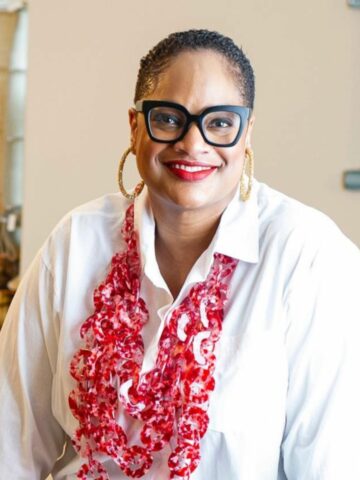
We are so delighted to introduce Francesca Giuggioli to Living the Gourmet today. For those new or unfamiliar with the world of wine, Ms. Giuggioli is the new Head Winemaker of the Chianti Classico Estate, which we just recently featured in our latest post, kicking off the Spring equinox.
Francesca has played a key role in overseeing winemaking across San Felice's three Tuscan estates and now steps into a dedicated leadership role at the Chianti Classico property, marking a natural evolution after more than 15 years with the company. Her vision continues the estate's long-term focus on terroir expression, quality, and innovation.
This interview was conducted by our chief editor, Mike Pappas (MP), with Francesca Giuggioli (FG) via email.
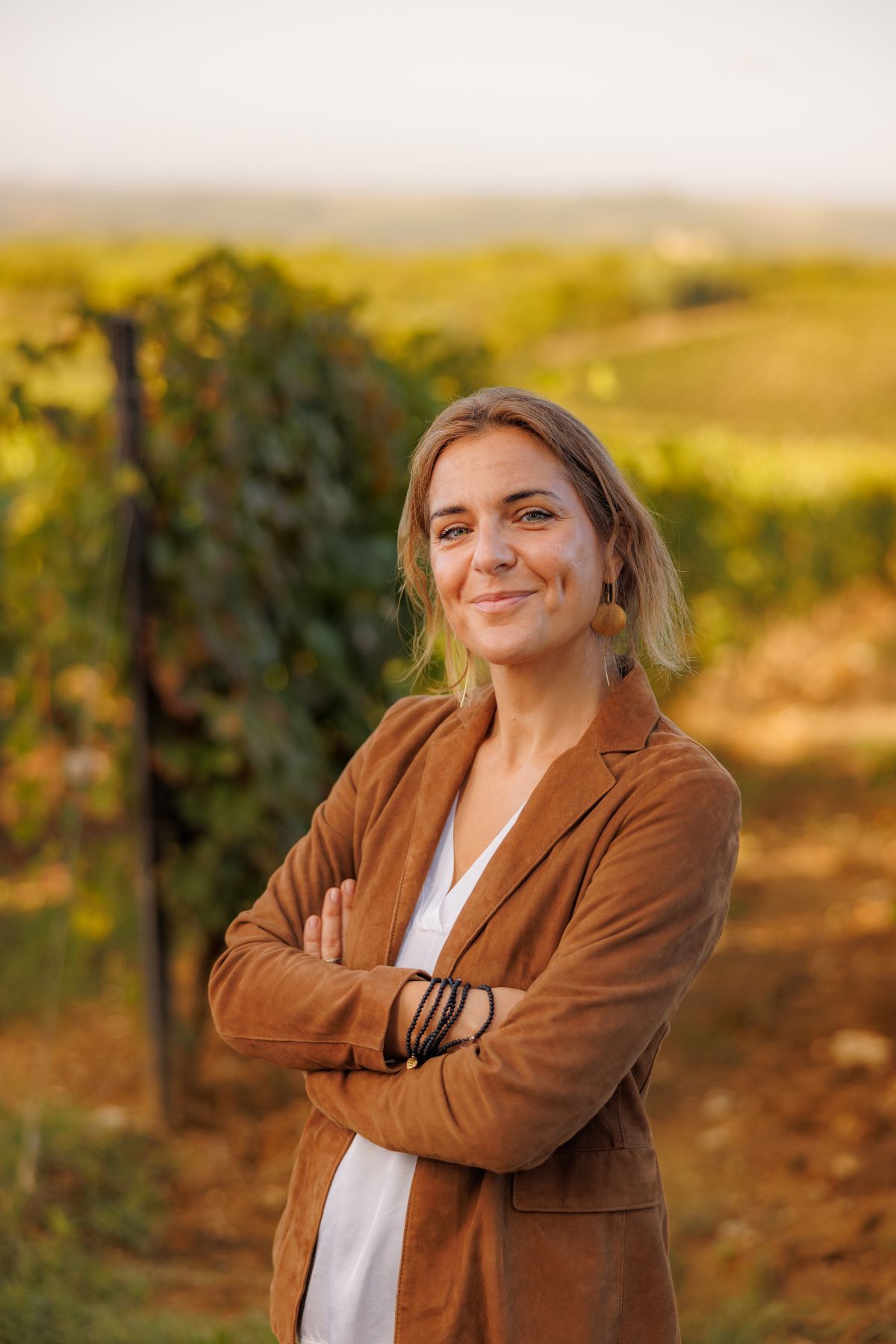
MP: After 15+ years at San Felice, what does this promotion to Head Winemaker mean to you personally?
FG: It's a moment of gratitude. Being appointed head winemaker is not a peak, it is a commitment. It means the estate trusts me to carry forward its identity and vision; it's the natural evolution of a long journey dedicated to elevating the character and quality of our wines. It brings perspective, along with a profound sense of responsibility and belonging.
MP: You've overseen production across the group's three estates (Chianti Classico, Campogiovanni in Montalcino, and Bell'Aja in Bolgheri). How will your focus shift now that you're the Head Winemaker specifically for Chianti Classico?
FG: Working across Chianti Classico, Montalcino and Bolgheri has given me a broad view of Tuscany's diversity. Each place has its own personality, nuances and contrasts. But Chianti Classico is where my sensibility feels most at home.
My focus now will be deeper rather than wider, giving greater attention to the subtle nuances that make this appellation unique.
MP: What drew you to San Felice back in 2008, and how has your vision evolved over these years?
FG: I was drawn to San Felice for its historical roots, pioneering spirit and strong commitment to research. And, quite simply, it is one of the most beautiful places in the world.
Over time, my vision has simplified and become more essential. At the beginning I was fascinated by what I could do in the cellar, today I am more interested in what I can avoid doing.
Winemaking Philosophy & Terroir
MP: You're quoted as wanting to "interpret the territory and tell its story through the glass." How will this philosophy shape your winemaking decisions? And what does it mean in practical terms for Chianti Classico's wines going forward?
FG: The territory must remain the protagonist. This means making choices that respect the voice of each vintage and the identity of every parcel. It involves precise grape selection, gentle extraction to preserve texture and measured oak management.
MP: How do you balance respect for traditional Chianti Classico methods with modern scientific research?
FG: Tradition gives us identity, science gives us precision.
I'm a strong believer in long maceration when the quality of the harvest allows it. At the same time, I monitor every fermenting tank daily, tasting and checking density twice a day. Without this data, for example, I could not choose the right moment to introduce oxygen.
Scientific research does not replace tradition; it supports it. And it helps us make more informed decisions.
MP: Having worked across three distinct Tuscan appellations (Chianti Classico, Montalcino, and Bolgheri), what, in your view, makes Chianti Classico's terroir unique?
FG: Chianti Classico is a land defined by contrasts. Its biodiversity and complex mosaic of soils, combined with varied altitudes and exposures, allow Sangiovese to express itself in multiple, nuanced ways. Compared to Bolgheri, Chianti Classico is less about opulence and more about structure and energy; compared to Montalcino, it often shows greater tension and brighter acidity. What truly makes it unique is its deep-rooted viticultural tradition. Here, terroir is not only geology and climate, but also culture, memory, and identity.
The Collaboration with Thomas Duclos
MP: What prompted the decision to bring French consultant Thomas Duclos into the fold?
FG: We wanted an external perspective, someone capable of challenging us constructively. After many years within the same estate, there is a risk of becoming too familiar with your own style. Thomas brings international experience and a precise approach. His presence creates dialogue, and dialogue produces growth.
MP: How do you see this French-Tuscan collaboration influencing the estate's stylistic direction?
FG: It is about refinement, not revolution.
The collaboration does not aim to change our identity. It encourages us to look more critically at certain details, thinking even more carefully about balance. The goal is not to impose a different style, but to elevate what is already there. It is not a stylistic shift, but a subtle evolution.
MP: What have you learned from working with Duclos so far?
FG: He has reinforced my belief that great wines are built on details.
Sustainability & Innovation
MP: San Felice is committed to regenerative viticulture. How does this approach influence your winemaking in the cellar?
FG: Healthier soils produce more balanced grapes. When the vineyard ecosystem is in equilibrium, intervention in the cellar decreases naturally. The wines require less correction, less adjustment. They ferment and age more harmoniously.
MP: The estate has undertaken extensive research into native varieties. Are there any rediscoveries you're particularly excited about?
FG: Absolutely. Research into indigenous varieties is one of San Felice's historic strengths. Some of these offer not only unique aromatic profiles but also can be interesting for facing climate change.
MP: How do you see climate change affecting Chianti Classico, and how are you adapting?
FG: Climate change is already clearly visible: earlier harvests, hotter and more intense summers, and increasingly irregular rainfall.
We see regenerative viticulture as one of the key tools to face these challenges. Healthier, more resilient vineyards mean vines that are better able to withstand the stress brought by climate change. By improving soil vitality, increasing organic matter, and promoting biodiversity, we strengthen the natural balance of the ecosystem.
Looking Forward
MP: What are your priorities for the Chianti Classico estate in your first year as Head Winemaker?
FG: My priority is understanding before acting. Listening to the vineyards, studying each parcel, and aligning with the team. From there, the focus is precision.
MP: Is there a particular wine in the San Felice portfolio you're eager to evolve or experiment with?
FG: Yes, but for the moment, it remains a secret.
MP: Where do you see Chianti Classico in the global wine landscape five years from now?
FG: After years dominated by power-driven styles, there is a growing global appreciation for wines of tension, elegance and drinkability. I see Chianti Classico perfectly aligned with this direction.
Many thanks to Francesca Giuggioli for taking the time to join me on LTG today.
Our curated wine reviews, also known as the LTG cellar, have been a side passion of mine for many years. Working with countless winemakers around the world and distributors is always such a humbling experience for me. It has opened many incredible opportunities for me, such as speaking with Ms. Giuggioli.
Thank you to the readers for taking the time to read and share each feature I have contributed here on Living the Gourmet. Your support means everything.
Cheers to you and Ms Giuggioli for visiting with us today.
Sincerely,
Mike and the team of Living the Gourmet
Leave a Comment