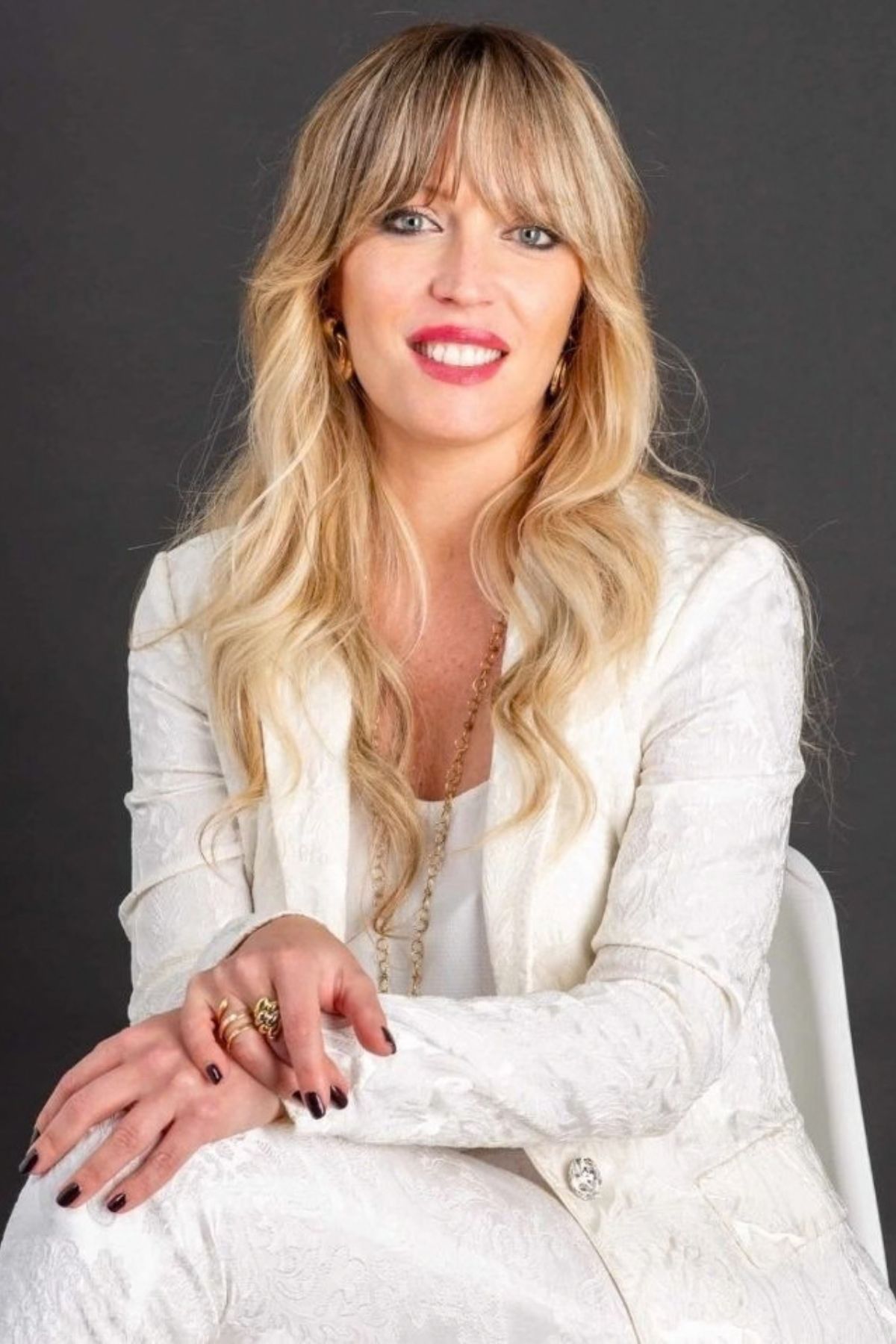
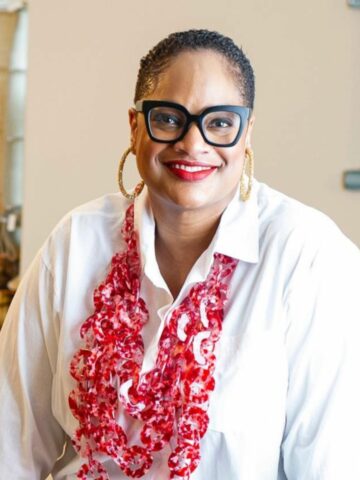
The wine world has been abuzz lately, and for good reason- the prestigious title of 'Master of Wine' has been awarded to Cristina Mercuri, marking a historical triumph within the community. Mercuri is the first Italian woman to hold the title.
We are honored to have had the opportunity to interview Cristina Mercuri about this tremendous honor and to introduce her to our audience here at Living the Gourmet.
Before beginning, here is a small introduction to Ms. Mercuri and her outstanding background that earned her such a title:
Born and raised in Tuscany, Italy, Cristina Mercuri built her career as a lawyer first in international law. In 2015, she sought a career change, pursuing her passion for wine while applying the same business model and professional discipline to her new career path. She is now the Founder and CEO of Mercuri Wine Club, a consulting firm and academy that integrates education, brand development, and strategic communications for leading Italian and international wine producers.
She is also the wine editor for Forbes Italia and a brand ambassador for Italian wine distributor, Mack & Schühle Italia.
Naturally, Cristina's rigorous career has made her an exceptional pick for MW.
This interview was conducted by our chief editor, Mike Pappas (MP), with Cristina Mercuri (CM) via email.
Historic Achievement & Personal Journey
MP: You're the first Italian woman to earn the Master of Wine title. What does this milestone mean to you personally?
CM: Becoming the first Italian woman Master of Wine carries a deeply personal meaning, but also a broader sense of responsibility. On a personal level, it represents the culmination of years of disciplined study, persistence and transformation. The MW journey reshapes the way you think, analyse and understand wine, and reaching this point feels like the natural outcome of a long commitment rather than a single moment of success.
At the same time, I am aware of the symbolic value this milestone holds. It reflects a gradual evolution within the Italian wine community and helps expand what younger professionals, especially women, can imagine for themselves. If this achievement contributes to making ambition feel more accessible and competence more visible, then it acquires a meaning that goes beyond my individual path.
For me, it marks the beginning of a new phase: using this platform to contribute to a more open, rigorous and internationally connected wine culture.
MP: In 2015, you left a successful career in law to pursue wine. Looking back, what prompted you to make such a dramatic career shift?
CM: The decision grew from a growing awareness that I wanted my professional life to align more closely with curiosity, culture and human connection. My legal career gave me discipline, analytical thinking and a strong professional foundation, but over time wine became the field where I felt those skills could evolve into something more meaningful for me.
When I entered the wine world in 2016, I approached it with the same rigour I had applied to law. The shift was significant, yet it felt coherent rather than impulsive. Wine combines science, economics, communication and culture, and that complexity was intellectually compelling.
Looking back, the transition was less about leaving one career behind and more about moving toward a space where study, interpretation and communication could coexist. That decision required courage, but it also gave me a clear sense of direction that has guided every step since.
The Master of Wine Program
MP: There are now four Italian Masters of Wine. What does this growing Italian presence mean for the country's wine industry globally?
CM: The presence of four Italian Masters of Wine reflects an important evolution in how Italy engages with the global wine conversation. Italy has always been one of the world's great producing countries, with extraordinary diversity and heritage, yet historically it has sometimes been less represented in international technical and educational leadership.
A growing number of MWs contributes to bridging that gap. The title brings a shared analytical framework and an international perspective that help translate the complexity of Italian wine into language that global markets can understand more easily. This strengthens dialogue with trade professionals, educators and media worldwide, supporting clearer positioning and greater credibility.
More broadly, it signals a shift toward a more outward-looking industry - one that combines tradition with critical thinking, research and global engagement. For Italian wine, this represents an opportunity to reinforce its cultural identity while communicating it with greater clarity and strategic awareness on the international stage.
Research Thesis: Wine, Women & Fascism
MP: Your thesis examined female representation in Enotria magazine during the Fascist era. What prompted you to choose this topic?
CM: The topic emerged from a long-standing interest in how wine is communicated and how cultural narratives shape the way we perceive the industry. While studying historical wine publications, I realised that Enotria, one of the most influential Italian wine magazines of the early twentieth century, offered a unique lens through which to observe the relationship between wine, imagery and social ideology.
My background in communication and education led me to look beyond wine as a product and focus on how representation influences identity and authority. The Fascist period provided a particularly revealing context, because media and visual language were deliberately used to construct social roles, including gender roles. Analysing female representation allowed me to explore how wine communication contributed to broader cultural narratives rather than existing in isolation.
Choosing this topic also reflected a contemporary question: understanding how historical storytelling shapes present-day perceptions helps us communicate more consciously today. The research ultimately became a way to connect wine history with current discussions around representation, responsibility and inclusion in wine media.
Advocacy & Changing Wine Culture
MP: You've been vocal about simplifying wine language and making the industry more accessible. Why is this so important to you?
CM: Accessibility in wine communication matters because language shapes participation. When wine is described through overly complex or exclusive terminology, many people feel that the conversation is not meant for them. A clearer language allows more people to engage, learn and develop confidence without reducing the depth or seriousness of the subject.
For me, simplifying language does not mean simplifying wine. It means translating knowledge responsibly, making technical concepts understandable while preserving accuracy. Wine is a cultural product connected to agriculture, economics and human experience, and communication should reflect that richness in a way that invites dialogue rather than distance.
This approach is also essential for the future of the industry. New generations approach wine with curiosity but expect transparency and clarity. When communication becomes more accessible, it strengthens trust, expands audiences and helps the sector remain relevant in a rapidly changing cultural landscape.
MP: Through the Mercuri Wine Club, you offer scholarships and training for young professionals and women. Tell us a little bit about this.
CM: Mercuri Wine Club was created with the idea that education can be a powerful driver of opportunity within the wine industry. Alongside professional training and strategic consultancy, an important part of our work focuses on access to education, particularly for young professionals and women who may not always find clear entry paths into the sector.
A meaningful example is the initiative developed in collaboration with a women's support association, through which we offered twenty scholarships granting access to WSET Level 2 training. The project was designed to provide practical skills and new professional perspectives to women going through moments of transition, using wine education as a tool for confidence, independence and reintegration into professional life.
For me, mentorship and education are closely connected. Supporting the next generation means helping people develop competence and a sense of belonging within the industry. When knowledge becomes accessible, the wine community becomes more diverse, more dynamic and ultimately stronger.
MP: You've said, "Italian wine is not just something to be told, it must be experienced with new words and a gaze that is finally free." What does that mean in practice?
CM: In practice, it means moving from repetition to interpretation. Italian wine carries an extraordinary heritage, yet it has often been communicated through inherited formulas - the same vocabulary, the same narratives, the same assumptions about what audiences already understand. A "free gaze" means observing wine without relying automatically on those conventions, asking instead how it is perceived today and by whom.
New words do not imply abandoning tradition; they allow us to translate it. When we speak about wine through clearer, more contemporary language, we help people connect sensory experience, place and meaning in a personal way. Experience becomes central: tasting, context, emotion and understanding come together rather than remaining confined to technical description.
In practical terms, this approach influences how we teach, how we design communication strategies and how producers position themselves internationally. It encourages listening to the audience, adapting narratives to different cultural contexts and creating dialogue instead of monologue. Italian wine becomes stronger when it is lived and understood, not only admired from a distance.
Mercuri Wine Club & Consulting Work
MP: What's your philosophy when consulting with wineries on positioning and communication?
CM: My philosophy begins with listening before advising. Every winery has an identity shaped by territory, people and production choices, and effective positioning starts by understanding that reality in depth rather than imposing an external narrative.
From there, the work focuses on clarity. Many wineries possess strong values and high-quality wines, yet struggle to translate them into a coherent message. My role is to help connect product, style and market positioning, ensuring that what the winery produces, how it communicates and where it wants to be perceived all move in the same direction.
Communication becomes effective when it reflects authenticity while remaining understandable to different audiences. This often means simplifying language, defining a clear stylistic identity and adapting storytelling to specific markets without losing cultural integrity.
Ultimately, positioning is a long-term process. Consistency over time builds trust, and trust is what transforms communication into brand equity. My goal is to help wineries develop a narrative that is sustainable, credible and capable of growing alongside their evolution.
MP: You're among the most followed Italian wine voices online. How do you approach digital communication differently from traditional wine writing?
CM: Digital communication requires a different rhythm and a different kind of responsibility compared to traditional wine writing. Online audiences engage in real time and expect clarity, authenticity and interaction rather than distance. My approach is to maintain the same level of technical accuracy while adapting the form: shorter narratives, clearer language and a stronger focus on dialogue.
Digital platforms allow wine communication to become participatory. Instead of speaking to an audience, you speak with it, listening to questions, doubts and curiosities. This continuous exchange helps shape content that remains relevant while preserving credibility.
At the same time, consistency is essential. Authority online is built over time through coherence of voice, transparency and intellectual honesty. Visibility can grow quickly, but trust develops slowly. My objective is to use digital media to make wine more understandable and engaging while maintaining the depth and rigour that define professional communication.
Italian Wine on the Global Stage
MP: What do Italian producers do exceptionally well, and where do they still struggle compared to other wine countries?
CM: Italian producers excel in expressing diversity and authenticity. Few countries can offer such a wide range of native grape varieties, landscapes and cultural identities, and this translates into wines with a strong sense of place. There is also a remarkable artisanal sensitivity: many producers work with an intuitive understanding of vineyard and tradition that gives Italian wines character and individuality.
Where challenges remain is often in communication and strategic positioning. Compared to some other wine countries, Italy can struggle to present a unified and easily readable message internationally. The richness of denominations and local identities, which is a great strength, can also create complexity for global audiences who seek clarity when navigating styles, quality levels and price positioning.
Another area of growth lies in long-term brand thinking. Some producers still focus primarily on production excellence, while markets increasingly require consistency in storytelling, market strategy and consumer engagement over time.
The opportunity for Italy is extraordinary: combining its cultural depth with clearer communication and stronger strategic vision allows Italian wine to reinforce its leadership globally while remaining true to its identity.
MP: If you could change one thing about how Italian wine is communicated or sold internationally, what would it be?
CM: If I could influence one aspect, I would encourage a stronger focus on shared narrative rather than individual voices speaking separately. Italian wine possesses extraordinary richness and diversity, and this is one of its greatest strengths. At the same time, international audiences often benefit from clearer points of reference that help them navigate that complexity with confidence.
More alignment in how we present identity, style and values would allow Italian wine to be perceived not only as a collection of exceptional regions, but as a coherent cultural system. This does not mean uniformity; it means creating a common language that helps the world understand the depth and diversity we already have.
In many ways, the opportunity lies in balancing heritage with accessibility - maintaining authenticity while making the story easier to enter for new markets and new generations. When communication evolves in that direction, the quality of Italian wine speaks even more powerfully on the global stage.
Looking Forward
MP: What are your priorities now that you've achieved the Master of Wine title?
CM: Achieving the Master of Wine title feels like the beginning of a new phase rather than a conclusion. My priority now is to use this platform responsibly, contributing to a more informed and internationally connected conversation around wine.
I want to continue strengthening education, helping professionals and consumers develop clearer understanding and confidence when approaching wine. At the same time, I plan to expand my work in strategic consulting, supporting producers in positioning their wines with greater clarity and coherence across global markets.
Another important focus is communication: promoting a language that is rigorous yet accessible, capable of engaging new generations while preserving cultural depth. Ultimately, my goal is to help build bridges - between Italy and international markets, between tradition and contemporary audiences, and between expertise and accessibility - so that wine remains relevant in a rapidly evolving world.
MP: Are there specific Italian wine regions or styles you're particularly passionate about championing?
CM: Italy's strength lies precisely in its diversity, so rather than focusing on a single region, I am particularly passionate about wines that express a strong sense of place with clarity and authenticity. Across the country, there is a growing movement toward precision, freshness and transparency of style, where terroir becomes more readable and less masked by technique.
I am especially interested in regions and producers that are redefining identity through contemporary interpretation - whether in volcanic areas, mountain vineyards or historically important appellations undergoing stylistic evolution. These wines often combine heritage with a more modern understanding of balance, drinkability and sustainability, which resonates strongly with today's global audiences.
More broadly, my focus is on championing Italy as a dynamic system rather than a static tradition: a country capable of evolving while preserving its cultural depth, and able to speak to international markets through authenticity and stylistic clarity.
I would like to personally thank Cristina Mercuri for this distinct pleasure of conducting this interview. It is a true honor to have the Master of Wine featured on Living the Gourmet.
Our curated wine reviews, also known as the LTG cellar, have been a side passion of mine for many years. Working with countless winemakers around the world and distributors is always such a humbling experience for me. Now, having the opportunity to speak with Cristina Mercuri has been the highlight of 2026, thus far.
Thank you to the readers for taking the time to read and share each feature I have contributed here on Living the Gourmet. Your support means everything.
Cheers to you and Ms. Mercuri for visiting with us today.
Sincerely,
Mike and the team of Living the Gourmet
Sarah Morgan says
What an exciting opportunity! Thank you so much for sharing...Cristina is such an inspiring woman. Perfect for IWD!
Living the Gourmet says
Dear Sarah, I could not agree more! Thank you so much for stopping by and sharing your thoughts. Happy International Women's Day!