
One of the most affordable cuts of beef at the butcher counter is eye of round. It's also one of the easiest to get wrong. If cooked like a fattier roast, it will turn out grey, dry, and chewy. Cooked right, it comes out tender, rosy, and perfect for slicing thin. Getting it right comes down to understanding the cut and treating it accordingly.
Jump to:
- Quick Answer
- Why Eye of Round Gets Tough
- Method 1: Low and Slow Roasting (Recommended)
- Method 2: Reverse Sear
- Method 3: The High-Heat, Oven-Off Method
- Internal Temperature Guide
- Why a Meat Thermometer Matters
- How to Slice Eye of Round
- Should You Marinate Eye of Round?
- Can You Make Pot Roast with Eye of Round?
- Common Mistakes
- Serving Ideas
- Storing Leftovers
- Bottom Line
Quick Answer
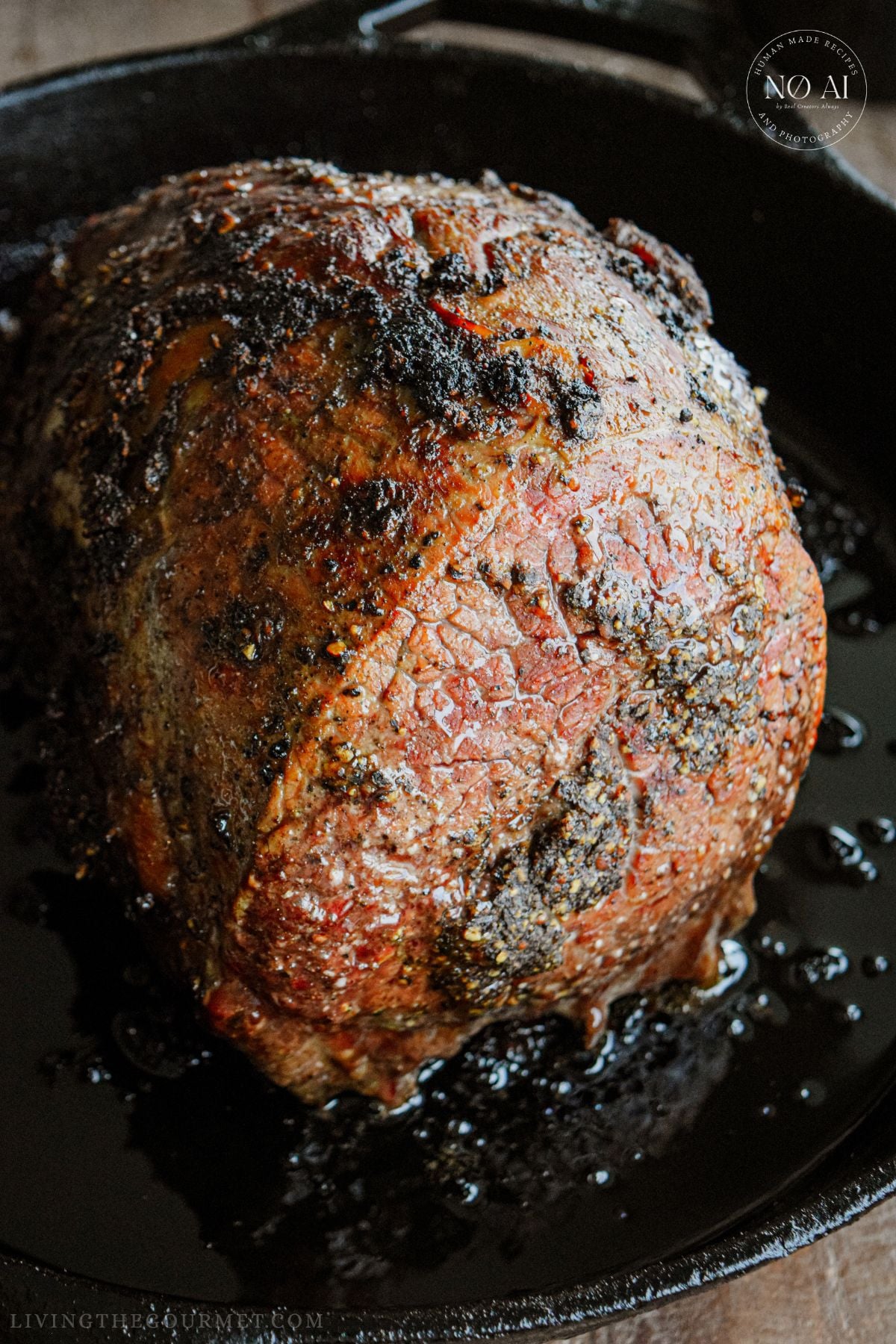
To cook a tender eye of round roast, start by seasoning it with salt a day ahead, then sear it on all sides, and roast it low and slow at 225-250°F until the center reaches 125-130°F for medium-rare. Then let the roast rest for 15 to 20 minutes on the counter. After that, slice it as thinly as possible, slicing against the grain. To summarize, we roast at low heat, aim for a moderate internal temperature, and then we slice it thin against the grain. That's how we make this lean cut of beef tender.
Why Eye of Round Gets Tough
True to its name, eye of round comes from the round of the cow, which is the hind leg. This is a hard-working muscle, and as such is naturally very lean, meaning there is very little fat marbling and very little connective tissue. This precise combination creates several problems.
- Too Little Fat: Not only does fat serve as flavor, but it also works to keep meat moist and tender as it cooks. Fat reduces into liquid as it heats up, and that liquid permeates into the meat, keeping the meat moist and, in turn, tender. Without enough fat, meat dries out rapidly once it passes the medium threshold.
- Not Enough Collagen For Braising: Connective tissue breaks down into a gelatin-like substance (collagen) during long braises as it heats up. Since eye of round lacks connective tissue, it can become stringy rather than tender if braised for hours.
- Tight Muscle Fibers: Eye of round has a long and dense grain, and that makes thick slices chewy, even if the meat is properly cooked.
The solution to these issues is to cook the roast gently to a lower internal temperature, rather than trying to cook it until it becomes tender or falls apart as it would with fattier roasts.
Method 1: Low and Slow Roasting (Recommended)
Low and slow roasting is the most reliable way to turn even the most stubborn cuts of meat moist and tender, and the eye of round is no exception.
- Dry Brine: Season the roast generously with kosher salt, or about one teaspoon per pound. Make sure you rub down every bit of the roast's outer surface. Then refrigerate it uncovered on a rack for 12 to 24 hours.
- Bring it to room temperature: Take the roast out of the fridge about an hour before cooking to let it rest and warm.
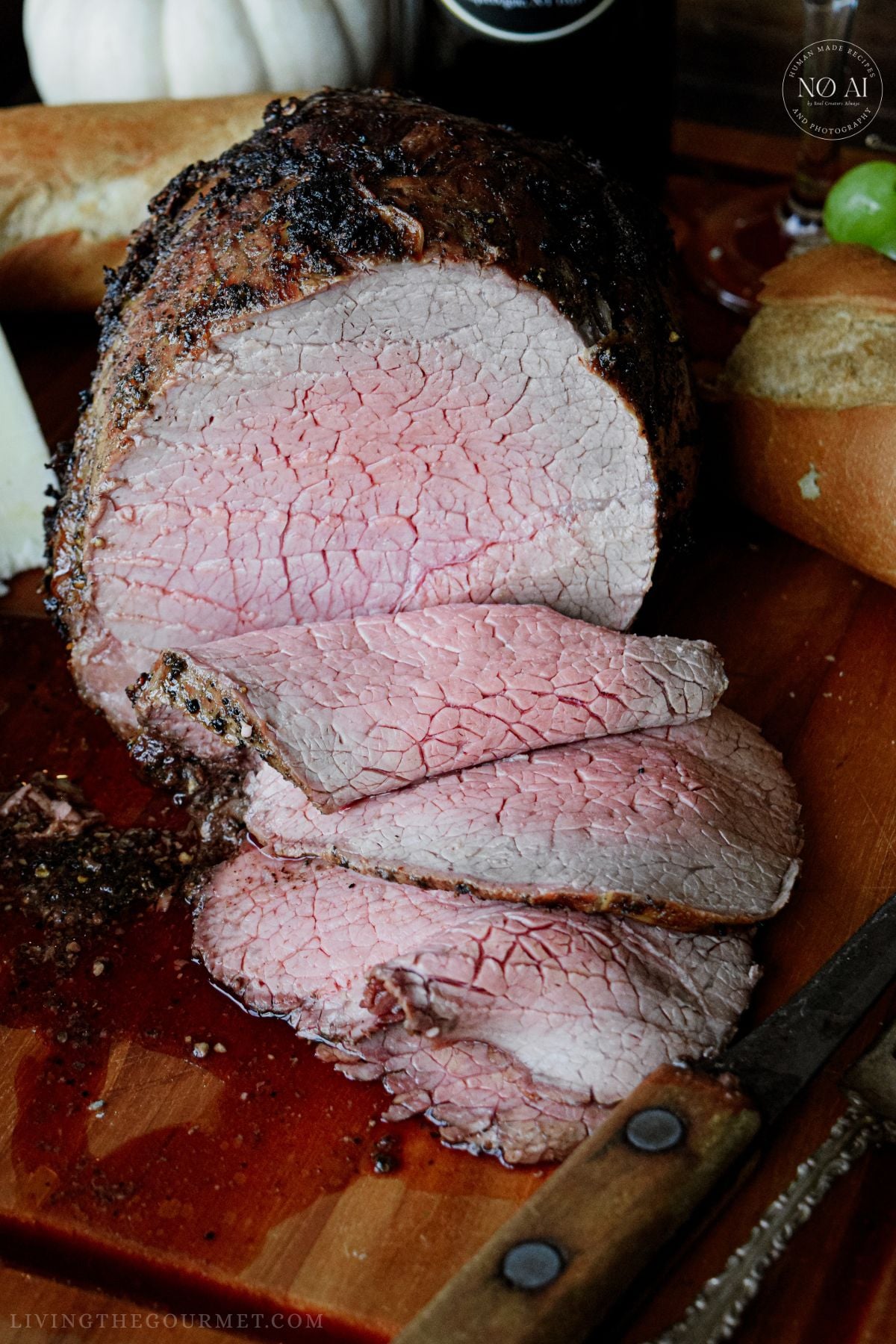
- Seat It: Pat the roast dry, rub it down with oil, and season with pepper and garlic. Then sear it in a hot cast iron skillet for 2 to 3 minutes per side. We want it deeply browned all over its outer surface.
- Roast Low: Place the roast on a rack in a roasting pan or heavy cast iron skillet and cook in a 225-250 degrees f oven until the center of the roast reaches 125-130°F. A 3-pound roast usually takes about 1 and a half to 2 hours.
- Rest: Tent the roast loosely with aluminum foil and rest it for 15 to 20 minutes. The temperature of the roast will rise another 5 degrees or so during this rest period.
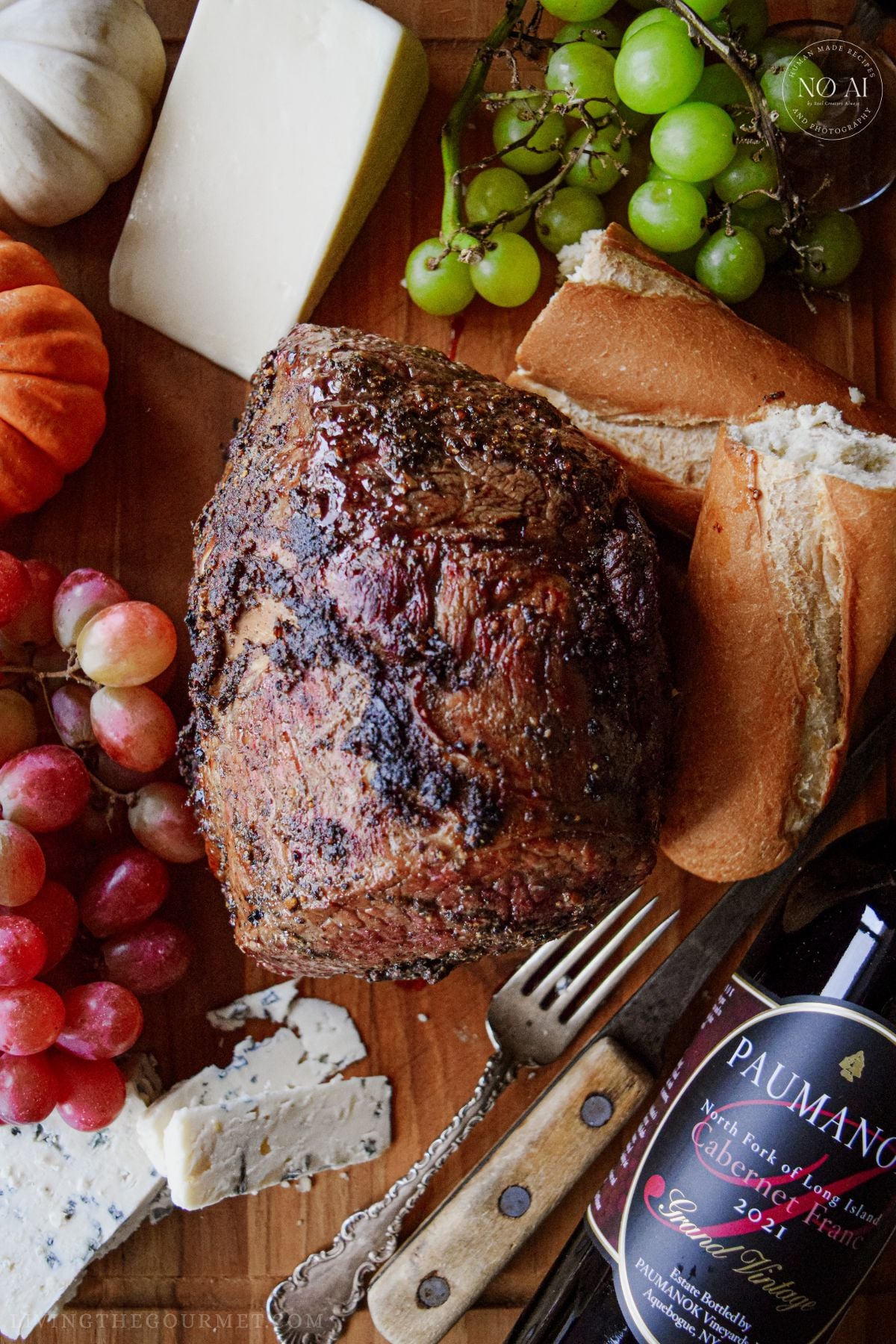
- Slice Thin: Slice the roast against the grain as thinly as you can manage.
- Serve: Plate the slices, and serve.
Low heat cooks the roast evenly through to the center, and that means you get rosy red meat throughout, instead of a grey outer ring centered around a pink middle.
Method 2: Reverse Sear
The reverse sear, just as the name implies, flips the order of the low-and-slow roast and produces an excellently crisp crust. Here's how to pull it off:
- Dry Brine as in Method 1: Season the roast with salt, and then let it sit uncovered in the fridge for 24 hours.
- Roast: Roast at 225°F until the center reaches about 120°F.
- Rest: Remove from the oven and rest for at least 10 minutes.
- Sear: Sear in a very hot skillet, or in a 500°F oven, for a few minutes per side until it is well browned.
- Slice: Slice thinly against the grain.
Method 3: The High-Heat, Oven-Off Method
A popular home method that starts the roast at high heat and then finishes it with the oven turned off.
- Preheat the oven to 500°F
- Roast the seasoned eye of round for 7 minutes per pound.
- Turn the oven off and leave the roast inside, door closed, for two to two and a half hours.
This method can work beautifully, but results vary quite a bit depending on your oven's insulation and the size of the roast. If attempting this method, always confirm the internal temperature of the roast with a thermometer before serving rather than relying on time alone.
Internal Temperature Guide
| Doneness | Pull from Oven (°F) | After Resting (°F) |
| Rare | 120 | 125 |
| Medium-rare | 125–130 | 130–135 |
| Medium | 135–140 | 140–145 |
For tenderness, eye of round is best served at medium-rare to medium. Cooked past medium, and the lack of fat makes the roast noticeably drier and tougher than it otherwise should be.
Food Safety Note: The USDA recommends cooking whole cuts of beef to at least 145°F with a 3-minute rest. While many cooks prefer whole roasts cooked to medium-rare, USDA guidance advises against this if serving young children, pregnant guests, or anyone with a weakened immune system.
Why a Meat Thermometer Matters
A few degrees can make the difference between tender and tough for a lean cut of meat such as an eye of round. Think of it this way - all cook time charts are guides for achieving a set internal temperature for the meat being cooked. In that regard, time charts really are estimates, as every roast varies in shape, thickness, and starting temperature, all of which can affect how long it takes to achieve a certain internal temperature. As such, an instant-read thermometer is the single most useful tool in making certain that your meat is cooked to perfection. Insert it in the thickest part of the roast, and you've taken the guesswork out of the cooking process.
How to Slice Eye of Round
For an eye of round roast, how you slice it is just as important as how you cooked it. Here's how to slice it right.
- Find the Grain: Look for the long lines of muscle fibers that run along the roast.
- Cut Against It: Slice perpendicular to the lines of muscle fiber. This shortens the fibers so that each bite is more tender.
- Slice Thin: Aim for no more than one-eighth of an inch in thickness. Thin slices are much more tender than thicker ones with this particular cut of beef.
- Use a Sharp Knife: I know this might sound like I'm stating the obvious, but not only is slicing with a sharp knife easier, but it is also safer. Thus, use a long, sharp knife for slicing to make clean, thin cuts. For deli-style roast beef, chill the cooked roast and use an electric knife or meat slicer.
Should You Marinate Eye of Round?
Marinating adds flavor, but a marinade does not penetrate deeply enough into lean, tough meats to make the whole roast significantly more tender or flavorful. A dry brine with salt, on the other hand, does more for both seasoning and moisture. If you want to add flavor, then rub the roast down with garlic, herbs, and pepper, or serve it with a sauce.
Can You Make Pot Roast with Eye of Round?
While you can make a pot roast with eye of round, it is definitely not the best choice for doing so. As mentioned above, eye of round has very little fat and very little collagen, and as such, slow braising tends to leave it dry and stringy rather than fork-tender.
Common Mistakes
- Cooking at High Heat the Whole Time: High heat will overcook the outside before the center is done.
- Overcooking: Cooking past medium is the most common reason that eye of round turns out tough.
- Skipping the Rest: Slicing immediately after roasting lets the juices run out onto the cutting board. The rest is vital to a tender, juicy roast.
- Slicing too Thick: Even a perfectly cooked eye of round will be chewy in thick slices. Slice thin.
- Cutting with the Grain: Cutting with the grain, rather than against the grain, leaves long muscle fibers intact, making each bite tough and chewy.
Serving Ideas
Eye of round shines when sliced thin and served with:
- Au jus or pan gravy
- Horseradish cream sauce
- Roasted potatoes and vegetables
- Yorkshire puddings or popovers
Leftover eye of round makes excellent roast beef sandwiches, French dip, or salads.
Storing Leftovers
Leftover eye of round roast should be refrigerated within 2 hours in an airtight container. I recommend using leftovers within 3 to 4 days. They are best served cold in sandwiches or gently rewarmed in a splash of au jus sauce or broth, as this keeps the slices from drying out.
Bottom Line
The key to a tender eye of round roast is gentle cooking and smart slicing. Salt it ahead of time, then sear it, roast it low until the center reaches 125-130°F, then rest it, and slice it thinly against the grain. If you treat eye of round as a lean roast, as opposed to a cut for braising, then this budget-friendly roast can be every bit as satisfying as more expensive options.
For more on roasting, see our Guide to a Perfect Roast and our guide to a Garlic and Herb Stuffed Rib End Pork Roast.
Leave a Comment