
There is almost always some gravy left over from Thanksgiving, and it is usually one of the first leftovers to be thrown away, since it doesn't last very long in the fridge. The good news is that most gravy freezes just fine. With the right storage and a good whisk, frozen gravy can be reheated beautifully and will taste just as good as the day it was made.
Quick Answer
Yes, you absolutely can freeze gravy. To do so, cool it quickly and then pour it into an airtight container or freezer bag with about a half an inch of headspace. Stored like that, gravy can be frozen for up to three months. I recommend thawing it in the refrigerator and then reheating it on the stovetop, whisking constantly, until it comes to a full boil. Flour-thickened gravy freezes best. Cornstarch-thickened gravy and cream-based gravies may separate, but a good whisk will bring them right back together.
Jump to:
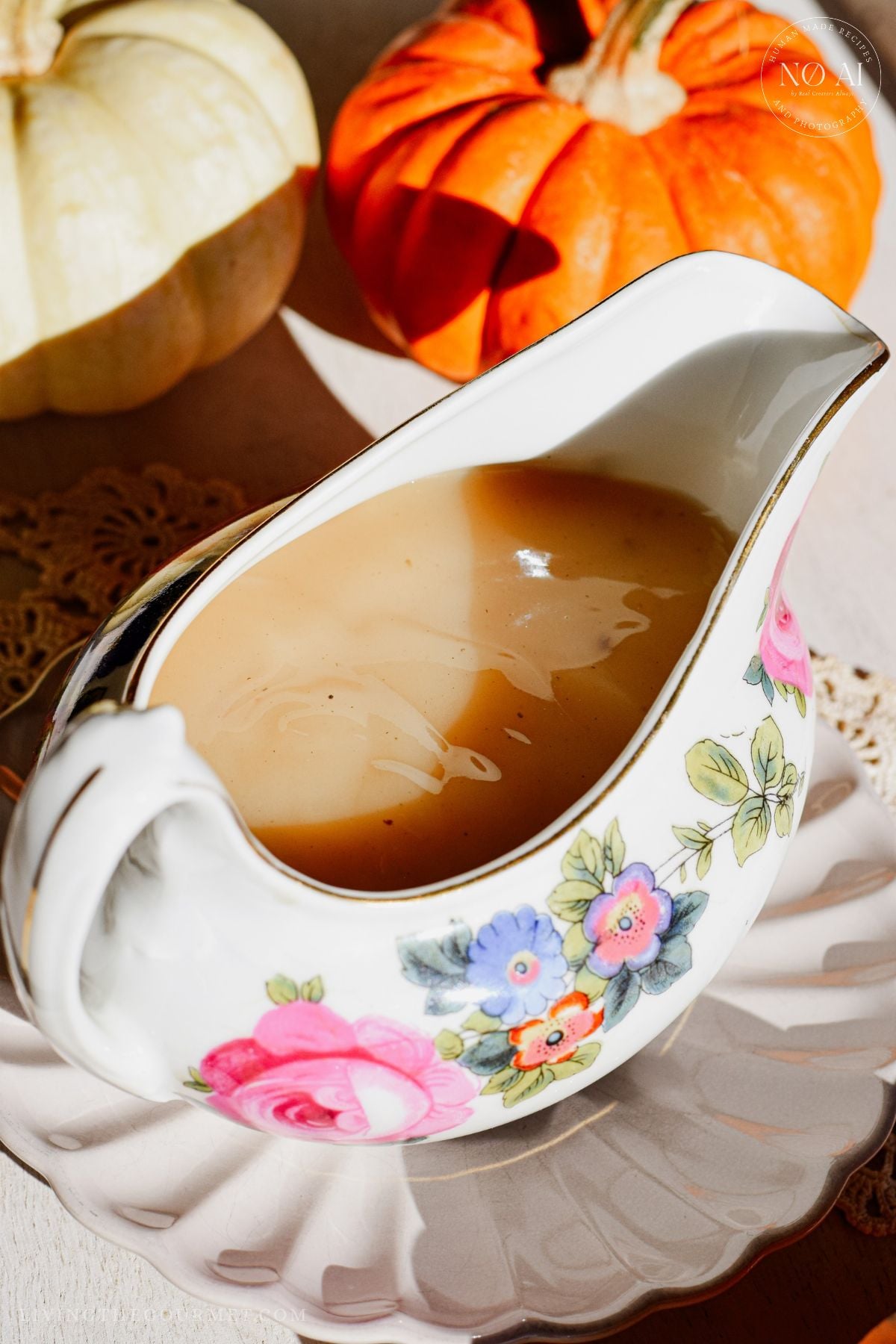
Why Gravy Doesn't Last Long in the Refrigerator
Being made primarily of meat drippings and broth, or some combination of fats with a thickening agent, means that gravy is rich, moist, and low in acid. That is exactly the kind of combination that foodborne bacteria thrive in. As such, it is recommended that you keep gravy in the fridge for no longer than 1-2 days, which is significantly shorter than most other leftovers. As such, unless you intend to use up your leftover gravy in less than two days, freezing is the safest way to keep it.
Which Gravies Freeze Best?
- Flour-Thickened Gravy: Flour-thickened gravy freezes very well, and this is the classic turkey gravy made with a fat and flour roux. That said, it may thicken in the freezer, but it will smooth out quite well as it is reheated.
- Cornstarch-thickened Gravy: This type of gravy can be frozen, but it can turn spongy or watery during thawing, as cornstarch breaks down when frozen. That said, whisking or adding in a fresh cornstarch slurry will usually revive it just fine.
- Cream or Milk-Based Gravy: Sausage gravy and other dairy-heavy gravies can separate or turn grainy when thawed, but remain safe to eat. Vigorous whisking usually helps revive them during reheating.
- Gravy Made from Drippings Only (au jus): These types of gravies freeze perfectly, as there is no thickener to break down. This makes au jus one of the easiest things to freeze.
- Mushroom Gravy: Typically freezes quite well, although the texture of the mushrooms may suffer a bit due to freezing.
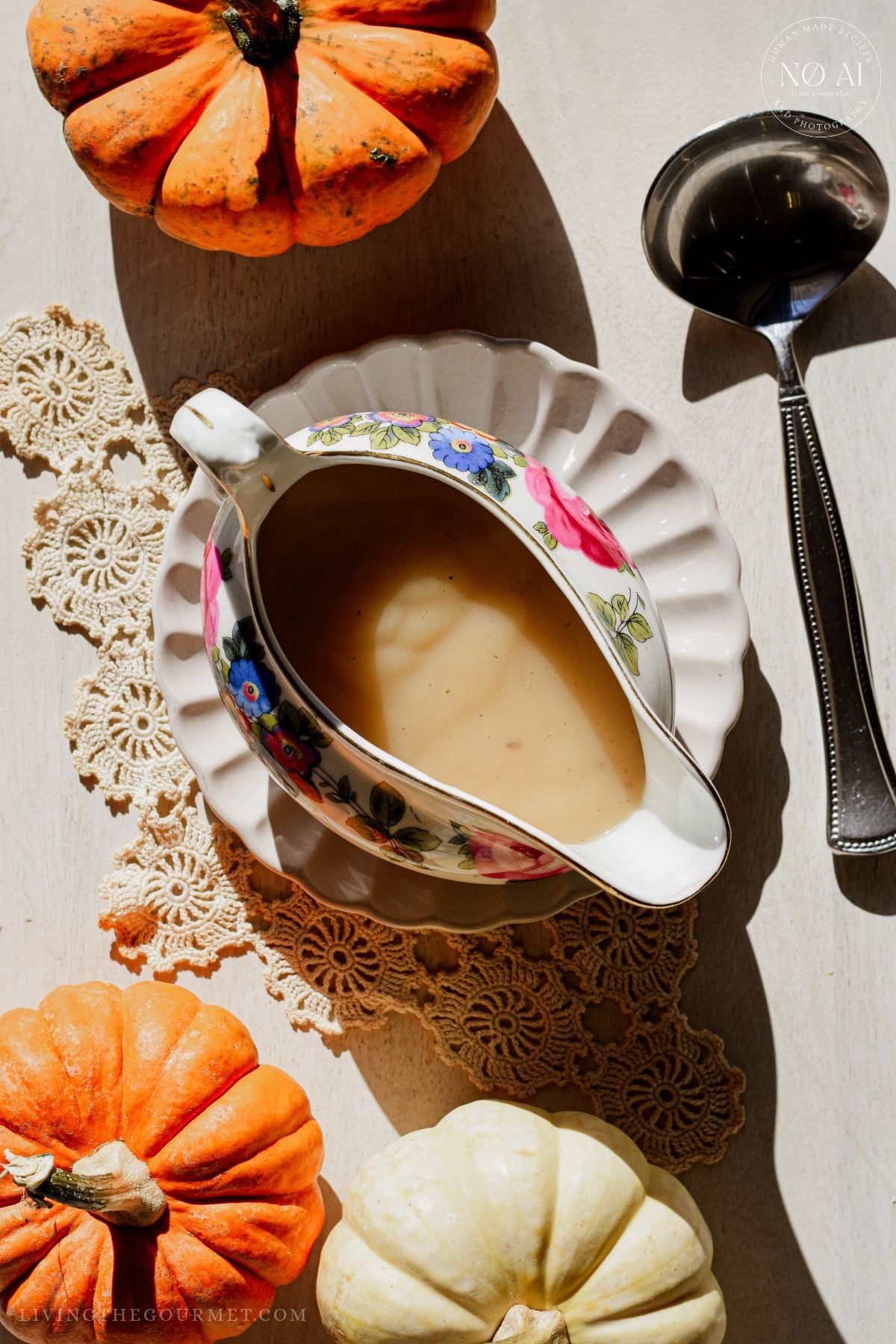
How to Freeze Gravy
- Cool it quickly: Refrigerate gravy within 2 hours of serving. I recommend pouring it into a shallow container to help it cool down quicker.
- Skim the fat (optional): Once chilled, the fat will rise and harden on top. This can be skimmed to lighten the gravy, or left and reincorporated into the gravy during heating.
- Portion it: I recommend freezing gravy in the amounts that you are likely to use, whether that's a full dinner's worth or single servings.
- Pack it airtight: Use freezer-safe containers or heavy-duty freezer bags. You should leave about half an inch of headspace between the lid and the gravy, since the gravy will expand as it freezes.
- Label and Date: Gravy, stock, and broth look alike once frozen, so I recommend labeling everything.
How Long Does Gravy Last?
| Storage | How Long |
| Refrigerator | 1–2 days |
| Freezer | 2–3 months for best quality |
Frozen gravy stays safe longer than three months if kept at 0°F, but its flavor and texture decline over time.
How to Thaw Frozen Gravy
- In the Refrigerator (Best Option): Simply place the gravy in the fridge, and let it thaw overnight. This method will yield the best results.
- From Frozen: You can reheat gravy straight from the freezer. Place the block of frozen gravy in a saucepan over low heat, and stir often as it melts. Once thawed, raise the heat and bring it to a boil.
- In Cold Water (Faster): Submerge a sealed freezer bag of gravy in cold water for about 1 to 2 hours, changing the water every 30 minutes.
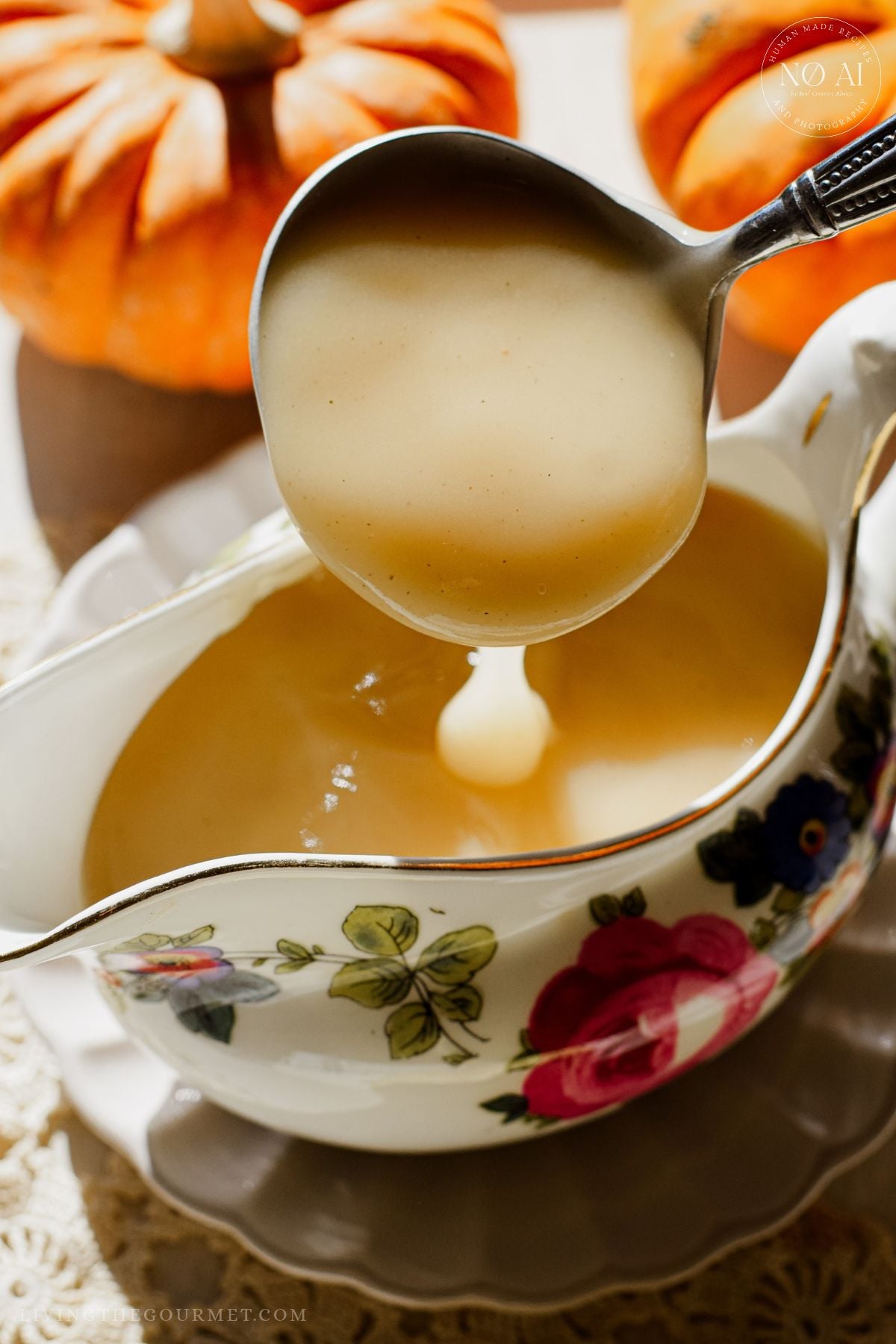
How to Reheat Gravy
On the Stovetop (Best Option)
- Pour the gravy into a saucepan over medium heat.
- Whisk constantly as it warms. This is what brings separated or lumpy gravy back together.
- Bring the gravy to a full, rolling boil before serving. Food safety guidance recommends reheating gravy to a boil rather than just warming it.
- Adjust the consistency. This could mean thinning with a splash of broth, or simmering it a few minutes longer if it is too thin.
In the Microwave
In a covered, microwave-safe bowl, heat the gravy in 30-to-60-second intervals, whisking between each, until it is bubbling and hot throughout.
How to Fix Gravy After Freezing
- If it is Separated: Vigorous whisking during reheating will usually do the trick. If the gravy refuses to come back together, an immersion blender will smooth it out in a few seconds.
- If it is too Thin: Mix 1 tablespoon of cornstarch with 2 tablespoons of cold water, then whisk that mixture into the simmering gravy, and cook for a minute or two until it is thickened.
- If it is too Thick: Whisk in a bit of warm broth a little at a time, until you reach the consistency you like.
- If it is Lumpy: Pour it through a fine mesh strainer, or give it a go in the blender.
- If the flavor has gone flat: A pinch of salt and pepper, a splash of broth, or a little fresh thyme or sage.
Signs Gravy Has Gone Bad
Throw out your leftover gravy if you notice any of the following:
- A sour smell or an off odor
- Mold anywhere on the surface
- A slimy texture
- Heavy freezer burn, which appears as dry, discolored patches
When in doubt, throw it out. Gravy is easy and cheap to make, and simply is not worth the risk.
Bottom Line
Most types of gravy freeze quite well. Cool the gravy quickly, store it in an airtight container with a little headspace, and use it within 2 to 3 months. Thaw it in the refrigerator overnight, and then whisk it on the stovetop and bring it to a full boil before serving. Flour-based gravies freeze best, while cornstarch and cream-based gravies may need extra whisking to come back together.
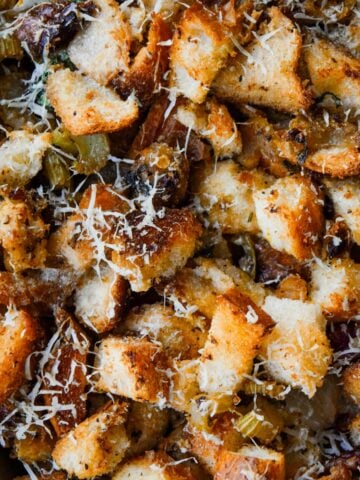
For more tips on saving holiday leftovers, see our Can you Freeze Leftover Stuffing guide.



Leave a Comment