
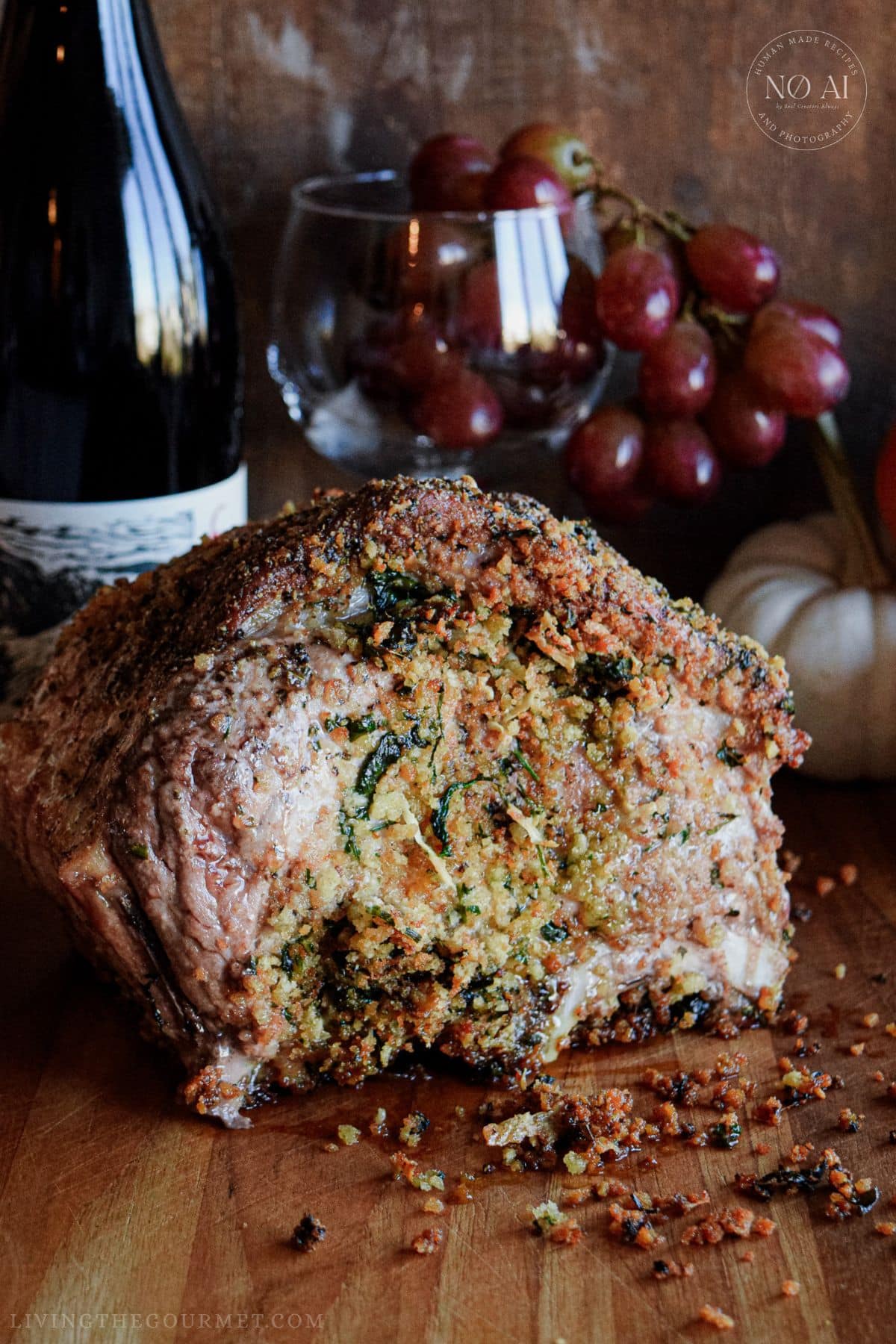
The aroma of garlic blistering in a hot pan, of panko toasting to a beautiful golden brown, mixed with the meaty pungency of roasting pork crusted in herbs is one of my favorite hallmarks of the holiday season. And that combo of aromas is precisely what our Garlic and Herb Stuffed Pork Roast delivers.
Best of all, this recipe comes together with very straightforward techniques and a selection of simple, everyday pantry staples. Here at Living the Gourmet, we absolutely love the rustic, cozy spirit of Italian-inspired home cooking, and that means the kinds of dishes that fill the kitchen with the aromas that bring everyone to the table. This recipe captures exactly that, while keeping things as accessible as possible, courtesy of one very hardworking piece of kitchen equipment: a heavy cast iron skillet. We use the cast iron skillet to char the garlic and toast the stuffing, and a larger one to cook the pork roast. This ensures the entire recipe remains simple, with minimal cleanup.
Read on, and we'll walk you through everything you will need to prepare this recipe at home, from picking the right cut, opening and stuffing the roast with confidence, how to tie the roast securely (should you need to), and how to roast it to the perfect temperature.
Jump to:
Why You'll Love This Stuffed Pork Roast
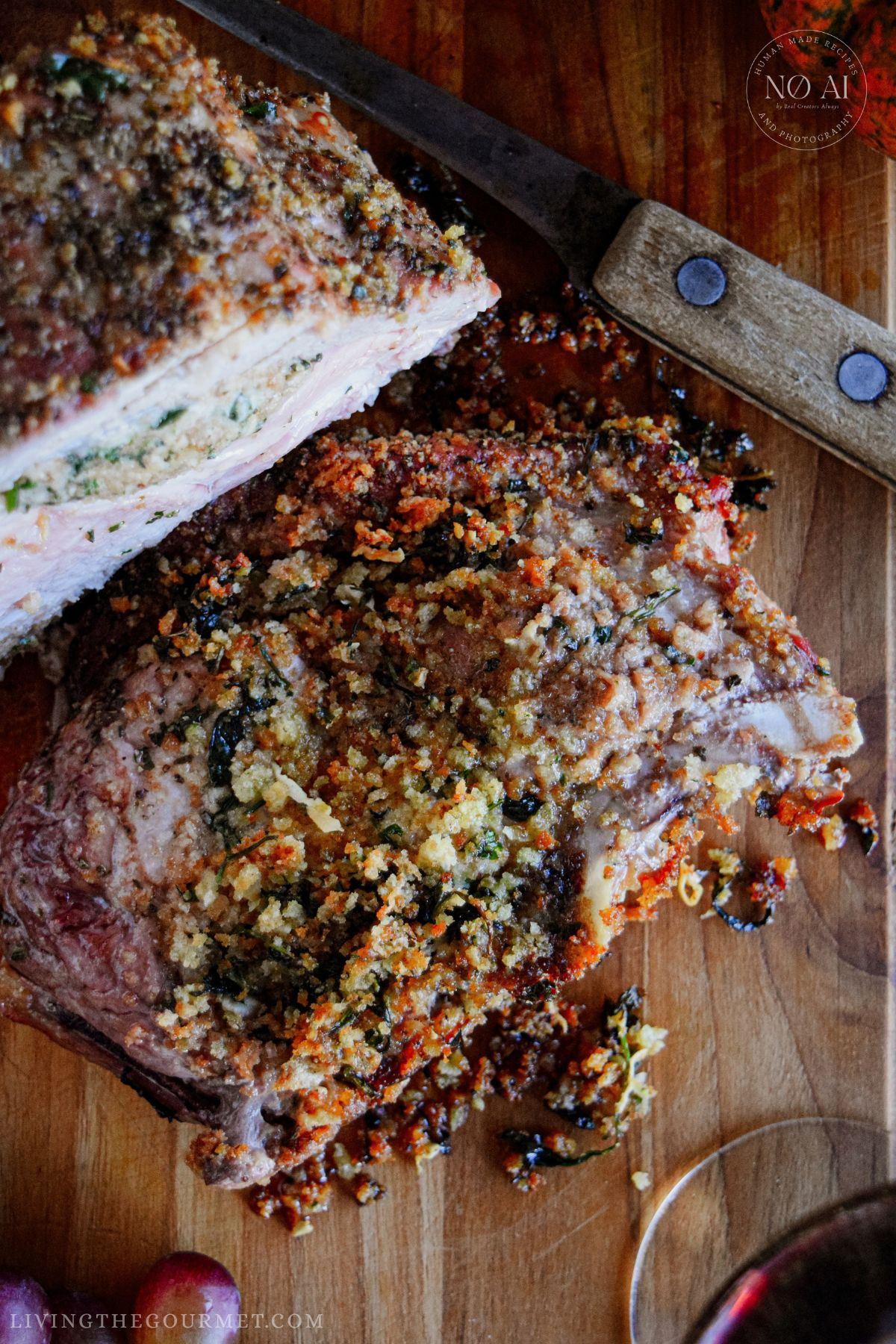
- Layers of Flavor: The roast features an outer crust, made from an oregano and olive oil herb rub, with a savory filling of spinach, sweet charred garlic, panko, and Romano cheese as the stuffing.
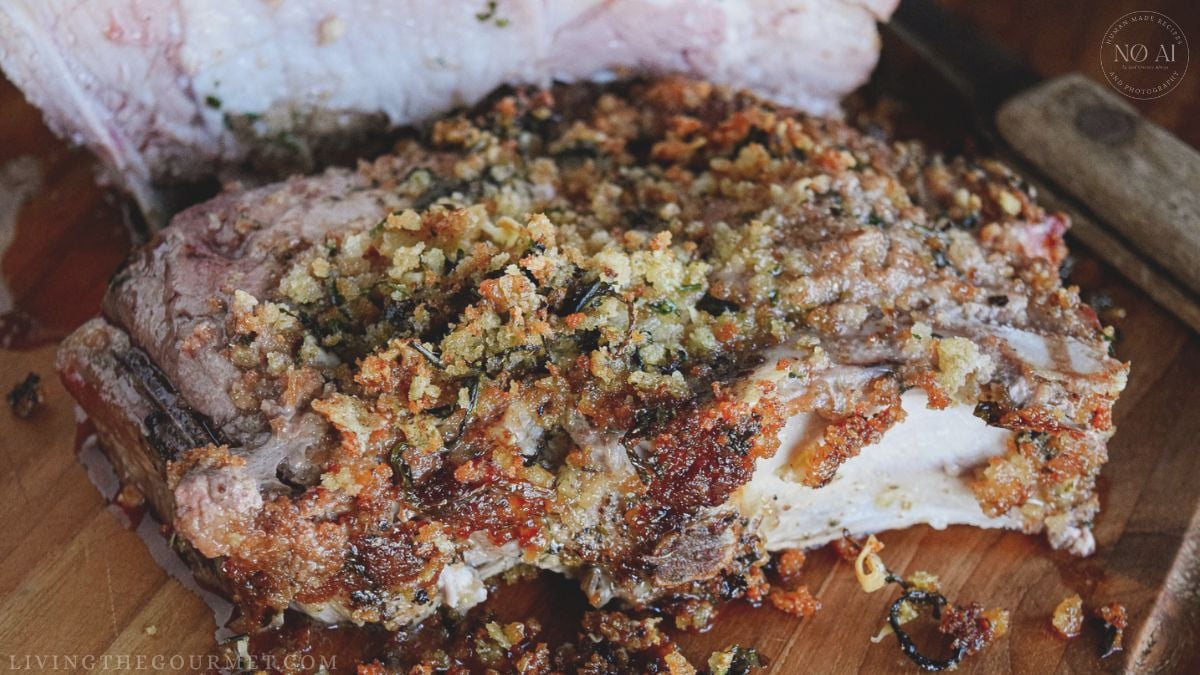
- Irresistible Texture: The cast iron holds and radiates steady heat. This helps the exterior of the roast to develop a flavorful, golden crust, while the interior stays moist and juicy. Crisp exterior, tender interior.
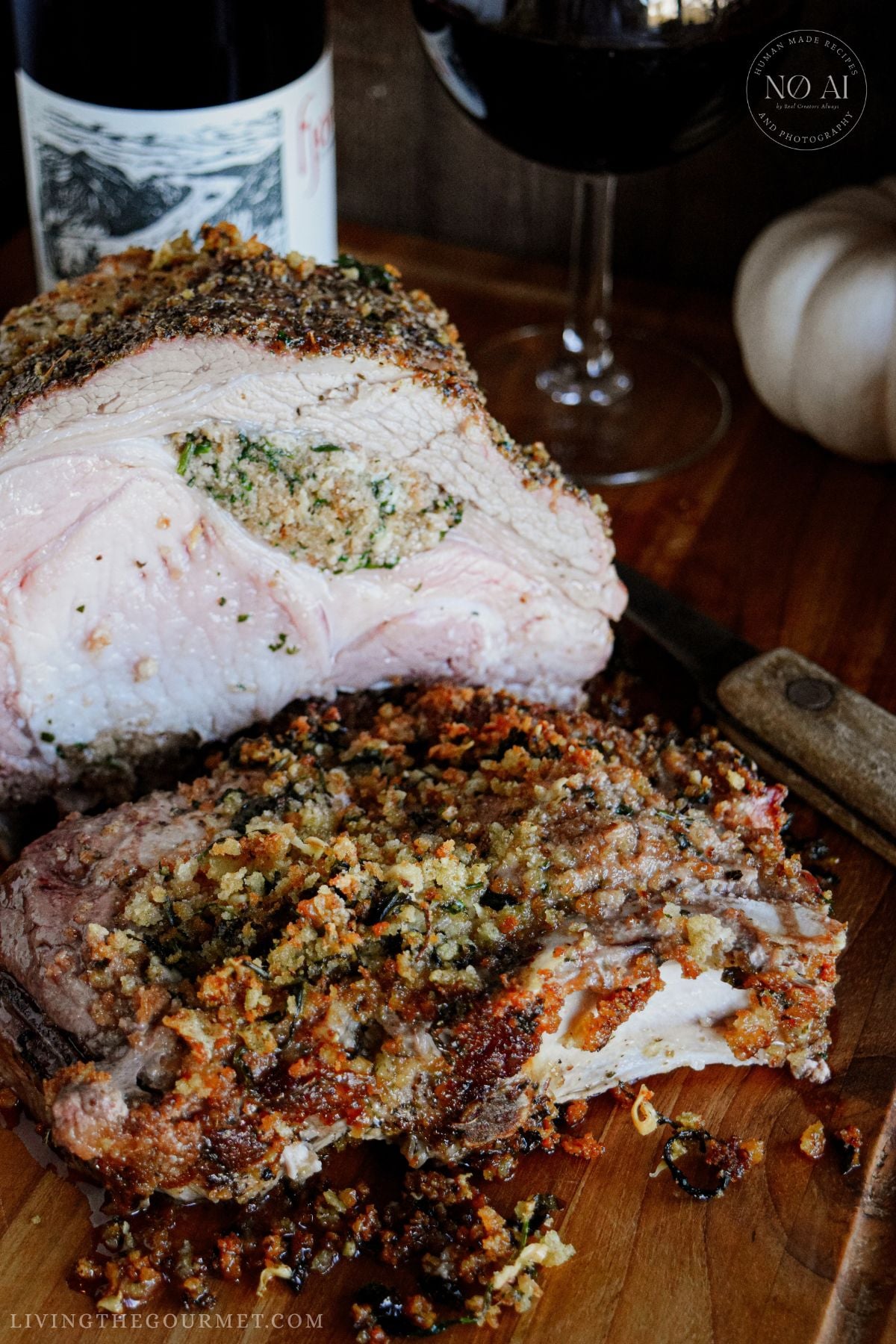
- Impressive but approachable: Opening and stuffing the roast might sound advanced and complicated or time-consuming, but if you follow the directions below, it actually takes just a few minutes and requires nothing more than a sharp knife and (potentially) some butcher's twine. I say this because all we're actually doing is opening pockets in the roast from its natural seams, and then stuffing those seams.
- Versatile: While this is a great centerpiece as a holiday roast, it also serves beautifully as a Sunday roast, or as the centerpiece for a dinner party. What's more, the leftovers are great, reheating beautifully or serving deliciously in sandwiches.
- Simple Ingredients: Everything in the stuffing and the crust you've likely already got on hand in your fridge or pantry, or is simple and affordable to find at the supermarket. We're using nothing fancy, nothing hard to find, and nothing expensive.
Key Ingredients and Substitutions
We've formulated this recipe such that each ingredient is playing a clear role. For exact measurements, see the recipe card below.
The Pork Roast and Rub
- Pork Rib End Roast: For this recipe, we're using a pork rib end roast, which is the rib end of the pork loin. This cut is also sometimes labeled as pork loin rib end roast. This particular cut is a terrific choice for stuffing. Due to being cut from the end of the loin closest to the pig's shoulder, a pork rib end roast has quite a bit more marbling than leaner center cuts, and that extra marbling means a richer flavor and moister meat. Fortunately for this recipe, it also has natural seams between its muscles, and these make for a convenient guide as to where to open up the roast for stuffing.
- Alternative Cuts: A center-cut pork loin roast is the best substitute, in my opinion. It has a very uniform shape, which helps facilitate even cooking and easier slicing. However, it is markedly leaner than a pork rib end roast, which means a slightly less rich flavor and slightly drier meat. Alternatively, a boneless pork shoulder, which is also sometimes labeled as pork butt, can be substituted as well. While a boneless pork shoulder can be stuffed very nicely, it does behave very differently than a pork rib end roast, as it has much more fat and connective tissue, and thus requires a long, slow cook time to achieve a much higher internal temperature so that it becomes tender. As such, while a boneless pork shoulder can work for today's recipe, it is probably better saved for slow-roasting recipes.
- The Herb Rub: We stir together extra virgin olive oil, dried oregano, garlic powder, coarse black pepper, and salt to create a coarse paste. Crush the oregano between your palms before adding it in to release its aromatic oils and a richer flavor - bonus points if you use a mortar and pestle. Kosher salt is a good choice here, as is any large-grain salt. The olive oil works to form the paste and ensure that the seasonings all stick to the meat, as well as helping to encourage a golden exterior. This is not a recipe for fancy or expensive olive oil, as most of the delicate qualities in expensive oils are stripped away during the oven roasting process.
The Savory Garlic and Spinach Stuffing
- Charred Garlic Cloves: Rather than mincing the garlic raw, we're toasting it whole and unpeeled in a dry cast iron skillet until the garlic's skin blisters and blackens. The skin protects the garlic itself from the heat, allowing it to soften rather than burn, which works to mellow the garlic's naturally sharp bite, while bringing out a gentler, sweeter flavor with hints of caramel and some smokiness. Once cooled, pop the garlic from its skin and mash it into a paste. And please, do allow the garlic to cool first, as there's no reason to burn your fingers.
- Toasted Panko Breadcrumbs: The panko is what gives this stuffed pork roast recipe its body and texture, by providing some crisp contrast to the otherwise tender meat. Toasting the panko dry, before any oil goes in, is vital, as the dry heat works to brown the crumbs evenly, while also giving them a nutty, toasty flavor. If you add the oil first, then the crumbs absorb it almost immediately and tend to brown unevenly, or turn greasy instead of crisp. Use plain panko, not seasoned, since the stuffing has all of its own seasonings. Using seasoned panko risks making the roast too salty.
- Baby Spinach and Italian Parsley: The greens bring some color to presentation, while giving freshness to the palate, and a mild, earthy balance to the richness of the cheese and the pork. Meanwhile, the flat-leaf Italian parsley adds bright, clean herbal notes to the mix. Keep in mind that baby spinach wilts in about a minute.
- Grated Romano or Parmesan Cheese: We want to use a hard and sharp Italian cheese that will bind the stuffing together and give it savory depth to complement the pork. Any Italian grating cheese works for this purpose, so it's your choice of Romano, Parmesan, Asiago, or whatever other Italian grating cheese suits your taste.
Essential Equipment
- Cast Iron Skillets: For this recipe, you will need two different cast iron skillets. First, we'll want a small or medium skillet (roughly 8 to 10 inches in diameter) for charring the garlic and toasting the stuffing, since the smaller surface works to keep the crumbs from scattering and burning. Then you will need a larger skillet of about 12 inches in diameter to give the roast room to cook - and giving the meat enough room during cooking is absolutely vital. Additionally, I personally believe that cast iron is perfect for this recipe because it heats evenly and then holds that heat steadily and reliably in the oven, which helps the exterior of the roast to achieve that gorgeous browned outer crust.
- Parchment Paper: This has been my number one kitchen hack for a long time, and I recommend parchment paper every chance I get. The reason I recommend it so strongly is that nothing makes cleanup easier than parchment paper, and nothing prevents sticking better than parchment paper. Additionally, the parchment paper helps prevent the bottom of the roast from burning against the pan.
- A Sharp Chef's Knife and (Potentially) Butcher's Twine: For this recipe, you want a long, sharp knife. And please, I mean it when I say the knife needs to be sharp because you want the cuts for the stuffing to be as clean as possible. Additionally, a paring knife works beautifully for opening the roast's natural seams. Finally, if you need to secure the roast shut (such if the roast is particularly heavy or you cut particularly deep into the seams), you'll want cotton butcher's twine, sometimes labeled as kitchen string. Cotton butcher's twine is my preference for securing the roast shut while it cooks. I recommend against synthetic string, which can melt in the oven.
- A digital meat thermometer: I used to set timers and eyeball whatever I was cooking, while relying on the press test, but honestly, without using a meat thermometer there's no denying that any other test for doneness is just educated guesswork. A digital meat thermometer removes the guesswork and tells you precisely when the meat is done. Remember, even well-marbled pork is still a lean meat, and that means that the difference between juicy and dry is just a few degrees.
Step-By-Step Instructions: How to Make Stuffed Pork Toast
Step 1: Prep the Rub
In a small bowl, we combine the garlic powder, crushed oregano, salt, black pepper, and the olive oil. Then stir until it forms a paste. While I recommend stirring until you've got a spreadable paste, do keep in mind that it will be coarse. Set it aside while you make the stuffing.
Step 2: Char the Garlic and Toast the Stuffing
- Charring the Garlic: Heat a small cast iron skillet over medium-high heat, and then add the unpeeled garlic cloves to the dry skillet and let them toast like that for 4 to 6 minutes. Turn them every 1-2 minutes, letting them roast until the skins are charred in spots and the garlic smells fragrant. Once they are charred and fragrant, transfer the cloves to a plate and let them cool. Once they are cool enough to handle, peel off the skins and mash them.
- Toasting the Panko: Wipe the skillet clean and return it to medium heat. Add in the dry panko and toast it, stirring constantly until golden brown. This should only take 1 to 2 minutes. Watch the panko closely, as it goes from beautiful golden brown to burnt very quickly. Once the panko is golden, drizzle in 1 tablespoon of olive oil and toss to coat. Add in the chopped spinach, salt, pepper, and a second tablespoon of olive oil (yes, the two tablespoons of olive oil need to be done separately), and cook for another minute, just until the spinach wilts. Then remove the skillet from the heat immediately, fold in the mashed garlic, chopped parsley, grated Romano, and a final tablespoon of olive oil. Stir until evenly combined, then transfer the stuffing to a bowl. Moving the mixture out of the hot skillet keeps the cheese from melting onto the pan and the crumbs from overbrowning. Let the stuffing cool slightly while you prepare the pork to be stuffed.
Step 3: Prep the Oven, Open the Seams, and Stuff the Pork
- Preheat the Oven: Preheat the oven to 350 degrees F, and line your larger cast iron skillet with parchment paper.
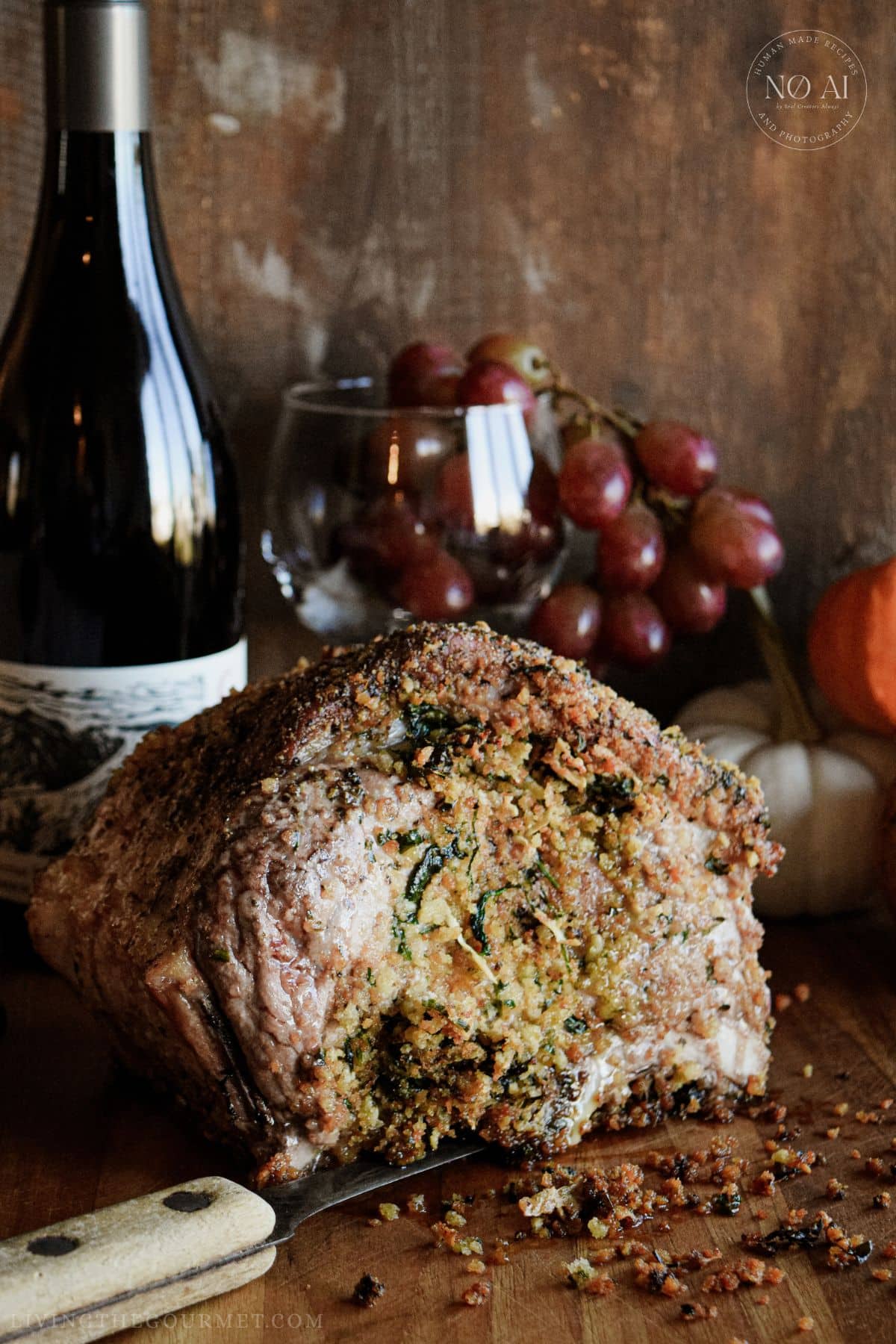
- Open the Seams: Start by placing the roast on a clean cutting board. Look and feel around the pork roast for noticeable seams, and then use a paring knife to open those seams. We are not looking to slice through or along these seams, only to open them enough to stuff the pork. Once the seams are open, push the stuffing into the seams as deep as it will go. Some seams will run all the way through to the other end of the roast; others will only go an inch or two. This is perfectly fine. Patience is your best friend for this part of the recipe. Take your time, and be gentle.
- Stuffing: Press the stuffing into the small pockets created within the seams, and push the stuffing in as far as it will go. Fill each seam to the very rim of the pocket.
- Tying (If Necessary): A pork rib end roast can be a delicate piece of meat and can decide to fall apart. If this starts to happen, don't worry; simply close the pork back into its original shape, and then tie it shut with a few strands of butcher's twine.
Step 4: Sear and Roast in Cast Iron
- Optional Sear: For a deep golden crust, you can opt to sear the roast on the stovetop before it goes into the oven. To do this, heat the large cast iron skillet over medium-high heat with a thin layer of olive oil. We are not yet using parchment paper - that's for when the roast goes into the oven. Sear the roast for about 2 minutes per side, until lightly browned all over. Because the rub contains garlic powder, which can scorch quickly, keep the heat at medium-high rather than high, and keep the sear brief. Once finished, transfer the roast to a plate, carefully line the skillet with parchment paper, and return the roast to the skillet. Searing gives the roast a head start, so begin checking the temperature a little earlier if you choose to do this.
- Oven Roast: Set the roast in the parchment-lined skillet and roast at 350 degrees F for 20 to 25 minutes per pound, or roughly 70 to 80 minutes for a three-and-a-half-pound roast. I advise that you begin checking the internal temperature at the 60-minute mark by inserting a meat thermometer into the thickest part of the meat, being sure to avoid the stuffing, which can give a misleading reading.
Step 5: Resting and Serving
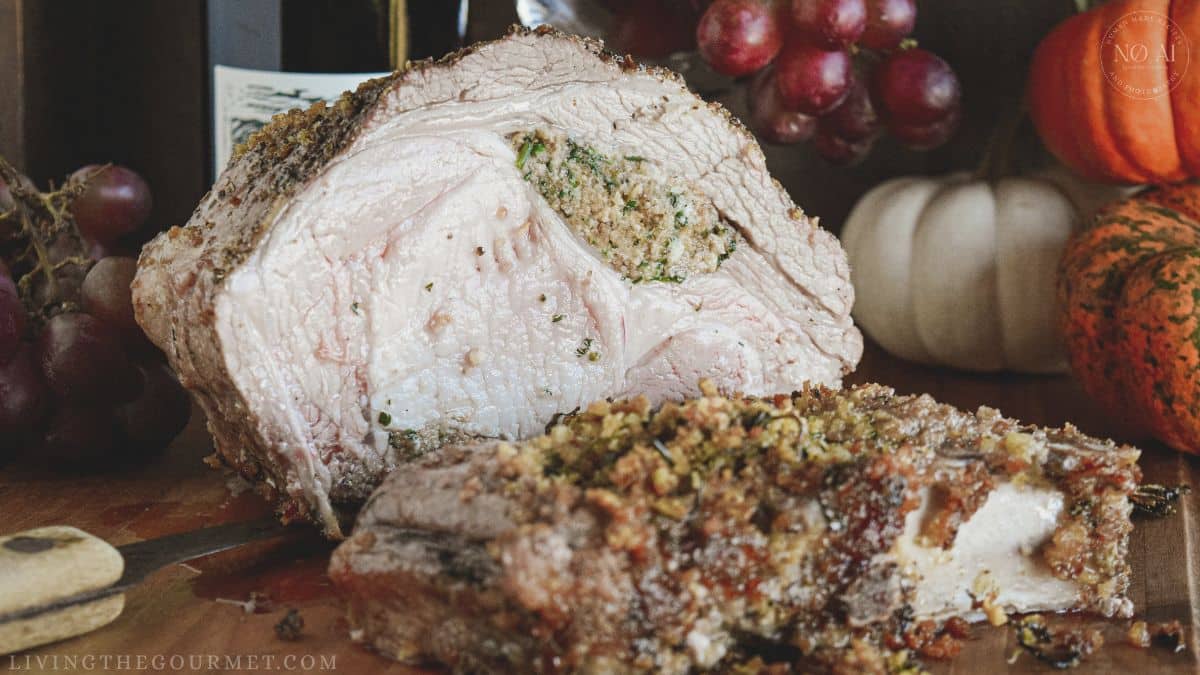
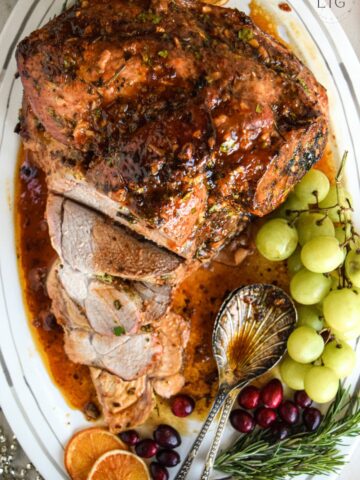
When the meat thermometer reads 140°F to 142°F, remove the roast from the oven. Then transfer it to a cutting board and tent it loosely with aluminum foil. Let the roast rest for about 8-10 minutes, during which the carryover cooking will raise the internal temperature to the safe minimum of 145°F. During this time, the juices will settle back into the meat, rather than running out onto the board, which is what will happen if you slice the meat too early.
Pro Tips for the Best Stuffed Pork Roast
Don't Overcook: Temperature is the Guide, Not Time
Consider the 20 to 25 minutes per pound guideline as a starting point, not as final guidance, as no two roasts are exactly alike. The roast's thickness, its starting temperature, how full the stuffing is, and how accurate your oven reports and holds its temperature are all factors that affect cook time. Also, bear in mind that pork loin is a lean cut, and as such it does not have much fat to keep it moist if it cooks too long. A few degrees past 145 degrees F, it begins to dry out. As such, I fully recommend relying on your meat thermometer rather than the clock alone. Start checking early, and pull the roast from the oven at 140°F to 142°F. Remember, it is far easier to return an undercooked roast to the oven than it is to somehow rescue an overcooked roast. Do note that 145°F to 150°F is considered medium rare for pork.
For more even cooking, let the roast sit at room temperature for about 20 to 30 minutes before it goes into the oven as the oven preheats. A roast that goes in straight from the refrigerator will cook less evenly, with the outer layers overcooking before the center catches up.
Prevent Stuffing Spillage
As we are only stuffing the seams of the roast, the roast should be able to be placed in the oven as is. However, be sure to take notice of how fragile the roast appears and feels after having stuffed the seams. If the roast feels fragile, or does not appear to be keeping its shape, then I suggest binding it with a few strands of butcher's twine.
Make-Ahead Friendly (Sort Of)
This recipe can be broken down into four stages, which makes it a great option for stress-free entertaining. The stuffing can be made up to a day ahead of time; just be sure to let it cool completely, and then store it in an airtight container in the fridge. The herb rub can also be mixed a day or two ahead as well. Meanwhile, the pork roast's seams can be opened a day ahead, and then the roast itself can be wrapped and stored in the refrigerator. With the stuffing and roast already prepped, that means all you have left to do the day-of is stuffing, tying (if needed), and then seasoning, which all should take no more than ten minutes.
Safety Note: As a matter of food safety, do not stuff the roast until you are ready to cook it. The USDA advises against stuffing raw meat ahead of time, as the stuffing sits in contact with the raw meat for hours, allowing bacteria to grow.
Let the Roast Rest
We've all been there - the roast comes fresh out of the oven, it's crackling and moist, and the temptation to slice right in is almost overwhelming. Do not give in to this temptation. Resting is essential, as it allows the juices to redistribute and gives the stuffing time to set. It also allows for carryover cooking to bring the roast fully to 145 degrees F. Slicing too soon will allow the juices to run out onto the cutting board, drying the roast.
Serving Suggestions and Pairings
Side Dishes
- Roasted Baby Potatoes: A quick, Italian-style potato salad would pair deliciously, perhaps tossed with olive oil, salt, and herbs.
- Garlic Butter Green Beans: Green beans tossed in garlic butter would bring delightful freshness and some veggie crunch to the plate, as well as a nice pop of color.
- Crisp Italian Chopped Salad: A bright, crisp chopped salad, perhaps with a red wine vinaigrette, works to cut through the richness of the roast, refreshing the palate.
- Honorable Mentions: Polenta, roasted root vegetables, sautéed broccoli rabe, or a nice loaf of crusty Italian bread to soak up the pan juices would all be great options as pairings.
Wine Pairing Suggestions
- Cabernet Franc: For herbal synergy, I recommend Cabernet Franc, as the wine is famous for its naturally herbal, savory profile, often featuring notes of dried herbs, oregano, black pepper, and subtle hints of pyrazines (bell peppers or leafy greens). These flavors complement this recipe deliciously by playing into the rub and the stuffing directly. Furthermore, Cabernet Franc has bright acidity, which cuts right through the rich, fatty goodness of the pork, cleansing the palate between bites. In my opinion, this is the ideal pairing for the roast.
- Chianti Classico: With lively acidity and an overall savory, herbal character, Chianti Classico is a natural pairing for the roast's oregano and garlic.
- Pinot Grigio: For a white wine pairing, opt for a crisp, dry Pinot Grigio. This pairing brings refreshing acidity and a light body that works to balance the richness of the pork and the stuffing.
Frequently Asked Questions
Yes, absolutely. A boneless center-cut pork loin works excellently for this and similar recipes. It is a leaner cut; however, it has a more uniform shape, making it easy to butterfly and slice into neat pinwheels. That said, because it is leaner, it can dry out more easily, meaning you need to start checking the temperature a little earlier and pull it from the oven at 140°F to 142°F, then let carryover cooking finish it through on the counter.
There are four things that help the most with this. First, tie the roast snug at even intervals and leave the butcher's twine on until after it rests. Second, let the roast rest the full 8 to 10 minutes, which gives the stuffing time to set. Third, be sure to use a long, very sharp knife, and yes, this applies whether you are merely opening the seams, cutting pockets, or fully butterflying the roast. Fourth and finally, slice slightly thicker portions than you might otherwise usually cut, as thin slices release stuffing more readily.
Whole cuts of pork, according to the USDA, including roasts, are safe to eat once they reach an internal temperature of 145°F, followed by a rest period of at least 3 minutes. Pork cooked to 145°F usually still appears pink in the center, and that is perfectly normal. As I recommended above, pull the roast from the oven at 140°F to 142°F, and let carryover cooking during the resting period bring it up to 145°F.
With that said, the USDA also recommends that stuffing cooked inside meat be allowed to reach 165°F.
Allow the cooked roast to cool, and then refrigerate leftovers in an airtight container within 2 hours of cooking. Stored in the fridge in an airtight container, the leftover roast will keep for 3 to 4 days. For longer storage, wrap individual slices tightly and freeze them for up to about 3 months. To thaw, let it sit in the refrigerator overnight before reheating. As a matter of food safety, do not attempt to hasten the thawing process.
To reheat the pork without drying it out, place slices in a baking dish, add a splash of broth or any leftover pan juices, cover with foil, and warm in a 325°F oven for about 15 to 20 minutes, until heated through. You can also reheat slices gently in a covered skillet over medium-low heat with a little broth. Leftover slices are also delicious cold, tucked into a sandwich on crusty bread.
More Delicious Pork Recipes from Living the Gourmet
- Easy Stuffed Pork Tenderloin Recipe: One of our most popular recipes here on Living the Gourmet, our stuffed pork tenderloin is perfect for holiday tables, weekend dinner parties, and makes for great leftovers.
- Oven Roasted Pork Shoulder with Glaze: Another of our most popular recipes, this is a quintessential holiday pork roast, with a sweet and smoky glaze.
- Slow Roasted Boneless Pork Butt: Our slow-roasted pork butt is Rich and flavorful, with a crispy crust that is sweet, savory, and sticky. The marinade is simple to prepare, and the slow roasting process is a mostly hands-off affair.
Garlic and Herb Stuffed Pork Roast Recipe
- Total Time: 1 hour 55 minutes
- Yield: 6-8 servings 1x
Description
A juicy cast iron port roast filled with charred garlic, spinach, toasted panko, and Romano cheese, wrapped in a golden oregano herb crust.
Ingredients
For the Garlic & Herb Rub:
- 1 tbs. extra virgin olive oil
- 1 tsp. garlic powder
- 1 tsp. dried oregano (crushed between your palms)
- 1 tsp. coarse ground black pepper
- 1/2 tsp. salt
For the Spinach & Charred Garlic Stuffing:
- 4-5 fresh garlic cloves (in their skins)
- 1 cup plain panko breadcrumbs
- 3 tbs. extra virgin olive oil (divided)
- 1 cup fresh baby spinach leaves (roughly chopped)
- 1 cup fresh Italian parsley (chopped)
- 1/4 cup grated Romano or Parmesan cheese
- 1/2 tsp. salt
- 1 tsp. coarsely ground black pepper
For the Meat:
- 3.5 lb. pork rib end roast (or center-cut pork loin roast)
Equipment Needed
- Small or medium cast iron skillet (for stuffing prep)
- Large cast iron skillet (for roasting)
- Parchment paper
- Chef's knife or paring knife
- Kitchen string / Butcher's twine
- Instant-read digital meat thermometer
Instructions
Prepare the Herb Rub Paste:
- In a small bowl, combine the olive oil, garlic powder, crushed oregano, black pepper, and salt. Stir into a paste and set aside.
Char the Garlic:
- Heat a small cast iron skillet over medium-high heat. Place the unpeeled garlic cloves in the dry skillet.
- Toast for 4-6 minutes, turning occasionally, until the skins are charred and fragrant.
- Remove the cloves from the skillet and allow them to cool. Once cool enough to handle, slip off the skins and finely mince or mash the softened garlic. Set aside.
Toast & Assemble the Stuffing:
- Wipe the skillet clean and return to medium heat. Add the dry panko breadcrumbs and toast, stirring constantly, until golden brown (1-2 minutes, watch closely as they burn easily).
- Drizzle 1 tablespoon of olive oil over the crumbs and toss to coat.
- Add the chopped baby spinach, salt, pepper, and a second tablespoon of olive oil. Cook for about 1 minute or just until the spinach wilts.
- Remove the skillet from the heat immediately to prevent burning.
- Fold in the mashed charred garlic, chopped parsley, grated Romano cheese, and the final tablespoon of olive oil. Stir until well combined. Transfer the stuffing to a bowl to prevent the cheese from sticking to the hot pan.
Stuff the Pork Roast:
- Preheat your oven to 350°F (175°C). Line a large cast iron skillet with parchment paper.
- Place the pork roast on a clean cutting board. Using a sharp knife, find the natural seams between the muscles and wedge them open with the knife. These are natural pockets between flaps of muscle meat, as well as between the muscle meat and marbling. Many of these seams should run the length of the pork roast, while others will be of varying depths. We are only looking to stretch or open the seams, not to slice through the pork.
- Once the seams are open, stuff each resulting pocket thoroughly.
- Once the pockets are stuffed, assess whether or not the pork is holding its shape. If the pork is not holding its shape, or if you are uncertain, secure the pork shut with a few strands of butcher's twine.
Season and Bake:
- Rub the prepared herb rub paste evenly over all exterior surfaces of the pork roast.
- Place the stuffed roast into the parchment-lined large cast iron skillet.
- Roast in the oven at 350°F for 20-25 minutes per pound (roughly 70-80 minutes total). Begin checking internal temperature at the 60-minute mark.
- Remove the roast from the oven when an instant-read meat thermometer inserted into the thickest part of the meat (avoiding the stuffing) reads 140°F-142°F.
Rest and Serve:
- Transfer the roast to a cutting board and let it rest loosely tented with foil for 8-10 minutes. Carryover heat will bring the internal temperature up to the safe minimum of 145°F while keeping the meat juicy.
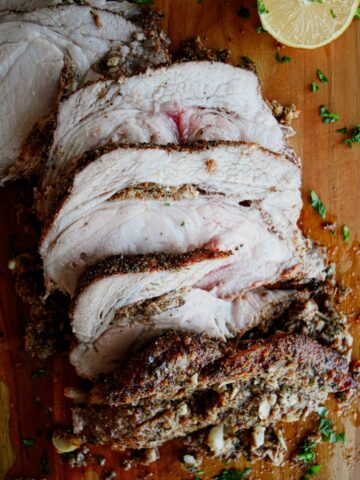
- Snip and remove the butcher's twine. Slice into thick portions and serve warm with pan juices.
- Prep Time: 10 minutes
- Resting Time: 10 minutes
- Cook Time: 70-80 minutes
- Category: Dinner
- Cuisine: American
And that's our Garlic and Herb Stuffed Pork Roast Recipe. If you have any questions or suggestions, be sure to let us know in the comments below; we always love hearing from you.
Happy Cooking!
This post contains affiliate links, and I may earn a commission if you purchase through these links, with no additional cost to you.


Leave a Comment