
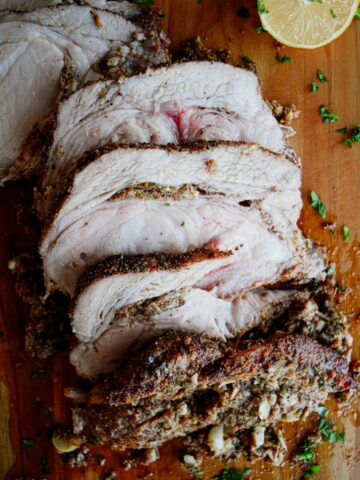
If you think impressing a crowd with a delicious roast requires complex cooking techniques and hours of hands-on work, I invite you to let me change your mind. This pork roast - made with a little help from our good friends over at Miller's Banana Pepper Sauce - is the ultimate crowd-pleaser. Featuring a garlic-and-herb crust with an apricot glaze, this roast cooks up with a crisp, garlicy skin and a deliciously tender, moist interior that's perfect for dinner parties and holiday tables alike.
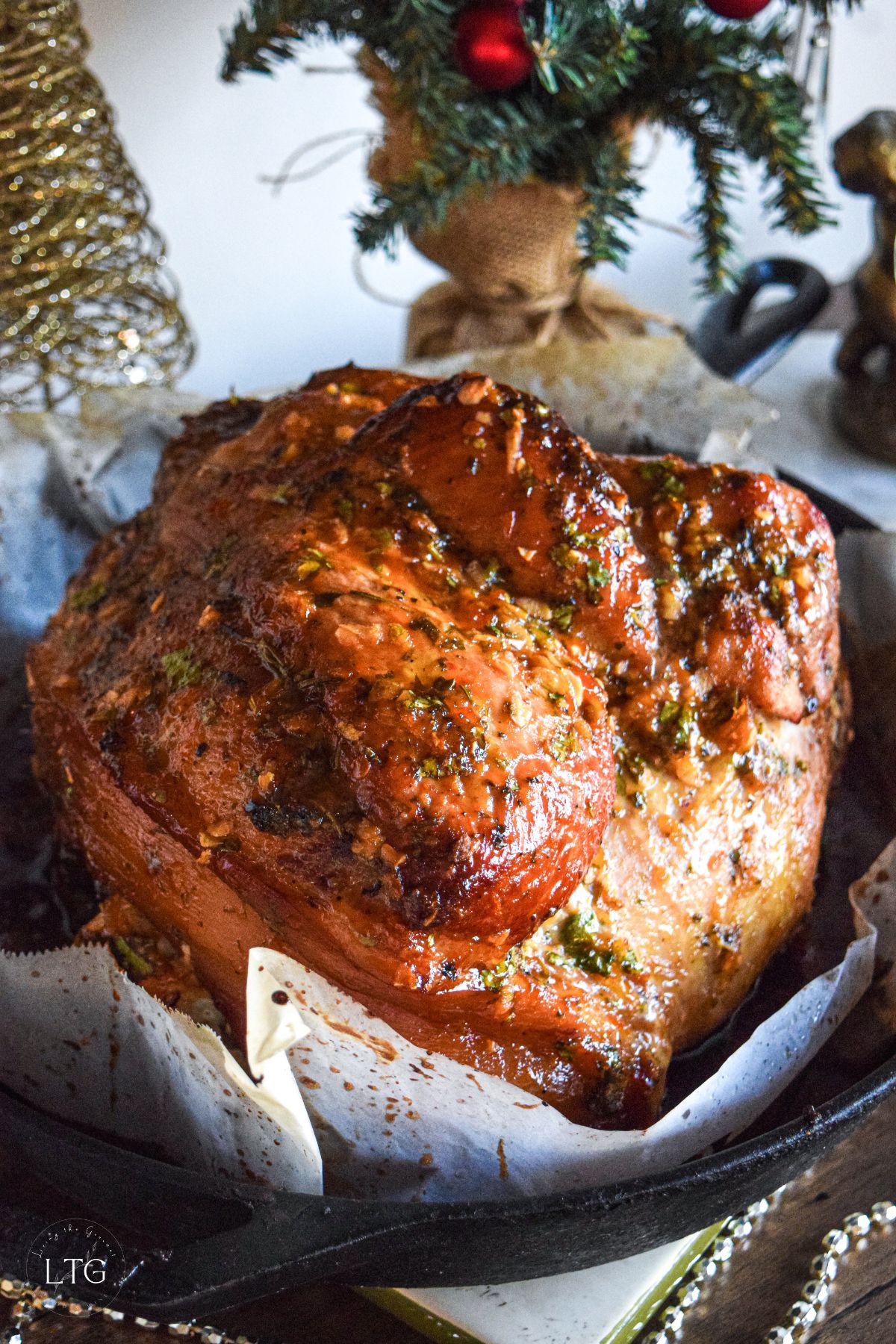
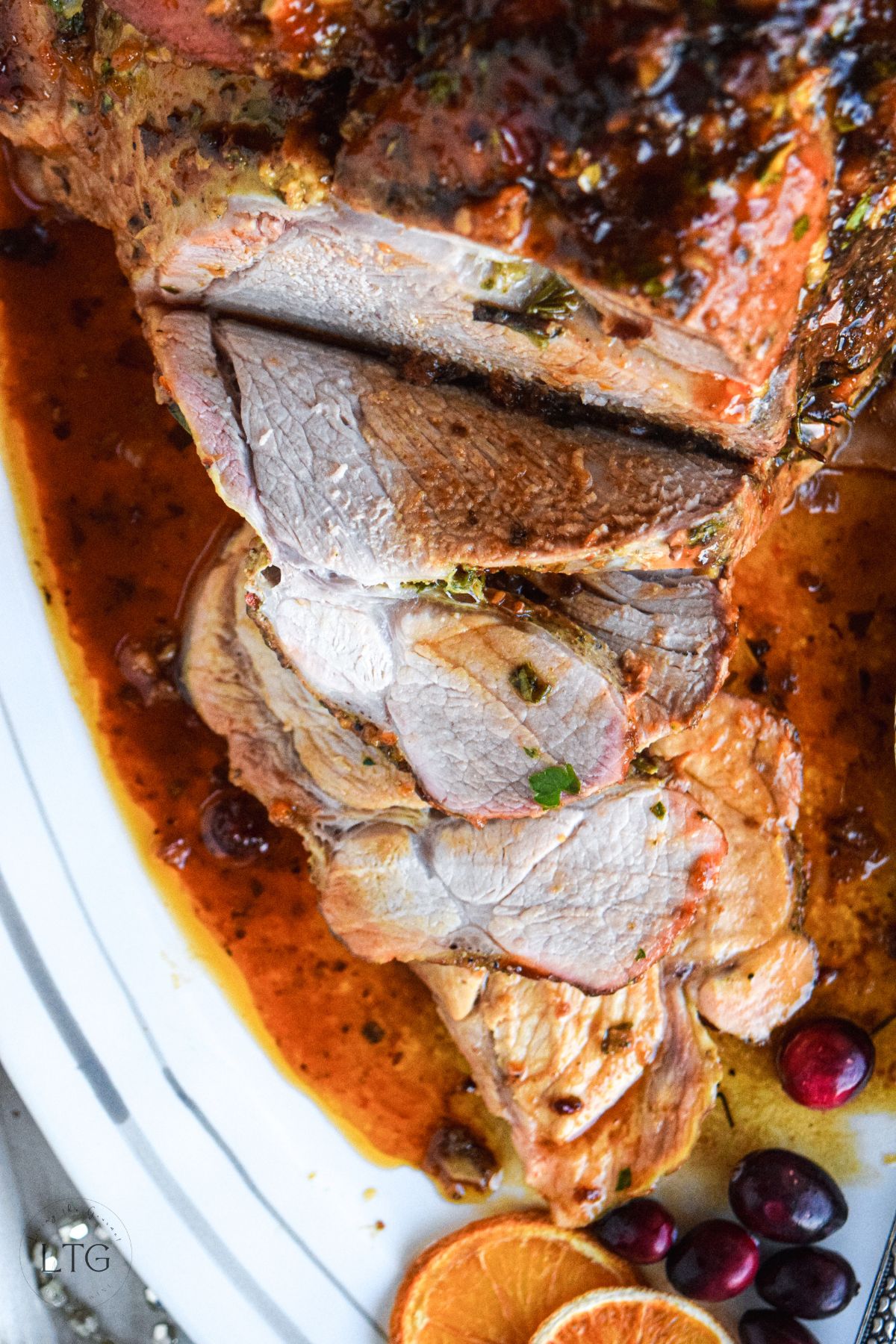
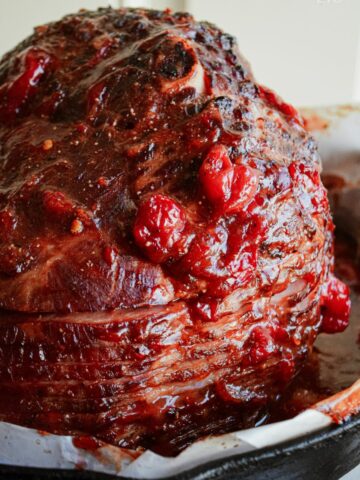
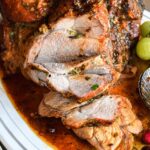
Let me set the stage for you. This roast comes out of the oven with a gorgeous, deeply burnished crust glistening with a caramelized glaze, and rich aromas of garlic, herbs, and apricot. As you slice into it, the meat immediately reveals itself as moist and tender. The secret ingredient in all of this is Miller's Banana Pepper Sauce. Serving as the base of the glaze, Miller's Banana Pepper sauce provides a gentle kick, while its vinegar-forward brightness helps balance the apricot sweetness.
This glazed pork roast is your answer for holiday dinners, Sunday family gatherings, or really any special occasion where you're looking to impress a crowd. And best of all, leftovers are absolutely spectacular, since this roast reheats beautifully - but more on that below. Read on for our complete ingredient checklist, professional tips, step-by-step guidance, and a printable recipe card.
Now, let's roast some pork.
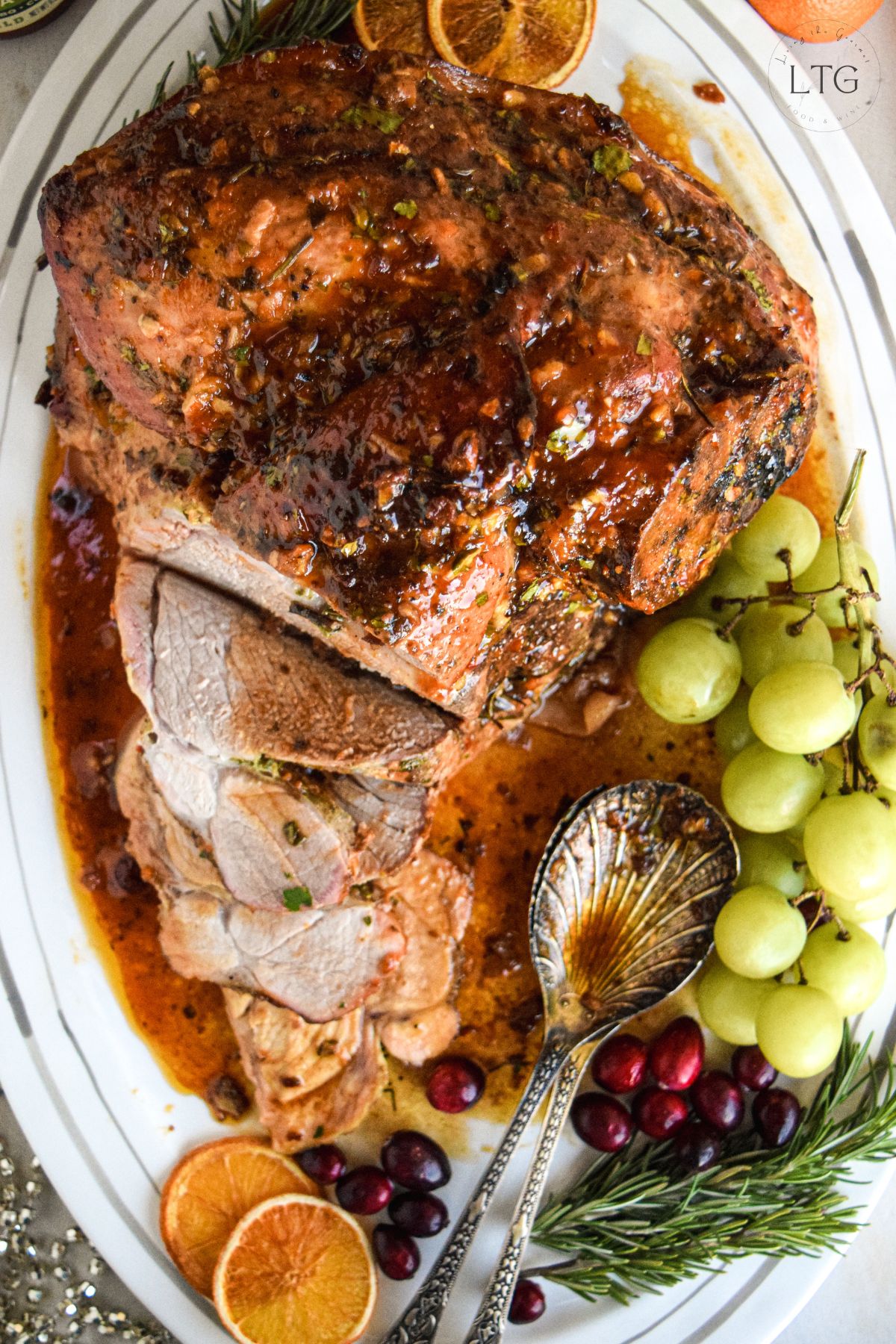
Recipe Overview - Oven Roasted Pork Shoulder with Glaze
Taste and Texture
In terms of taste, the recipe is formulated to deliver a balance of sweet and savory flavors, with just a hint of vinegar-tang and background spice. We're using a rub with garlic, oregano, and Romano cheese, which creates a delicious crust that seasons the entire roast, as well as providing the base of the aromatics. However, the secret ingredient for this roast comes courtesy of Miller's Banana Pepper Sauce, which we're combining with apricot preserves to make a glaze. This glaze works beautifully to transform this roast into something truly special. The glaze comes through with fruity sweetness, vinegar-forward tang, a hint of spice, and plenty of chili pepper goodness. In terms of texture, expect a delicious contrast between a crisped exterior and a moist, succulent interior. The exterior cooks up crispy, with an almost lacquered mahogany-like sheen, while our cooking method ensures that the meat remains incredibly tender and juicy.
Difficulty Level
Intermediate. I say this due to the time commitment and attention to detail that is required, rather than any complex cooking techniques. The hands-on work required from this recipe is fairly basic, but there is a good bit of it involved. Realistically, however, the most challenging part of this recipe is the cook time, which clocks in at between four and a half to six hours, during which you need to baste the roast every hour with the glaze.
Preparation Process
This is an oven-roasted pork shoulder, so most of the prep process is entirely hands-off. The process for preparing this roast begins with mixing the garlic rub and then massaging it thoroughly into the entire roast (about 10 minutes). Then we mix the glaze while the pork comes to room temperature (about 5 to 10 minutes). After that, we begin roasting the pork. We start at high heat, 425 degrees F, for 30 minutes to develop the crust, and then drop the heat to 325 degrees F. This is where the low and slow cooking begins, which ensures that the meat cooks up tender. This is also where we tent the roast, and begin basting every hour.
Sides for our Fresh Roast Pork
- Sides: Creamy mashed potatoes, homemade bread, or stuffed mushrooms are all delicious pairings.
- Salad: I would opt for something simple yet hearty, such as a Caesar salad with a homemade vinaigrette.
- Desserts: Aim for rustic desserts, such as a brandy apple caramel pie or apple crisps.
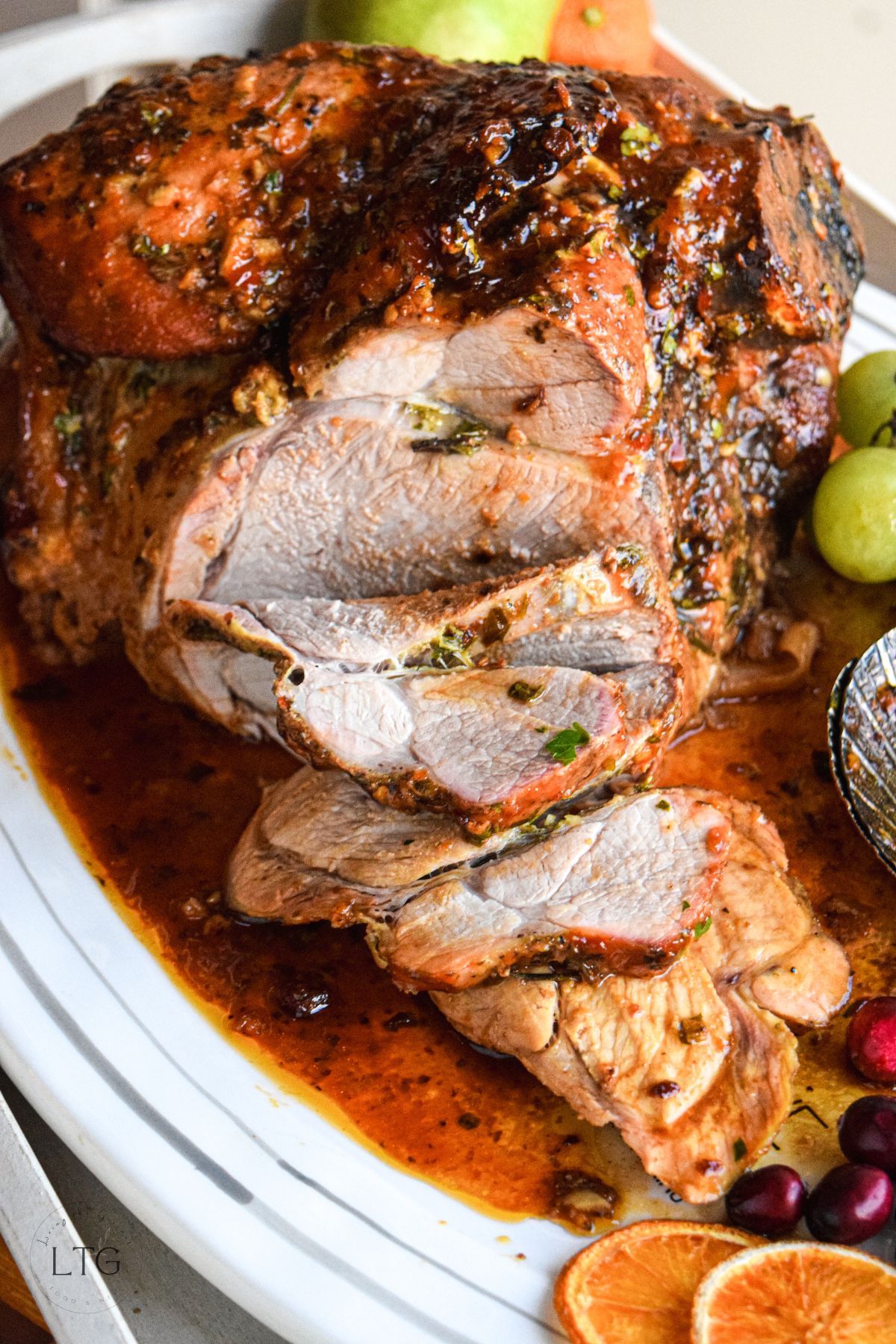
Oven Roasted Pork Shoulder with Glaze - Ingredient Checklist
For the Roast
- 8 lb. pork shoulder roast
- By any other name: Though usually labeled as "pork shoulder," this cut of pork can also be labeled as "picnic shoulder" and sometimes as "Boston butt" (which is actually a completely different cut).
- Bone-in vs. Boneless: The truth is that a bone-in pork shoulder will yield a better result. The bone adds flavor and helps retain moisture.
- Room temperature: You want the pork to be at room temperature for even cooking. The cook time in the recipe card below assumes a room-temperature pork.
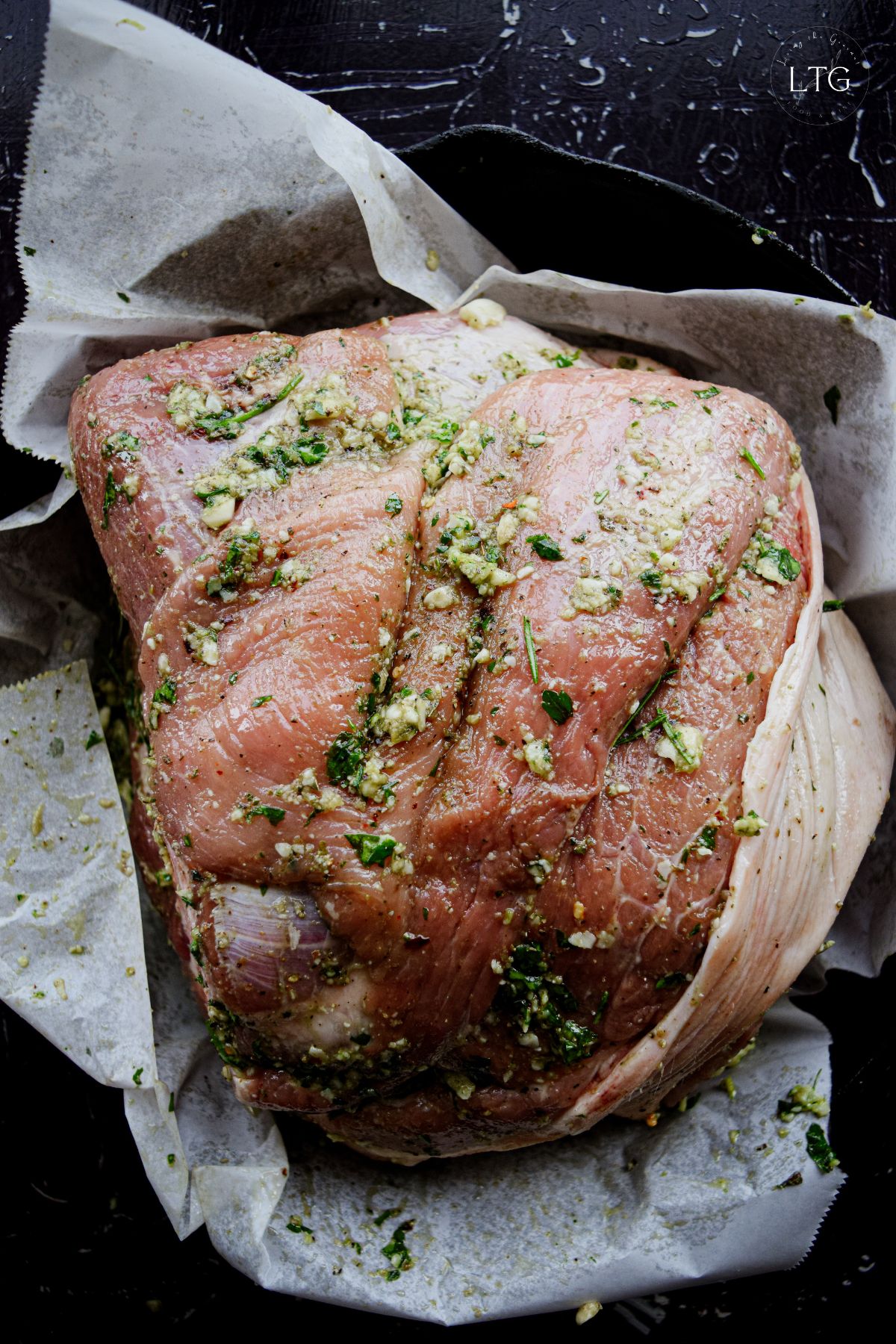
For the Rub
- 1 teaspoon black pepper
- Freshly ground: We're using fresh ground black pepper for the added aromatic depth.
- Substitution: Yes, pre-ground black pepper will work just fine.
- ¼ teaspoon red pepper flakes
- For subtle heat: Red pepper brings some subtle background heat, which helps add to the overall depth of the rub, and nicely complements the Miller's Banana Pepper Sauce.
- Substitute: A pinch of cayenne, or your favorite chili flakes, will work just fine. Optionally, you can leave it out entirely.
- 1 teaspoon garlic powder
- Why not fresh? We're using powdered garlic to achieve maximal distribution throughout the rub, as we want that garlic flavor present throughout the entire pork.
- It won't burn: Fresh garlic would risk burning throughout the long cooking process, not so with garlic powder.
- 1 teaspoon dried oregano
- Dried vs. Fresh: As a rule of thumb, always use dried oregano unless a recipe specifically calls for fresh. Fresh oregano can easily overpower even the hardiest of meals unless a recipe is specifically formulated for fresh oregano. For this recipe, dried is the way to go.
- Substitution: Italian seasoning mix, dried thyme, or dried basil would all work just fine.
- ½ teaspoon salt
- Plain table salt: Keep things simple. Plain table salt is really all you need for this recipe.
- Only half a teaspoon? It might seem like a small amount, but remember that we're also using a good bit of grating cheese, which also adds to the salt content.
- ¼ cup fresh Italian parsley (about 4 tablespoons)
- Flat-leaf Italian parsley: Curly leaf parsley has almost no flavor of its own, and as such is not a substitute for flat-leaf parsley.
- Substitution: Fresh basil or cilantro. You can also swap in dried parsley.
- 3 tablespoons freshly grated Romano or Parmesan Cheese
- For umami depth: The grating cheese adds not only saltiness, but it also brings umami depth to the rub.
- Substitution: Your grating cheese of choice will work. Asiago, Grana Padano. Any sharp, aged, umami-forward cheese will work.
- 3-4 tablespoons olive oil
- Use decent olive oil: This brings the best flavor. The olive oil seeps into the meat and forms a part of the flavor profile. As such, use a decent quality olive oil.
- Substitution: If olive oil is not an option, use a basic flavor-neutral cooking oil.
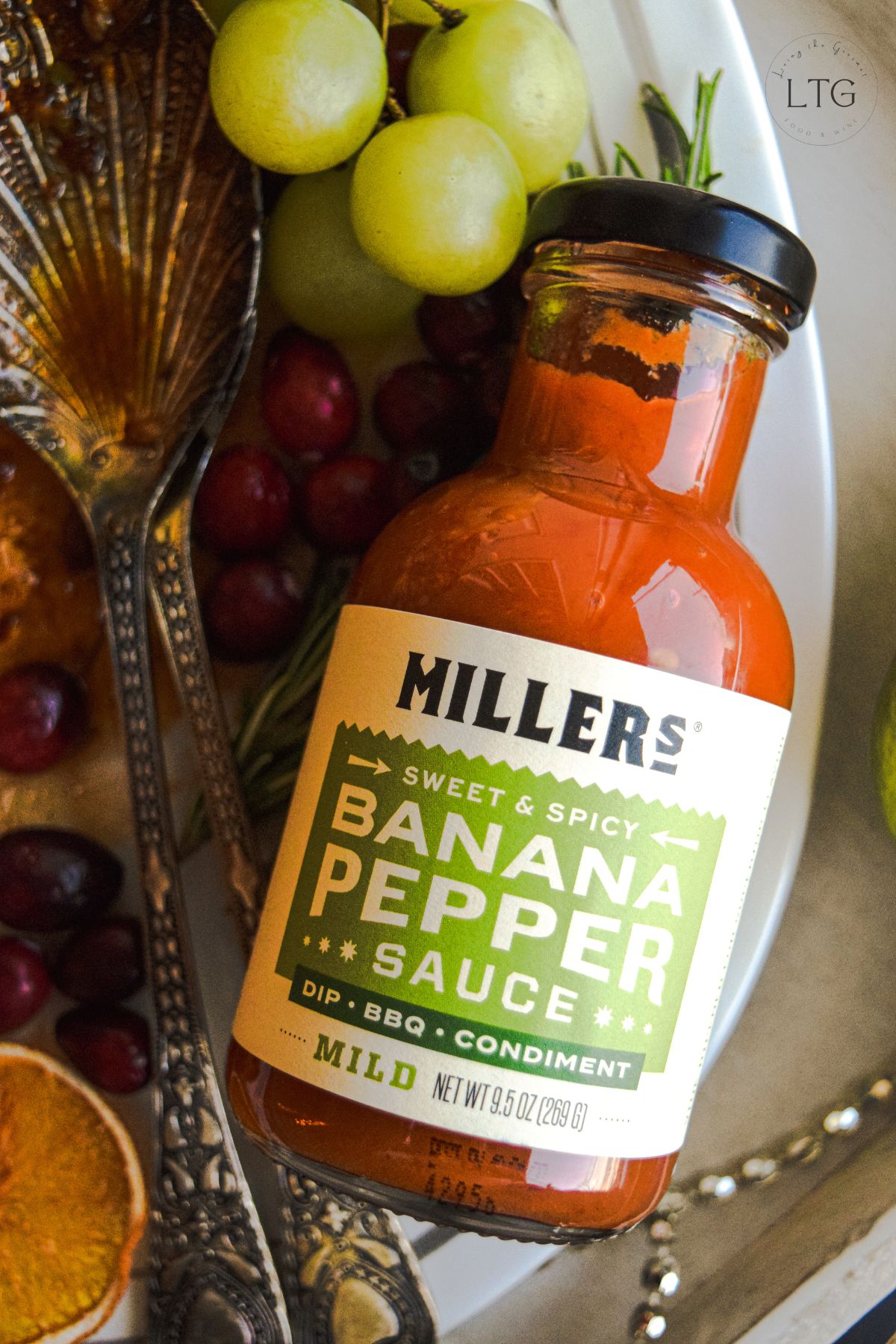
For the Glaze
- 1 cup apricot preserves
- Preserves, not jam: Preserves have a better texture and bring some chunks of fruit, which we want. Jelly and (most) jams, by contrast, will risk burning rather than working to form a crust.
- Substitution: Your preferred preserves. Peach preserves or orange marmalade would be my go-to.
- ¼ cup apple cider vinegar
- For acidity: We want bright acidity to help cut through the sweet and rich flavors. This brings contrast and complexity.
- Substitution: White wine vinegar, rice vinegar, or additional fresh lemon juice (2 tablespoons).
- 1 tablespoon fresh lemon juice
- For bright citrus and acidity: The lemon juice works to heighten all of the ingredients by bringing some bright citrus notes and acidity.
- Fresh or bottled? Fresh is essential. Lemon juice begins degrading the instant it leaves the lemon, and as such, bottled lemon juice lacks much of the vibrant flavors that we want for this recipe.
- Substitution: Fresh lime juice or additional vinegar.
- 5-6 Garlic Cloves, grated or chopped fine
- Fresh is a must: For the glaze, we want those fresh garlic juices for their garlicy flavor and rich aroma.
- Grated: We want the garlicy juices, and as such, that means we need to extract those juices. The best way to do that is to grate the garlic. The other way is to crush and then chop the garlic.
- Substitute: If fresh garlic isn't available, use about one and a half teaspoons of garlic powder, or two tablespoons of jarred minced garlic.
- ¼ cup fresh Italian parsley
- Flat-leaf Italian parsley: Once again, use fresh, flat-leaf Italian parsley.
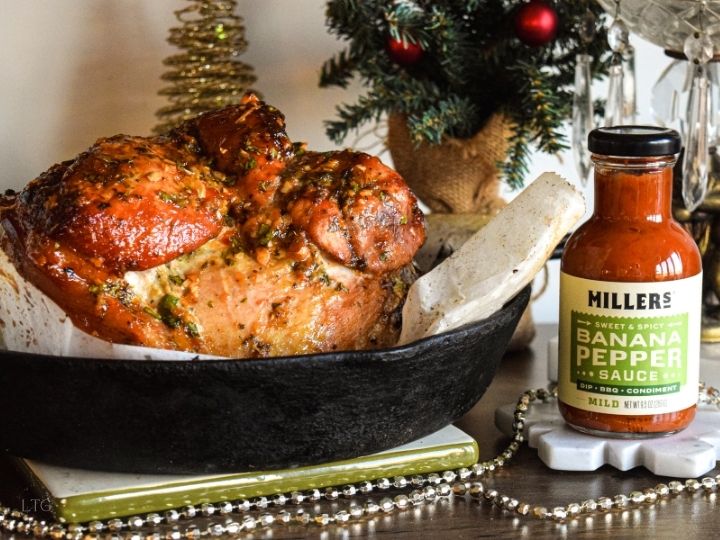
- 6 tablespoons Miller's Banana Pepper Sauce
- The Star of the Show: The key ingredient for the glaze. Miller's Banana Pepper Hot Sauce works beautifully to create a subtly sweet and spicy glaze, which pairs deliciously with the meatiness of the pork. It also melds beautifully with the other ingredients, the glaze, while deliciously complementing the meatiness of the roast. Its unique, vinegar-forward profile, with subtle fruitiness and copious chili goodness, is the true star of the show.
Equipment You'll Need for This Recipe
- Large Frying Pan:
- Cast Iron: For me, cast iron is the way to go for this recipe. It heats beautifully and helps to encourage browning. That said, we'll need a particularly large cast-iron pan that can accommodate an 8-pound roast with some inches to spare around the sides. The heavy nature of the cast iron provides for even heat distribution.
- Large Roasting Pan: If you're not using cast iron, any heavy-duty roasting pan will work. One that heats evenly and will hold up under the roast.
- Parchment Paper:
- Easier Cleanup: I lined my cast-iron pan with parchment to prevent sticking and to make cleanup easier. And no, it won't burn at 425 degrees F. As I like to say, parchment paper is my number one kitchen tip, since nothing makes cleanup easier.
- Meat Thermometer:
- For Certainty: An instant-read meat thermometer is a must-have, since it ensures the most accurate read on doneness. Stick it into the thickest portion of the meat, and if it reads 170 degrees F, your roast is done.
Perfect the Roast - Tips For Success
Selecting a Pork Shoulder and Fat Cap Tips
You want a pork shoulder with good marbling and an intact fat cap - which is intramuscular fat that keeps the meat juicy throughout the roasting process. Also, do not trim the fat cap, as it naturally bastes the meat as it renders down. To that same point, if your roast comes tied with butcher's twine, leave it in place to help the roast maintain its shape - the butcher didn't tie it for fashion reasons.
Rub Application
You want the rub to have a coarse, paste-like consistency. Keep this in mind when pulsing the rub in the food processor. Aim for about 4-6 pulses in short bursts. You also want to pay attention to the moisture of the rub. If the rub seems too dry or crumbly, add a bit more olive oil. Again, aim for a coarse texture with a paste-like consistency. From there, apply the rub generously across the roast. Massage it into every nook and cranny, and along the entire outer surface. Top, bottom, sides, and especially the crevices. This is important. And do not be gentle - you aren't going to 'break' the roast. Really work the rub in, spending at least 2-3 minutes to ensure complete coverage. This is important.
Glaze Prep and Application Strategy
Mix the ingredients thoroughly in a bowl. You want to make sure that the apricot preserves are thoroughly incorporated with the vinegar, lemon juice, and Miller's Banana Pepper Sauce. Yes, it is fine if the preserves have large fruit chunks - this will give the roast a nice rustic look, along with pockets of fruit-forward flavor. This is a good thing! Also, the glaze can be made up to three days ahead of time and left in an airtight container in the fridge. When basting, use a silicone basting brush or spoon to generously coat all exposed surfaces of the roast. Seriously, be generous - do not skimp on the glaze. This is the flavor and aroma of the roast. Now, you might be asking why we're glazing every hour - the answer is layering. Glazing each hour during cooking allows us to layer on the glaze, creating depth of flavor, with each layer building on the previous one. The Miller's Banana Pepper Sauce in the glaze works to intensify with each application, creating delicious depth.
Oven Roasted Pork Shoulder with Glaze
- Total Time: 4 hours 20 minutes
- Yield: 4-6 1x
Description
This pork roast is the ultimate crowd-pleaser, featuring a garlic and herb crust with an apricot glaze. It's perfect for dinner parties and holiday tables alike.
Ingredients
- 8 lb. Pork Shoulder (also called Picnic Roast)
For the Rub:
- 1 tsp. black pepper
- 1/4 tsp. red pepper flakes
- 1 tsp. garlic powder
- 1 tsp. dried oregano
- 1/2 tsp. salt
- 1/4 cup (about 4 tbs.) fresh Italian parsley
- 3 tbs. freshly grated Romano cheese or Parmesan cheese
- 3-4 tbs. olive oil
For the Glaze:
- 1 cup Apricot preserves
- 1/4 cup Apple cider vinegar
- 1 tbs. fresh lemon juice
- 5-6 garlic cloves, grated or finely chopped
- 1/4 cup fresh Italian parsley
- 6 tbs. Miller's Banana Pepper Sauce
Instructions
- Preheat oven 425 degrees F.
- Place all the ingredients for the rub in the bullet attachment of a food processor and pulse a few times.
- Massage this mixture all over the pork roast and into the folds of the pork as well as under the skin.
- Place the pork roast in a large cast-iron frying pan lined with parchment paper. Roast in the oven for 30 minutes.
- In the meantime, combine all of the ingredients for the glaze in a small bowl and mix well. Set aside.
- Lower the oven temperature to 325 degrees F. after the first 30 minutes of cooking.
- Loosely tent the roast with tin foil then return it to the oven.
- After the first hour of cooking, brush the roast with the prepared glaze.
- Tent and place the roast back in the oven to continue cooking.
- After the second hour of cooking, brush the roast again with the glaze, tent it, and place it back in the oven.
- The internal temperature should reach 170 degrees F for sliced pork, or 195-205 degrees F for pulled pork.
- Uncover the pork roast for the last 30 minutes of cooking.
- Let the roast rest for 15-25 minutes before carving.
- Serve and enjoy!
Notes
The cook time for a pork roast at 325 degrees F is approximately 35-45 minutes per pound. The internal temperature should reach 170 degrees F for sliced pork, or 195-205 degrees F for pulled pork.
- Prep Time: 20 minutes
- Cook Time: 4 hours
- Category: Main Dish
- Method: Roast
- Cuisine: American
And that's our Fresh Pork Roast brought to you by Miller's Banana Pepper Sauce! If you enjoyed this recipe, or have any questions or suggestions, be sure to let us know in the comments below! We always love hearing from you. And, as always, be sure to check out our good friends over at Miller's Banana Pepper Sauce.
Happy Cooking!
This post has been sponsored by Miller's Banana Pepper Sauce. All opinions expressed are my own.


Alexander Thomas says
Clear, concise, and straight to the point. Great job!
Michael Thomas says
Nice summary! Thanks for saving me hours of research.
Susan Broughton says
Is there anything else you can substitute for the Millers sauce?
Living the Gourmet says
Hi Susan, you can absolutely use your favorite hot sauce here!
Amy says
Such a beautiful, cozy dish! Pork tenderloin with apples and onions is a truly classic pairing, and roasting everything together makes for the best flavors and the easiest cleanup. This looks like the perfect Sunday dinner!
Catalina says
Juicy, sweet, and savory all at once. I’ll definitely make it again!
Ben says
Great recipe. The fruity flavor is nice with the aromatics and the heat of the red pepper flakes.