
Some salads are all about the greens; others are all about the add-ins, toppings, or dressing. This fresh apple salad is all about texture - specifically, the crunch. This recipe is about complementing the crisp texture of Honeycrisp apples with juicy grapes, fresh celery, toasted walnuts, and then tying it all together with a sweet-yet-tangy creamy dressing. The end result is a Honeycrisp Waldorf Salad that features bright flavors and a lively, rather than heavy, dressing, which is a far cry from the mayonnaise-drenched versions that were popular in previous generations (no, seriously, they were sealing mayo-dressed Waldorf salads in gelatin molds back in the day).
What makes our Honeycrisp Waldorf Salad so satisfying is contrasting textures that permeate every bite. What's more, this is probably one of the most forgiving recipes that you can possibly make. There is absolutely no cooking involved other than a few minutes spent toasting the walnuts. Better yet, the ingredient list is short and contains only pantry and kitchen staples. Really, most of this salad's prep is just chopping and stirring. In spite of that simplicity, this Waldorf salad easily earns its place on any holiday table, and holds its own at even the most elegant of dinner parties, while also making for a lovely light lunch on an ordinary weekday.
Read on for a complete ingredient checklist, prep tips, and a full recipe card.
Jump to:
- What is a Waldorf Salad?
- Why You'll Love This Honeycrisp Waldorf Salad
- Ingredient Checklist for Honeycrisp Waldorf Salad
- Choosing the Best Apples
- How to Prep the Ingredients
- How to Make a Honeycrisp Waldorf Salad
- Getting the Creamy Dressing Just Right
- How to Keep Honeycrisp Apples Crisp and the Dressing Creamy
- Waldorf Salad Troubleshooting
- Can You Make Waldorf Salad Ahead of Time?
- What to Serve with Honeycrisp Waldorf Salad
- Frequently Asked Questions
- Honeycrisp Waldorf Salad with Creamy Dressing
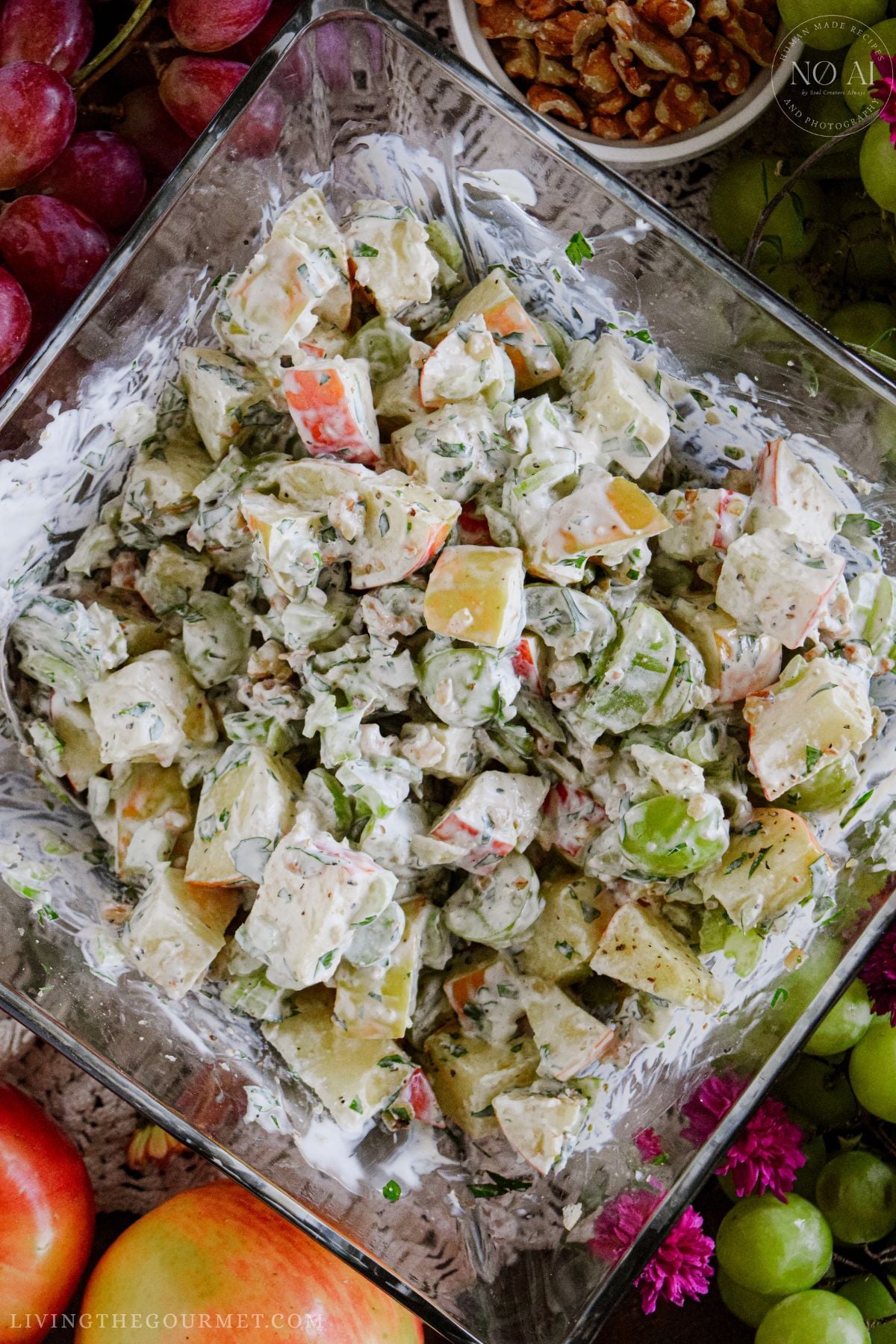
What is a Waldorf Salad?
From the Waldorf-Astoria Hotel to a Classic Salad
The Waldorf Salad originated in New York City in the 1890s in the Waldorf Hotel, a Fifth Avenue landmark that later became the world-famous Waldorf-Astoria Hotel. The recipe is credited to renowned Oscar Tschirky. What was he renowned for? Being the maître d'hôtel of the Waldorf - remember folks, this was the 1890s, and being a charismatic and forward-thinking maître d'hôtel is one of the things that could make you famous back in the day.
The recipe is said to have debuted at a society charity ball hosted at the Waldorf. This first version of the recipe was shockingly simple - just apples and celery dressed in mayonnaise. That's it, and it was a smash success. The recipe was later included in Oscar Tschirky's book "The Cookbook by Oscar of the Waldorf."
Walnuts, now considered a vital component, were added in later versions of the salad, appearing early in the twentieth century. Grapes, raisins, and other additions followed even later in the 1920s, while in the 1940s and 1950s it was common to see Waldorf Salad suspended in gelatin molds.
How This Honeycrisp Version Is Different
We're not deviating too far from a classic apple Waldorf salad foundation of apples, celery, walnuts, and a creamy dressing, but we're updating it in a few key ways. Here's how:
- Honeycrisp Apples: Instead of tart apples or green apples, we're using Honeycrisp, which brings a definitive crunch and notable sweetness. These qualities are key.
- Green Grapes: For bursts of sweetness and juiciness.
- Toasted Walnuts: The toasting is key, as it lets the walnuts bring a warmer, deeper flavor than raw walnuts.
- Celery leaves and Italian parsley: Together, these bring fresh, herbaceous notes to the salad that most other versions of this recipe simply leave out.
- Sour Cream and mayonnaise: Combining sour cream with the mayonnaise creates balance and a little bit of nuance via contrast. The sour cream works to mellow the mayo's heaviness, while also adding some much-needed tang to the dressing. Mayo alone is one-dimensional and a bit heavy - at least for my palate.
- Honey and fresh lemon juice: Together, the honey and fresh lemon juice brighten and balance the entire salad
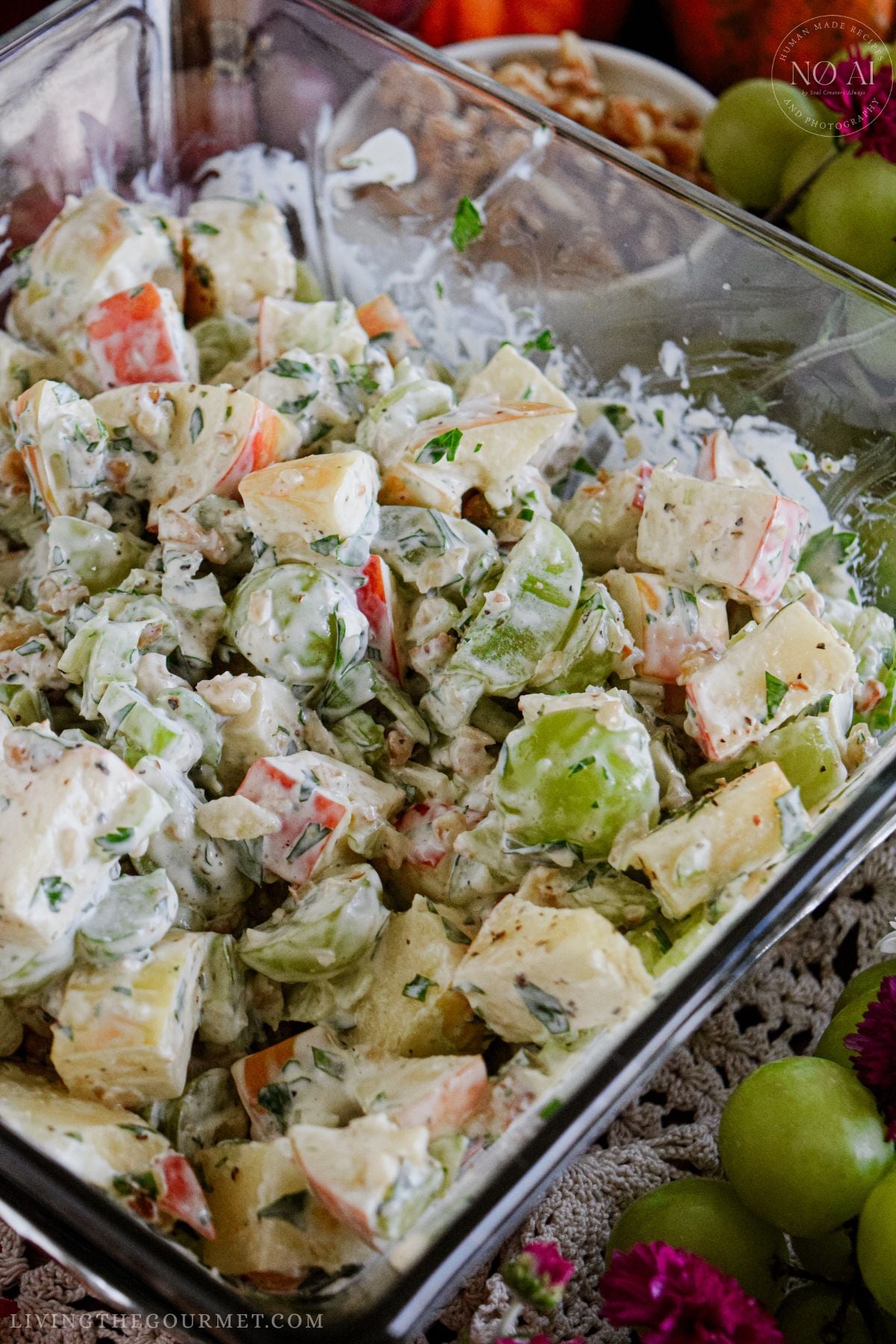
Why You'll Love This Honeycrisp Waldorf Salad
- Crisp and Juicy: The dominant qualities of this salad are best described as a satisfying crunch, with copious juice.
- Creamy but Not Heavy: We're using a mayo dressing to which we've added sour cream. This keeps the dressing rich, but avoids heaviness. It also adds a nice tang.
- Fresh and Herbaceous: Italian parsley and celery leaves bring brightness and lush herbal notes.
- Quick to Prepare: My favorite thing about this recipe is that despite being rich, thoroughly flavorful, and making a great presentation, it's sublimely simple to bring together, taking around 15-20 minutes in total.
- Easy to Customize: Let your creative juices flow. Want to add in candied pecans? Go ahead. Want to add your favorite cheese? That works too. Want to go retro and suspend the entire salad in a gelatin mold? Shockingly, that works deliciously and makes for a truly unique centerpiece. The possibilities are really endless, so feel free to get creative.
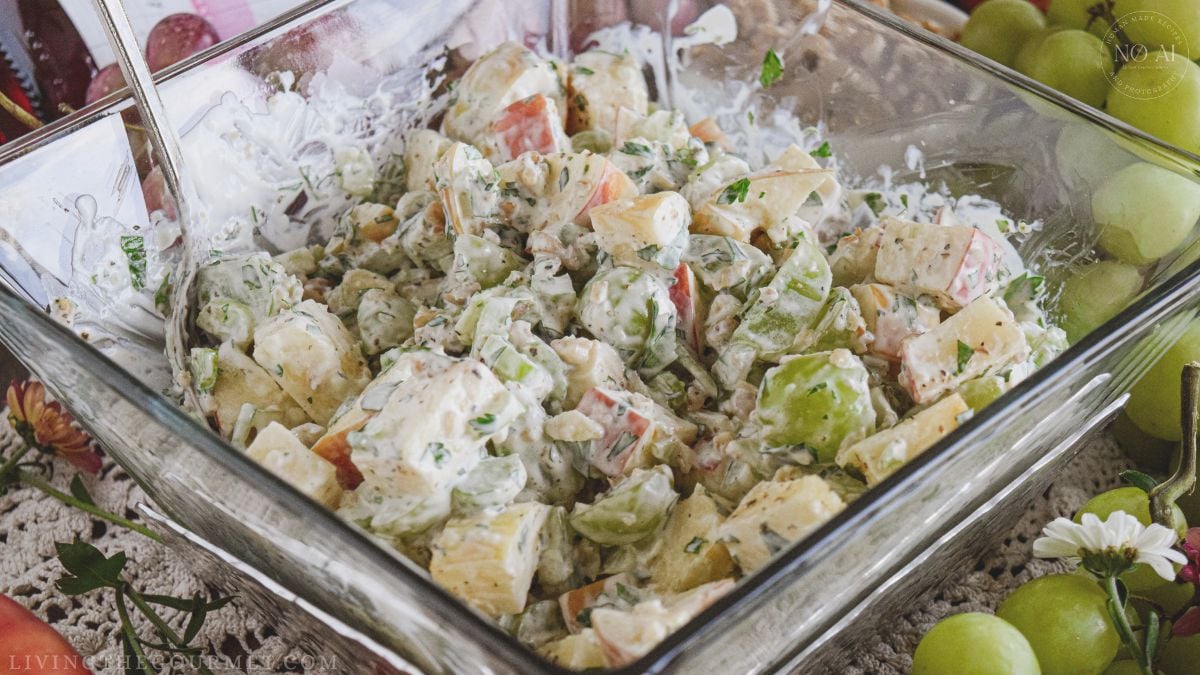
Ingredient Checklist for Honeycrisp Waldorf Salad
Here's a checklist for everything that you'll need to make a Honeycrisp Waldorf Salad. Exact measurements are in the recipe card below.
For the Salad
- Honeycrisp Apples, cubed: The star of the show. We're using Honeycrisp for their crunch, innate sweetness, and copious amounts of juice.
- Green Grapes, halved: Having them allows the dressing to cling and allows for the more reliable release of their flavor into the salad.
- Walnuts, toasted: Now quintessential to Waldorf salad, but we're toasting the walnuts to deepen their flavor. Chopping ensures that they are speckled through every bite.
- Italian parsley, finely chopped: We're using flat-leaf parsley as a palate cleanser, as it helps to brighten the flavor. Don't bother with curly-leaf parsley, as that's purely a garnish.
For the Creamy Dressing
- Sour Cream: Helps to lighten the texture, while also providing some nice tang to the dressing, which would otherwise be fairly heavy if we relied solely on mayo.
- Mayonnaise: Provides the body of the dressing and richness.
- Honey: Brings gentle sweetness and some 'honey flavor' to the dressing, while also helping to balance the tang from the sour cream.
- Fresh Lemon Juice: Brings citrusy brightness and balance. It also helps to keep the apples from browning.
- Salt: Helps to bind the other flavors together.
- Black Pepper: For savory warmth and balance.
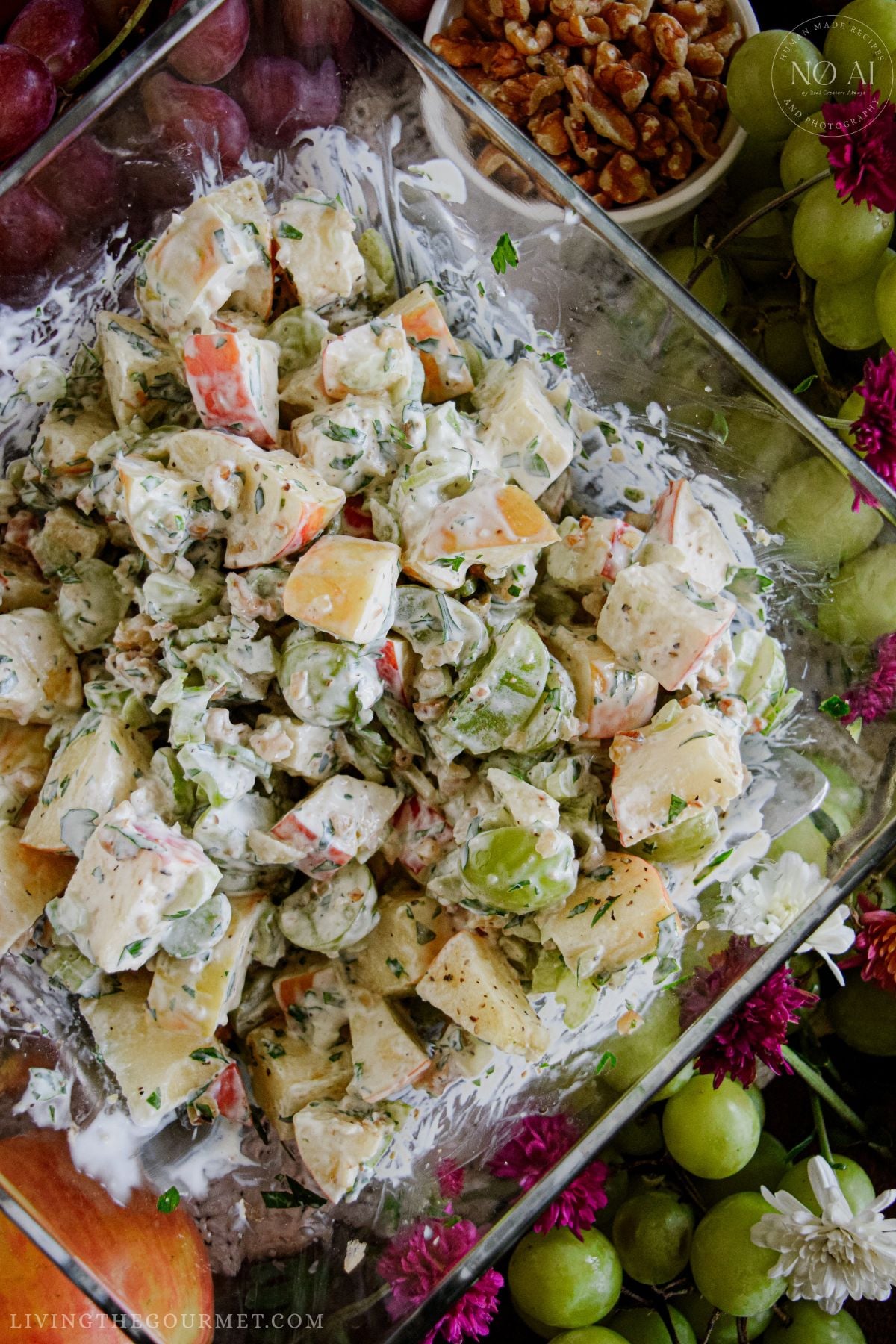
Choosing the Best Apples
For this recipe, we're using Honeycrisp apples, which are sometimes spelled Honey Crisp, as their crunch and sweetness make them simply ideal. The key behind their crunch is their unusually large cells, which fracture cleanly and evenly when you bite into them, and this is also why they taste so crisp and release so much juice. What's more, their sweet-tart balance stands up excellently to the dressing.
Really, what we're looking for are firm apples with no soft spots. A good Honeycrisp apple should feel rock solid.
If Honeycrisps are not available, or you prefer a different flavor, these are the best apples to substitute:
- Granny Smith Apples: They produce a sharper, tarter salad with a very firm bite. These are my go-to substitutes.
- Green Apples: Any green, crisp apple will work and provide a similarly bright flavor.
- Pink Lady Apples: Provide a sweet-tart flavor, crisp texture, and resist browning. Another great substitute, in my opinion.
- Fuji or Gala: Provide a sweeter salad, but an overall milder flavor.
In any case, avoid softer apples, or apples with a mealy texture such as Red Delicious or McIntosh. These apples simply don't work for Waldorf Salad, and this recipe is no exception. They lose their structure very quickly once dressed, and leave you with a mushy, soft salad, which is the opposite of what we're looking for. You can, of course, always mix and match apples, such as Honeycrisp with Granny Smith, for a salad with more complexity and a bit more color.
Leave the Peel On
Do not peel the apples; there is simply no need. The skin adds color, a bit of extra texture, and helps the apple cubes hold their shape. That said, be sure to wash and then dry the apples thoroughly before cutting.
How to Prep the Ingredients
This salad is all about texture, and a few minutes of prep can really pay off in this regard.
How to Toast Walnuts
Once again, we're toasting the walnuts to deepen their flavor and bring out warming notes and earthy essences, which provide lovely contrast to the other flavors of the salad.
- Stovetop: Set the walnuts in a dry skillet over medium-low heat until they start to release nutty aromas and become lightly golden. Be sure to stir them every 3-5 minutes so that they do not burn.
- Oven: Spread the walnuts out on a baking sheet, and toast them in the oven at 350 degrees F for about 6 to 8 minutes. Flip once about halfway through to ensure even toasting.
Whichever way you choose to toast the walnuts, be sure to keep a close eye on them, as walnuts tend to go from a lovely golden color with nutty aromas and flavors to burnt and astringent-tasting very quickly.
How to Cut the Apples
Start by coring the apples and then slicing into roughly half-inch cubes. Do try to keep the pieces as uniform as possible, as this makes the salad both more pleasant to eat as well as ensuring a consistent texture and crunch throughout.
Pro-Tip: Cut the apples last, right before you assemble the salad to ensure maximal crispness and flavor.
How to Prep a Celery Heart
For starters, the celery heart is the pale cluster of tender inner stalks at the center of the celery bunch. Start by trimming the base of the cluster, then rinse the stalks well, as dirt has a tendency to gather near the bottom. Then slice them into thin chunks. Save the pale yellow and green leaves and chop them along with the parsley. If your grocery store sells only whole celery bunches, then use the innermost stalks and leaves and save the outer stalks for something else.
How to Prep the Grapes and Parsley
Super simple. Just pat the grapes dry and halve them. For the parsley, pull the leaves from the stems, make sure they are dry, and then chop them as finely as you can manage.
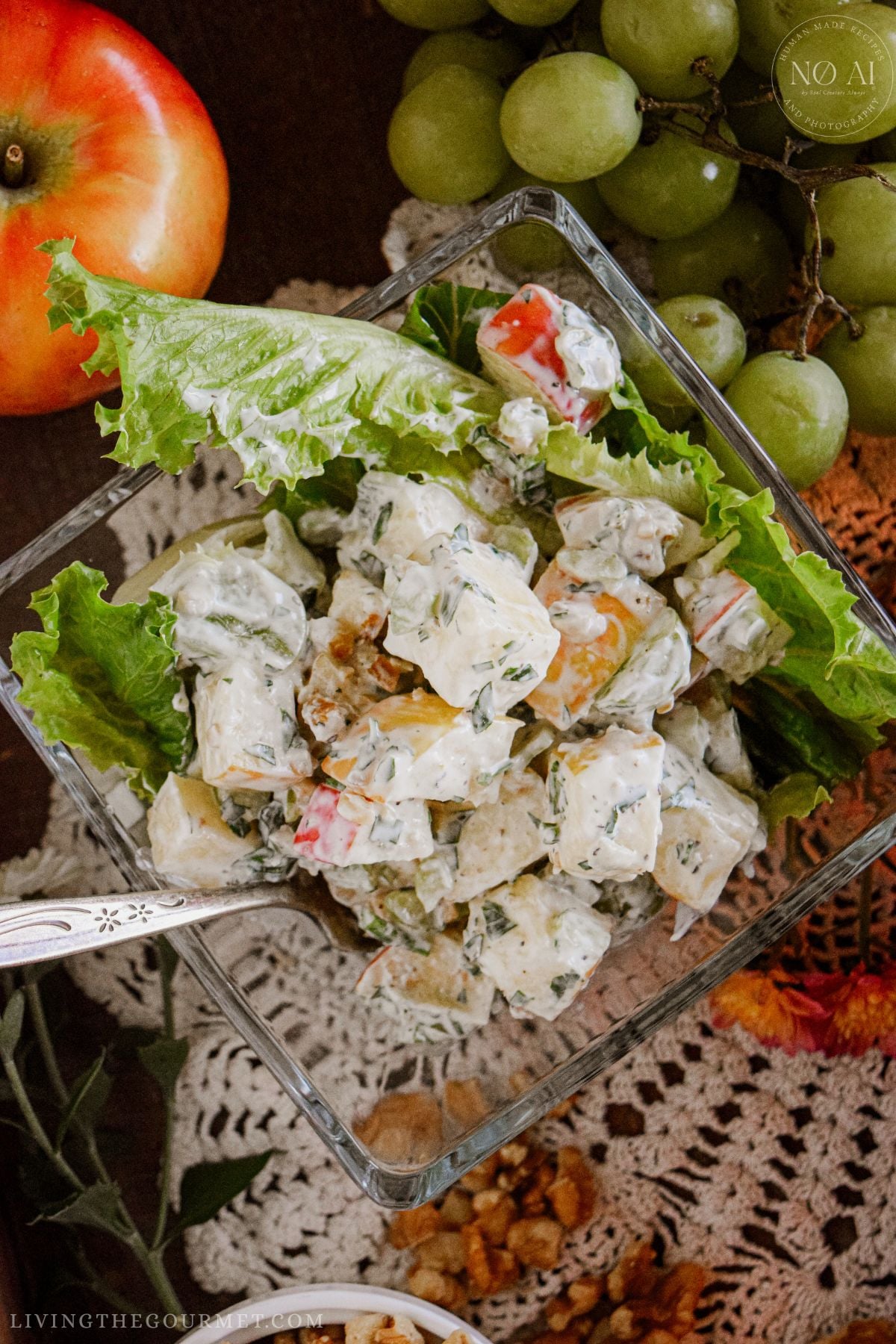
How to Make a Honeycrisp Waldorf Salad
- Prepare the Salad Ingredients: Toast the walnuts and let them cool. Then halve the grapes, chop the celery hearts and leaves, and chop the parsley. Cube the apples last. Mix everything in a large bowl. Simple.
- Make the Dressing: In a medium bowl, combine the sour cream, mayonnaise, honey, salt, fresh lemon juice, and black pepper. Whisk until smooth. Taste it, adjust to your preference if needed.
- Toss and Serve: Pour the dressing over the salad, but do not stir harshly. Instead, gently fold the salad until the apple pieces are coated. Gentle is key, as you do not want to bruise the apples. Serve right away over a bed of lettuce. Butter lettuce leaves are especially nice since their delicate texture plays deliciously with the crispness of the salad.
Getting the Creamy Dressing Just Right
Understanding the Flavor Balance
This dressing works because each ingredient has a purpose. For example, the sour cream brings tartness to the dressing as well as pleasantly lightening the texture. The honey helps balance that same tang with some sweetness, while the fresh lemon juice adds citrusy brightness; meanwhile, the black pepper provides savoriness and depth of flavor.
- Too Thick?: Whisk in a teaspoon of lemon juice or a splash of milk.
- Too Thin?: Add in another spoonful of sour cream.
- Too Tart?: Add a little more honey, but only half a teaspoon at a time.
- Too Sweet or Too Flat?: Add a squeeze of lemon and a pinch of salt.
Keep in mind that the apples and the grapes will add sweetness on their own, so the dressing should taste slightly tangier on its own than you want it to prior to being added to the assembled salad.
Can You Make a Lighter Version?
Absolutely. Yes. To make a lighter dressing, replace some or all of the sour cream with plain Greek yogurt, as Greek yogurt offers similar tang, more protein, and less fat and a lighter overall texture. You can also swap part of the mayonnaise with Greek yogurt, though I would advise keeping at least half of the mayo to preserve the dressing's intended richness and classic Waldorf flavor.
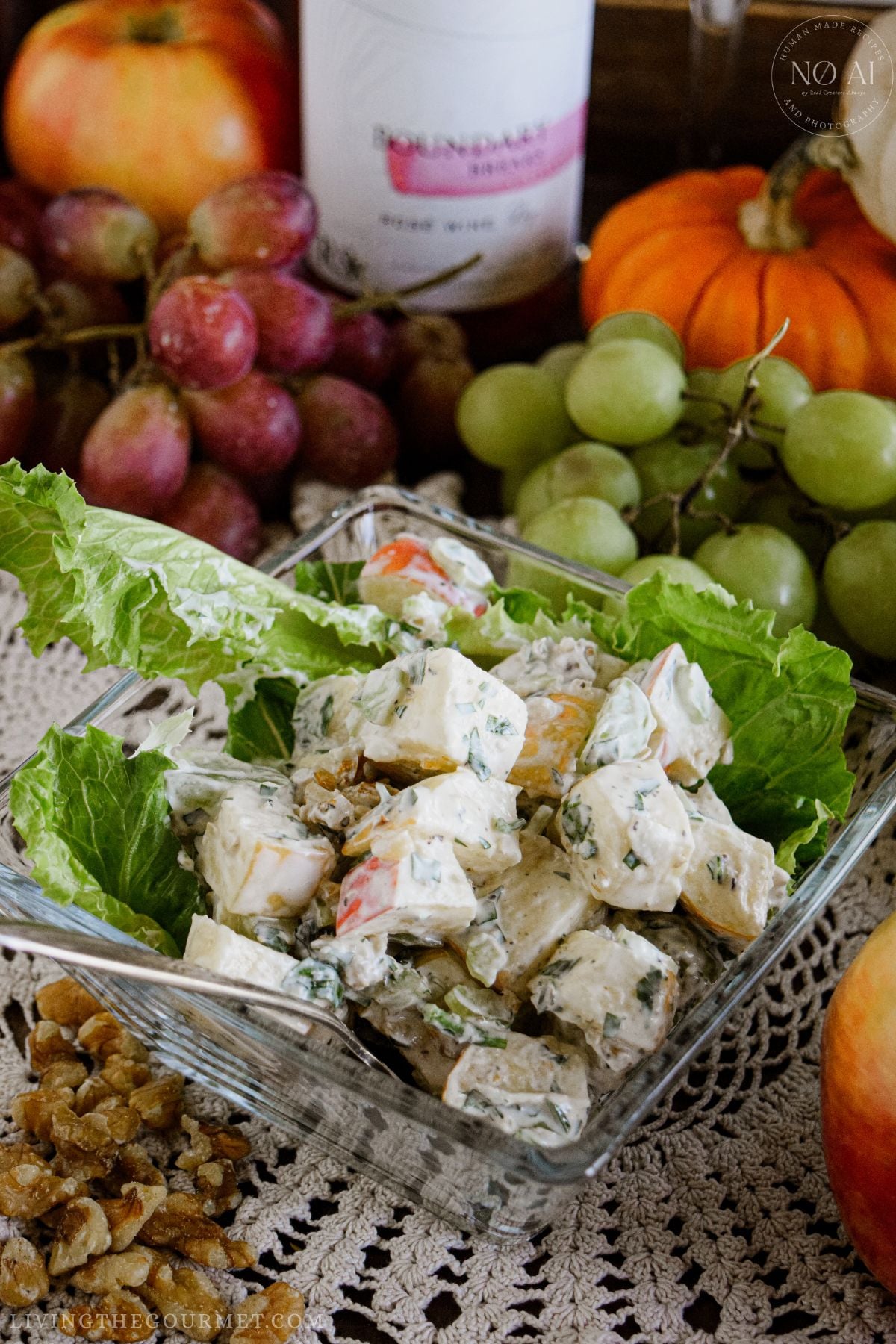
How to Keep Honeycrisp Apples Crisp and the Dressing Creamy
The most frustrating part of any Waldorf salad is that it can turn watery and soft in as little as an hour, even if it looks and tastes perfect when you first make it. Here is why that happens and how to prevent it.
Why Waldorf Salad Gets Watery
Honeycrisp apples are beloved for their texture and their juiciness - but juiciness means moisture, and as the Honeycrisp apples sit sliced, they naturally leak that juiciness, adding moisture to the dressing. What's more is that salt draws out moisture from the fruit and veggies, meaning once the salted dressing meets the apples, the grapes, and the celery, the liquid from those fruits and veggies begins seeping out and pooling at the bottom of the bowl. As such, the longer the salad sits, the more liquid you get.
Preventing Honeycrisp Apples from Making the Dressing Watery
- Slice the apples shortly before assembling, not hours, as advised above.
- Pat the apples, celery, and grapes dry with paper towels before adding in the dressing.
- Make sure that the parsley and grapes are completely dry after washing.
- Skip soaking the apples in extra lemon juice. The lemon in the dressing is more than enough. Any extra liquid, even lemon juice, only thins things out.
- Keep the salad well chilled. Cold slows the release of moisture.
- If you aren't serving the salad immediately, let it sit in the refrigerator.
Pro-Tip: Do not soak the apples in lemon juice. Yes, this will stop the browning process for a full twelve hours, but it will make the apples very tart, throwing off the entire flavor balance of the salad.
Why Celery Leaves Belong in This Salad
Typically, most home cooks throw away celery leaves without even thinking about it. However, they are one of the secrets of this recipe, and I do advise learning when and how to use them in general - but that's an article for another day. For this recipe, the leaves have a beautifully concentrated celery flavor that is fresh, delightfully peppery, and almost herb-like. Paired with the parsley, the celery leaves help to cut through the richness of the dressing, giving the salad a green, somehow garden-like quality that isn't typically part of the profile for most classic Waldorf salad preparations. You want to use the pale, inner leaves from the celery heart. The darker outer leaves can be tough and bitter, and that's not what we're looking for.
When to Add in the Walnuts
The walnuts soften as they sit in the dressing, and so we want to fold them in as close to serving as we can to ensure maximal texture. If you are putting the salad out as part of a buffet, consider holding back a handful of the nuts to scatter over the top just before serving, or even offer them as an optional side for your guests to add in on their own. This adds additional texture and helps to make the salad look even more inviting.
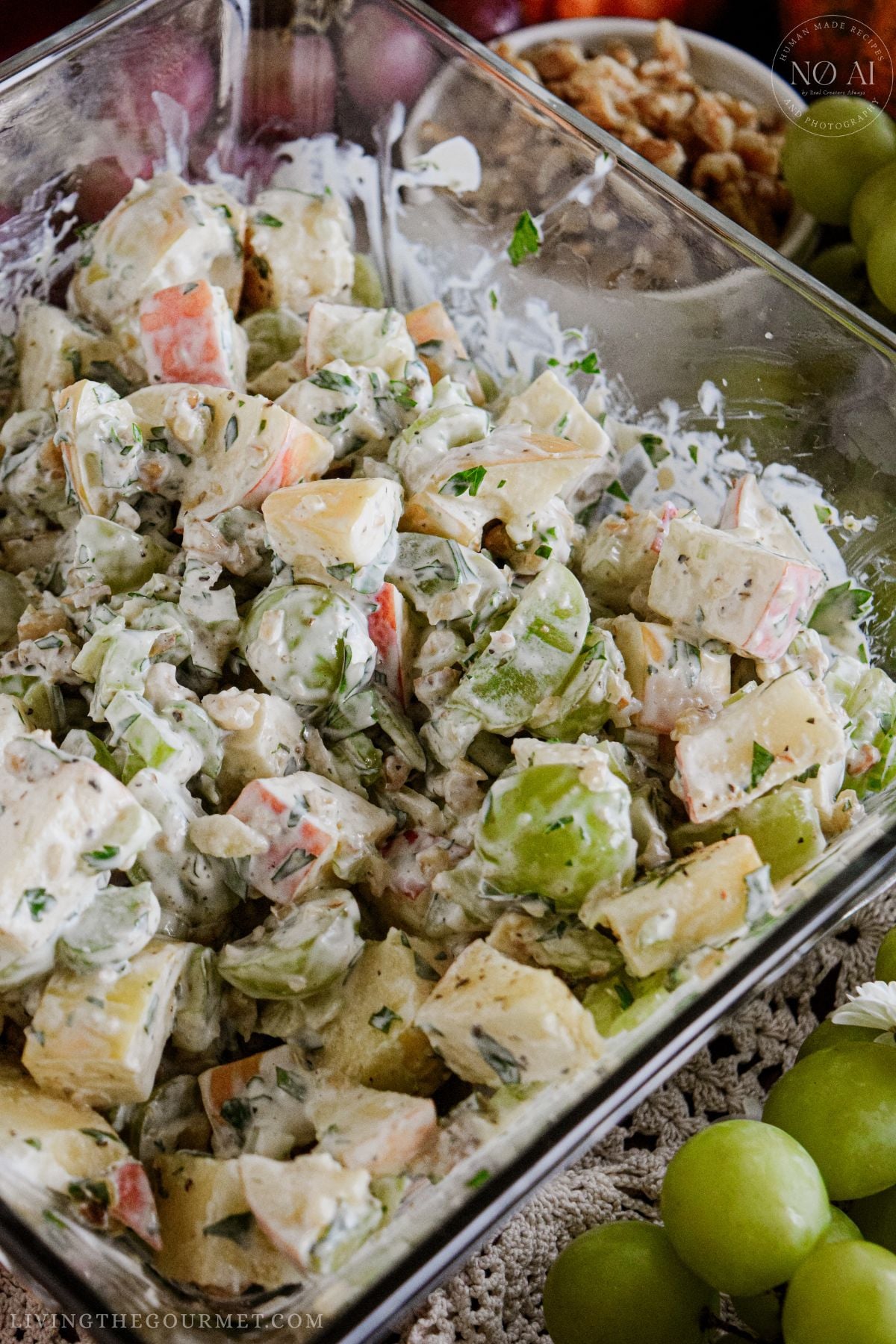
Waldorf Salad Troubleshooting
Here are some of the most common Waldorf salad pitfalls and how to fix or avoid them.
- Watery Salad: Usually happens due to moisture pulled from the fruit and the celery. To prevent this, pat the ingredients dry, dress the salad closer to serving, and drain any pooled liquid before stirring in a spoonful of fresh dressing.
- Soggy Walnuts: Almost always due to the walnuts being fully toasted or added too early. Be sure to toast the nuts until they are fragrant, then cool them completely before adding to the salad. Also, be sure to add the nuts when you are serving the salad.
- Mushy Apples: This typically means you are using a mushy or mealy apple variety, or the apples were cut too far ahead. Use Honeycrisp, Granny Smith, or Pink Lady apples, and cut them just before assembling the salad.
- Browned Apples: Apples brown due to exposure to air. Once cut, toss the apples with the dressing promptly, as the lemon juice slows browning.
- Bland Flavor: This means you under-seasoned the dressing. Add a pinch of salt and a squeeze of lemon, then taste again. If it's still bland, adjust the rest of the seasonings.
- Too Sweet: This means you likely used very sweet varieties of apples or grapes. The simplest solution is to add lemon juice, a bit more black pepper, or swap one apple for a Granny Smith next time.
Can You Make Waldorf Salad Ahead of Time?
Absolutely, as long as you make the salad in stages and avoid dressing the salad until it's time to serve. Here's how.
Make the Dressing Ahead
Whisk the sour cream, mayo, honey, lemon juice, salt, and pepper together, and then store the dressing in an airtight container. The dressing will keep in the refrigerator for up to 2 days, provided you are storing it in an airtight container. The flavors will meld together nicely as it rests. However, be sure to give it a quick stir before tossing it with the salad.
A Simple Make-Ahead Timeline
- Up to 2 Days Ahead: Make the dressing and refrigerate it.
- Up to 1 Day Ahead: The walnuts can be toasted up to a day ahead of time. Store them in a small bowl or container at room temperature, covered. The celery, parsley, and grapes can also be prepared a day ahead of time. Store them wrapped in paper towels in the fridge.
- Just Before Serving: I strongly recommend cubing the apples right as you are ready to serve the salad. Then combine everything, add the walnuts, toss with the dressing, and spoon over the lettuce.
Following this timeline will mean that on the day, you only need about five minutes to finish the salad.
How to Store Leftovers
I recommend storing any leftovers in an airtight container in the fridge. That said, I don't recommend keeping leftover Waldorf salad for more than a day. This salad is always best freshly assembled, as the apples tend to become mushy and brown very quickly. Also, Waldorf salad does not freeze well, as the fruit and the dressing both break down considerably during thawing.
What to Serve with Honeycrisp Waldorf Salad
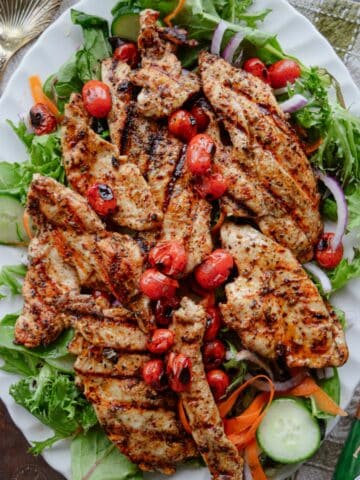
- Grilled Chicken: Any bright, fresh grilled chicken recipe, such as our bistro-style grilled chicken, would pair deliciously.
- Roast Chicken: A light roast chicken preparation, such as roasted spatchcocked chicken with garlic and lemon, would pair beautifully.
- Pork: A simple pork tenderloin stuffed with herbs, garlic, and cheese would be my go-to pairing. Grab my recipe for it here.
- Wine Pairing: A decent rosé would be my go-to wine pairing, such as Boundary Breaks Vineyard's Rosè wine.
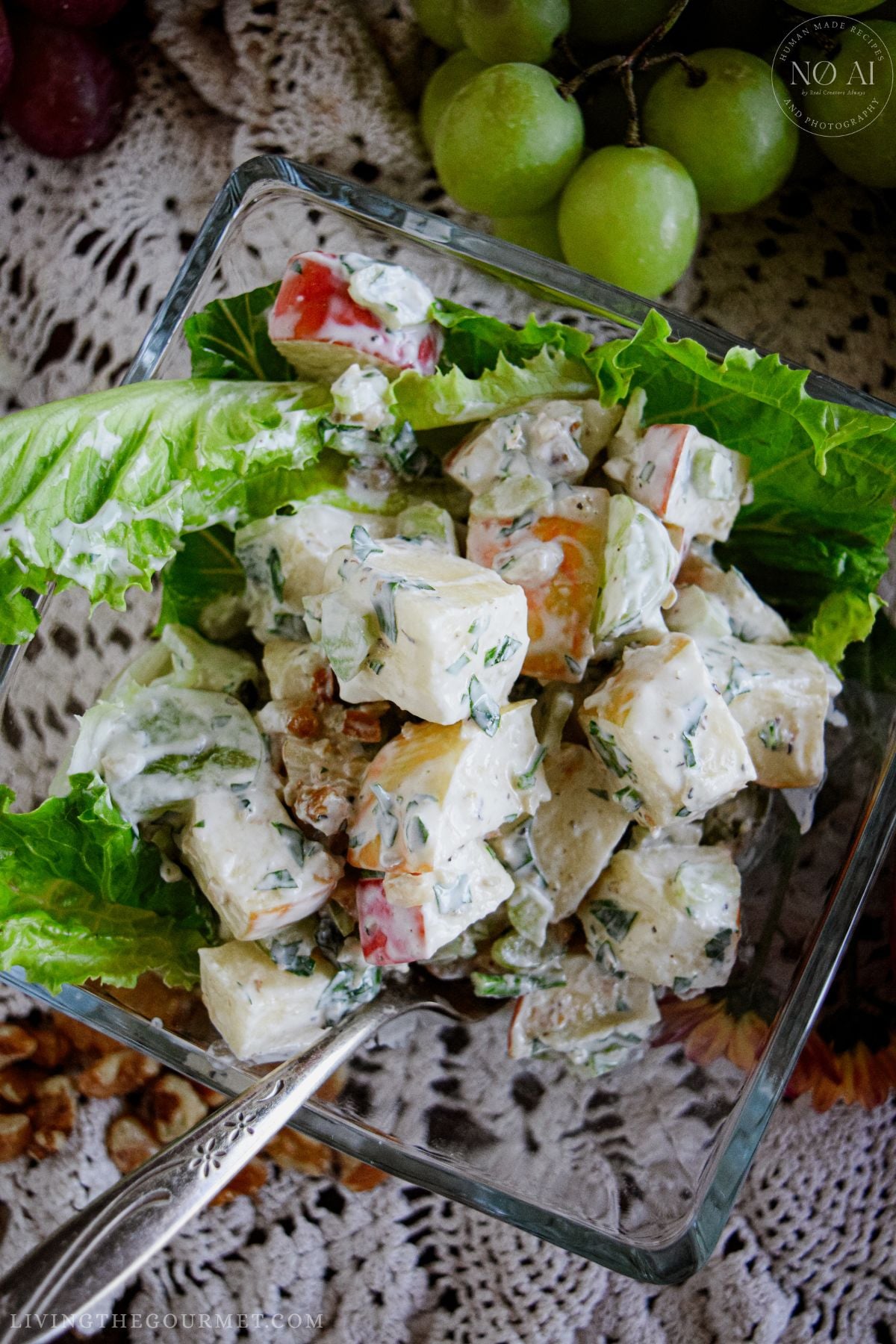
Frequently Asked Questions
Yes, you can. Granny Smith Apples make for a tarter, sharper salad and will give the salad a very firm bite.
You can make the dressing and prep most of the ingredients the day before as we outlined above. However, for the best texture, cut the apples and dress the salad shortly before serving.
The fresh lemon juice in the dressing slows down browning, so toss the apples with the dressing immediately after slicing. Avoid soaking the apples in extra lemon juice, as this will thin the dressing and throw off the intended flavor balance.
Yes. Red grapes are somewhat sweeter and add a nice pop of color. Many chefs mix different types of grapes. So, feel free to experiment.
The inventor of the Waldorf Salad himself, Oscar Tschirky, made Waldorf salad without walnuts, and you can too. That being said, I do recommend adding something to replace them for the sake of texture. Good substitutes for walnuts are toasted sunflower seeds or pumpkin seeds for a nut-free option. If you can eat nuts but simply don't like walnuts, pecans are a great alternative.
You can, but it produces a very different salad, as mayo is really a foundational ingredient going right back to Oscar Tschirky's original recipe. That said, you can replace the mayonnaise with additional sour cream or plain Greek yogurt, but both will produce a much tangier, much lighter, and thinner dressing. A little extra honey can balance out the tanginess.
Butter lettuce is particularly good because it is soft and has delicate leaves, and this contrasts nicely with the crunch that's central to the salad's texture. Bibb, Boston, or tender green leaf lettuce all work nicely.
Refrigerate promptly in an airtight container. It keeps for about a day in the fridge. It is certainly safe to eat for a little longer than a day, but the texture degrades rapidly.
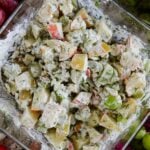
Honeycrisp Waldorf Salad with Creamy Dressing
- Total Time: 15 minutes
- Yield: 4-6 1x
Description
A fresh, modern take on the classic. Crisp Honeycrisp apples, juicy grapes, toasted walnuts, and a tangy-sweet sour cream dressing.
Ingredients
For the Salad:
- 1 cup green grapes, halved
- 1 cup loosely packed Italian parsley, finely chopped
- 2 Honeycrisp apples, cubed
- 1 cup walnuts, gently toasted and finely chopped
- 1 celery heart, chopped with leaves
For the Dressing:
- 1/2 cup sour cream
- 1/2 cup mayonnaise
- 1/2 tsp. salt
- 1/2 tsp. Coarse-ground black pepper
- 1 tbsp. honey
- 2 tbsp. fresh lemon juice
Instructions
For the Salad:
- Place all of the chopped ingredients in a serving bowl.
For the Dressing:
- Combine all of the ingredients for the dressing in a medium-sized bowl and whisk together.
- Pour over the chopped salad and toss.
- Serve over your favorite salad greens.
- Prep Time: 15 minutes
- Category: Side Dish
- Cuisine: American
And that's our Honeycrisp Waldorf Salad with Creamy Dressing. If you enjoyed this recipe, tried any of the pairings, or have any questions or suggestions, be sure to let us know in the comments below.
Happy Cooking!
This post contains affiliate links, and I may earn a commission if you purchase through these links, with no additional cost to you.

Leave a Comment