
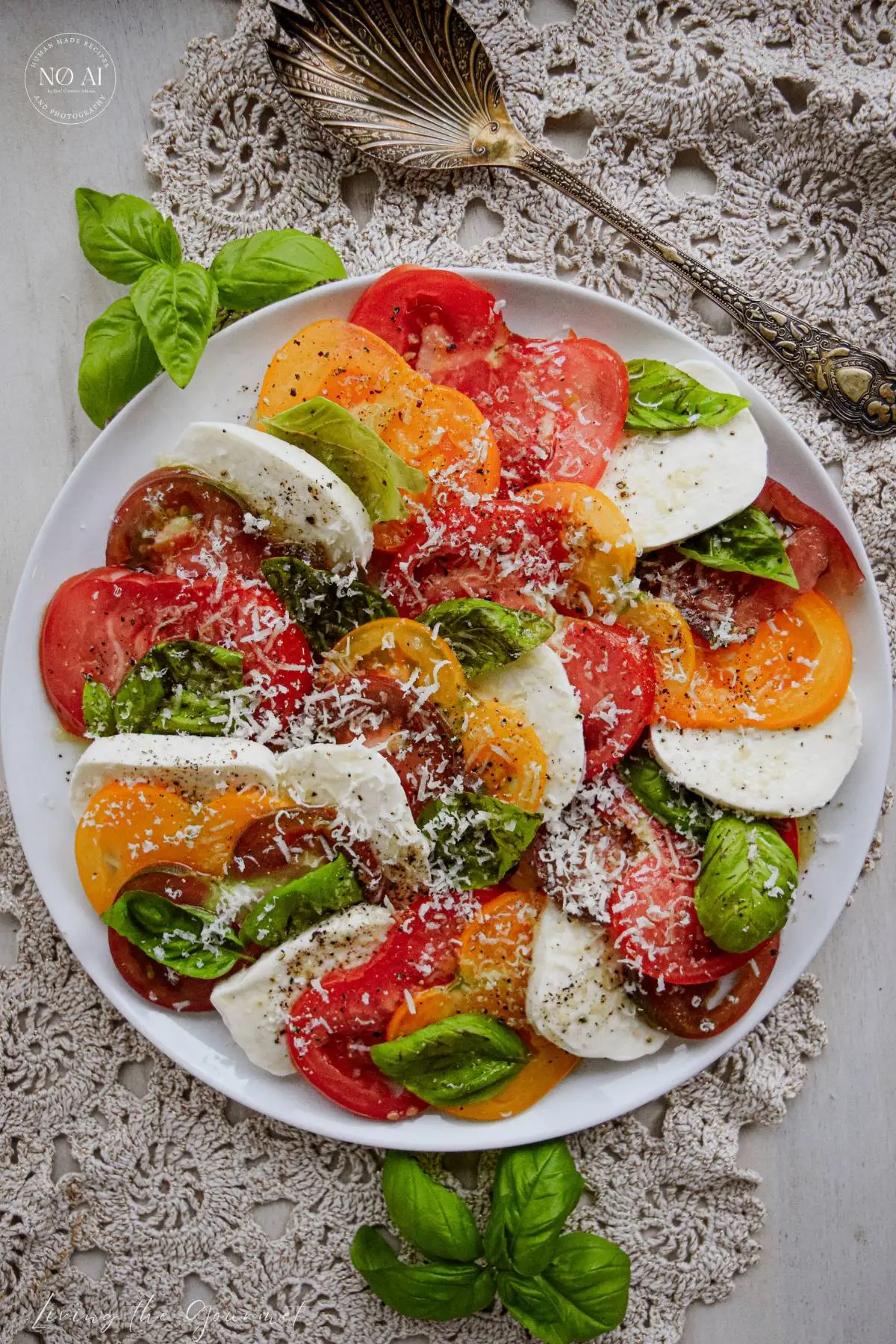
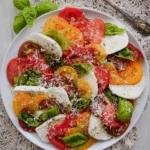
Our simple Caprese Salad uses just four basic ingredients. Fresh mozzarella cheese, fresh basil, heirloom tomatoes, and extra virgin olive oil. Traditional Italian cuisine doesn't get simpler than this.
Easily one of my favorite summer recipes, Caprese Salad (insalata caprese) originated on the Italian island of Capri in the Bay of Naples in the early 20th century. Some accounts pinpoint its inception to Hotel Quisisana- which dubs it a "masterpiece of simplicity," where it won the hearts of American tourists over other, more complex salads and appetizers.
Our recipe adheres to the original Italian flag-inspired recipe of red, white, and green (tomatoes, mozzarella, and basil), with a drizzle of olive oil over the top. However, we're diverging from the original recipe with the use of heirloom tomatoes, which bring a little more 'tomato flavor' and sweetness, as well as a little more texture and eye appeal - in my ever-humble opinion.
With all of that said, the best part about this salad is that it takes mere minutes to prepare (no, seriously, minutes), and that it can be customized to fit the occasion and your palate - more on all of that below. For now, let's prep a classic Caprese Salad.
How to Make Caprese Salad (Step-by-Step)
Making the perfect Caprese Salad is less about complex Italian recipe technique, and more about sourcing quality ingredients, and then letting those ingredients stand on their own merit. Remember Hotel Quisisana's description of their own invention "a masterpiece of simplicity" - and that means we keep things simple in this recipe for simplicity's sake.
Step 1: Prepare the Tomatoes
We're using heirloom tomatoes - more on why below. Use a sharp knife, and slice the tomatoes into quarter-inch-thick rounds. Uniform thickness matters here, both for the presentation of the salad and for balanced flavor and texture in each bite. Place the sliced tomatoes on a paper-towel-lined plate, and then sprinkle lightly with salt. Let them rest for 5-10 minutes to draw out the excess juices and to concentrate the flavor. And yes, the flavor of the tomatoes absolutely matters here - meaning you should use quality tomatoes. From there, pat the tops gently with a fresh paper towel before plating.
💡Pro Tip: Slice the tomatoes at room temperature, never straight from the refrigerator. Cold tomatoes have muted flavor.
Step 2: Prepare the Fresh Basil
We want to handle the fresh basil without wilting or bruising it. To do this, we start by gently rinsing fresh basil leaves. Then pat them dry completely between paper towels. For a classic presentation, we then assemble the leaves whole over the salad. Alternatively, you can chiffonade them for a more even distribution of basil throughout the salad.
Step 3: Slice the Mozzarella
My number one tip for the mozzarella is this - fresh mozzarella must be used at room temperature. Remove the fresh mozzarella from the fridge 30 minutes before using. Cold mozzarella is rubbery and flavorless. Room temperature mozzarella is creamy, soft, and full of that delicate milky flavor that 'makes' fresh mozzarella.
After that, we want to slice the fresh mozzarella into quarter-inch rounds to match the thickness of the tomatoes. Uniformity creates visual harmony and balanced flavor. Uneven ingredients look sloppy and create an imbalance of flavors.
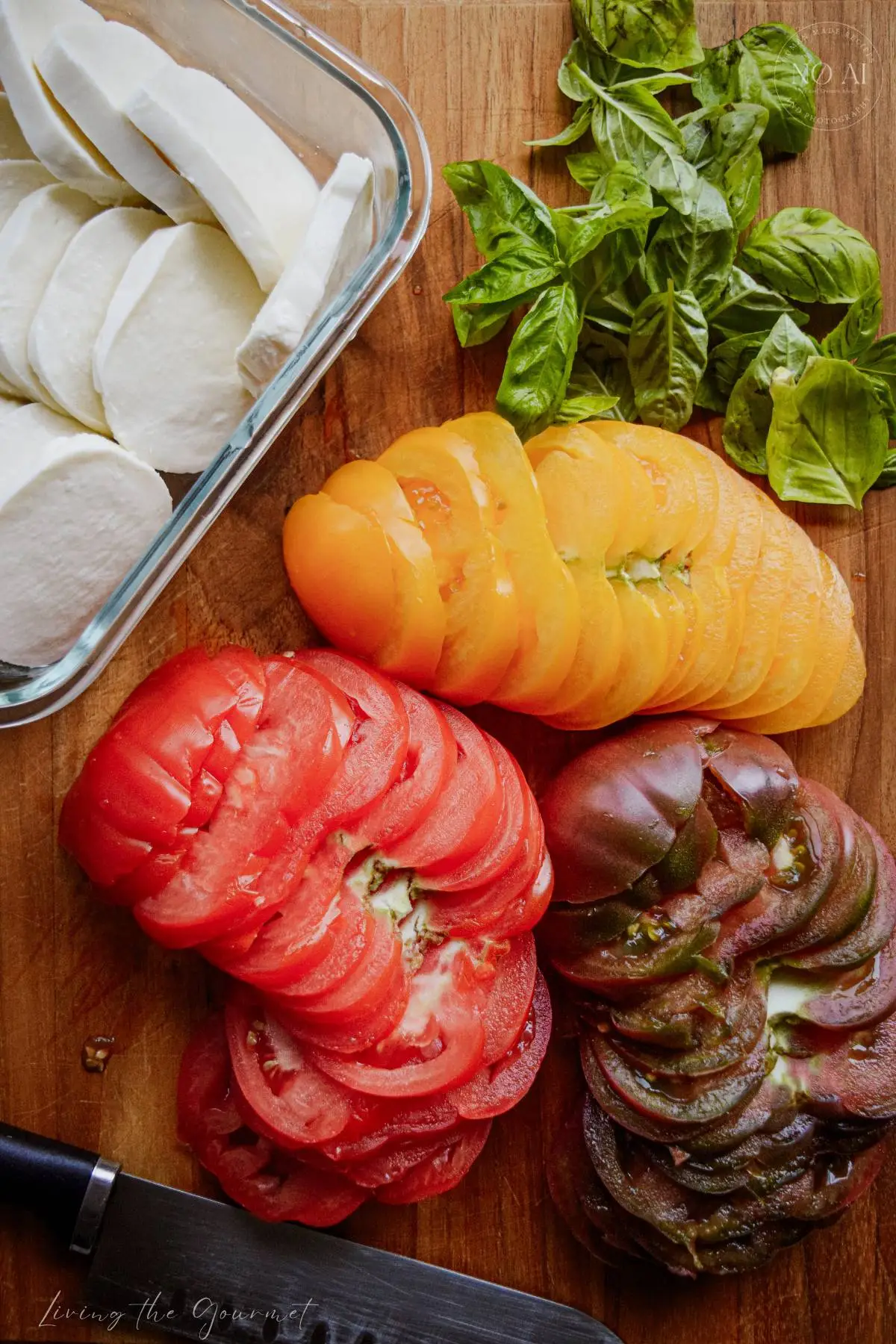
Step 4: Plate the Salad
Recipe preparation meets art. Begin by arranging a slice of tomato on your serving platter, then top with a whole basil leaf followed by a slice of fresh mozzarella cheese. Continue this alternating pattern until you have covered the platter. Tomato, basil, mozzarella, each slightly overlapping. You want a gorgeous cascading effect.
Step 5: Finishing Touches
The order is important here. First, we want to drizzle the salad generously with high-quality extra virgin olive oil, allowing it to pool between the layers.
Then, sprinkle with flaky salt (I'm specifying flaky salt for a reason, which I'll touch on in the ingredient checklist), and then freshly ground black pepper. For an optional Living the Gourmet Twist (yes, I just made that up), finish with a light grating of fresh Parmesan or Romano cheese for some added umami depth, which beautifully complements the fresh mozzarella.
Finally, this is where you would add your balsamic dressing or glaze - if desired. We'll talk below about the differences between a balsamic reduction, glaze, or dressing and which you should use, if any.
Serve immediately at room temperature
This is non-negotiable. Caprese Salad is at its absolute best within 15-20 minutes of assembly. This is not a make-ahead recipe. You want the extra-virgin olive oil glistening, the cheese moist and milky, and the tomatoes and basil crisp. All of that vanishes if you let the salad sit out for an hour or if you try to store it in the fridge. Refrigerating Caprese Salad ruins the intended texture and flavor, so be sure to make this salad immediately before serving.
What to Serve with Caprese Salad
- Italian Cuisine: Traditionally, Caprese Salad is served as an antipasto course before entrees or pasta dishes such as chicken piccata, veal Milanese, or ossobuco. It also works beautifully alongside main courses like roasted meats and seafood.
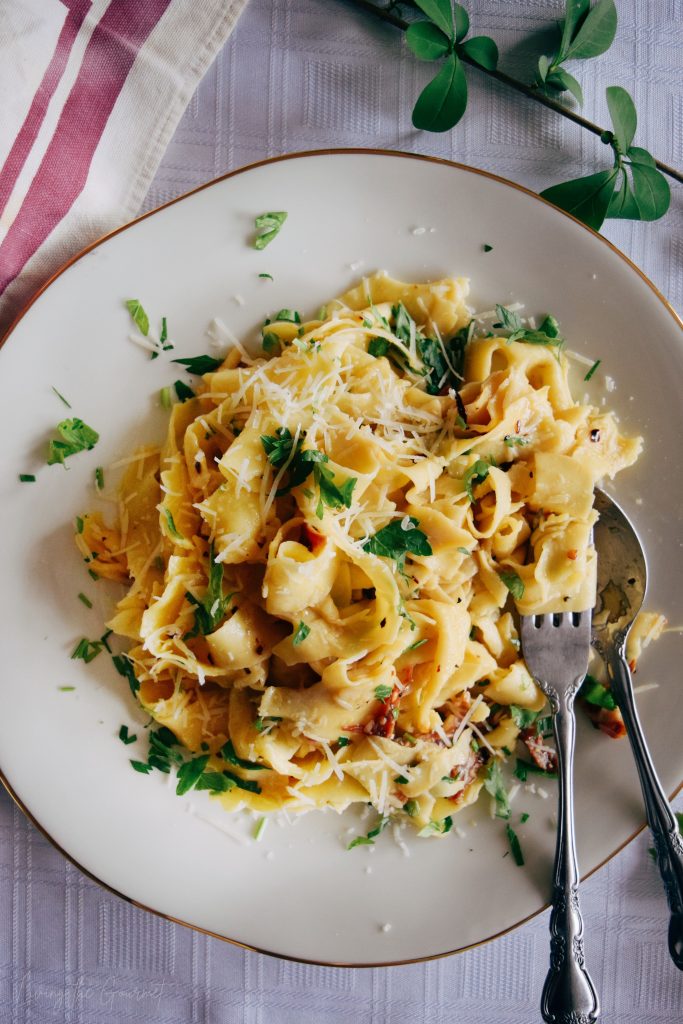
- Pasta Dishes: Personally, I love serving caprese salad before light pasta dishes that won't overwhelm it. Aglio e olio, pesto pasta, lemon pasta, or simple tomato-based sauces all work great. Definitely avoid heavy cream sauces.
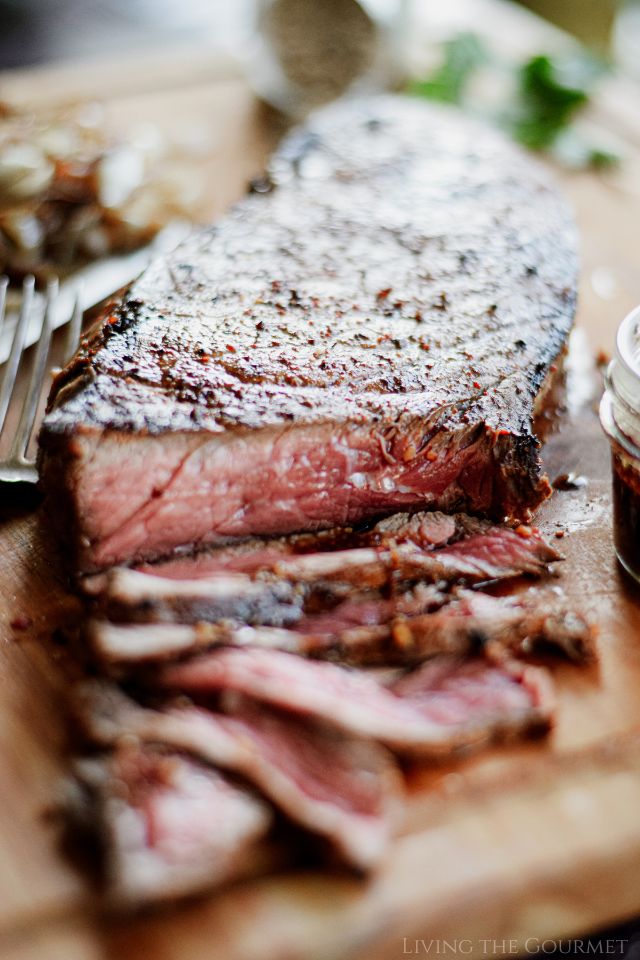
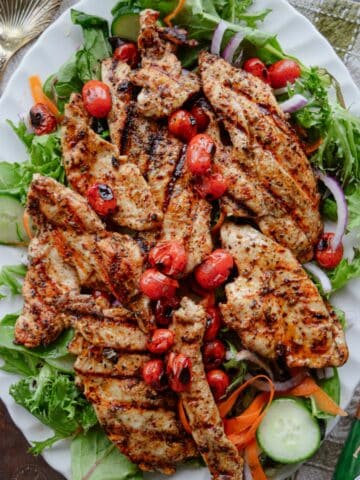
- Grilled Meat: Caprese Salad is a decidedly warm-weather salad, and so it should come as no surprise that some of the best pairings are grilled meat and seafood. However, the key is keeping things light so as not to overwhelm this delicate recipe. That means grilled chicken, grilled fish, grilled shrimp, or barbecued pork tenderloin.
- Wine Pairings: Italian white wines are front and center. That means pinot grigio Vermentino. Italian reds also work, especially Chianti and Barbera.
- Crusty Bread: A decent loaf of crusty Italian bread is always a welcome addition. Bonus points if preparing something like a homemade boule loaf.
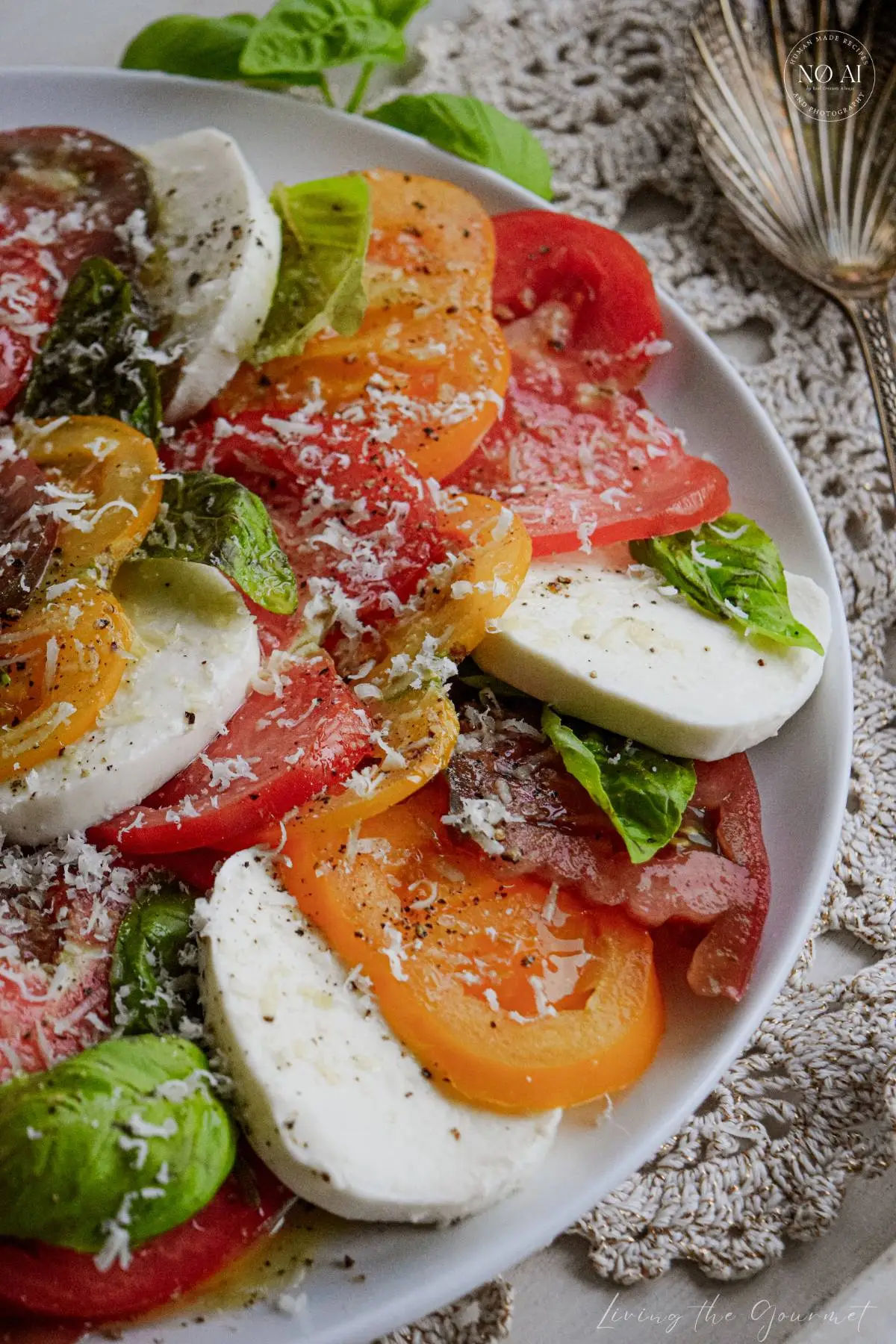
Caprese Salad Recipe - Complete Ingredient Checklist
- 2-3 Heirloom Tomatoes, sliced ¼-inch thick
- Why Heirloom Tomatoes: Heirloom tomatoes are open-pollinated, meaning they are grown for flavor rather than uniform appearance or shipping durability. This means enhanced sweetness, brighter acidity, and flavor depth that standard tomatoes simply can't match.
- Imperfections are Fine: Don't be put off by lumpy shapes, color variations, or small blemishes. These are characteristic of the open-pollination process.
- Substitutions: Regular tomatoes are traditional to Caprese Salad, so don't worry if heirloom tomatoes aren't available. Regular, fresh tomatoes are all you need. Vine-ripened tomatoes would be my go-to substitute. Cherry tomatoes also work, but will dramatically change the structure of the salad. Cherry tomatoes and grape tomatoes turn this into a tossed or chopped salad, rather than an assembled or stacked salad - which is fine.
- Fresh Basil
- Fresh is Best: This is absolutely not a recipe for dried basil. We want fresh, fragrant basil. The entire character of Caprese salad is about freshness and brightness, and a big part of that comes from the anise-like, herbal brightness and peppery aromatic profile of fresh basil.
- Substitutions: None. Fresh basil is a foundational flavor and aromatic component to this recipe. If you don't have fresh basil, I would honestly recommend prepping a different salad.
- Fresh Mozzarella Cheese (sliced to ¼-inch thickness)
- Fresh is a Must: The defining quality of 'fresh' mozzarella is its high-moisture content. This is in sharp contrast to the low-moisture blocks that we might buy for use on pizza or baked recipes like lasagna. High-moisture, fresh mozzarella has a creamier texture and a delicate, milky flavor, and those qualities are essential to a good caprese salad.
- Mozzarella di Bufala (Buffalo Mozzarella): For the ultimate Caprese Salad, use buffalo mozzarella. This mozzarella is made from water buffalo milk. This is the most prized and authentic type of mozzarella cheese. It is richer, creamier, and more flavorful than cow's milk versions. It is also saltier and a bit tangy, with a much more complex flavor, with a slight grassiness to it. This is what is traditionally used in Italy, and represents the pinnacle of fresh mozzarella cheese.
- Extra Virgin Olive Oil (for drizzling)
- Quality Matters: With so few ingredients, and such simple ingredients, the olive oil is a primary flavor component. With that in mind, you really do want to use a good olive oil, ideally the best olive oil you have access to.
- What actually is extra virgin olive oil?: EVOO is the highest quality grade olive oil there is. This oil is cold-pressed from olives, and features no chemical extraction. Acidity is 0.8% or lower, and must pass sensory evaluation for fruity flavor and the absence of defects.
- The Salt
- Avoid Fine Grain Salt: For a caprese salad, you absolutely want to avoid fine grain salt. Fine grain salt will sprinkle on too densely, and will dissolve invisibly without noticeable flavor enhancement beyond "saltiness."
- Large Grain: Opt for large grain, flaky salt for the best texture and flavor impact. I recommend Maldon Sea Salt flakes or fleur de sel. Coarse sea salt will also work beautifully. Really, though, all you need is your favorite flaky sea salt.
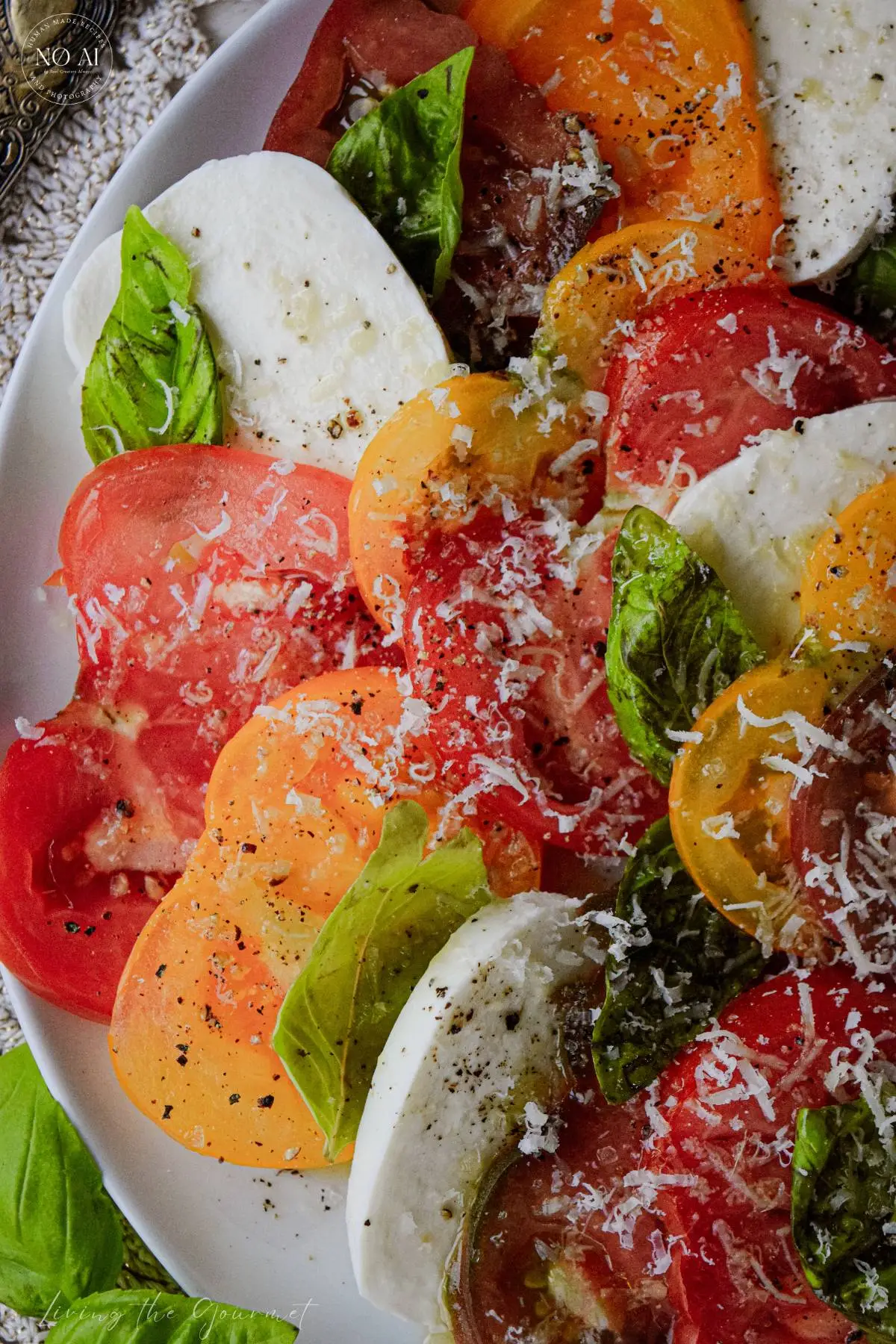
Customizations and Variations
One of the great things about this caprese salad recipe is just how customizable it is. Here are some suggestions for getting your creative juices flowing.
- Balsamic Caprese: A popular and surprisingly modern reinterpretation of the classic caprese salad. This takes the base recipe and simply adds a drizzle of either aged balsamic vinegar or thick balsamic glaze over the top. Bonus points if using a homemade balsamic reduction or a homemade balsamic glaze. In any case, a drizzle of balsamic 'anything' adds a sweet-and-tart depth that really works beautifully with the heirloom tomatoes.
- Burrata Caprese: A far more decadent caprese salad. Burrata is a fresh mozzarella shell that's been filled with cream and stracciatella (shredded mozzarella). This makes the caprese salad far more luxurious, but also a good bit heavier.
- Stacked Caprese: This modifies the structure, rather than the ingredients or flavor. To do this, we layer tomato, basil, and mozzarella into vertical stacks, drizzled with olive oil. This is ideal if using the caprese salad as a side dish for a dinner party - since the presentation is simply lovely.
- Caprese Skewers: I'm a sucker for all things skewered, and caprese skewers are no exception. Caprese skewers are incredibly easy to make; simply thread cherry tomatoes, mini mozzarella balls, and basil leaves onto skewers, then drizzle with olive oil. Perfect for parties or warm-weather get-togethers - and they're super easy to get creative with. Check out my chicken caprese skewers as an example.
- Avocado Caprese: Some sliced avocados, or mashed avocado, layered between the tomato and mozzarella, would be delicious. This variation, in particular, is great as a side to a light meal, such as grilled chicken with herbs or a light pasta dish such as tossed garlic and oil.
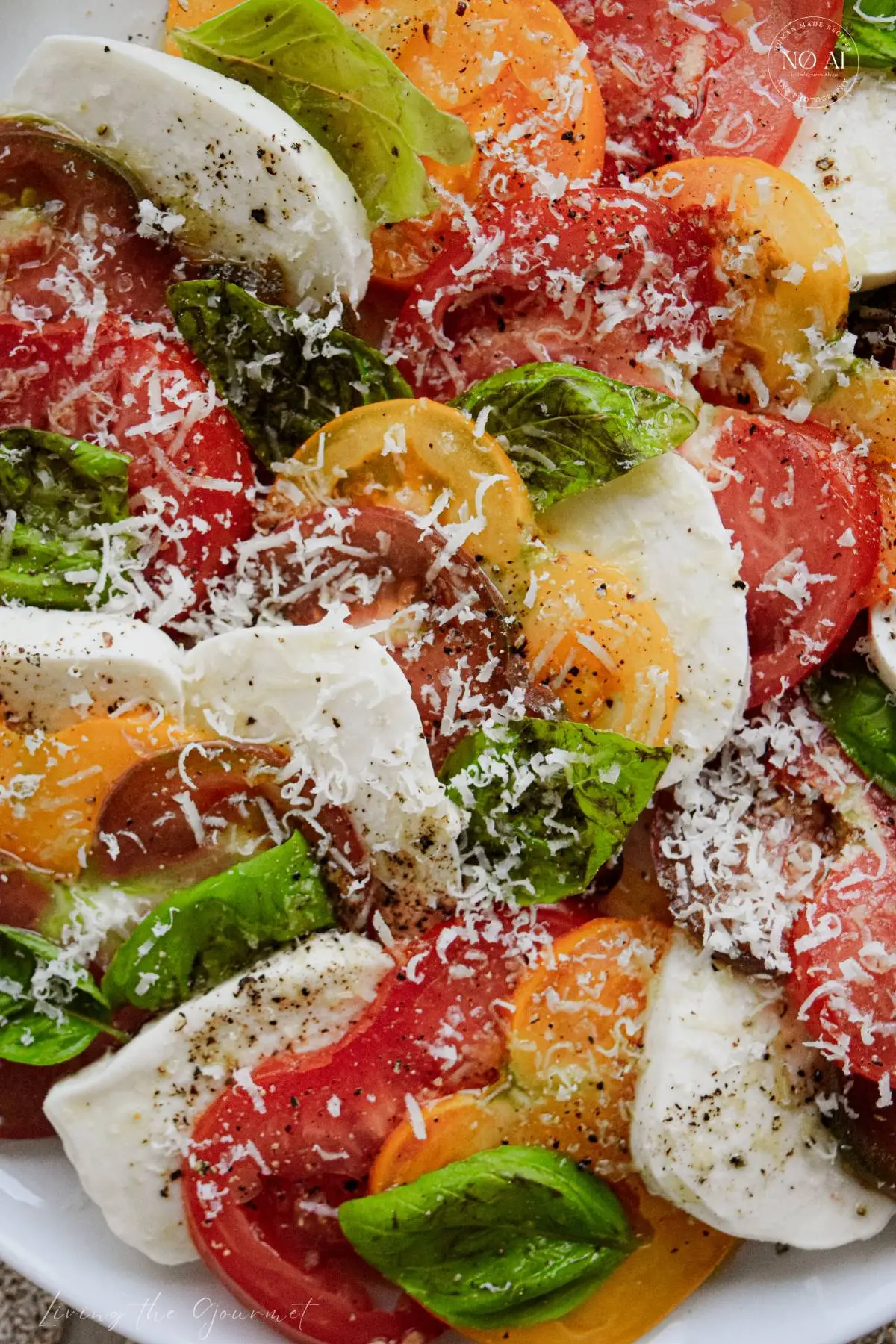
Storage and Make-Ahead Tips
The truth is that Caprese salad is best enjoyed within 30 minutes of assembly. The olive has yet to seep into the cheese and tomatoes, while the mozzarella is still milky and creamy, and the basil is fresh. These qualities are what 'makes' a caprese salad.
Make-Ahead Caprese Salad Components (a few hours ahead)
- The Basil: Wash and dry the basil leaves, then wrap them in paper towels and refrigerate.
- The Mozzarella: Slice the fresh mozzarella and drain on paper towels (maximum 1-2 hours ahead)
- Tomatoes: Wash the tomatoes and store in the fridge. Do not slice until ready to assemble.
Why Caprese Salad Doesn't Keep Well
Salted tomatoes release water. Mozzarella absorbs that moisture and becomes soggy, and the basil wilts against the acidity from the tomatoes. In other words, the texture and flavor degrade dramatically within hours.
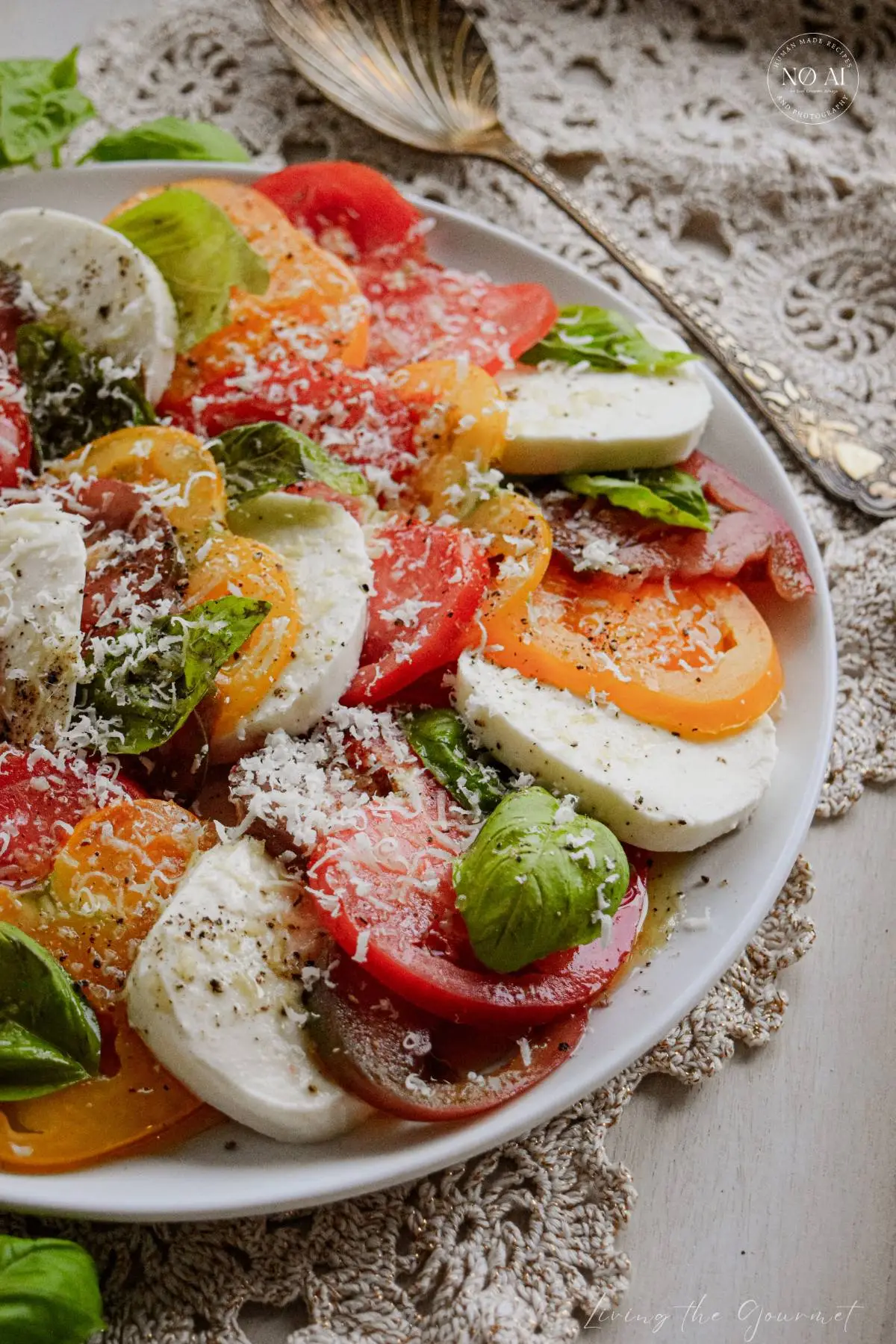
Frequently Asked Questions About Caprese Salad
Caprese salad (insalata caprese in Italian) is a super simple Italian salad originating in Capri, an island in the Campania region of Southern Italy. This salad consists of just four main ingredients: ripe tomatoes, fresh mozzarella cheese (traditionally buffalo mozzarella), fresh basil, and extra virgin olive oil. These ingredients are sliced, layered in an alternating pattern, and then served immediately.
The word "Caprese" in Italian literally means "of Capri" or "from Capri," a picturesque island in the Bay of Naples where the salad originated. The salad was reportedly invented in the 1920s, with various stories saying it was created by local restaurateurs who designed the dish to showcase the colors of the Italian flag and celebrate the abundance of fresh produce in the Campania region.
Perhaps. Some origin stories say that Caprese Salad originated in Capri's iconic Hotel Quisisana, where the dish gained early popularity with American tourists in the 1950s.
Fresh mozzarella is a must. We want the soft texture and delicate, milky flavor of fresh mozzarella for Caprese Salad. The gold standard is Mozarella di Bufala or buffalo mozzarella.
Totally preference. Finishing a caprese salad with a drizzle of aged balsamic vinegar is probably the most common variation of Caprese Salad. However, that being said, authentic Italian Caprese salad does not include balsamic vinegar - just extra virgin olive oil.
Classic Caprese Salad (Easy Recipe)
- Total Time: 10 minutes
- Yield: 4-6 1x
Ingredients
- 3 heirloom tomatoes
- 1 lb. fresh mozzarella
- 1 cup fresh basil leaves
- Flaky Sea Salt
- Coarse Black Pepper
- Extra Virgin Olive Oil
- Parmesan Cheese, for grating
Instructions
- Slice the tomatoes, sprinkle with a little salt, and pat dry with a paper towel.
- Because I prefer thinly sliced tomatoes, I layer two slices of tomatoes, followed by a slice of mozzarella, and then the basil leaves on the platter.
- Sprinkle the platter with some flaky salt, fresh cracked black pepper, a generous drizzle of good-quality olive oil, and a sprinkling of grated Parmesan cheese.
- Serve immediately at room temperature. Do not refrigerate, as cold temperatures mute the tomato flavor and wilt the basil.
- Prep Time: 10 minutes
- Category: Salads
- Cuisine: Italian
And that's our Caprese Salad Recipe. If you enjoyed this post, or have any questions or suggestions, be sure to let us know in the comments below; we always love hearing from you!
Happy Cooking!
Vidhya says
Sometimes the simplest things are the best. The freshness of the basil against the creamy mozzarella and juicy tomatoes was absolute perfection!
Catalina says
I made this with fresh garden tomatoes and basil, and it was absolutely delicious. Simple ingredients really shine in this classic salad!
Ben says
I've never had an authentic caprese salad before I made this one. I'm in love!
Beth says
This is so perfect for the summer. It's so light and fresh. Love it.