
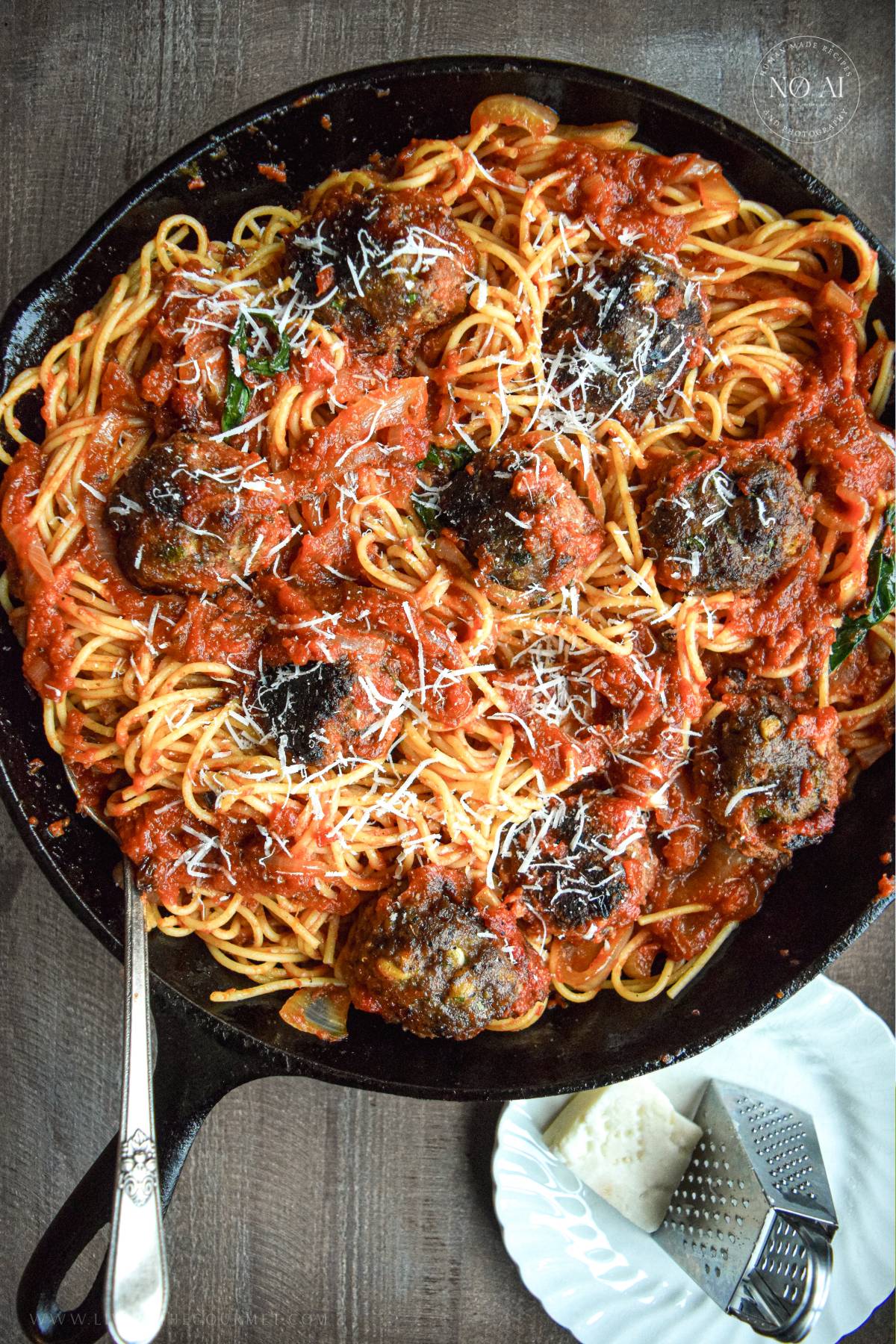
Meatballs are done when they reach an internal temperature of 160°F (for beef or pork) or 165°F (for poultry), as measured with an instant-read thermometer inserted into the center of the largest meatball. Visually, fully cooked meatballs are no longer pink inside, and in terms of texture, they should be firm to the touch. When cut, they should release clear rather than pink juice. Cooking time varies based on size and method, but standard 1 and a half inch to 2-inch meatballs typically take 20-30 minutes in the oven.
Quick Answer
I recommend using an instant-read thermometer for accuracy. Look for a temperature of 160°F for beef, pork, and lamb, or a temperature of 165 for chicken and turkey. Without a thermometer, I would recommend cutting the largest meatball in half. It should be uniformly brown throughout with no pink in the center, and the juices should run clear. The cooking time for this should be about 20-25 minutes if baking in an oven at 400 degrees F, 25-30 minutes simmering in sauce, or about 10-15 minutes panfrying (which I recommend finishing by simmering in sauce).
Methods to Check for Doneness
Instant-Read Thermometer
This is the most accurate, as well as the easiest, method to check for doneness. Simply insert the thermometer into the center of the largest meatball (without touching the bottom of the pan, and yes, I've done this by accident, only to be shocked by the 200+ degree reading. As I've stated twice now, the temperature should be 160 degrees for red meat, or 165 degrees for poultry. I will add that using an instant-read thermometer is the only truly foolproof way to check for doneness, as it does not rely on visual cues, textural cues, or simple timing and guessing.
Cut Test
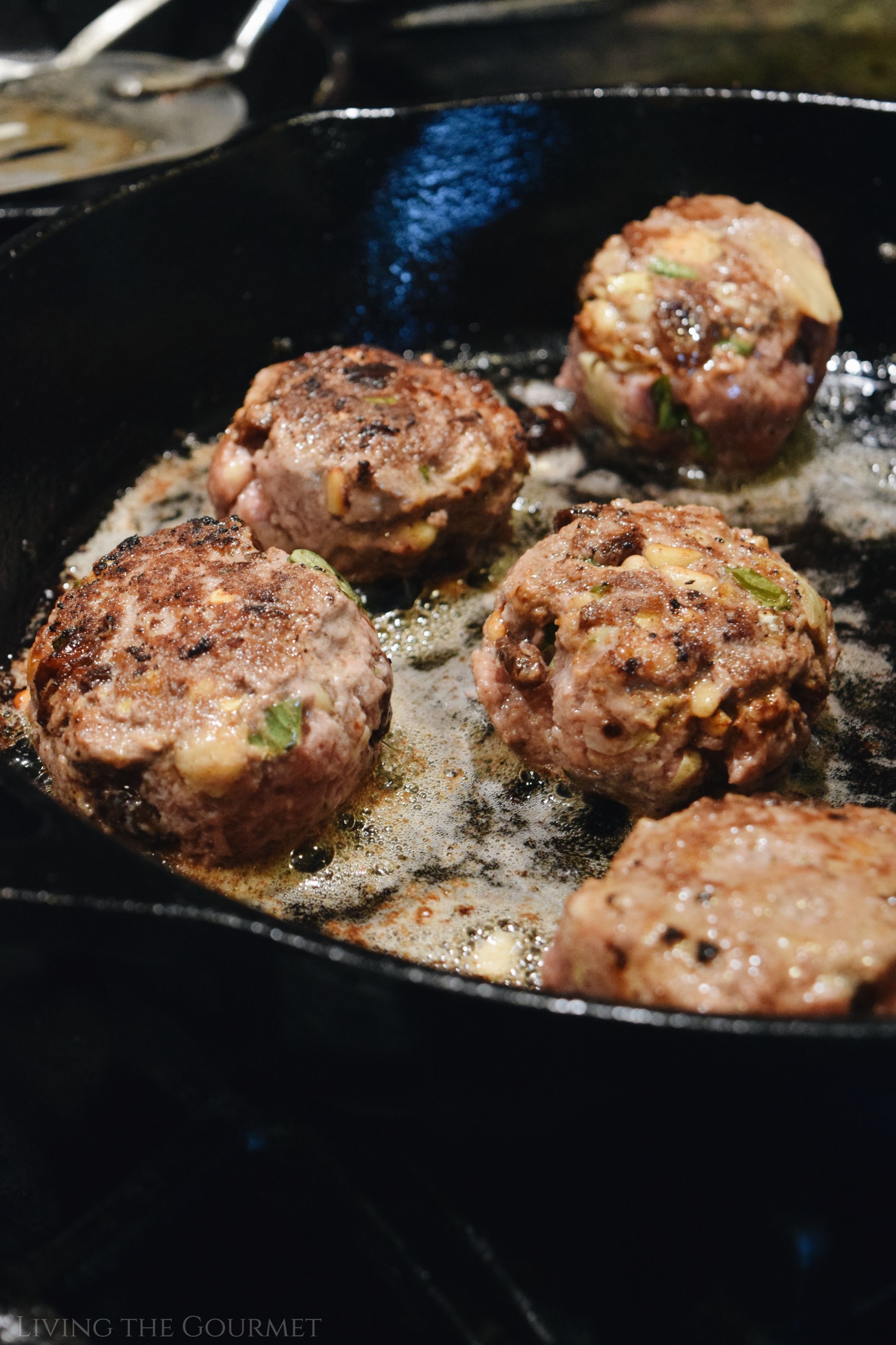
This is a visual cue test, and as such, it is imperfect. Basically, cut the largest meatball in half, and check the interior. The meat should be uniformly brown, without any trace of pink. In addition, the juices should run clear as you cut. Pink, in this case, means unsafe. We do not want undercooked chopped meat. I'll also say that, in addition to no pink traces, the meatball should also feel firm, rather than mushy.
Juice Test
This is related to the cut test, or really should be considered a part of the cut test - and I would 'not' advise relying on this test alone unless you are super averse to cutting a meatball prior to serving. Basically, puncture the meatball with a knife, and let the juices run. If they're clear, proceed to cut the meatball and check the interior.
Firmness Test (Least Reliable)
I truly don't recommend relying on this test, except as a prelude to the cut test. Basically, if the meatball feels mushy, it isn't done. If the meatball feels firm, proceed to the cut test.
Cooking Times by Method
- Baking (400°F): 20-25 minutes, assuming your meatballs are about 1 and a half to 2 inches in diameter. Be sure to turn the meatballs once halfway through baking.
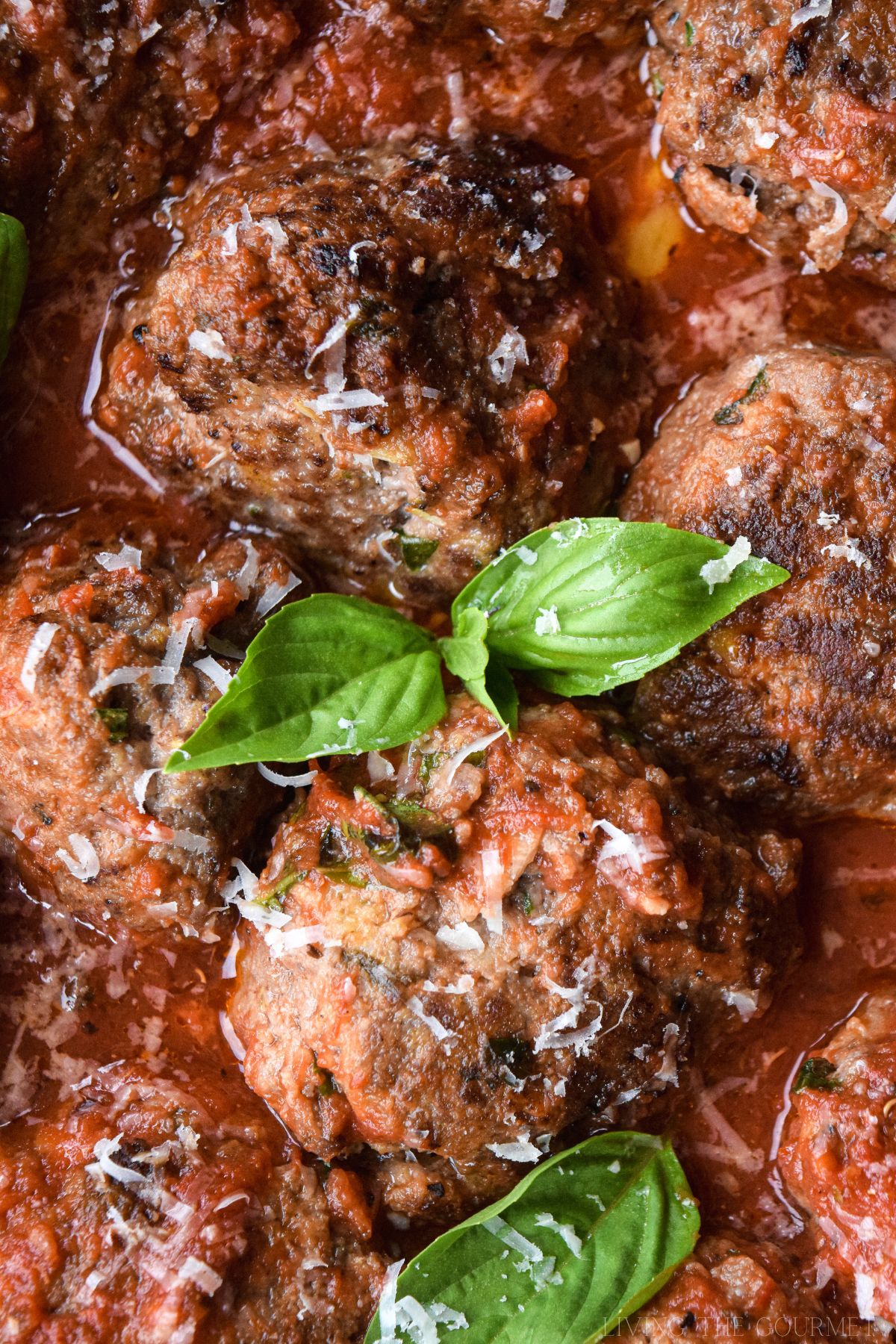
- Simmering in Sauce: 25-30 minutes at a gentle simmer after an initial searing to allow the flavors to meld.
- Pan-Frying: 10-15 minutes to brown on all sides over medium heat.
- Slow Cooker: 4-6 hours on low after browning, or about 2-3 hours on high.
Safety Reminder
I'm not a fan of rare chop meat, and you shouldn't be either. Don't rely solely on timing or texture. Also, remember that size affects cooking. Larger meatballs need to be cooked longer. Always check the largest meatball since it cooks the slowest.
And that's my guide on how to tell when meatballs are done. If you have any questions or suggestions, be sure to let us know in the comments below.
Leave a Comment