
Picking fruit can feel like a guessing game, especially when we're talking about larger fruits like watermelons. However, as with any fruit, picking a ripe watermelon comes down to a few telltale signs, and once you know what you're looking for, you'll be picking the very best every time.
Quick Answer
A ripe watermelon has a cream-colored or yellow spot on one side (called the field spot). In addition to the field spot, a ripe watermelon feels overly heavy for its size, sounds hollow when tapped, has a dull rather than shiny rind, and has a dried, brown stem. Check all five signs, as no single indicator is foolproof evidence of ripeness on its own.
The Five Signs of a Ripe Watermelon
- The Field Spot should be cream-colored or cream-yellow
- The field spot is the patch on the underside of the watermelon where it rested on the ground while growing and ripening. If the spot is creamy yellow or buttery gold, then the melon stayed on the vine long enough to ripen properly. A white or pale green field spot means the watermelon was picked too early.
- Heavy for its size
- Pick up two watermelons of similar size and compare them. The heavier one has more water, meaning it's juicier and riper. A lighter watermelon is often dry or underripe.
- It should sound hollow when tapped
- Tape the watermelon gently with your knuckles. Ripe watermelons produce a deep, hollow sound - almost like knocking on a door. An underripe melon sounds dull or thuddy. An overripe melon sounds flat. This is not an invitation to bruise or dent the melons - a light tap will get you the results you need.
- The rind should be dull, not shiny
- If a melon is shiny, it is underripe. A ripe melon has a slightly dull or matte finished rind. As a rule of thumb, you're looking for a finish closer to a chalkboard than a polished apple.
- The stem should be dry and brown
- If the watermelon still has its stem, the stem should be brown and dried out, indicating that the melon ripened naturally on the vine. A green stem means it was cut too early. Most supermarket watermelons have the stem removed, so this tip really only applies to farm stands and farmers' markets.
What about Watermelon Shape?
The shape offers some clues, but is generally the least reliable indicator. Symmetrical, evenly shaped watermelons are the most consistent and evenly ripened ones. Round watermelons tend to be sweeter, though oval ones tend to be juicier. That said, shape is generally not important when determining ripeness. Shape is more about preference.
Common Mistakes
Going by Color Alone
When looking for a ripe watermelon, the color is generally the least reliable indicator. A dark green rind does not guarantee ripeness. The field spot and weight are more important.
Trusting only the tap test
It works, and it's easy, but it really should be used in conjunction with other signs.
Assuming Bigger Watermelons are Better
Watermelons come in all shapes and sizes, meaning a small watermelon can indeed be just as ripe as a large watermelon. Instead, a watermelon should feel heavy for its size, not necessarily "be heavy" in general, which is where this myth originated.
Picking the Shiny Watermelons Because They Look Better
It's easy to understand why you might feel drawn to the shinier watermelons - they do look better. However, watermelons are shiny when they are underripe, and darken and become matte finished when they are at their sweetest.
How long does a Watermelon Stay Ripe?
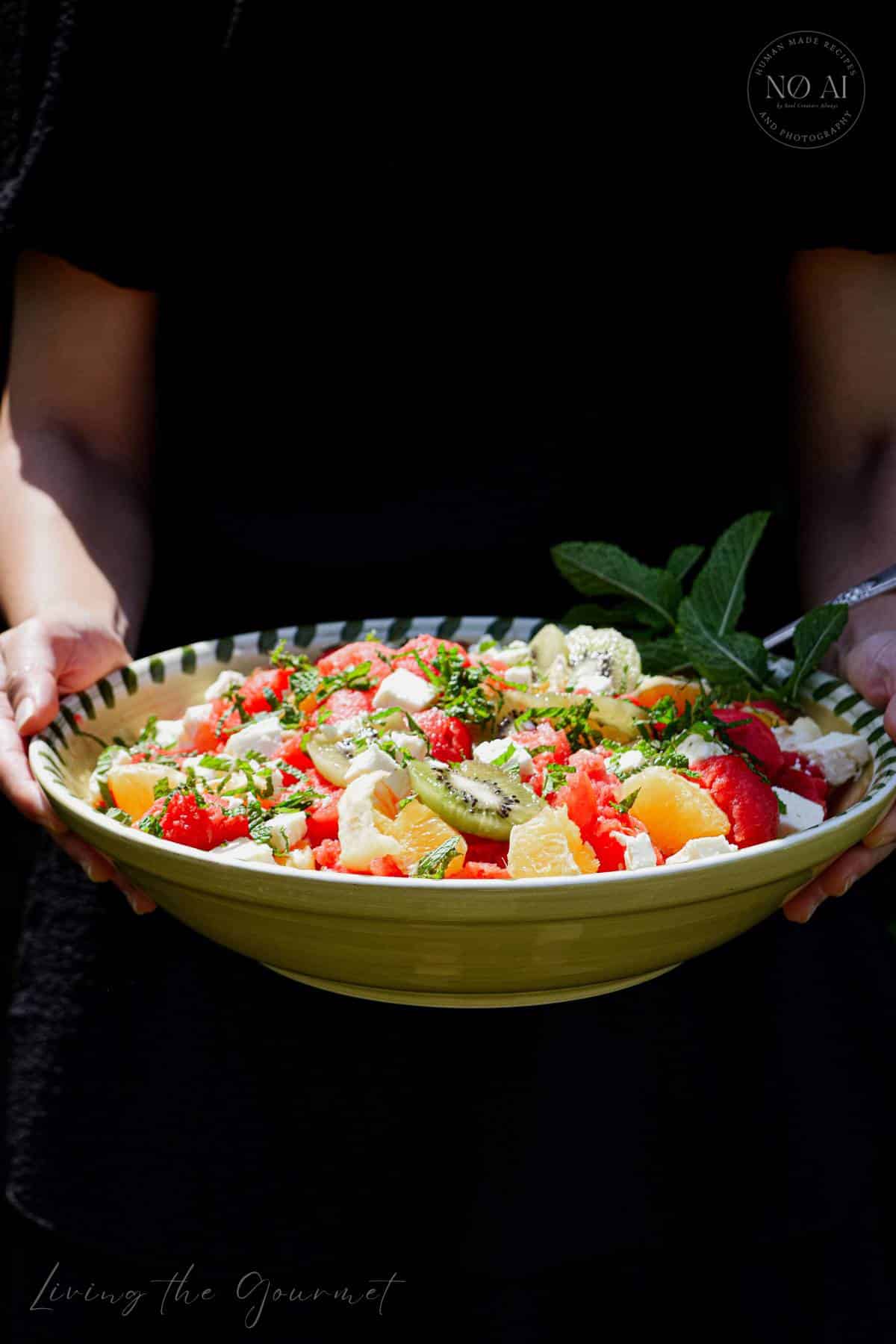
A whole, uncut watermelon will keep for about a week at room temperature, or about two weeks in the refrigerator. After slicing, store the watermelon covered in the fridge and use it within three to four days, such as in a salad or simply on its own.
Bottom Line
The creamy yellow field spot is the single most reliable indicator, though for best results, check all five signs together. Once you've picked a few good watermelons, you'll get the hang of it.
And that's our answer to the question "How to tell if a watermelon is ripe?" If you enjoyed this article or have any questions, be sure to let us know in the comments below.
Happy Cooking!


Catalina says
Tried using this advice today and it actually worked. No more guessing, and the watermelon was juicy and delicious!
Lora says
A truly useful guide because choosing a ripe watermelon can feel impossible sometimes. Knowing the little signs to check makes it so much easier to pick one that’s sweet, juicy, and actually worth carrying home.
Liz says
This is such a helpful guide because picking a good watermelon can be so hit or miss. Once you know the signs to look for, it makes choosing a sweet, juicy one so much easier.
Amy says
Such a handy guide! There’s nothing worse than coming home with a dull watermelon. These quick, practical tips take all the guesswork out of picking a sweet, juicy one every single time.
Ben says
Everyone needs to bookmark this. Nothing is a bigger summer time bummer than a watermelon that isn't sweet and juicy.
Terri says
I'm bookmarking this. I have always had a terrible time picking out a really good watermelon. Thank you!
Beth says
Great guide! There's nothing more of a bummer than planning out a nice picnic or watermelon recipe only to discover you picked a bad one.