
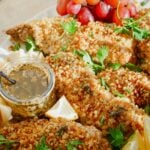
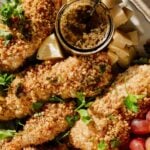
If you have never cooked monkfish at home, I promise that this baked monkfish recipe is the best place to start. Our monkfish is coated in a golden panko breadcrumb crust and is finished with a silky smooth, rich lemon and butter garlic sauce. This monkfish recipe produces restaurant-quality results, and looks and tastes like you spent hours in the kitchen, and yet takes just 35 minutes to prepare.
With all of that said, monkfish can be intimidating to make, as there is one notable pitfall in the prep process - the membrane - which we'll discuss below. However, I promise that just a few simple steps make all the difference in the world, giving you meaty, buttery monkfish that's well worthy of its title "Poor Man's Lobster."
Now, without further introduction, let's get to it. Read on for a complete recipe overview, pairing suggestions, a printable recipe card, my answers to some of the most frequently asked questions regarding monkfish, and prep tips to make sure this recipe comes out perfect every time.
Jump to:
- What to Expect - Baked Monkfish Recipe Overview
- Why You'll Love This Baked Monkfish Recipe
- Crucial Pre-Baking Prep: How to Prepare Monkfish Fillets
- The Secret to a Truly Golden Crust: Pre-Toasting the Panko
- Ingredients for Baked Monkfish
- Step-by-Step Preparation: How to Make Baked Monkfish
- Baked Monkfish Recipe Frequently Asked Questions
- Easy Baked Monkfish Recipe with Panko and Garlic Butter
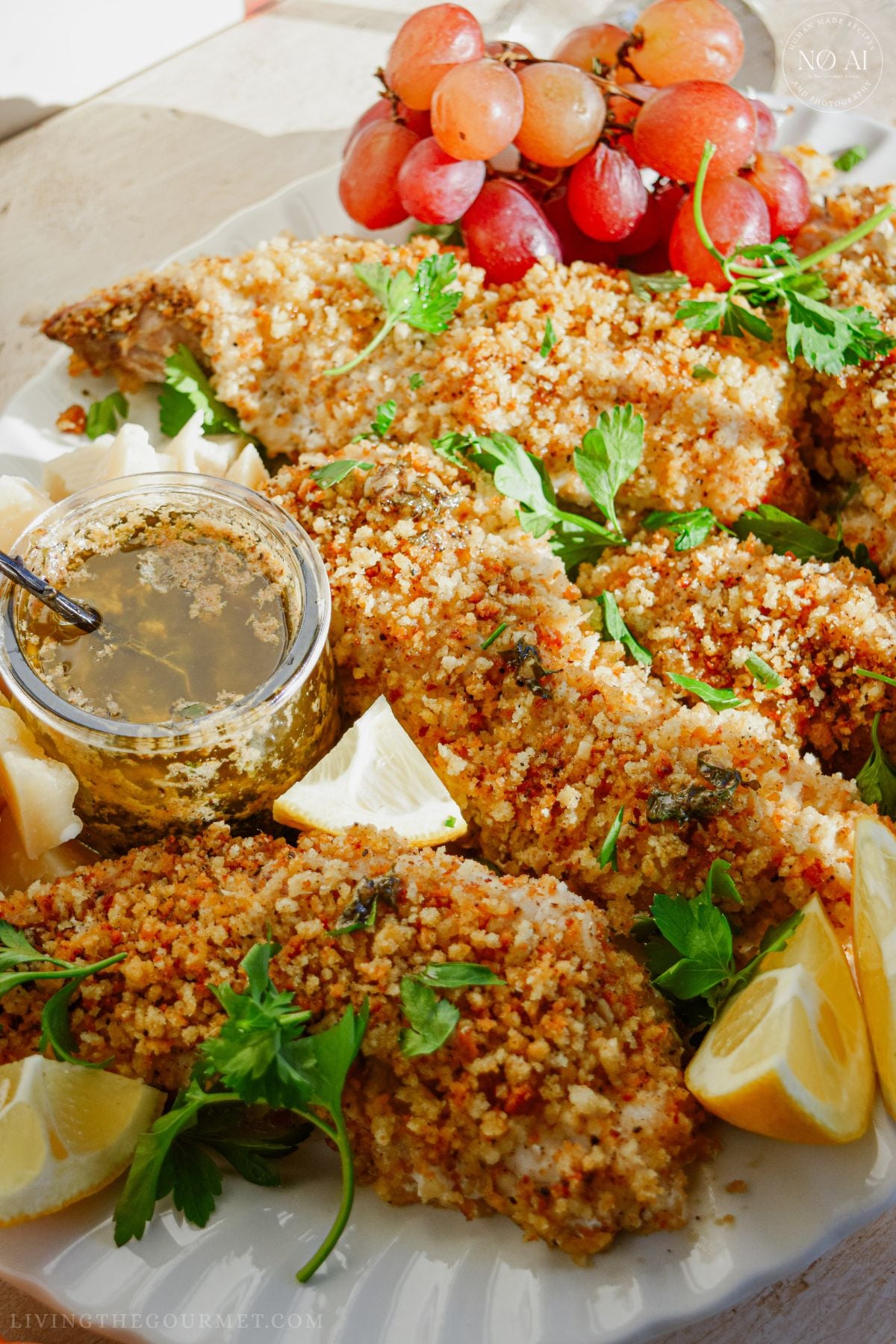
What to Expect - Baked Monkfish Recipe Overview
Taste and Texture
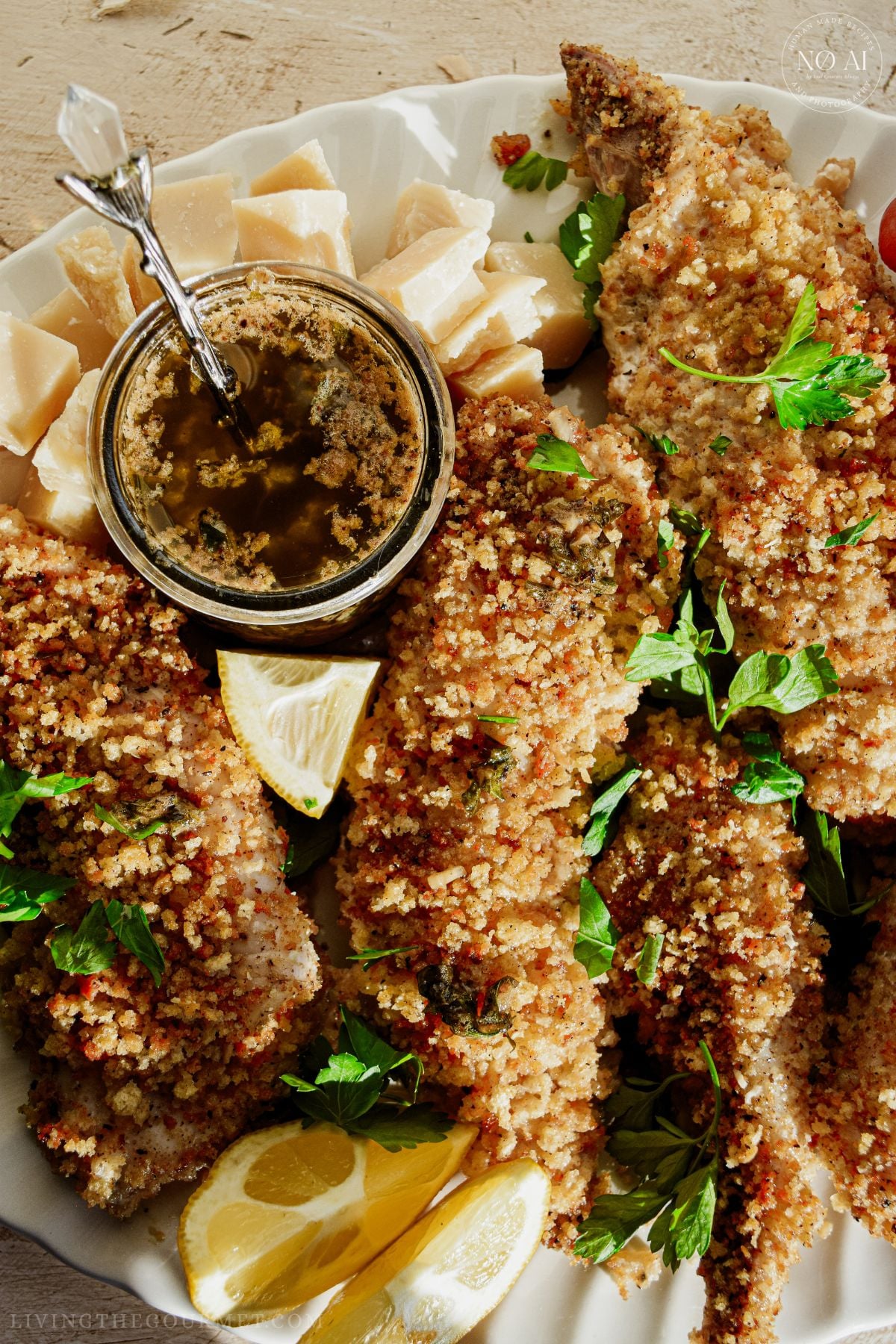
Monkfish is a white fish with a firm texture and mild, subtly sweet flavor. Its firmness produces a dense, meaty texture that is often compared to that of lobster - hence the age-old "Poor Man's Lobster" title for monkfish. Monkfish is very different from most other white fish, which are almost universally delicate, flaky fish; monkfish holds together, almost stubbornly, no matter how it is cut or prepared. Whether you serve whole fillets or slice them into medallions, monkfish resists flaking or breaking down, and this texture works wonders when baked, especially since monkfish fillets have no bones that need to be picked around. Meanwhile, the panko crust bakes up a beautiful golden brown and gives a nice bit of crunchiness to the monkfish, with savory notes from the parmesan, paprika, and black pepper. The lemon and grilled garlic butter produce a silky, bright finish, while grilling the garlic works to mellow its bite and brings out a nutty, caramelized sweetness from the garlic.
Recipe Difficulty Level
This is one of the easier monkfish recipes you can prepare, and is a great starting point if you've never prepared monkfish before. That said, the one step that does take a little care is cleaning the fish, which involves trimming the thin membrane from the fillets, and we'll be walking you through that below. That said, beyond trimming the membrane, the rest of the recipe is very simple and straightforward. All we're doing is toasting the breadcrumbs, coating the fish, and baking at medium-high heat, or 375 degrees F. We're aiming for medium doneness. For each cooked fillet, an instant-read thermometer should give a reading of 145°F when inserted into the thickest portion of the fish.
Preparation Process
From start to finish, this recipe takes about 35 minutes. We start by charring a few garlic cloves in a small cast iron skillet or frying pan - and yes, before you ask, your nonstick skillet of choice will also work just fine. After that, we toast the panko in the same pan with a little olive oil and butter until lightly golden. After that, we trim the monkfish, pat it dry to remove excess moisture, and coat the fillets with the seasoned panko crumbs. Then we're baking the monkfish in the oven for 15 to 20 minutes, and during that time you'll be whisking together the lemon butter sauce. Once the fish is done, we let it rest for 10-15 minutes before slicing and serving.
As a quick note, if the monkfish tail is still on the bone when you buy it, be sure to ask your fishmonger to fillet it, and save the bones for a homemade fish broth or fish stock.
Pairings
- Crispy roasted potatoes, grilled asparagus, and fennel-citrus salad are all classic pairings.
- Crusty bread to soak up the broth is also a great choice. For wine pairings, a decent cabernet franc or an oaked chardonnay would both pair deliciously.
Garnish Options
After baking, garnishing is limited only by your imagination. Fresh rosemary sprigs, lemon slices, some lemon zest, a dusting of chopped fresh herbs, or sliced cherry tomatoes are all great choices.
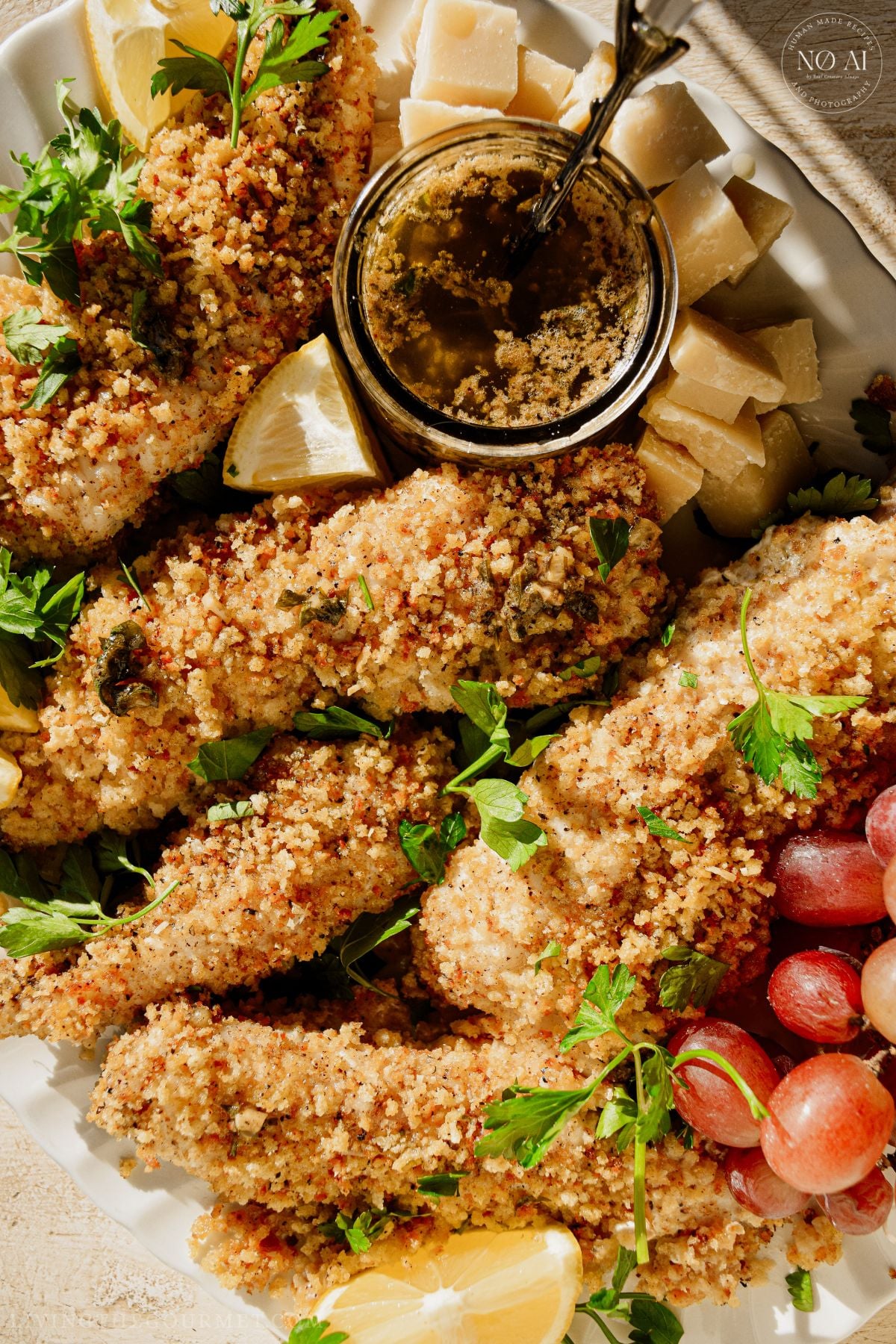
Why You'll Love This Baked Monkfish Recipe
- The "Poor Man's Lobster" Experience: As mentioned above, monkfish is generally called the Poor Man's Lobster due to its firm, meaty texture and its lobster-like flavor when properly prepared. The flesh is dense, firm, and mildly sweet, and that combination makes monkfish very similar to lobster tail when coupled with the meaty texture I've mentioned a few times now.
- Elevated Flavor Profile: This recipe produces a buttery flavor, while the panko crust not only provides texture, but is also seasoned with Parmesan, paprika, and black pepper, which we tie together with a velvety grilled garlic and lemon butter sauce for richness and brightness.
- Quick and Reliable: Monkfish is amazingly forgiving to prepare, and this particular recipe takes only 35 minutes from start to finish. This recipe is simple enough for a weeknight dinner, and yet also impressive enough to be served at a dinner party.
Crucial Pre-Baking Prep: How to Prepare Monkfish Fillets
Prepping the monkfish properly is very important for this recipe, and also happens to be the very first step. Prepping only takes a few minutes, but it is the difference between tender, evenly cooked fish and fillets that curl up and turn rubbery - and rubbery monkfish is not good.
Trimming the Blue Membrane
Monkfish fillets are often cut from the tail and are most often sold skinless and boneless. That said, they are nevertheless covered in a thin, slick, blue-grey membrane. Removing this membrane is not optional, since as the monkfish cooks, the membrane will shrink much faster than does the flesh beneath, almost like cling wrap. As such, if the fish is cooked with the membrane still attached, the membrane will squeeze the fillet, causing the fish to curl in on itself, ruining the texture of the fish in the process. The membrane itself also turns tough and chewy.
To remove the membrane, set the fillet down flat on a cutting board. Then, using a thin, sharp knife, such as a boning knife or a paring knife, slip the tip of the blade just under the membrane, angle the blade slightly upward toward the membrane, and slide the knife along the fillet while gently pulling the membrane taut with your other hand. The membrane will pull away from the fillet much like chicken skin, or the silverskin on a pork tenderloin. Work the membrane off in strips until all of it is gone, removing as little of the monkfish flesh as possible. Many fishmongers will do this for you if you ask, but always be sure to check for yourself and trim any patches that might remain.
Also, while you're doing this, be sure to take a look at the shape of the fillets. Monkfish tails taper towards one end, so the thin end will often overcook before the thick part is done. To avoid uneven cooking, cut the fish into 4 even portions, or tuck the thin end under itself. Even cooking is key.
Patting Dry and Oiling
Monkfish holds a decent amount of moisture, and we want to remove as much of the fish's excess moisture as possible. Thus, I recommend patting the fish dry with paper towels. Surface moisture keeps the crumbs from sticking and turning into steam in the oven, which softens the crust and leaves a watery puddle on the baking sheet. After you've patted down the fish, season it with a light pinch of salt so that it is seasoned through, not just on the crust.
Next, massage the first tablespoon of olive oil across the fillet. This is crucial since the oil works to bind the crumbs to the top of the fish by giving them something to cling to other than the fish's own moisture. The olive oil also works to help the fish turn golden as it bakes, thereby helping to ensure even browning.
The Secret to a Truly Golden Crust: Pre-Toasting the Panko
Why Raw Breadcrumbs Fail on Monkfish
I understand that it can be tempting to just sprinkle raw breadcrumbs over the fish as a shortcut and then bake and hope for the best - but do not do this with monkfish. Monkfish, as mentioned earlier, has a lot of moisture, and that moisture releases as the monkfish cooks. This means that in 15 to 20 minutes in the oven at 375°F, the steam rising from the fish will have softened the crumbs from underneath before they have a chance to brown and crisp up. The end result will be a pale, soggy topping rather than a crisp, golden crust. Not fun. Raw breadcrumbs, also, lack flavor, whereas toasting them gives them their rich, nutty taste.
Skillet-Toasting in Butter and Olive Oil
Toasting the panko in a cast iron skillet before setting it over the fish solves both problems we just discussed. For starters, the crumbs dry out during toasting and begin to brown, and they are coated in butter and olive oil, which helps them resist the moisture that is released from the fish during cooking; instead, they become crispy. Here is the technique we're using in this recipe:
- Toast the Panko Dry: Set the panko in a dry cast iron skillet or frying pan over medium heat. Toss the panko frequently so it toasts evenly and does not scorch.
- Season It: While tossing, add the salt, black pepper, and paprika. Toss to distribute evenly.
- Add in the Fats: Add in the butter and the olive oil. I prefer using extra virgin olive oil for this step, as it helps heighten the flavor of the panko. Keep tossing so that it is absorbed evenly by the breadcrumbs.
- Stop at Light Golden: Once the panko is light golden, remove the skillet from the heat. A good indicator is the butter. Once it is completely melted and the crumbs are light golden, take it off the heat. The crumbs will continue to brown in the oven, so taking them off the heat a bit early keeps the finished crust from burning in the oven.
- Stir in the cheese off the heat: Add the grated Parmesan or Romano after the pan has come off the heat. In a hot pan, the cheese risks melting and sticking to the pan, which will result in scorching. Not fun.
- Transfer: Finally, transfer the crumbs to a plate or a small bowl so that they stop cooking in the hot skillet.
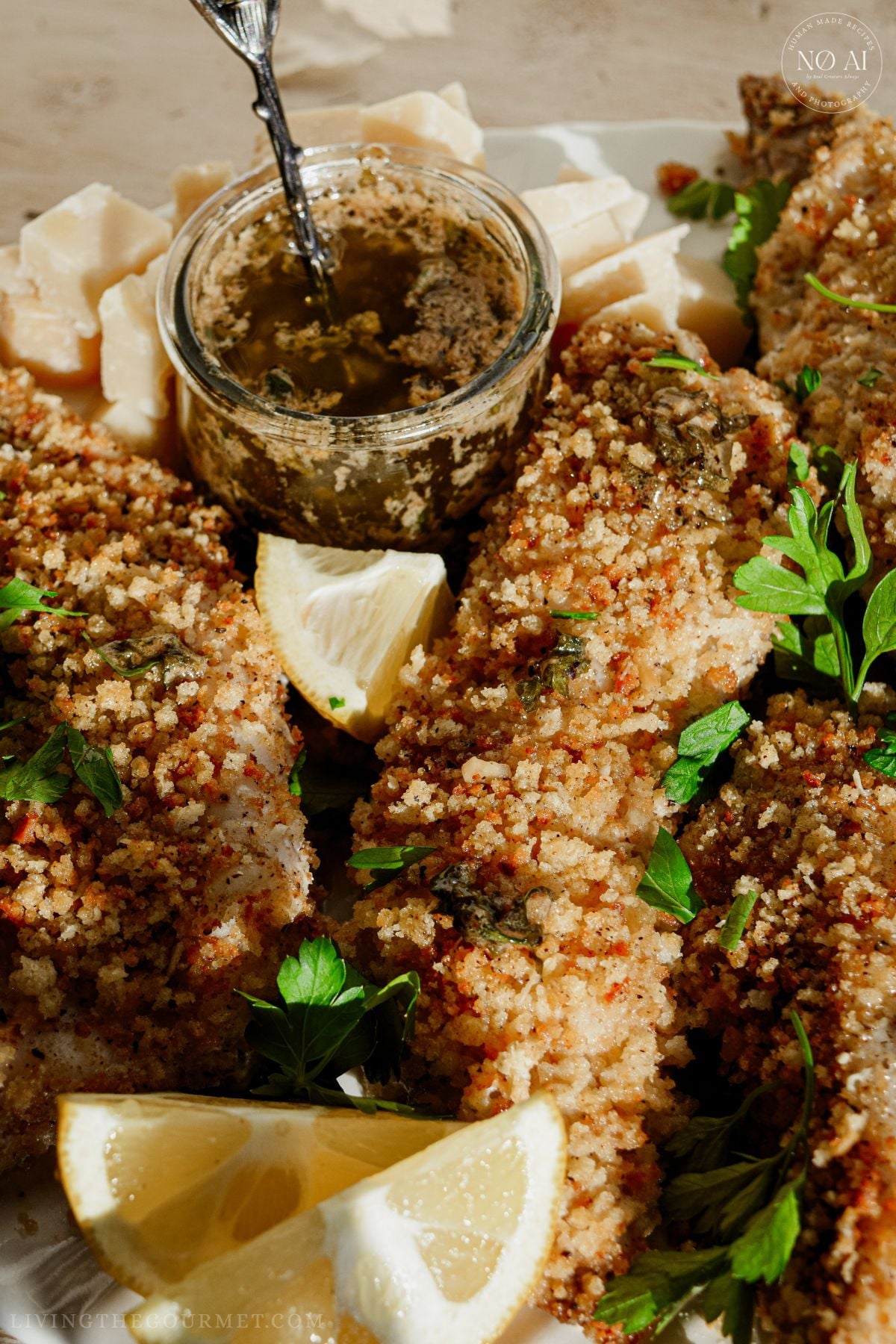
Ingredients for Baked Monkfish
The Monkfish
- 1.5 lbs Monkfish fillets
- Trimmed: If the fishmonger has not removed the membrane, be sure to remove the membrane.
- Patted Dry: Be sure to pat the monkfish dry of any excess moisture. Excess moisture turns to steam, sogging the panko coating.
- Even Portions: Slice the fillets into even portions to promote even cooking.
- Buying Tip: When buying monkfish, look for firm, glossy, off-white fillets that have a clean, fresh ocean smell.
- 2 tablespoon olive oil, divided
- Two Jobs: We're using one tablespoon to massage into the fish so that the crumbs stick, and a second tablespoon to drizzle over the top for extra browning.
For the Toasted Panko Coating
- 1.5 cups panko breadcrumbs
- Why Panko? These are Japanese-style breadcrumbs made from dried, crumbled white bread. Panko breadcrumbs are light and airy and give a crunchier texture than standard breadcrumbs.
- Substitute: Gluten-free panko works with similar results. Plain breadcrumbs can, in fact, work in this recipe but will result in a less crispy texture.
- 2 tablespoon grated Parmesan Cheese or Romano Cheese
- Savory Depth: Parmesan is nutty and mellow, whereas Romano is sharper and saltier. Which you choose to use is purely a matter of preference.
- Paprika
- Color: The paprika gives the crust a warming flavor and golden-red color.
- Flavor: Regular paprika provides subtle warmth, whereas smoked paprika brings a subtle smokiness to the mix. Which you choose to use is entirely up to preference.
- Substitute: Chili powder can achieve most of the same results as paprika, but will change the flavor profile noticeably.
- Salt
- Flavor Unison: A little salt helps to tie the flavors together, as well as bring the flavors out to the forefront.
- Type of Salt: Any salt works. Standard kosher salt will do fine, as will your preferred sea salt.
- Coarse black pepper
- Fresh is Best: I recommend grinding the pepper fresh, as freshly ground black pepper has much more aromatic depth than pre-ground, as pre-ground black pepper has lost many of the oils that give pepper its aroma. Basically, pre-ground pepper lacks aroma, while freshly ground pepper has aroma.
- Substitute: Pre-ground pepper can work in this recipe, but will lack much of the depth that fresh provides. White pepper can also be used if preferred.
- 1 tbs butter and 1 tbs olive oil
- Flavor and Crunch: Together, the butter and olive oil are the fats for the panko crust. The butter brings rich flavor, while the olive oil helps the crumbs to become crisp without burning.
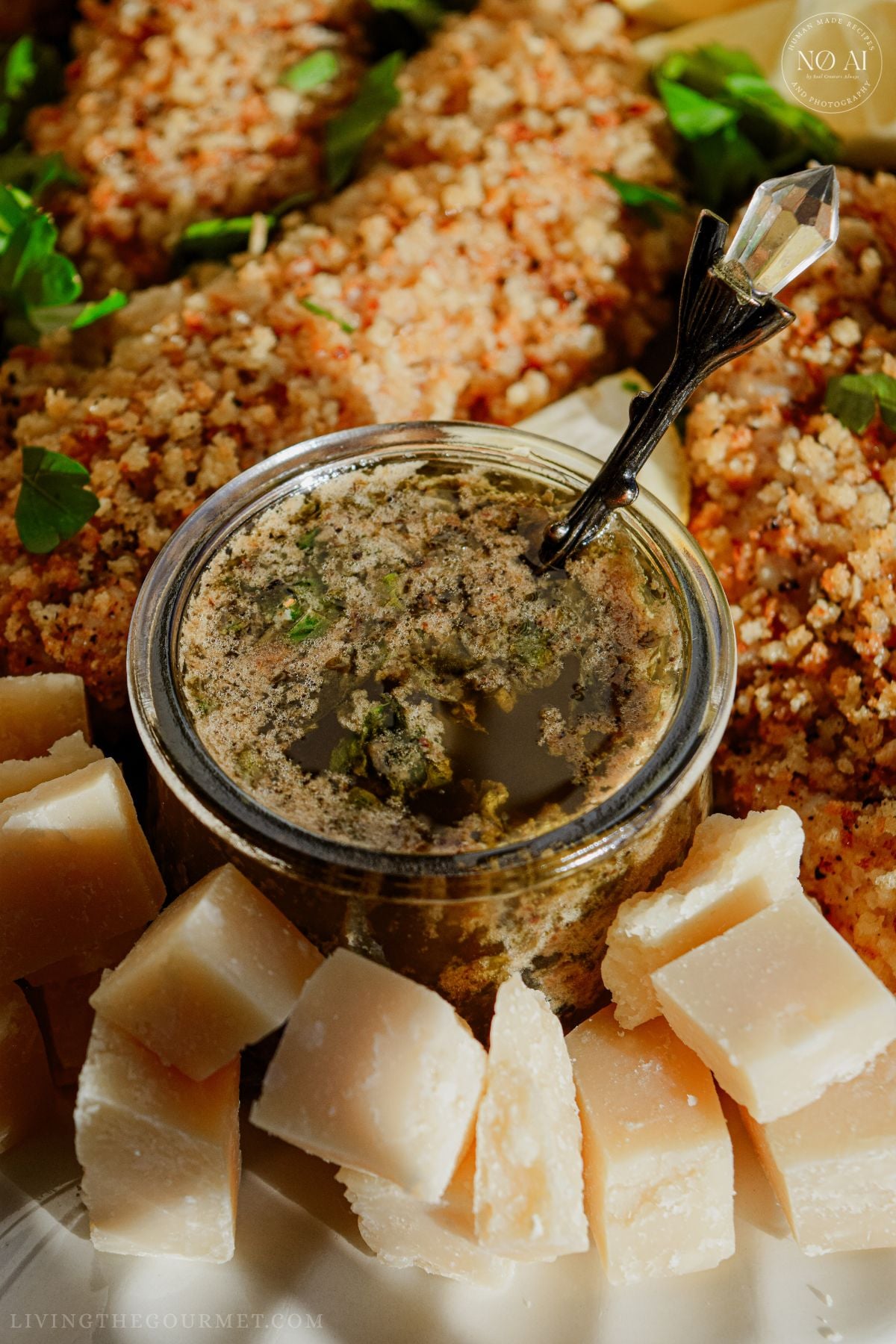
For the Grilled Garlic and Lemon Butter Sauce
- 4 tbs butter and 2 tbs olive oil
- Silky Base: Together, the butter and olive oil form the base of the sauce. The olive oil works to keep the butter from browning too quickly over the heat, while the butter provides richness.
- 2-3 garlic cloves, grilled
- Sweet, not Sharp: Charring the garlic cloves in their skins works to mellow the garlicy bite into a sweet, nutty, caramel-like flavor.
- Juice of half a lemon
- Acidic Brightness: Freshly squeezed lemon works to cut right through the richness of the butter, bringing it complexity and evening out the other flavors.
- Fresh is Best: This is one recipe where I truly do recommend using fresh lemon, as pre-bottled will simply fall flat in this recipe.
- 2 tbs fresh Italian Parsley
- Flat-Leaf Parsley: For this recipe, we're using Italian flat-leaf parsley for herbal brightness.
- Can I use curly leaf parsley? Not for this recipe. For this recipe, curly-leaf parsley will simply be overwhelmed and taste like nothing.
- Substitute: Fresh basil can work, but will bring a slight anise flavor to the butter. About half the amount of fresh oregano can also work, but will bring a much heavier, deeper flavor. Dried parsley is not an option for this recipe, as fresh parsley brings brightness and aromatics that are simply absent in dried.
- Salt and Pepper to taste
- Depth and Flavor: Salt and pepper work to help bring out and accentuate the other flavors in the garlic and lemon butter. Adjust to taste.
Step-by-Step Preparation: How to Make Baked Monkfish
Step 1: Toast and Season the Panko
Preheat your oven to 375°F (190°C) and then line a baking sheet with parchment paper. I say this every chance I get: Parchment is my ultimate kitchen hack, as nothing makes cleanup easier, and nothing prevents sticking better than parchment paper. Next, we char the garlic for the sauce, placing the unpeeled cloves in a dry cast iron skillet or a small frying pan over medium heat and toasting for about 4-6 minutes, turning occasionally, until the skins are charred and the garlic inside is soft. Then set the garlic aside to cool - please do not try to pop the garlic out of the skins while still hot; there's no rush. Wipe out the skillet, then toast the panko as described in the recipe card below, stirring in the cheese only after the pan is off the heat.
Step 2: Prep and Coat the Monkfish
Next up, we remove the membrane from the monkfish and cut the fish into even portions as mentioned above. As a reminder, be sure to pat the fish dry after slicing, and season lightly with salt. Next, place the fish in a bowl and massage it with about a tablespoon of olive oil. Add about half of the toasted panko breadcrumbs and press them gently over the fish to coat it. Arrange the fish on the prepared baking sheet, press the remaining crumbs over the top of the fish, and drizzle with the second tablespoon of olive oil.
Step 3: Bake to Perfect Doneness, Time and Temperature Guidelines
Bake the monkfish at 375F for 15 to 20 minutes, until the crumbs are golden. The fish is done when an instant-read thermometer inserted into the thickest portion of the fish reads 145°F. Thicker portions take closer to 20 minutes, so I do recommend that you start checking the fish at around the 15-minute mark. That said, if the crumbs are browning faster than the fish is cooking, lay a loose sheet of foil over the top of the fish.
Step 4: Make the Grilled Garlic Lemon Butter Sauce
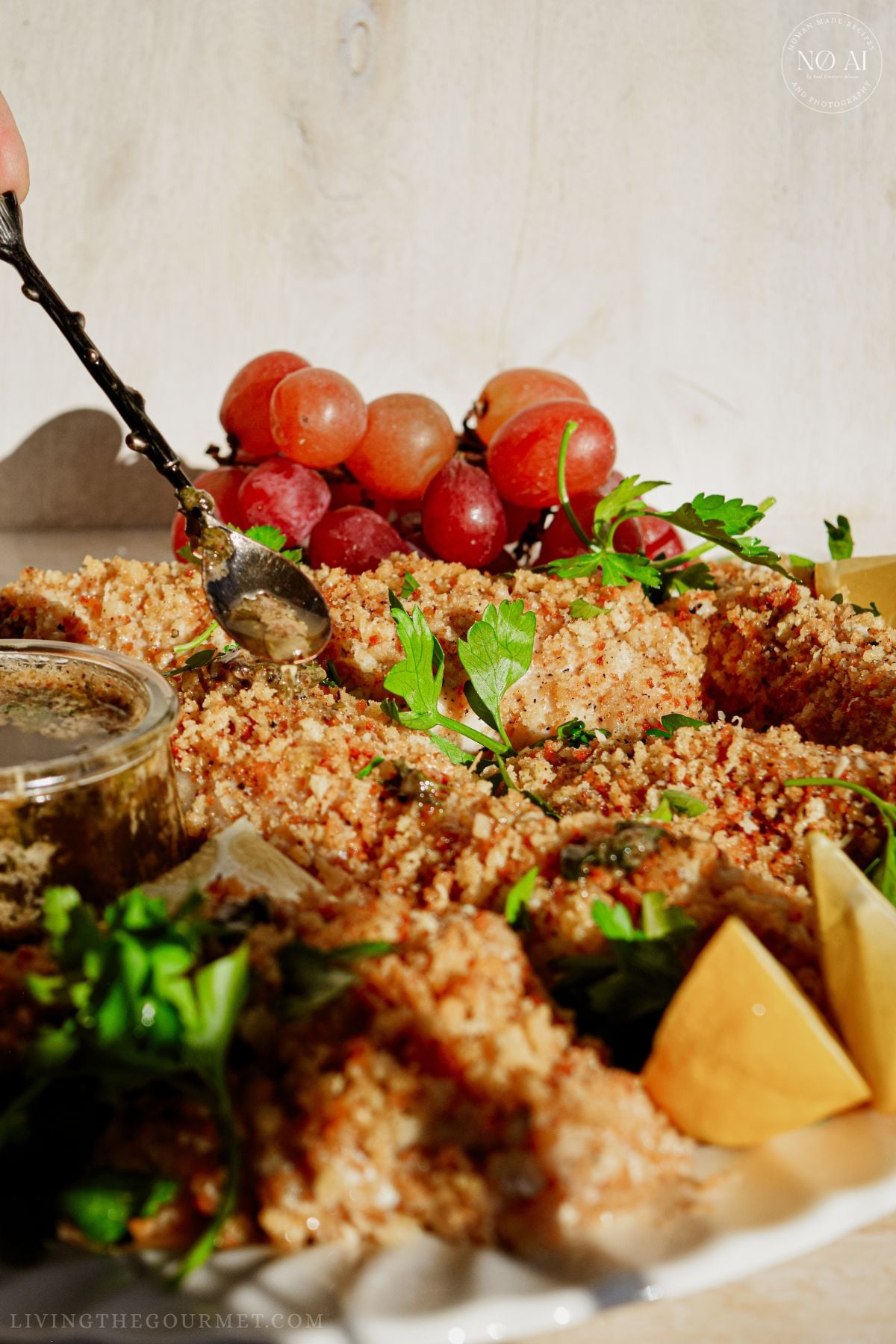
Next, as the fish bakes, remove the grilled garlic from its skins and mash it into a paste. Then, set a small cast iron skillet over gentle heat, and melt the butter with the olive oil, without letting the butter brown. Once that's done, add in the garlic, salt, pepper, and lemon juice, and lastly stir in the chopped fresh parsley. Then spoon the garlic lemon butter sauce over the baked fish.
Why Grilled Garlic Instead of Raw?
For this recipe, fresh garlic would be overpowering, as it would be far too sharp and pungent for this recipe's otherwise gentle flavors. What's more, it can turn bitter if it cooks too fast - which it would. By contrast, charring the cloves in their skins works to gently steam them in their own skins. This steaming turns them soft, slightly sweet, and slightly nutty, with a slightly caramel-like flavor. When mashed into the sauce, the garlic melts in smoothly and gives this lemon butter sauce a mellow, rounded garlic flavor that complements rather than overpowers.
Baked Monkfish Recipe Frequently Asked Questions
Monkfish has a mild but slightly sweet flavor. However, monkfish's most endearing and characteristic quality is its firm, dense texture and meaty bite, earning it the nickname "poor man's lobster."
The most reliable way is to use an instant-read thermometer, as this removes all of the guesswork. Monkfish is done when it reaches an internal temperature of 145F or 63F in the thickest portion of the fillet. Visually, the fish should be opaque and white throughout, and feel firm when pressed. That said, monkfish does not flake as easily as other fish, especially delicate, white-bodied fish, so do not try to cook it until it falls apart, as that does not apply to monkfish at all. If you cook the monkfish to that point, it will be very overcooked and rubbery.
Absolutely. As mentioned in the ingredient checklist, gluten-free panko works just fine, as do standard breadcrumbs. With that said, regular breadcrumbs are much finer and will produce a slightly denser crust and browns faster, so you will need to watch it more closely.
Leftover monkfish can be stored in an airtight container for up to 3 days in the refrigerator. I recommend storing any leftover sauce separately. To reheat the fish, place it on a baking sheet and warm it in a 275°F oven for about 10 to 15 minutes, just until it is heated through. The low temperature warms the fish gently without drying it out, and the panko crust will crisp up again nicely. I strongly recommend against the microwave, which will toughen monkfish and soften the crust. Rewarm the sauce gently in a small pan before spooning it over.
Easy Baked Monkfish Recipe with Panko and Garlic Butter
- Total Time: 35 minutes
- Yield: 4 servings 1x
Description
Tender, lobster-like monkfish baked under a buttery, pre-toasted panko crust and finished with a grilled garlic and lemon butter sauce.
Ingredients
For the Monkfish
- 1 1/2 lbs. monkfish fillets, membrane removed
- Pinch of salt
- 1 tbsp. olive oil to toss the fish with
- 1 tbsp. olive oil to drizzle over the fish
- Parchment paper, for lining the baking sheet
For the Panko Crumbs
- 1 1/2 cups panko breadcrumbs
- 1 tsp. coarsely ground black pepper
- 2 tbsp. Parmesan or Romano cheese, grated
- 1/2 tsp. salt
- 1/2 tsp. paprika
- 1 tbsp. butter
- 1 tbsp. olive oil
For the Lemon Butter Sauce
- 4 tbs. butter
- 2-3 garlic cloves, unpeeled (to be grilled)
- Juice of 1/2 lemon
- 2 tbs. olive oil
- 2 tbs. fresh Italian parsley, finely chopped
- 1/2 tsp. salt
- 1 tsp. coarse ground black pepper
- Lemon wedges, for serving (optional)
Instructions
- Preheat the oven to 375°F (190°C) and line a baking sheet with parchment paper.
- Place the unpeeled garlic cloves in a small, dry cast iron skillet over medium heat. Toast for 4-6 minutes, turning occasionally, until the skins are charred. Set aside to cool.
- Wipe out the skillet. Add the panko and toast over gentle heat, tossing often. Add the salt, pepper, and paprika and toss.
- Add the butter and olive oil and keep tossing until the butter is melted and absorbed and the crumbs are lightly golden. Remove from the heat, stir in the cheese, and transfer the crumbs to a plate.
- Remove any membrane from the monkfish and cut it into 4 even portions (or tuck the thin ends under). Pat dry with paper towels and season lightly with salt.
- Place the monkfish in a bowl, drizzle with 1 tablespoon of olive oil, and massage the oil into the fish.
- Add about half of the panko crumbs and press them over the fish to coat.
- Place the coated fish on the prepared baking sheet. Press the remaining crumbs over the tops and drizzle with the remaining tablespoon of olive oil.
- Bake for 15-20 minutes, until the crumbs are golden and the internal temperature reaches 145°F (63°C) at the thickest part of the fish. If the crumbs brown too quickly, tent loosely with foil.
- While the fish bakes, make the sauce: Peel and mash the grilled garlic. Heat the butter and olive oil in a small cast iron skillet over gentle heat until the butter melts, without browning. Add the garlic, salt, pepper, and lemon juice, then add the parsley and toss.
- Drizzle the sauce over the fish and serve with lemon wedges.
Notes
Leftover Notes
- Prep Time: 15 minutes
- Cook Time: 20 minutes
- Category: Dinner
And that's our Baked Monkfish Recipe. If you enjoyed this recipe, or have any questions or suggestions, be sure to let us know in the comments below; we always love hearing from you!
Happy Cooking!
Leave a Comment