
If you've ever wondered whether "lemon zest" and "lemon peel" mean the same thing, you are not alone. These terms are very often used interchangeably in recipes, but are actually different parts of the same citrus fruit - and using the wrong one can ruin your finished dish. Understanding the distinction between citrus zest and citrus peel will improve everything from your baked goods to your salad dressings.
Jump to:
Quick Answer
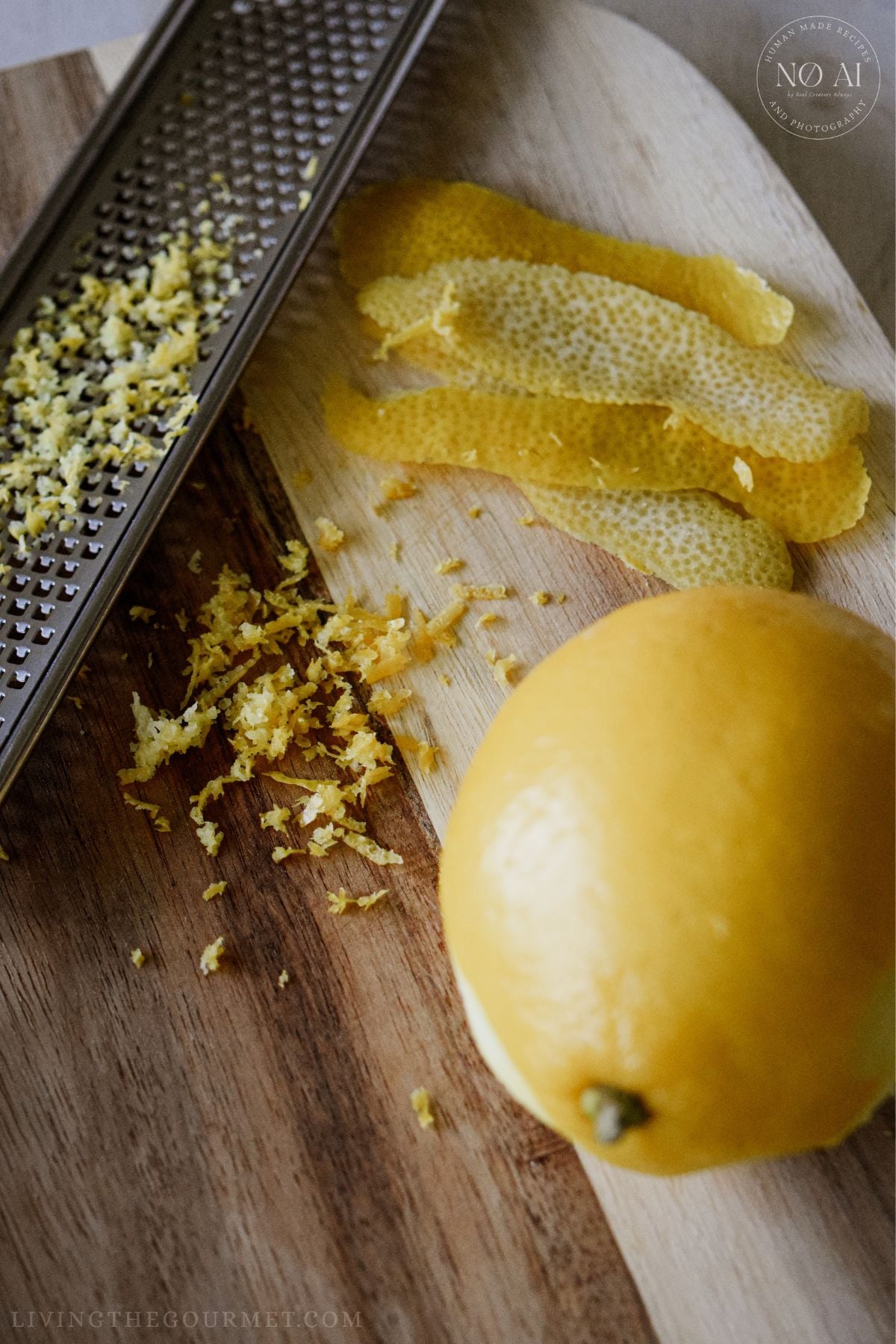
Lemon zest refers only to the outermost layer of the lemon peel, meaning the bright yellow, oil-rich surface. That's it. Lemon peel refers to the entire peel, including both the outer yellow layer and the bitter white pith underneath. Lemon zest delivers concentrated citrus flavor without bitterness, while whole lemon peel can add both citrus flavor and bitter notes to your cooking.
What is Lemon Zest?
Lemon zest refers only to the outer layer of the lemon peel. The bright yellow surface where all of the essential oils are concentrated. This is where the lemon's tangy flavor and distinct aroma live. When you zest lemons properly, you're extracting these essential oils without any of the bitter white pith beneath. That means bright citrus flavor, but no bitterness.
Fresh lemon zest provides intense, pure citrus flavor that's brighter and more concentrated than fresh lemon juice. In fact, a single teaspoon of lemon zest can deliver as much citrus impact as two tablespoons of lemon juice, but without adding any liquid to your recipe. This makes lemon zest invaluable for baked goods like lemon bars, lemon pie, cookies, and cakes where you want strong lemon flavor but without any extra moisture.
What is Lemon Peel?
Lemon peel typically refers to the entire peel of the citrus fruit - meaning both the yellow outer layer (which is technically the zest) and the white pith beneath. In some recipes, "lemon peel" and "lemon rind" are used interchangeably to describe strips of the peel that include some pith.
The bitter white pith, however, is where the challenge lies. While the pith does contain some citrus flavor, it primarily carries compounds that combine to create a bitter taste that can overwhelm delicate recipes. This is why most modern recipes specifically call for zest rather than the entire peel - unless, of course, the bitter notes are actually desired, as in traditional lemon marmalade, certain preserved lemon preparations, or certain heavier dishes, such as braises.
Key Differences at a Glance
Lemon Zest
- Only the outermost layer of the lemon peel (yellow part only).
- Concentrated essential oils and citrus flavor.
- No bitterness.
- Perfect for baked goods, salad dressings, savory dishes, and meat marinades.
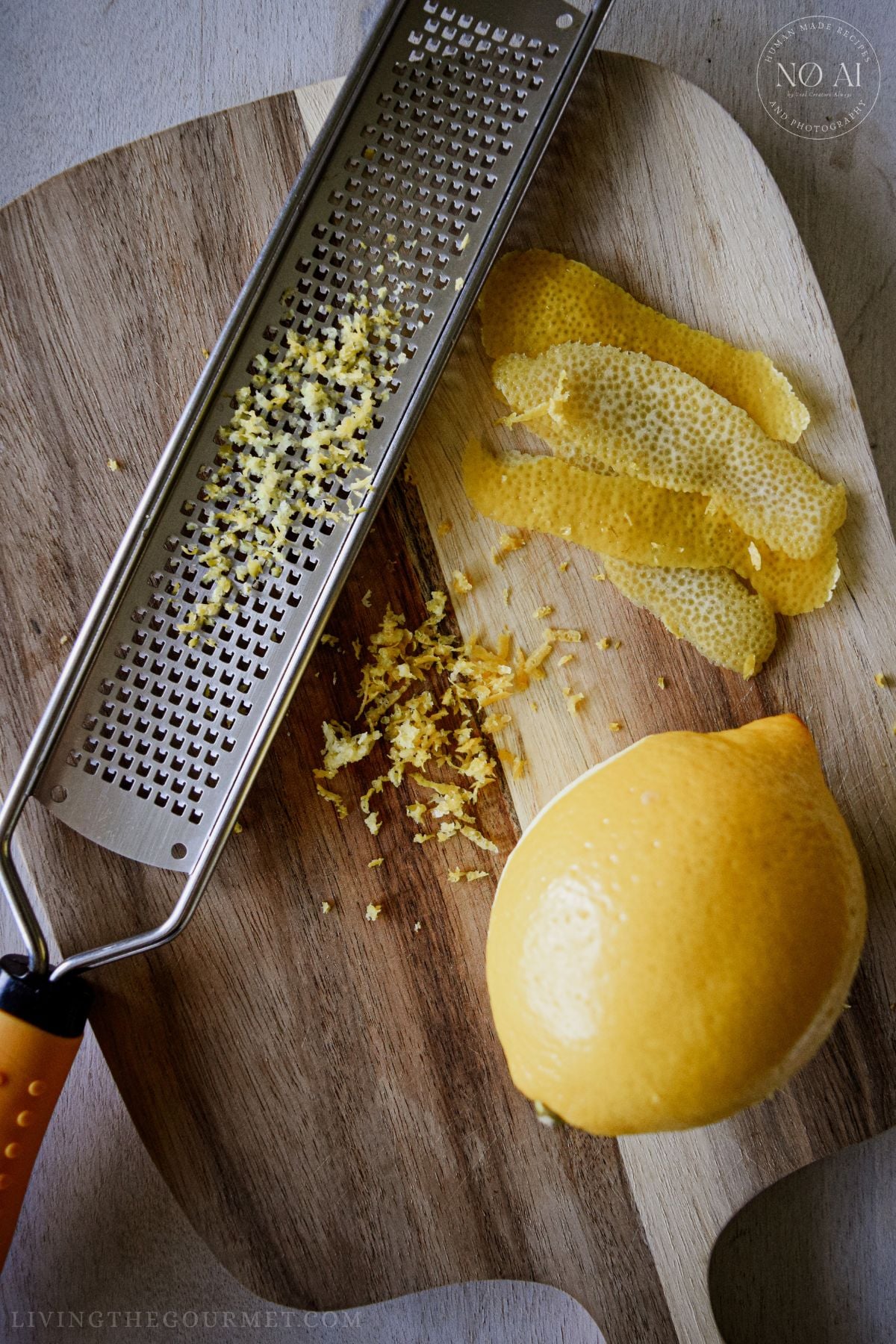
- Best extracted using a microplane grater.
Lemon Peel (whole)
- The entire peel, including the bitter white pith
- Contains both citrus flavor and bitter compounds
- Adds bitter flavor when used incorrectly
- Traditional in lemon marmalade, candied peel, and infusions
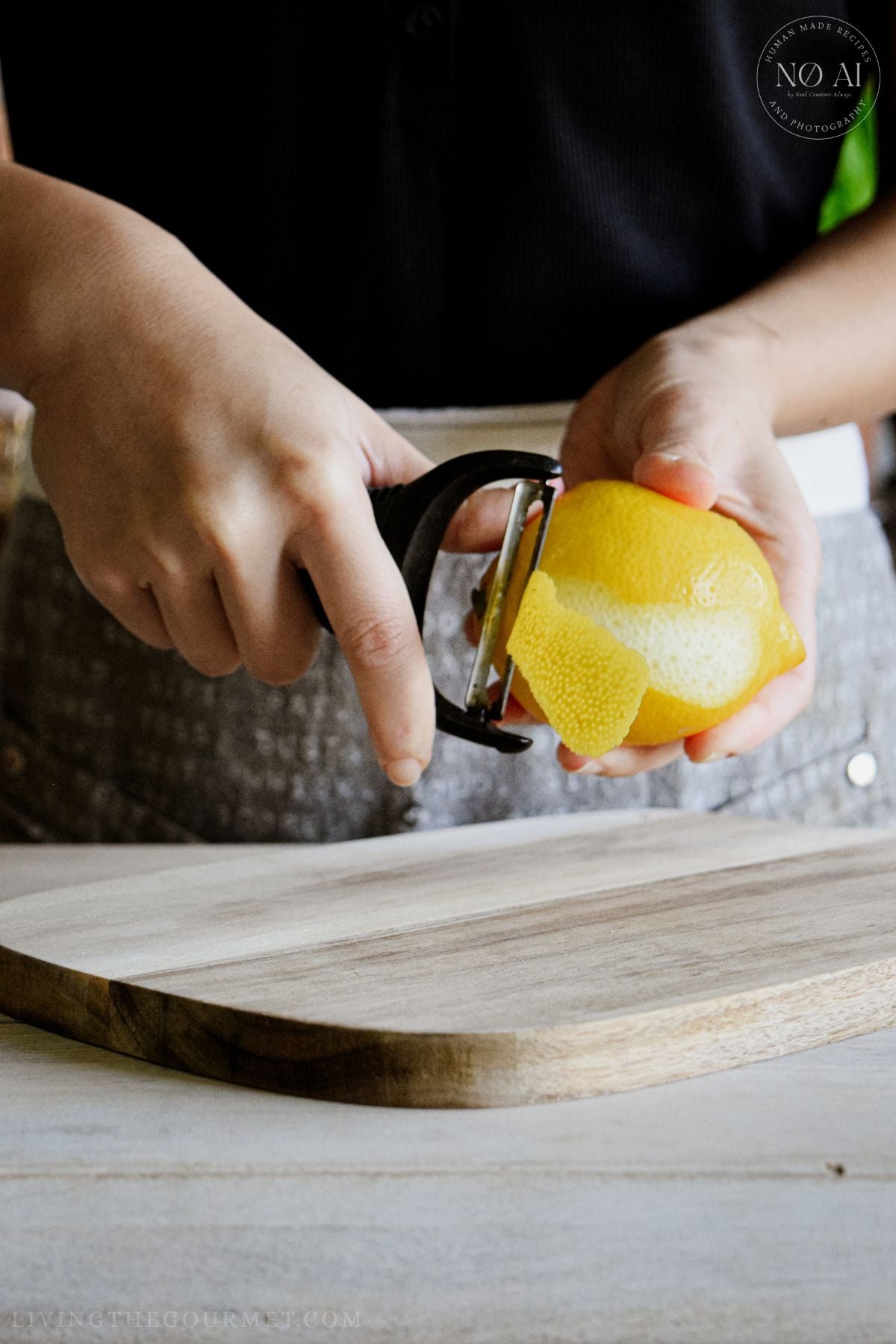
- Typically removed with a vegetable peeler in strips
How to Zest a Lemon Properly
The best way to zest a whole lemon properly is with a microplane grater, which produces a fine, delicate zest that releases essential oils into your dish. To properly zest a lemon, follow these steps:
- Wash and dry a whole lemon - preferably organic since you are using the peel specifically.
- Let the lemon reach room temperature. This makes it easier to zest.
- Holding the lemon in one hand, then guide it gently against the microplane grater, applying only minimal pressure. Too much pressure and you will dig into the pith.
- Rotate the lemon as you go, taking only the yellow layer.
- Stop as soon as you see the white pith. That's the signal to move on to a fresh, yellow area of the lemon.
If you do not have a microplane grater, a vegetable peeler can work in a pinch. Remove wide strips of just the yellow layer, and then finely chop them with a sharp knife. Avoid box graters, which tend to dig too deeply, grabbing pith and producing uneven zest.

When to Use Zest vs Peel
Use Lemon Zest For
- Salad dressings, as it brings a bright citrus flavor without extra acidity or bitterness.
- Baked goods such as lemon bars, lemon pie, cookies, and pound cake.
- Savory dishes where you want a citrusy, zesty flavor without added moisture, acidity, or bitterness.
- Finishing dishes with a fresh citrus aroma.
- Compound butters and flavored sugars.
Used Whole Lemon Peel For
- Lemon marmalade, where the bitter notes help to balance out the sweetness.
- Candied lemon peel.
- Infusing oils and spirits (such as limoncello).
- Long braises, where the pith softens and mellows.
- Traditional preserves lemon preparations.
The Same Rules Apply to Other Citrus Fruits
These distinctions apply to all citrus fruit, not just lemons. Orange zest delivers pure citrusy flavor without bitterness, while orange peel includes the pith. Similarly, when a recipe calls for orange juice, it's using the juice for flavor 'and' moisture, whereas orange zest brings a completely different flavor dimension that concentrated juice can't match. The same principle applies to limes, grapefruit, and other varieties of citrus.
Lemon Zest Substitute Options
If you're out of fresh lemons and don't feel like running to the grocery store, here are a few practical lemon zest substitutes:
- Dried Lemon Zest: Found in the spice aisle, dried lemon zest is usually a fine substitute for fresh. Use about half the amount called for in the recipe, as it converts at a half-to-one ratio.
- Lemon Extract: Use about a quarter of a teaspoon per teaspoon of fresh zest.
- Orange Zest: This will provide a different citrusy flavor, but still brings the same citrusy brightness. Orange zest is often a fine substitute for lemon zest.
- Lemon Juice: Not ideal, since it adds liquid to the recipe, but it can work in a pinch. Use about a tablespoon of juice per teaspoon of zest. Naturally, do not use this substitute in recipes that are sensitive to added liquid.
Storage Tips
Fresh lemon zest is best used immediately, and so I do not recommend zesting more than you need for a given recipe. I say this because the essential oils begin degrading the moment they are extracted from the lemon. However, if you must store lemon zest I recommend the following:
- Freeze Zest: Store the zest in an airtight container and pop it in the fridge for up to three months.
- Dry the Zest: You can spread the zest on parchment and then let it air-dry before storing it in an airtight container.
- Preserve in Sugar: For baked goods, you can preserve the zest in sugar. Mix the zest with sugar and store.
The Bottom Line
The difference between lemon zest and lemon peel comes down to one basic concept: the zest is only the outermost layer of the lemon, the yellow part where the essential oils live, whereas whole lemon peel includes the bitter white pith beneath the yellow. For most modern recipes, especially baked goods, salad dressings, and savory dishes, you only want the zest, not the entire peel. Master the technique of properly zesting citrus fruit with a microplane grater, and you'll be gracing your recipes with bright, citrusy goodness.
And that's our answer to the question "What's the difference between lemon zest and lemon peel?" If you enjoyed this article, or have any questions or suggestions, be sure to let us know in the comments below. We always love hearing from you!
Happy Cooking!




Leave a Comment