
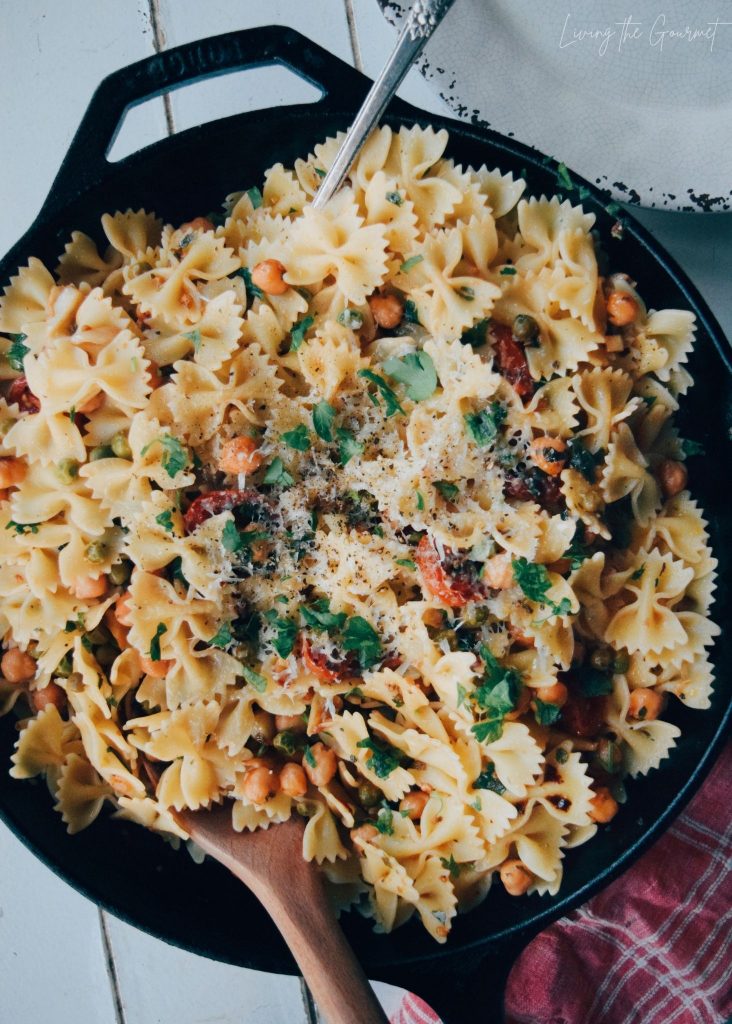
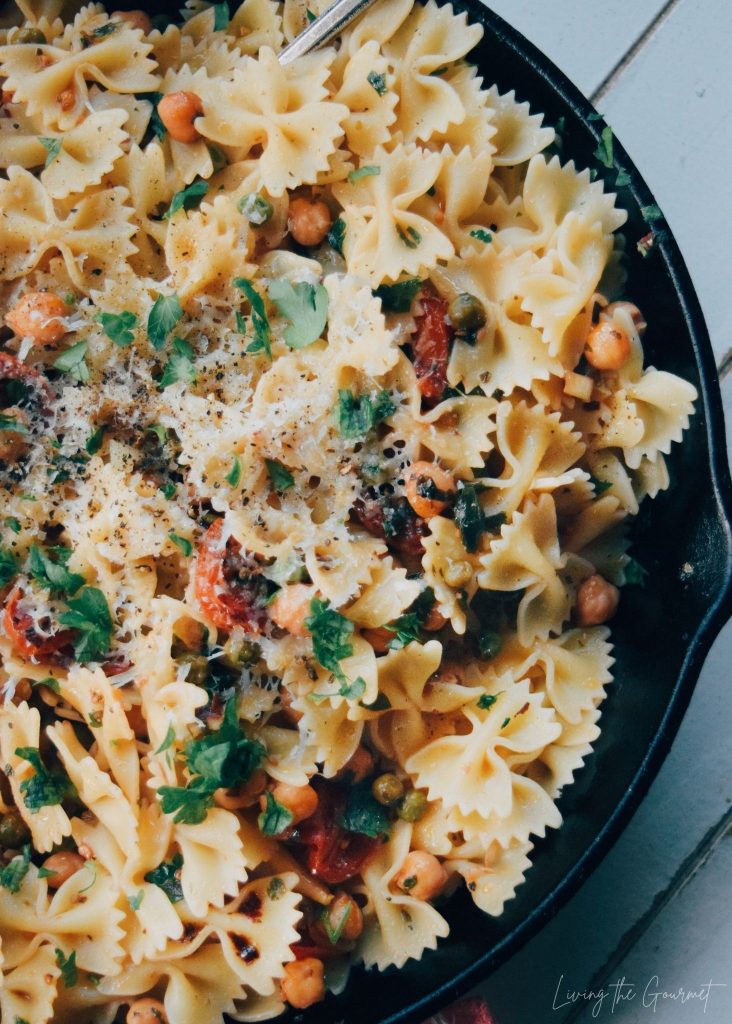
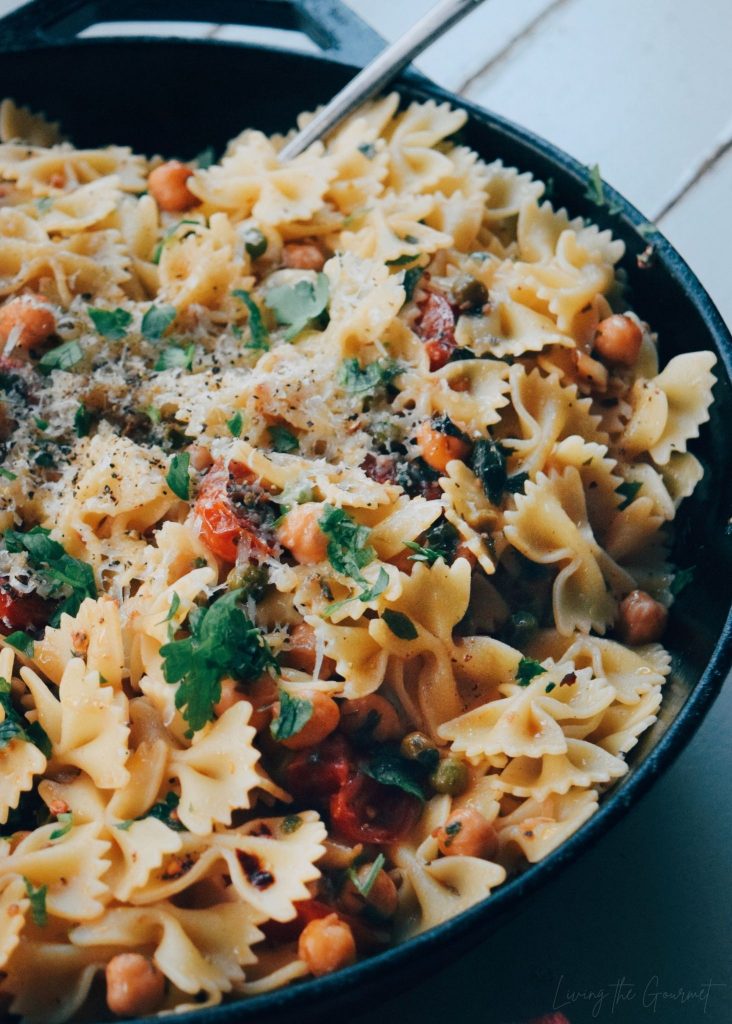
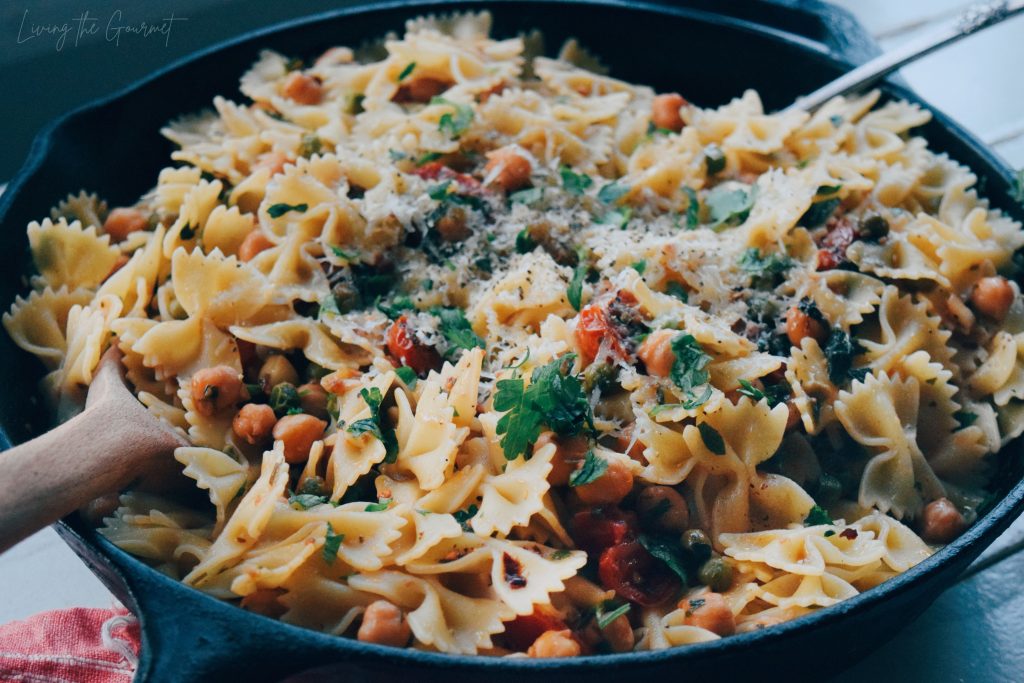
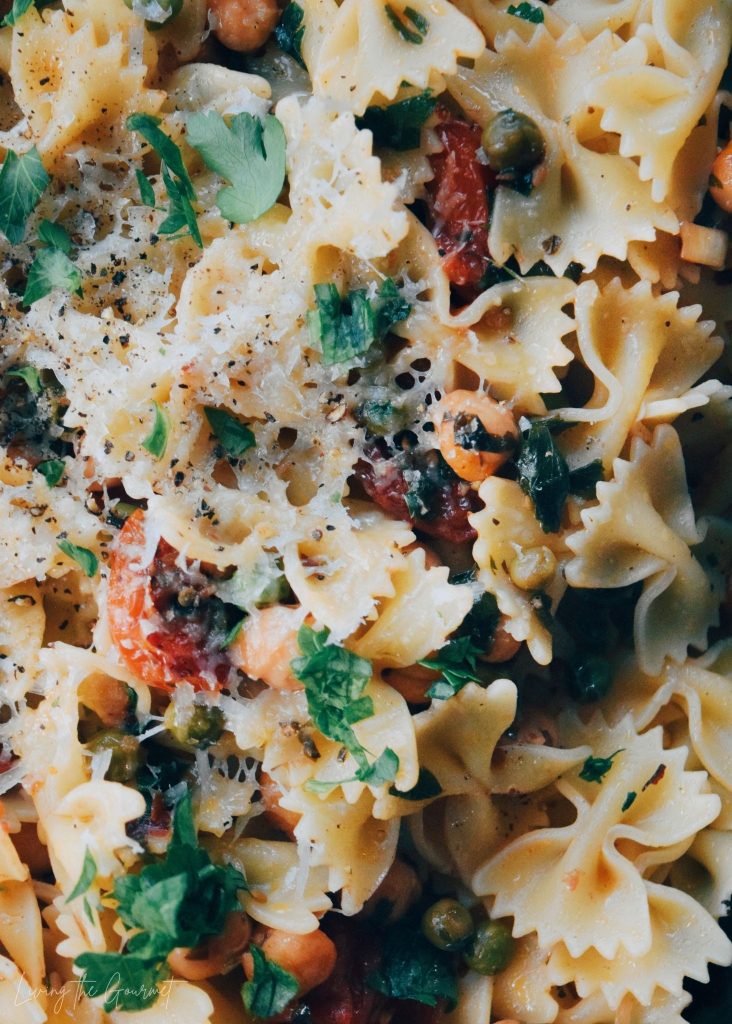
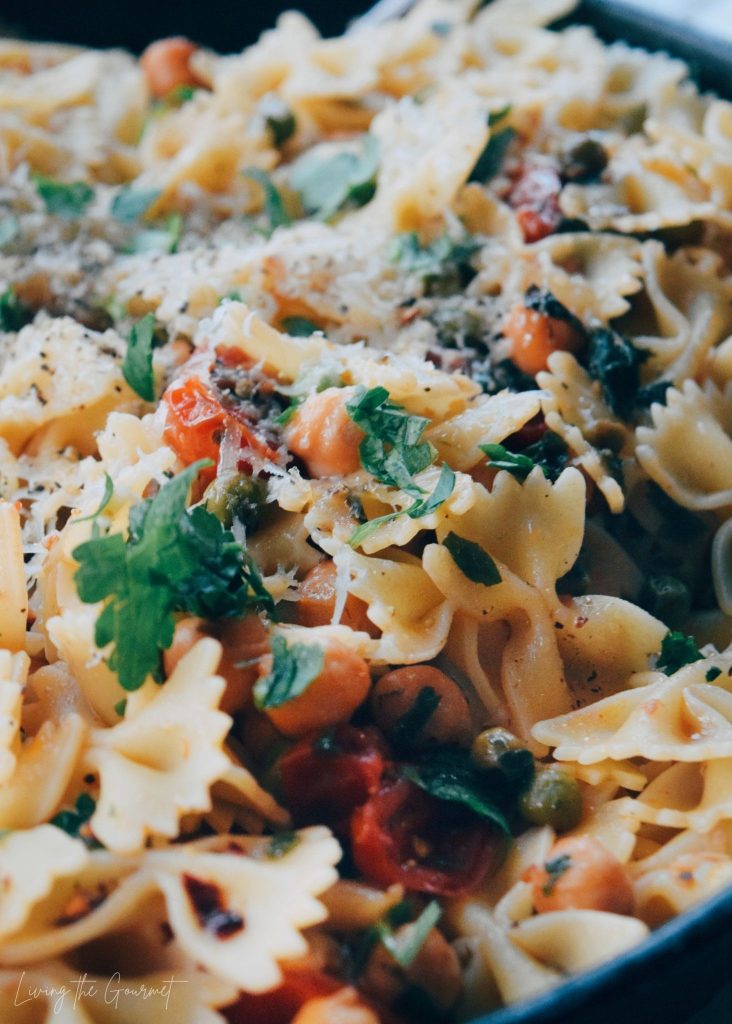
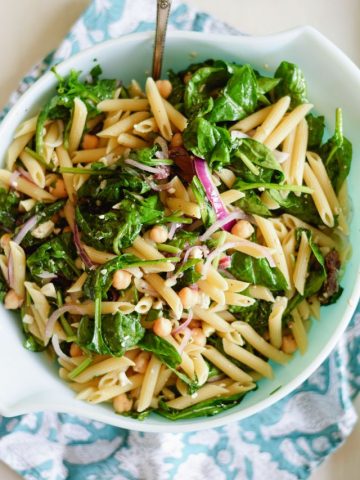
Today we're putting together the first of our spring season themed recipes - pasta with chickpeas & fresh cilantro, which we'll be tossing tossing with fresh grape tomatoes, red pepper, & plenty of grating cheese. The end result is a bright, pleasantly spice pasta dish, that's perfect for the warming weather.
In addition, I'll be running down some chickpea basics, including giving you my take on the age old debate between canned and dried, and then covering how to soak or rehydrate dried chickpeas. Spoiler: The process couldn't be simpler.
Why You'll Love today's Pasta
1) Great for the Spring Season. Today's pasta dish is light, easy to prepare, and bursting with fresh flavors, making it ideal for the spring season.
2) Super Simple. Sauté the listed ingredients together in oil, boil the pasta, and then mix them all together. Does it get an easier than that? Didn't think so.
3) No Fancy Ingredients. Today's pasta dish pulls together its medley of flavors using only basic, pantry-friendly ingredients, such as oregano, red pepper, chick peas, and cilantro.
Ingredient Notes, Tips, and Substitutions
1) Chick Peas: Dried vs Canned. While chickpeas are a staple in Indian, Mediterranean, and Middle Eastern cuisine, these ancient legumes (we've been cultivating them as species for nearly 10,000 years) have experienced a surge in popularity over the last twenty-four or so months, thanks largely to various publications proclaiming them as the latest 'Super Food.' However, is working with dried, bagged chickpeas worth the effort? Or are canned 'just fine?' The answer is 'both.' Both dried and canned chickpeas carry all of the same health benefits in terms of protein content and nutrient density. Thus, the difference really comes down to taste and convenience - and this is where trade offs need to be made. Dried chickpeas are a hassle, requiring that you soak them for anywhere from an hour to overnight, 'after' sifting for stones and dirt, but are generally agreed to be better tastier than their canned counterparts. By contrast, canned chickpeas are ready in seconds, but are often regarded as lacking in both taste and texture. As such, only you can decide if that added hassle is worth it or not.
How to Soak Dried Chickpeas - The Overnight Method: First, you need to sort through the chickpeas, making sure there are no stones or debris. Place the chickpeas in a large bowl, and cover them with water. Then simply leave them to soak overnight - or for roughly twelve hours.
How to Soak Dried Chickpeas - The One Hour Method: This involves boiling. We start off sifting beans, and then giving them a quick rinse. We then transfer them to a sauce pan, cover with water, and bring to a boil. We cook them for about a minute before removing them from the heat. We then allow them to soak in that same water for about an hour.
2) Cilantro - The Herb that Tastes like…soap? Almost unknown in the USA and Canada until the 1970s, cilantro has a lot of detractors - despite being a staple herb across the entirety of the Spanish speaking world and parts of Asia. But why? Because to a wide swath of the globe's population, due entirely to an accident of genetics, cilantro tastes like soap, or - according to Julia Child - 'death.' Personally, I find the taste of cilantro to be bright and citrusy, a bit like 'parsley with a dash of earthiness and a squeeze of lemon.'
How to Use Cilantro: Generally speaking, in the same way you might use parsley, but with a few caveats. Cilantro fairs better in heavier, fattier recipes than does parsley, since the herb is stronger and more pungent. Due to these qualities, you might want to skip cilantro in lighter recipes, opting instead for parsley or basil. For example, cilantro fairs best in things like spicy salsa and pico de gallo, chunkier guacamoles, and, my personal favorite, chimichurri. Raw, you might consider sprinkling it over tacos, chili, or chicken tikka masala. In recipes like these, parsley would simply be overwhelmed. However, before using cilantro, you're going to want to wash its leaves thoroughly under cool water, and then separate the leaves from their stems - a very tedious but worthwhile process. Yes, the stems 'are' edible if you are so inclined.
3) Fresh Oregano vs Dried - and Possible Substitutions. The one word you'll likely always come across when reading about fresh oregano is 'pungent,' and occasionally 'intrusive.' For this reason, it's at home in recipes with 'powerful' ingredients, or where an abundance of other fresh ingredients are present. Things like Greek salads, whole roasted fish, grilled lamb, heavy sauces, or in herbal mixes for use in stuffing pork shoulders. In other words, recipes that aren't 'gentle' or light. For virtually all other uses, dried oregano is preferable, since the drying process mellows it dramatically - which is almost the polar opposite of what happens with other dried herbs, where the drying process has a tendency to 'concentrate' rather than mellow the herbs' most prominent qualities.
Substitution: Dried basil or thyme at a 1-to-1 ratio.
More Pasta Favorites from Living the Gourmet
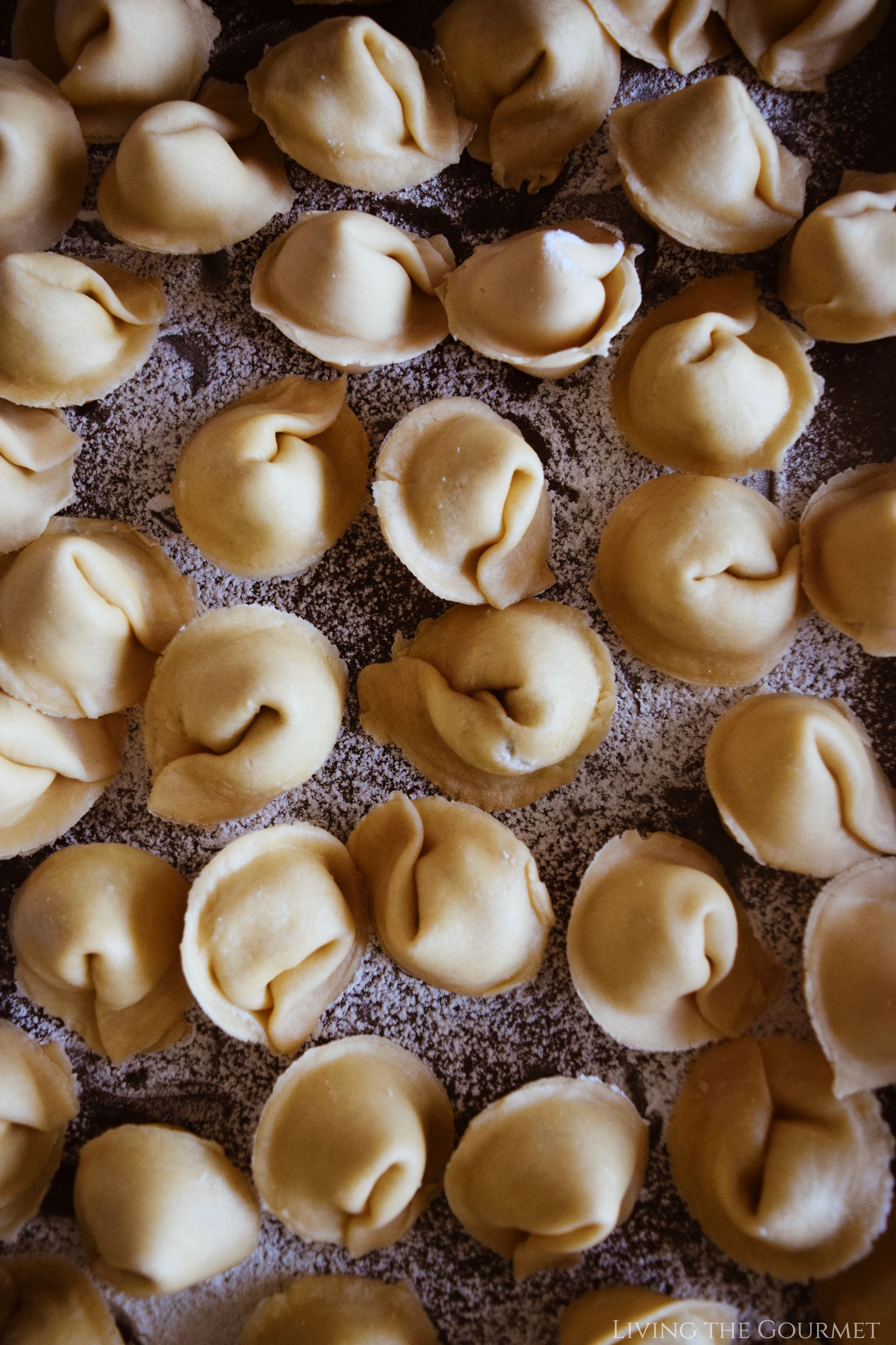
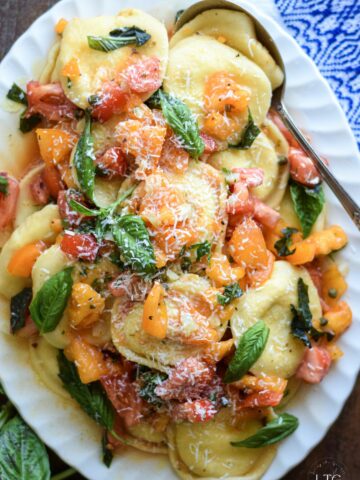
1) Homemade Ravioli. My favorite twist on a beloved classic, but the real draw here is the delicious mix of asiago, ricotta, mozzarella, and romano, coupled with a fresh red sauce, plenty of garlic, and fresh spinach.
2) Feta and Pignoli Ravioli. Homemade ravioli stuffed with a sweet and savory mix of ricotta, feta, and parmesan, along with cinnamon and nutmeg, served with a white wine and butter sauce, prepared with roasted pignoli nuts, raisins, and garlic. Delicious and elegant.
3) Brown Butter and Herbs Pasta. Super simple, yet delicious and satisfying, this recipe features a rich brown butter sauce prepared with fresh lemon, garlic, and oregano, topped with crisped breadcrumbs and walnuts.
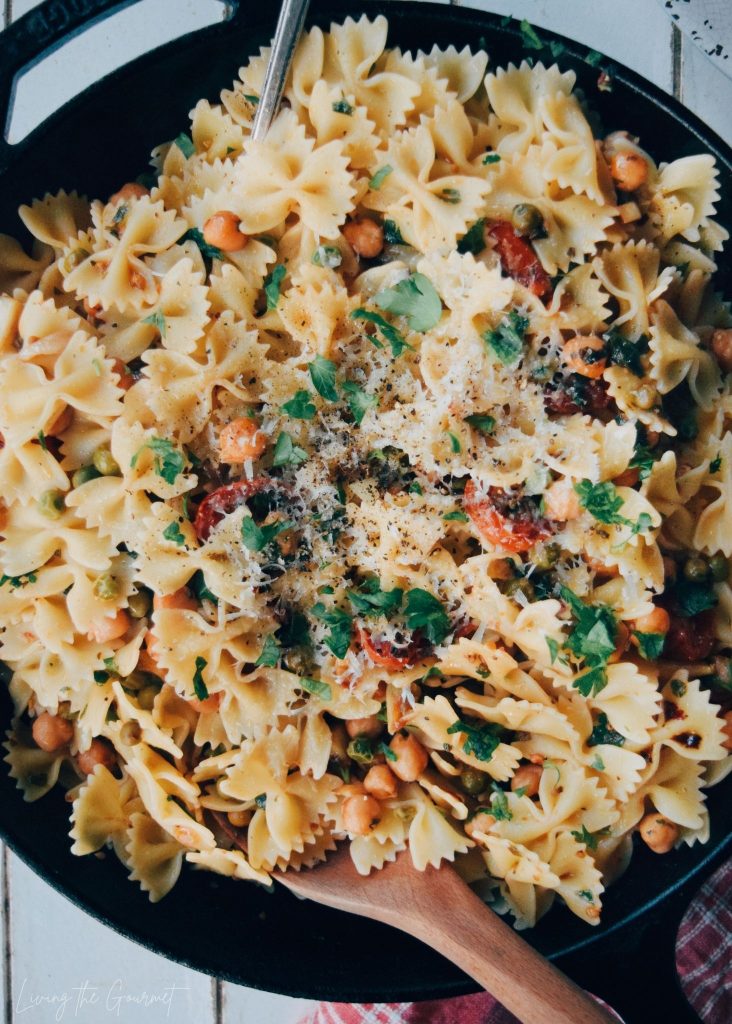
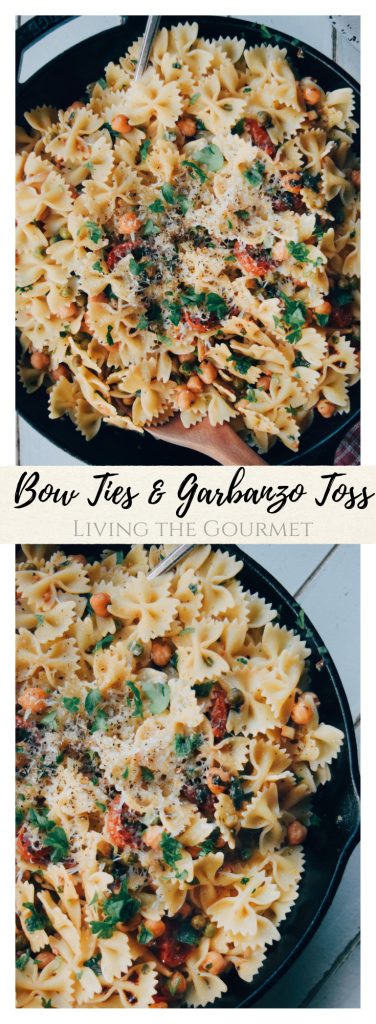
Bow Ties & Garbanzo Toss
- Total Time: 30 minutes
- Yield: 4 servings 1x
Ingredients
- 15.5 oz. can of chickpeas (garbanzo beans), drained
- 1 - 2 cups of frozen peas
- 1 pint of grape tomatoes
- 4 - 5 cloves of garlic - chopped
- 1/2 cup of fresh cilantro - stems removed and chopped
- 1/2 cup of water
- 3 - 4 tbs. of olive oil - plus more for drizzling
- 2 tsp. salt
- 1 tsp. fresh ground black pepper
- 1/2 tsp. red pepper flakes
- 1 tsp. dried oregano
- 1 lb. of your favorite pasta
- Fresh parmesan or Romano cheese for grating
Instructions
- Heat a large cast iron frying pan.
- Add the tomatoes and let the tomatoes get a slight char and pop.
- Add the garlic and the olive oil and allow the garlic become fragrant.
- Add the chickpeas, fresh cilantro and the peas and continue to simmer on a gentle heat. Drizzle with a bit more olive oil.
- Add the water and toss. Taste for seasoning.
- Prepare the pasta as directed; drain and add to the tomato and peas.
- Drizzle with olive oil and finish with fresh grated Parmesan or Romano cheese and fresh chopped cilantro.
- Prep Time: 10 minutes
- Cook Time: 20 minutes
- Category: Main Dish
- Cuisine: Italian
Everything Enchanting says
How delicious! I've never had pasta with chickpeas before, so would love to try this recipe.
Rhian Westbury says
That sounds like such a lovely and fresh pasta dish. Although I don't think myself I have made pasta using chickpeas before x
Risa Lopez says
A picture you can taste, lol. That looks so yummy! Yummy recipe, I'm saving it.
Yeah Lifestyle says
Such a delicious recipe, I've learnt a few new tips such as to soak the chicpeaks in boiled water and that both canned/dried chickpeas have the same nutrition