This post has been brought to you by Gancia. All opinions expressed are my own. The following message is intended for those 21+. Please enjoy responsibly.
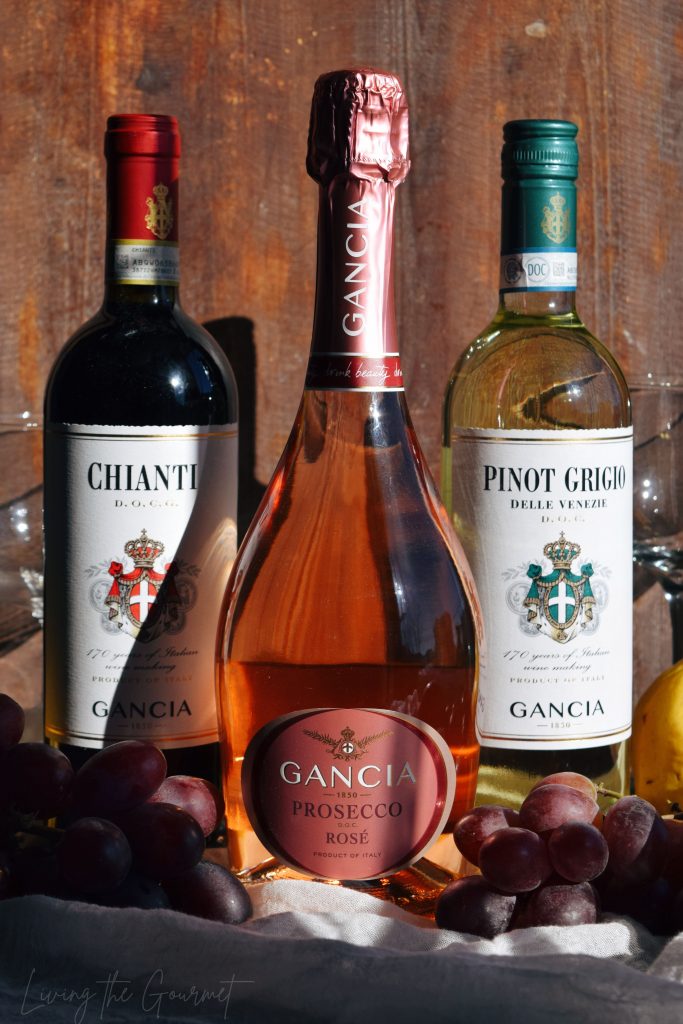
Today we'll be taking a look at a trio of bottles from one of the world's premier wine regions - Tuscany, Italy. Up first, we'll be covering some of the region's basics, then we'll move on to sampling the wines themselves, and I'll be closing with some pairing and serving suggestions.
The Where - Tuscany (Chianti DOCG), Italy
Today's bottle comes to us from Tuscany, which is arguably the most iconic wine region within Italian winemaking - which in turn makes it "One of the most iconic regions in 'all' of winemaking."
In turn, the Chianti DOCG, (Denominazione di Origine Controllata e Garantita, or Denomination of Controlled and Guaranteed Origin), is the single best-known Italian wine region within Tuscany, and not without good reason. Chianti, produced from Sangiovese grapes, is recognized for its assorted cherry aromas and flavors, along with pleasantly contrasting savory notes, rich acidity, and full tannins. The first Chianti wine zone dates back over three hundred years to 1716 courtesy of Grand Duke Cosimo Medici. Recognizably 'modern' Chianti, the 'style' or blending of Sangiovese that we all know and love today, dates back to the 1800s, courtesy of Barone Ricasoli of the Castello di Brolio winery.
Outside of the Chianti DOCG, Tuscany is divided across a whopping forty-one DOCs and 11 DOCGs, Italy's regional classification system, which regulates how and where wines are made. Aside from production methods and geography, this classification system also sets rigid quality standards, including but not limited to standardized taste testing.
However, despite the literally dozens of specified production areas and methods into which Tuscany is divided, the bedrock of Tuscan winemaking is a single varietal - Sangiovese. Sangiovese so dominates the region that it is almost impossible to talk about Tuscan winemaking without giving mention to the grape that produces the dry red wines for which Tuscany is famous. Prized for its high acid, 'pleasantly firm' tannins and balance, a quality wine based on Sangiovese will evoke images of ripe dark cherries and black stonefruit, perforated with stark herbal notes. Chianti, Vino Nobile di Montepulciano, and Brunello di Montalcino (all of which we've reviewed here on Living the Gourmet), are just a few of the world-renowned wines produced from Sangiovese.
However, Sangiovese is assuredly 'not' the beginning and end of the story of Tuscan winemaking. For example, the 1970s saw the rise of 'Super Tuscans,' an unofficial term used to describe several high-quality Tuscan wines that were - for one reason or another - excluded from receiving DOC or DOCG status by breaking traditional Italian winemaking norms. Regardless of local labeling, a number of these wines achieved critical acclaim, as well as commercial success, and ended up becoming 'cult wines' that commanded high prices. Over the ensuing decades some of these 'Super Tuscans' were granted DOC or DOCG status - although it can be argued that such status detracted from their 'cult' mystique as 'rogue labels.' Aside from the controversial 'Super Tuscans,' other wines have also seen success across Tuscany, such as Syrah, Merlot, and Cabernet Sauvignon.
Tight regulations and quality standards aside, climate is perhaps the foremost factor in Tuscany's success. The region's warm and temperate coastline is flanked by inland hillsides and mountains, which help temper the region's searing summers, which in turn contributes to increased temperature variation. This temperature variation between the hills, mountains, and warm coastline help balance the sugars and acidity of the region's grapes. Sangiovese performs best when it receives maximum direct sunlight, and as such the hilly terrain of the region is almost tailormade for this grape, with the majority of area's vineyards being planted at elevations of between some five-hundred and sixteen-hundred feet. This higher elevation further increases temperature variance, which further increases the balance in sugar and acidity.
Tasting and Aromatics - The Review
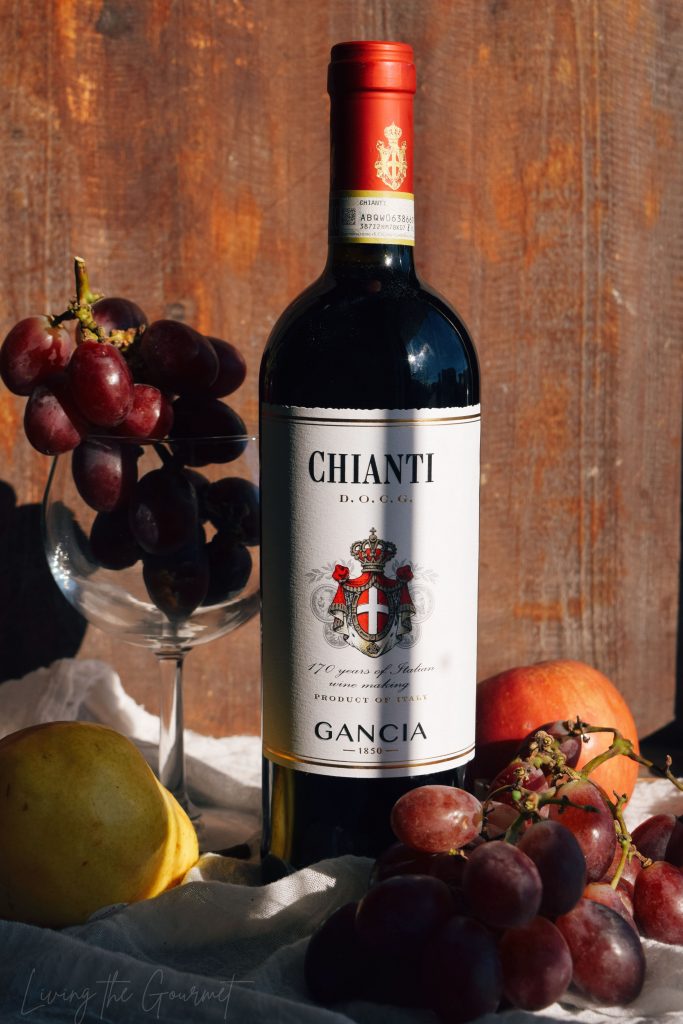
The Chianti introduces itself with deep, robust, and layered aromatics featuring juicy sliced dark fruit, such as plums and blackberries, just a hint of boysenberry, and 'something jammy.' Deeper into the glass, the fruit aromatics mature significantly, with the berries being replaced sundried tomatoes, herbal notes, and tilled soil. What I'll describe as 'crusty bread and cocoa' manifests on third whiffs, but this could just be me lingering too long in the bouquet. On the palate, the wine stakes out a delicate balance between being a 'delicately medium bodied' wine and a 'heavier light bodied' wine, while retaining structured tannins. This creates a unique and unexpected mouthfeel. The palate is very dry, featuring notes of cracked leather, a touch oak, and the mixed berries from the bouquet.
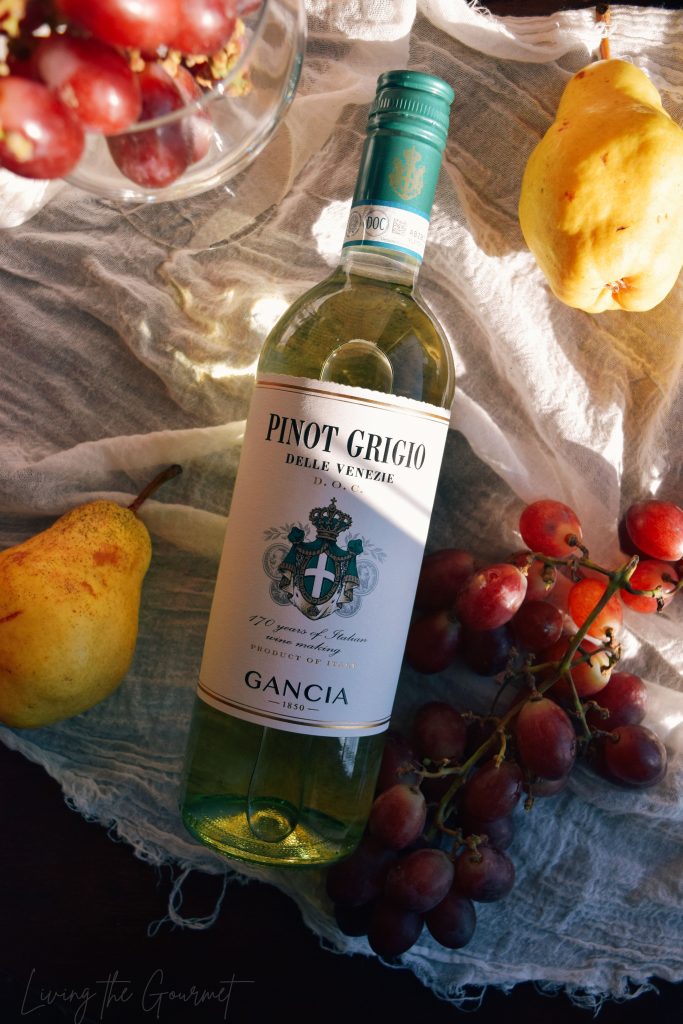
The Pinto Grigio introduces itself with aromas of sliced golden apple, and a dusting of lemon zest. White flowers and fresh herbs manifest on second sampling. A lack of oak is noticeable. On the palate, the wine is dry, but crisp and lively, with quick bursts of lemon zest punctuated by traces of lime or perhaps fresh citrus. A very pleasant experience from start to finish.
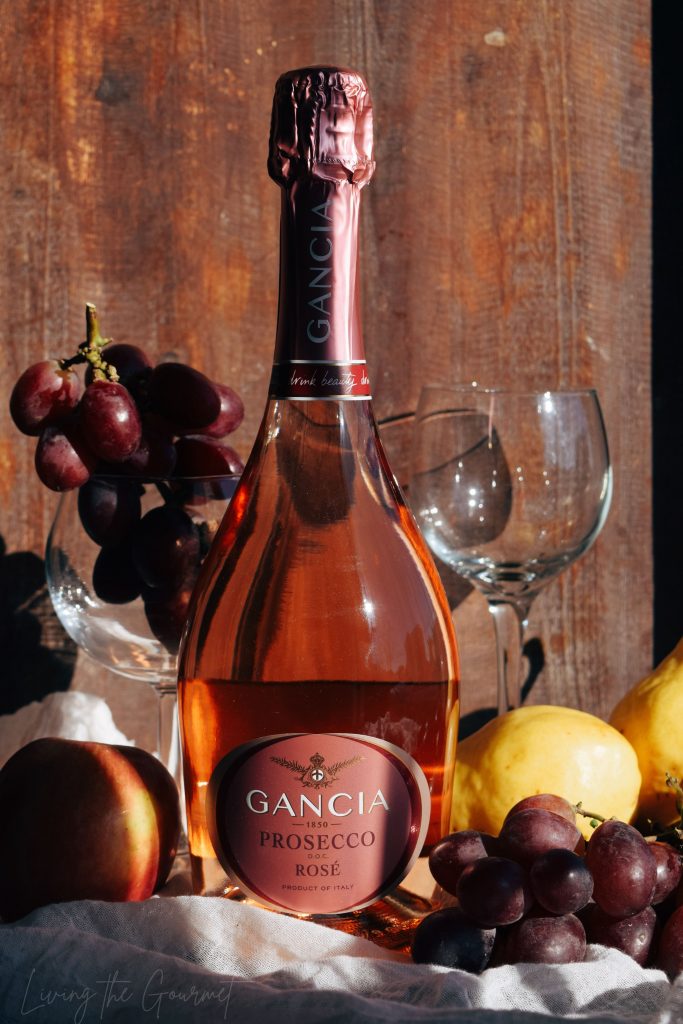
The Prosecco introduces itself with characteristic bright fruit aromas. Think blueberry, strawberry, and 'mixed melon.' Hints of acacia and lemon cream manifest on second breaths, while something vaguely reminiscent of 'sweet lavender' lingers in the background. On the palate, the wine features a medium acidity, carrying lime zest and raspberry, with a delightful finish. Very pleasant.
What to Eat - The Pairings
With the Chianti, by the book pairings are the way to go with this particular bottle. What does that mean? That means rich, heavy, and meaty entrees. For example, a prime rib prepared with a curry and cayenne-based rub mixed with garlic, coriander and cumin. Beef tacos are another great pairing. Conversely, you might also consider an herb roasted rack of lamb, prepared with a mix of honey, oregano, garlic, and basil. Seared beef steaks, shark steaks, spicy barbecue, red meat sauces over pasta, and the like are all potential pairings.
With the Pinot Grigio think light, think crisp, and think 'accessible' rather than 'pretentious.' Pinot grigio is often described as a delicate and neutral wine that pairs best with things like grilled chicken or braised pork. Think chicken fajitas with lots of cheese, greens, and fresh peppers. Greek salads with crumbled feta. Similarly, lightly herbed fish, pasta tossed with garlic and oil, and other such fare are all 'on the mark' pairings. Conversely, you might also consider pairing this wine with a cheese board - which is perhaps the most common 'by the book' pairing for pinot grigio.
The Prosecco is an aperitif bottle best paired with feather-light starters, light leafy salads, or fruit salad, or simply with company and conversation.
Cheers!
Melissa Cushing says
These look like fabulous selections and I love a good glass of wine. I will have to check these out and pinning them next to my Pinterest board of must try's!
Jupiter Hadley says
WOW, I had no idea there were that many different production areas in Tuscany! It's really interesting to learn about wine in your posts!
Rosey says
This is a whole new world to me. My DIL has a certificate in wines and she knows so much about them. It's interesting.
Laura says
Great review. These all sound like really great wines - but what do you expect from Tuscany, right 🙂
Melanie Edjourian says
These all sound like lovely wines. I don't recall having had any wines from Gancia before. I will be looking out for them now though.
Rhian Westbury says
I've definitely heard of and seen wine from this region before. Sounds like some great bottles x
Mosaics Lab says
I've been to Chianti a few years ago, it was magical and charming. And the best wines of course....