
This post has been sponsored by Poderi Roccanera. All opinions expressed are my own. The following message is intended for those 21+.
Today, we're reviewing a 2024 Moscato d'Asti from the Poderi Roccanera winery located in Piedmont's Langhe area. The Poderi Roccanera winery is a leading figure in the Sori Eroici initiative that aims to project historic steeped vineyards where mechanical farming is impossible.
As always, we'll be taking a brief tour of Piedmont as a wine region and the winery itself, before taking a look at the Moscato itself. I'll be reviewing the wine in detail, and then we'll take a look at some pairing and serving suggestions.
Now, let's get tasting.
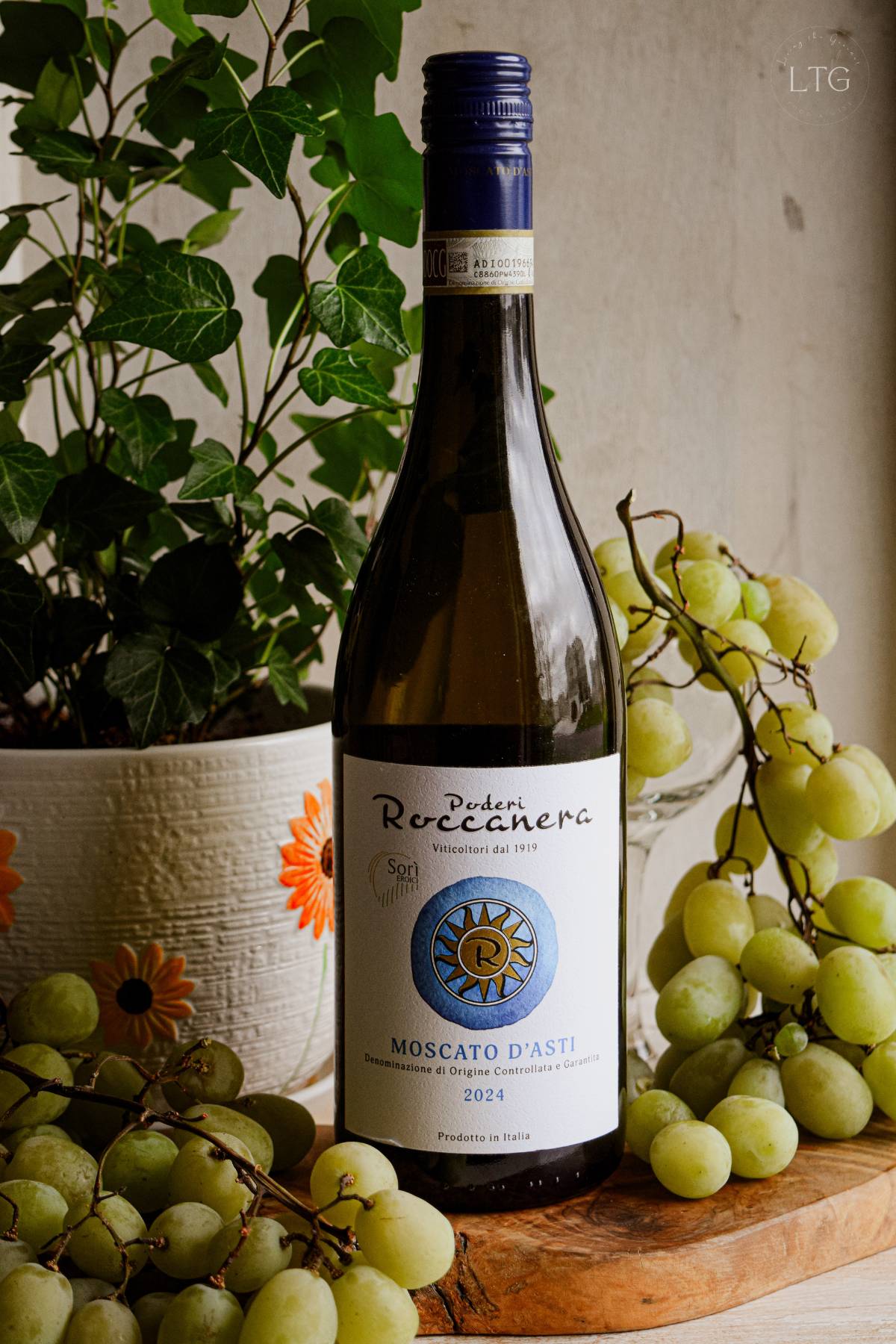
Wine Overview
Quick Facts
- Winery: The Poderi Roccanera winery is a family-owned estate dating back to 1919. Today, it is managed by the fourth and fifth generations, who introduced innovative sustainable practices while maintaining century-old family traditions. Owner and winemaker Alessandro Negro is a leading figure in the Sori Eroici (Heroic Slopes) initiative. This project protects historic, exceptionally steeped vineyards where mechanical farming is impossible, meaning all work must be done by hand.
- Grape Varietals: This wine is produced under the Moscato d'Asti DOCG and is 100% Moscato Bianco grapes.
- ABV: 5.5% alcohol by volume.
- Price: As of this review, this wine costs about $18-22 USD.
Region - Langhe, Piedmont, Italy
The estate is located in Cossano Belbo, which is a small community in the Langhe region of Piedmont, Italy. The vineyards in this area are part of the UNESCO World Heritage landscape. The hills of Cossano Belbo feature calcareous marl and sandstone soils. The white, limestone-rich soil is crucial for the grapes, as it reflects sunlight and heat back onto the clusters, helping to ensure optimal ripening.
Piedmont itself abuts the Alps and is characterized by rolling hills of moderate elevations. The region enjoys a continental climate, with cold winters and warm summers. During the growing season, daytime temperatures are typically quite warm, and the nights are pleasantly cool, contributing to the development of aromatic compounds in the grapes.
Moscato d'Asti and the Asti Spumante - What's the Difference?
Both Moscato d'Asti and Asti Spumante fall under the same Asti DOCG umbrella, and both are made from Moscato Bianco grapes. However, they are distinct wines with their own characteristics, though both are a style of sparkling wine.
Moscato d'Asti is frizzante, meaning it is a gentle, semi-sparkling wine, while Asti Spumante is a full sparkler. Moscato d'Asti has an ABV of 4.5 to 6.5, whereas Asti Spumante has an ABV of 7 to 9.5. Moscato d'Asti, true to its reputation as a social bottle, is sweeter with higher residual sugar than its Asti Spumante counterpart.
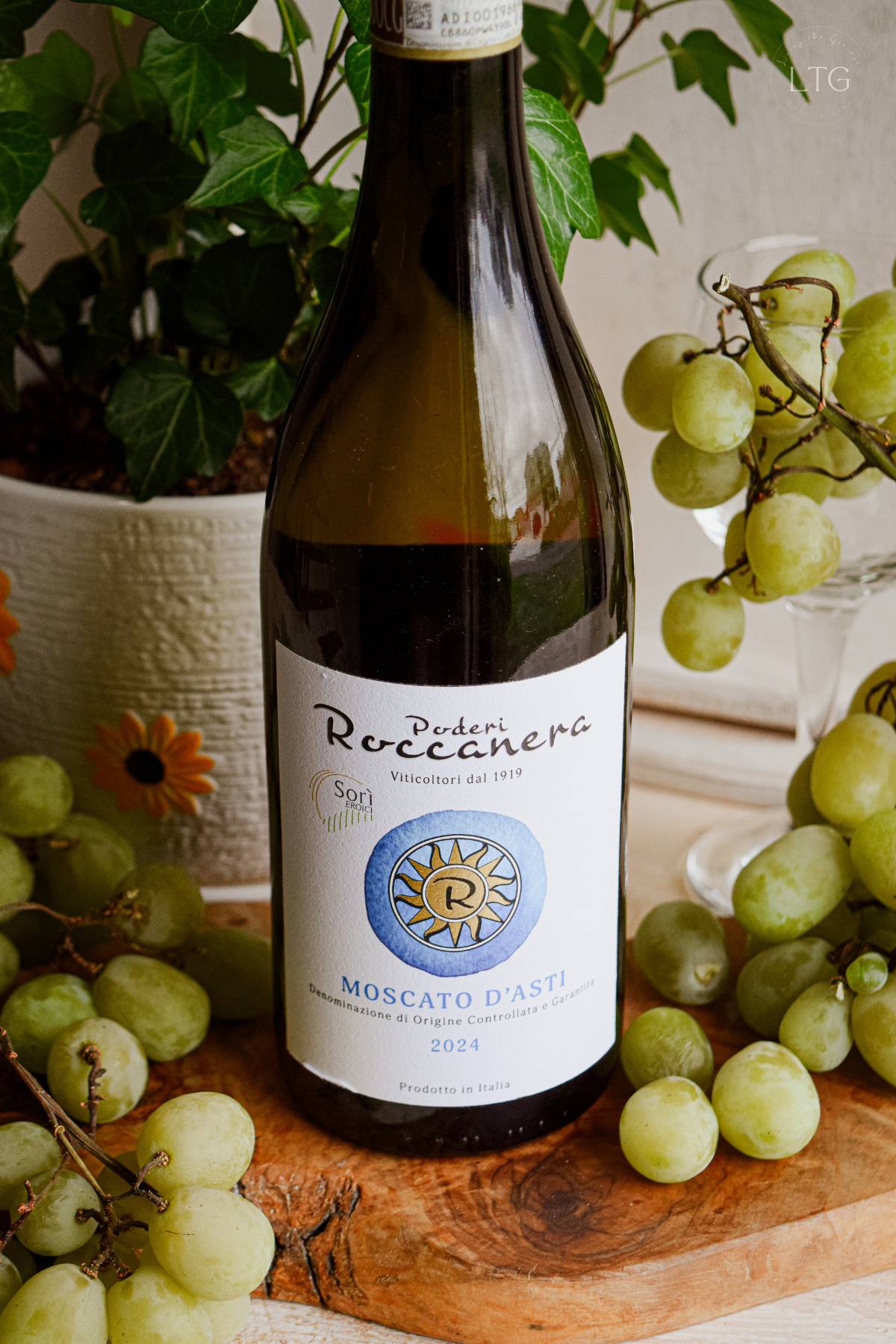
Aromatic and Tasting Notes
On the Nose
Off the top of the glass, the wine introduces itself with syrupy peaches, acacia honey, and citrus - chiefly grapefruit essences. On second whiff, the peach ripens, complemented by elderflower essences and wisteria, with just a hint of background herbaceousness. Thoroughly enjoyable, approachable, and light.
On the Palate
The wine is instantly lively on the palate and features a playful complexity with hints of stone fruit and an elegant, creamy mousse.
Finish
The finish is quite lasting, and thoroughly well balanced, with an acidity that prevents the wine's innate sweetness from becoming cloying.
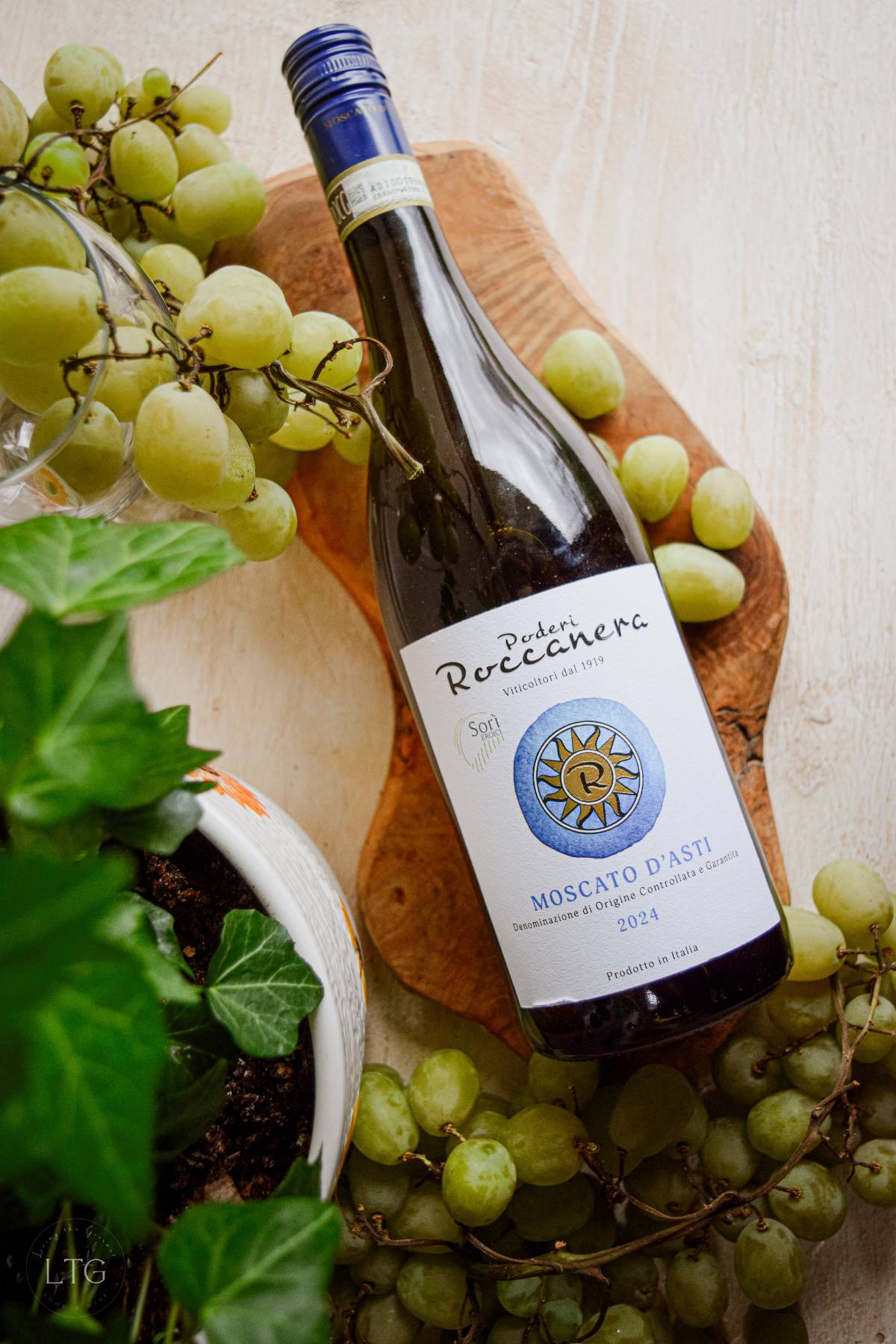
Wine Score
This is a simply excellent example of a Moscato d'Asti. It's lively, approachable, and perfect for easy drinking on a warm summer day. Coupled with a great price-to-quality ratio, this becomes a very easy bottle to recommend. For these reasons, I'll award it a 93.
Serving and Food Pairing
- Best Served: I strongly suggest serving this wine cold, at around 41-45 degrees F.
- Traditional Pairings: Hazelnut cake, fruit-based tarts, and creamy pastries are all by-the-book pairings for Moscato d'Asti.
- Fruit-based Desserts: I would recommend fruit pies, tarts, or simple fruit salads. Bonus points if using wine syrup for the fruit salad. The fruits I would use are peaches, apples, or mixed berries.
- Cheese and Charcuterie: Strong and pungent cheeses, especially salty cheeses like gorgonzola, would pair deliciously. A decent charcuterie board, however, would be my go-to.
And that's our review of the Poderi Roccanera Moscato D'Asti 2024. If you tried this wine, or sampled any of the pairing suggestions, or have any questions, be sure to let us know in the comments below. We always love hearing from you.
Cheers!
0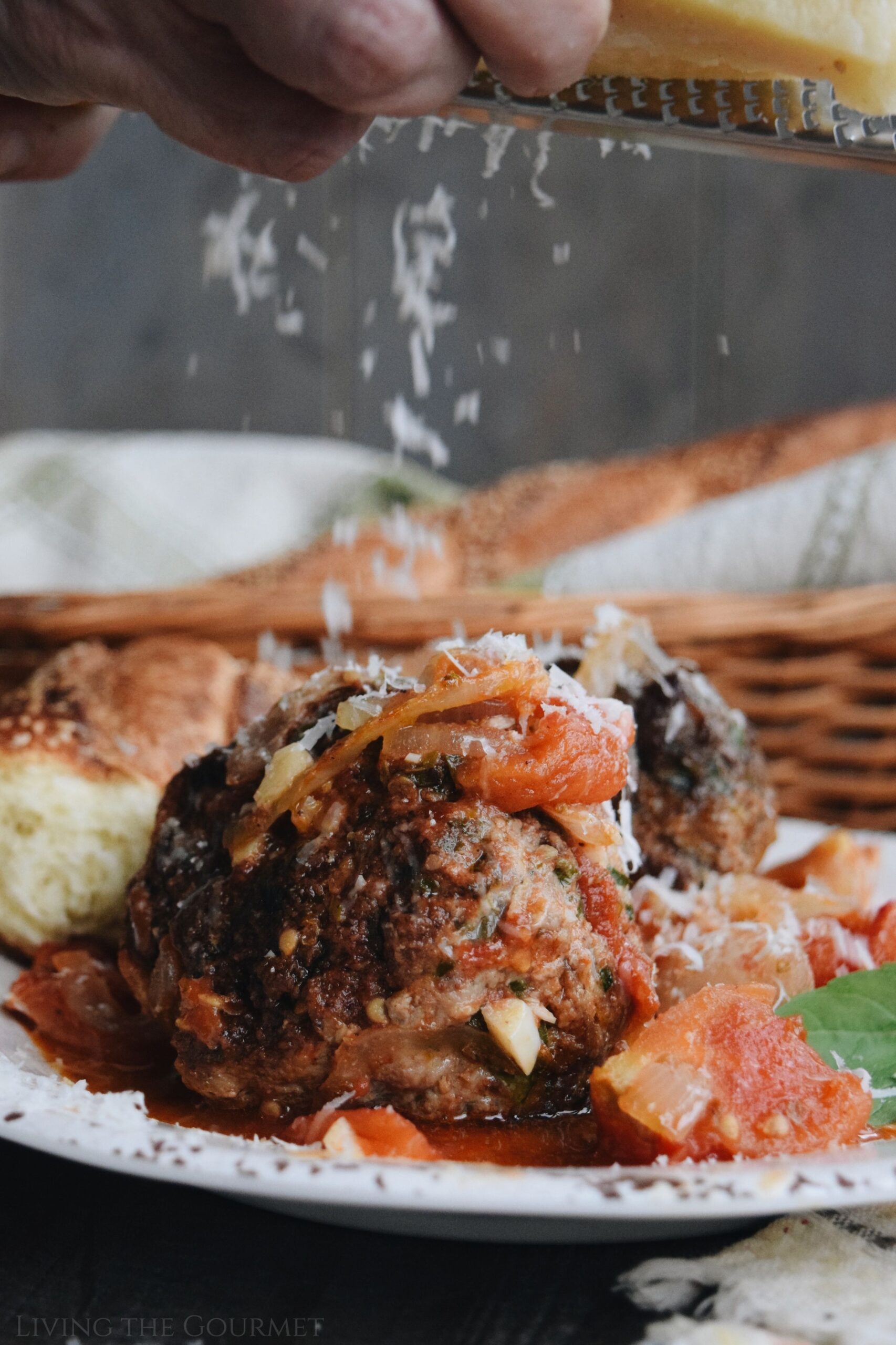

Leave a Comment