
Paprika Meatballs are having a moment - and it's no wonder why. They're delicious! Our paprika meatballs recipe yields sweet and savory meatballs that are moist and tender on the inside, and crisped on the outside. We pan-sear the meatballs, and then simmer them in a rich tomato sauce, and serve them over pasta.
If you're looking for a weekend treat or an indulgent recipe for a weeknight, paprika meatballs require less than an hour of active hands-on work, with the rest of the cook time being a gentle simmer on the stovetop. It's that simple. If you prep yourself a batch, I promise this recipe will become a family favorite.
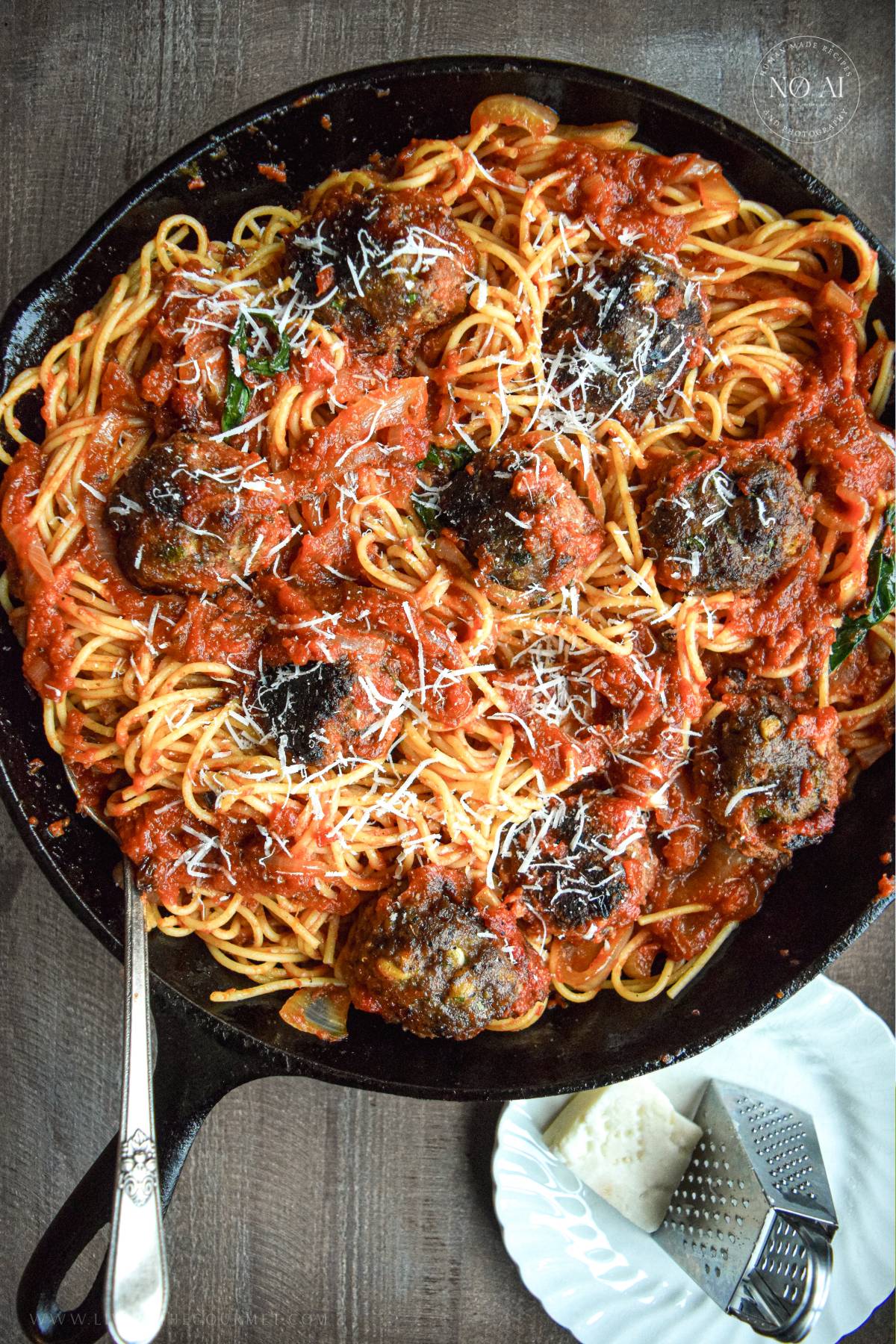
I originally wanted to start this piece off by sharing some family memories of this particular recipe. I wanted to talk about how my mother and aunt used to compete for the title of "Best Meatballs" in the family, and how almost every time I see my cousin Sal, he'll joke and ask, "Hey, my grandma always made the best meatballs, didn't she?" And she did. We actually called her "Meatball Annie."
My paprika meatballs over spaghetti and red sauce are what I would call a heritage recipe. Passed down through generations, inspired by the many hands of my family who all claimed to make "the best," this is my version added to the unofficial Cappiello family cookbook.
Jump to:
What to Expect from our Sweet Paprika Meatballs Recipe
Taste and Texture
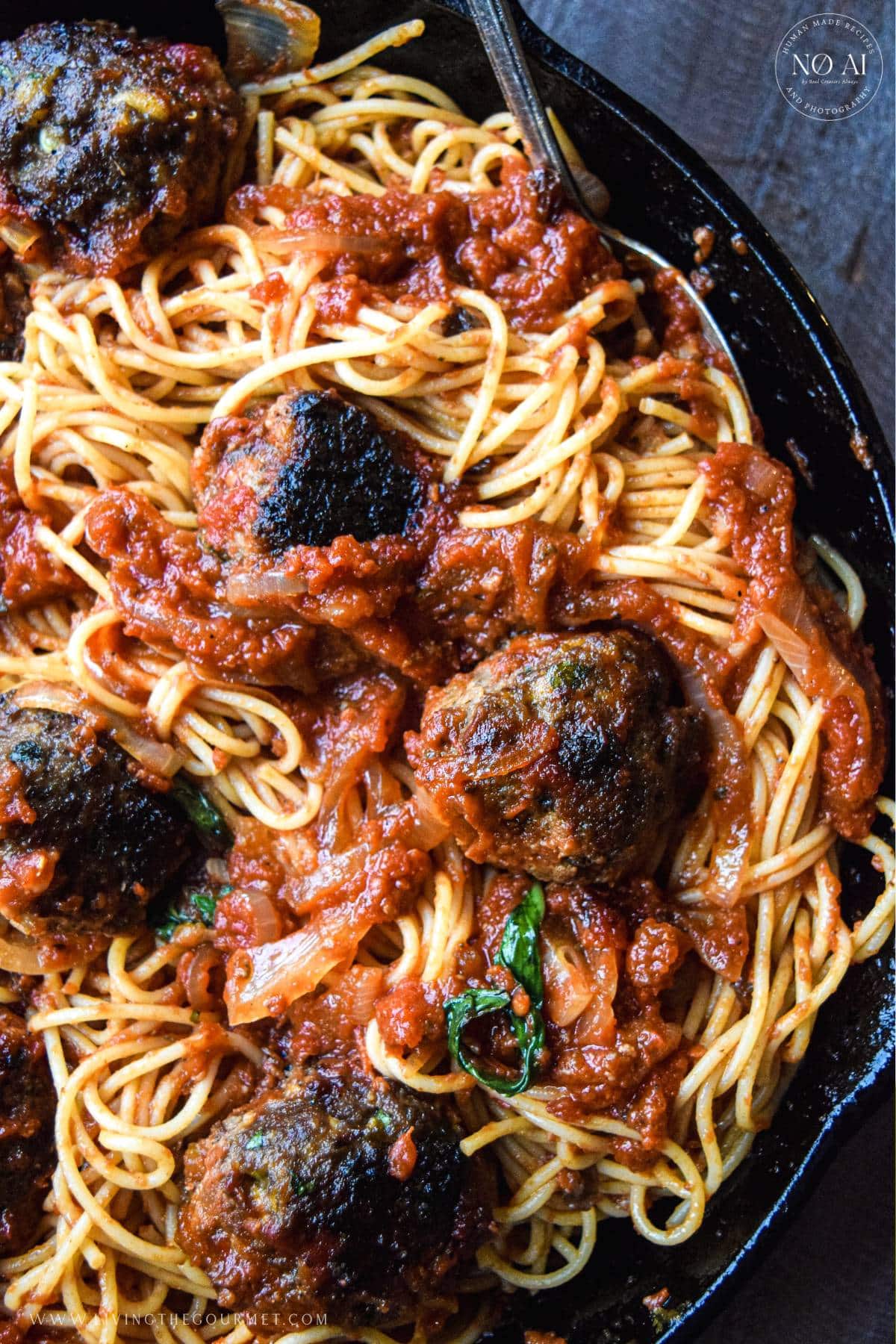
- Flavor: Sweet and savory. Sophisticated and layered. That combination is what really sets paprika meatballs apart from more traditional Italian-American meatball recipes, which lean a bit more into the meatiness of the ground meat. Our recipe's combination of sweet paprika, chopped raisins, capers, and peach preserves creates a sweet-savory complexity that's instantly reminiscent of Hungarian meatballs, but with a decidedly Mediterranean flair.
- How the Flavors Work Together: The sweet paprika is the star, providing gentle warmth and earthy depth without aggressive heat, while forming the base and background for the other flavors. The raisins, meanwhile, add pockets of concentrated sweetness that complement the capers, while the peach preserves bring subtle fruity notes. Fresh cilantro (or Italian parsley) brings herbaceous brightness, adding freshness to an otherwise rustic recipe.
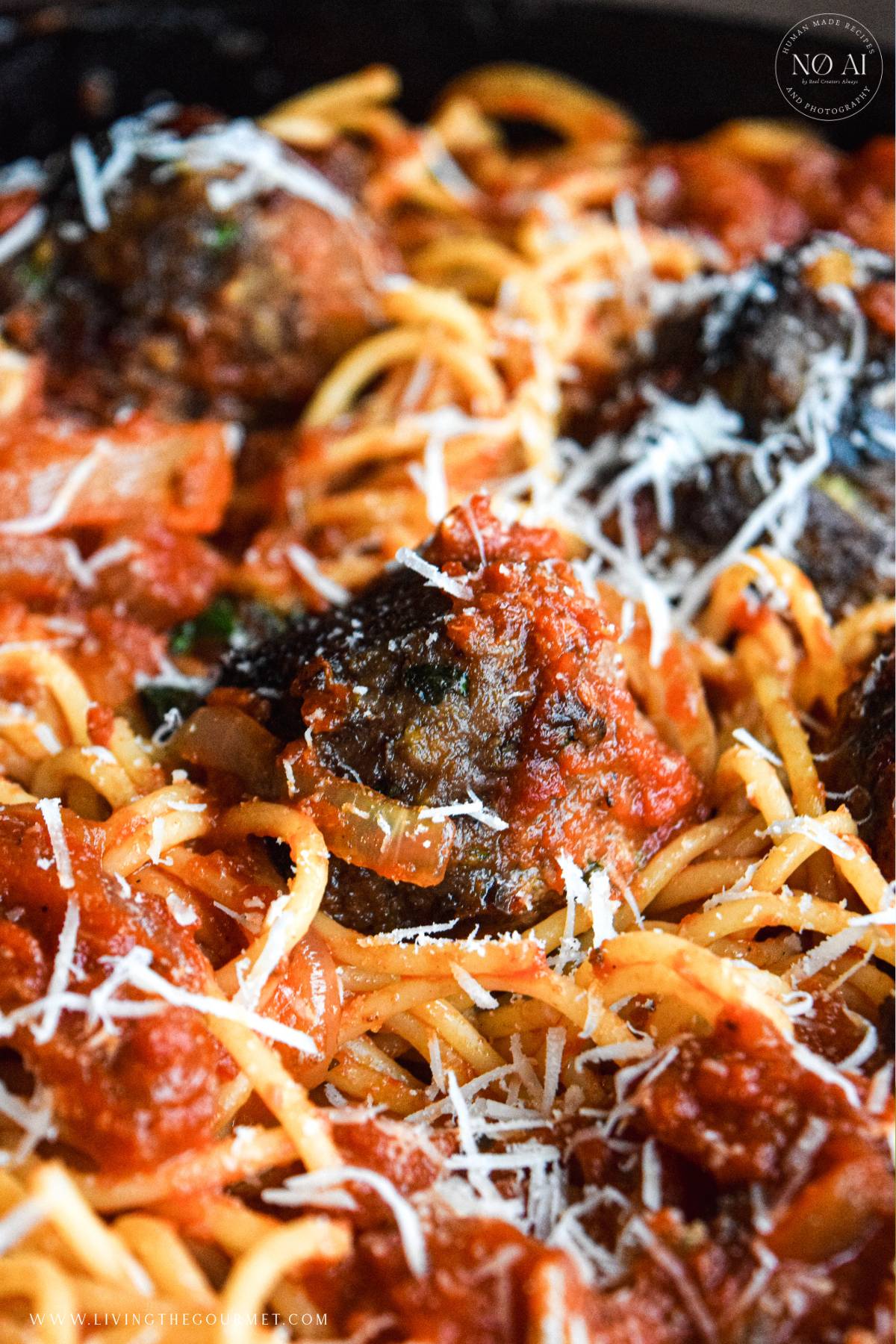
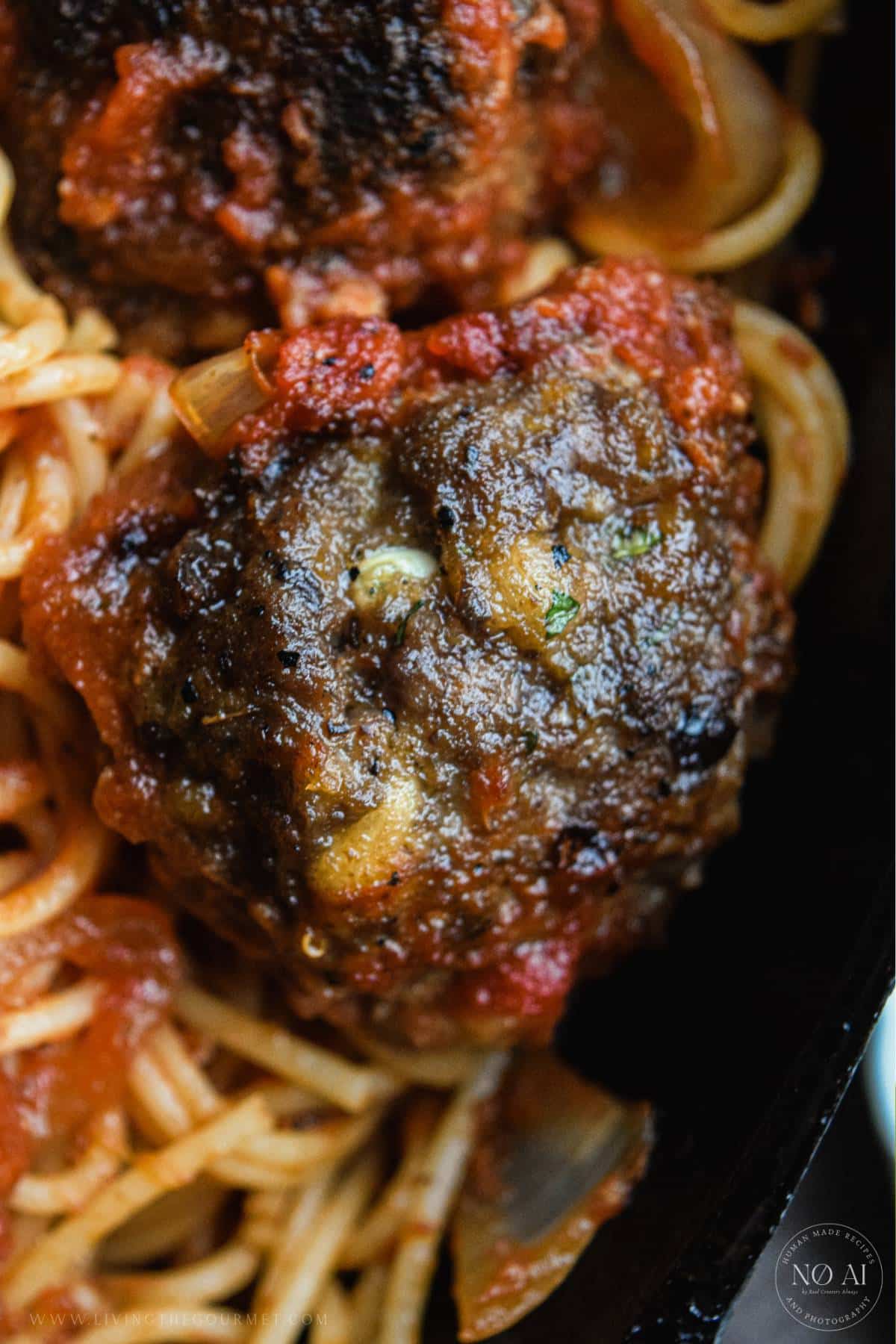
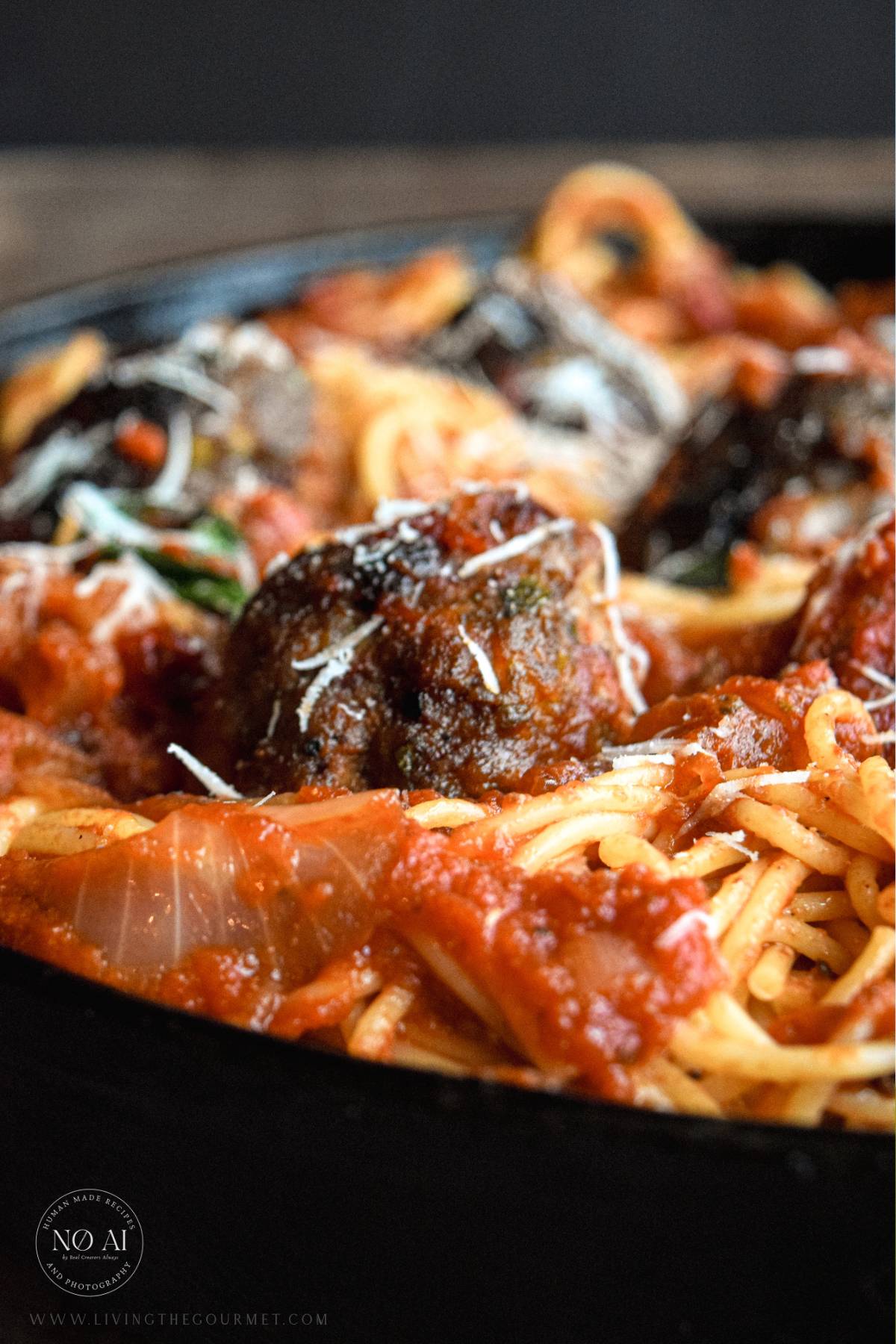
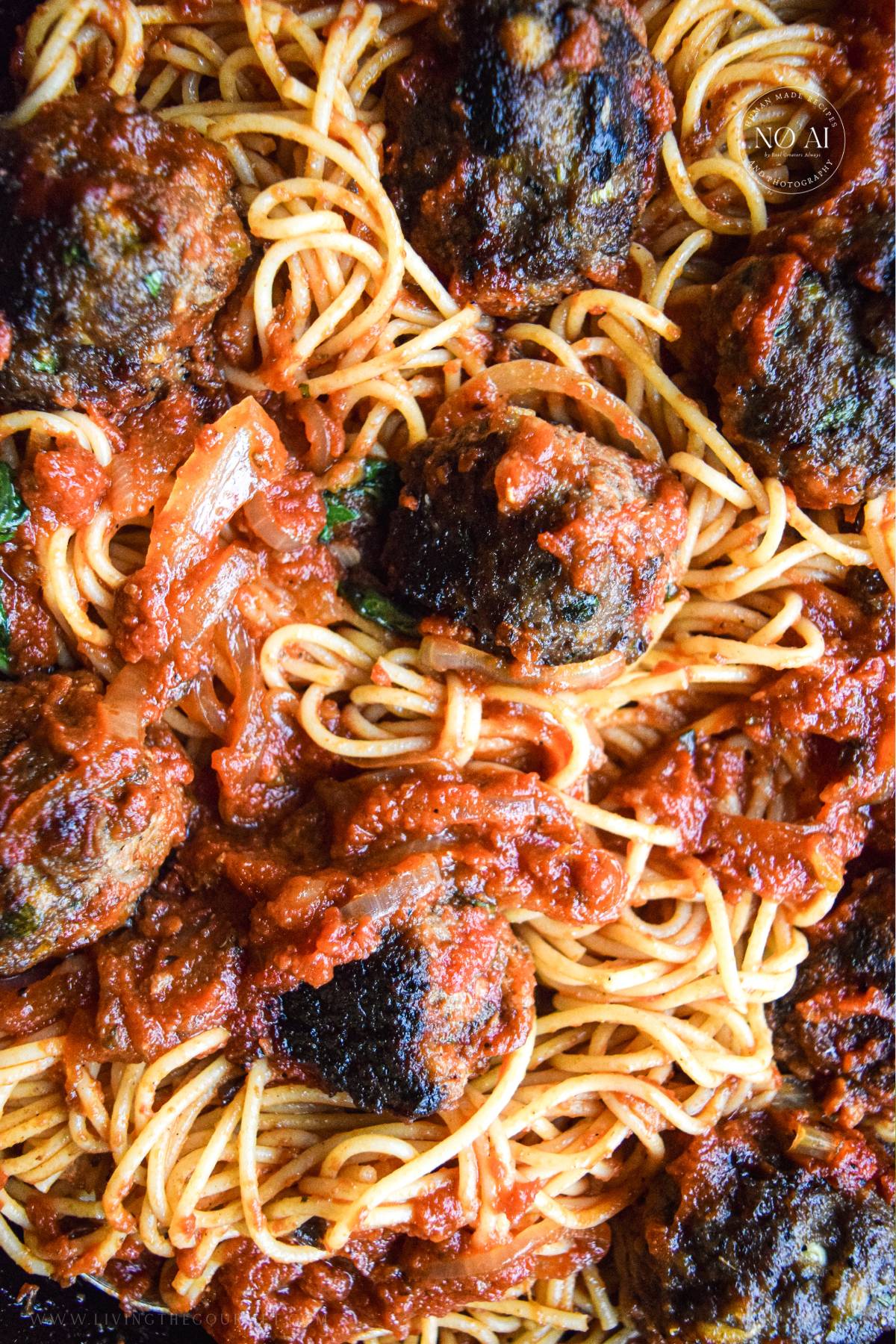
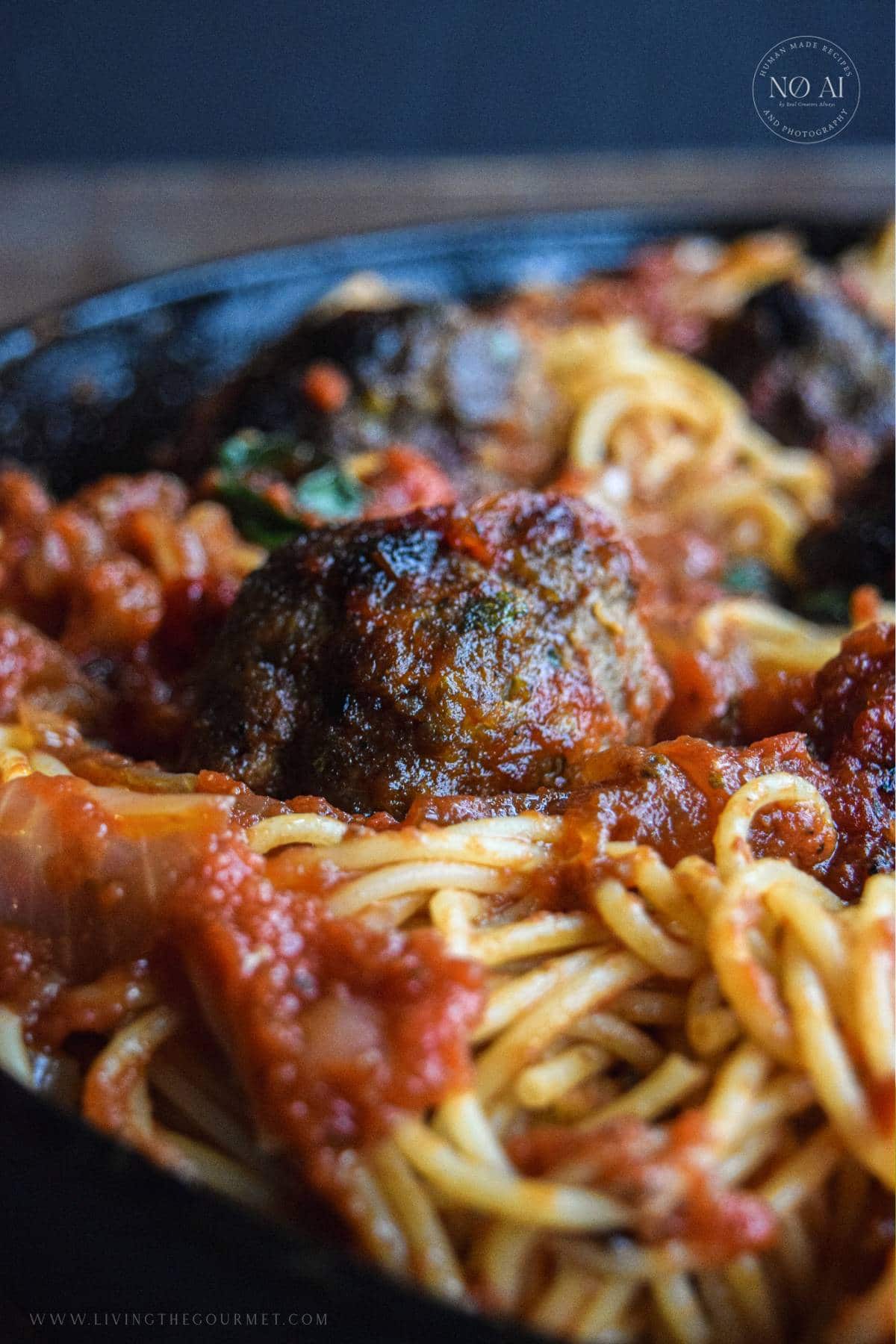
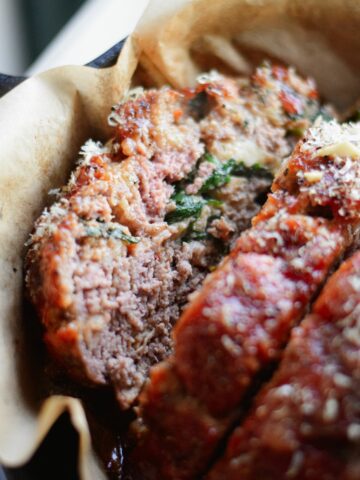
- Texture: The meatballs cook up tender and moist, with a deliciously crisped exterior. The combination of ground beef, bread, egg, and the moisture from the raisins and peach preserves ensures a soft, almost pillowy interior that contrasts beautifully with the golden brown crust that we achieve during pan-searing. By searing the meatballs in a large cast iron skillet with olive oil over medium heat (not too high, which would burn the exterior before cooking the interior), the meatballs develop a golden char that not only looks great but also adds a deeper, caramelized flavor. The end result is meatballs that are fork-tender, richly flavored, and thoroughly infused with the tomato and paprika sauce.
- Texture Complements: The grated garlic and finely sliced celery work not only to enrich the flavor, but also to help enrich the texture.
Difficulty Level
Intermediate. This is an intermediate recipe if ever there was one. Our sweet paprika meatballs recipe does not require any advanced cooking methods or complicated equipment, but it does require attention to detail, proper technique (for forming the meatballs), and proper timing (for the pan searing). The most important aspect of this recipe, in my opinion, is forming uniform meatballs. We want medium-sized meatballs, which means about 1 ½ to 2 inches in diameter. This facilitates even cooking. From there, we need to focus on not overcrowding the pan (which causes steaming rather than searing), and managing heat properly (we want medium to medium-high heat to create the golden brown crust without burning the meatballs.
If you've never made meatballs before, the process is fairly straightforward. Combine all of the ingredients for the meatball mixture in a medium bowl, mix gently but thoroughly (don't overmix or the meatballs become dense), then form them into balls with damp hands to prevent sticking. Then it's time to pan-sear them.
Pan-searing can be intimidating if you've never pan-seared before. We want to start by heating a large skillet or cast-iron frying pan with a drizzle of olive oil. From there, add the formed meatballs without crowding (yes, this will mean pan searing in batches), and resist the urge to move the meatballs around too early. Instead, let them develop that golden brown char on one side (about 5-7 minutes depending on size and heat) before turning to brown the other side.
The sauce prep is beginner-friendly. Super easy, actually. Sauté the aromatics, add in the tomatoes and seasonings, then nestle the seared meatballs into the sauce along with any pan scrapings from the bottom of the pan you seared the meatballs in (please don't waste that flavor!). From there, gently simmer for at least an hour. The long simmer is mostly passive. You're not actively cooking anything during the simmer; you're just letting time and heat work their magic to meld the flavors together. The sauce is getting some meatiness from the meatballs, while the meatballs are absorbing the sauce.
Preparation Process and Total Recipe Time
- Total Time: This recipe takes about two to two and a half hours total. About 30-40 minutes of active hands-on work. The rest is passive simmering time. The workflow breaks down like so: prep your meatball mixture in a medium bowl, combining ground beef, chopped raisins, capers (plus their briny juice), peach preserves, Italian breadcrumbs, fresh cilantro, salt, black pepper, sweet paprika, grated garlic, celery, white bread, and the egg. Mix everything together gently - do not try to mix it thoroughly. Mix only until it is roughly combined, and then stop. We want as little air in the meatball mixture as possible. Overworking the chopped meat develops too much protein structure and brings too much air into the meatballs, which in turn creates tough, dry meatballs. Form the mixture into medium-sized balls of about 1 and a ½ - 2 inches in diameter. This should yield between sixteen and twenty meatballs.
- Recipe Process: Once the meatballs have been formed, heat a large cast-iron frying pan or a large skillet over medium to medium-high heat with a drizzle of olive oil. Work in batches to avoid overcrowding the pan. You want at least an inch of space between the meatballs as they sear. Let the meatballs sear for 5-7 minutes, undisturbed, until they develop a nice golden char. Then, carefully turn each meatball and brown the other side for another 5-7 minutes. Remove the seared meatballs and set them in a plate or baking sheet, and set aside. However, do not yet clean the pan you used to sear. Those browned bits are loads of flavor, and we'll be using them for the sauce.
- The Tomato Sauce: And the sauce - super simple. Heat another large skillet, and add the aromatics and seasonings. That means the sliced sweet onions, chopped garlic, salt, black pepper, sweet paprika, sugar, and chopped raisins. Sauté dry for a couple of minutes until you've got the aroma filling your kitchen (yes, I'm serious). That should take about ten minutes. From there, add in the crushed tomatoes and toss to combine, and then set the meatballs in the tomato sauce along with any scrapings and drippings from the meatball pan. That's the flavor. Reduce the heat to low, and let the sauce simmer for about an hour. You want the sauce only barely bubbling. Just a lazy simmer. If you boil the sauce, goodbye flavor.
Ingredient Checklist - Everything You'll Need
Ingredients for the Paprika Meatballs
- 1½ Pounds Ground Beef
- 80/20: Do not use lean ground beef for meatballs. You want ground beef that's 80% lean and 20% fat. This balances flavor and moisture.
- The Fat Content is Crucial: Fat is flavor. Full stop. Lean beef creates a dry, dense texture due to the lack of the fat's moisture.
- Yield: 1½ pounds of chopped meat yields approximately 16-20 medium-sized meatballs, depending on portioning.
- Substitute: Ground pork. Pork creates a sweeter, more tender meatball, but will usually produce a drier meatball. Ground lamb would also work deliciously. You could also use a mix of beef and pork - opt for the usual 50/50 combination.
- ¼ Cup Raisins, Chopped
- What Raisins to Use? Preference, really. Golden raisins or dark raisins both work fine.
- Chop Them: I recommend chopping them finely so that they distribute evenly throughout the meatball mixture. This matters because the raisins add pockets of concentrated sweetness that balance the recipe's savory elements - and balance is flavor.
- Substitute: Dried cranberries would be my go-to, but they will create a tarter meatball. Chopped dried apricots would be great, as would dried currants.
- 1 Tablespoon Capers plus caper juice, chopped
- Brine Juice: The flavor of capers is the brine. Un-brined capers are not palatable. So we want that brine juice, because that's the flavor capers bring to the recipe.
- Don't Rinse: I do not know when, where, or why this started being a thing, but don't do it. When you rinse capers, you are rinsing away the flavor that they bring to a recipe. Again, the flavor of capers is the brine.
- Substitute: Finely chopped green olives would be my go-to.
- 1 Tablespoon Peach Preserves
- Preserves or Jam: We want smooth preserves or jam, not chunky or whole-fruit preserves, as chunky or whole-fruit will not distribute evenly.
- What this ingredient brings: Subtle fruity notes and mild sweetness, which complement the paprika and raisins deliciously. Seriously, this ingredient is nearly as important to the recipe as the paprika itself.
- 2 Tablespoons Fresh Italian Flat-Leaf Parsley
- Italian Flat Leaf Parsley: You want to use flat-leaf Italian parsley for this recipe as it brings bright, herbal notes to the meatballs, which in turn works to contrast with the paprika.
- Why not curly leaf parsley? Curly leaf parsley is almost only ever used as a garnish, the reason being that curly leaf has very little flavor and almost no aroma. I say this a lot, but an important culinary rule of thumb is to only ever use curly leaf parsley if a recipe specifically calls for it.
- Why Fresh? Fresh is important because we want those bright, herbal notes and fresh vegetal essences that are absent in dried parsley. Fresh parsley also has cleaner, richer aromatics. Here again, this is to work in contrast to the paprika.
- ¼ Cup Italian-Style Breadcrumbs
- Why Breadcrumbs? Breadcrumbs help to bind the meatballs and to keep them from falling apart during searing and simmering. Breadcrumbs do this by absorbing moisture, which also works to help keep the texture tender. Win-win.
- Only a ¼ cup?: This recipe relies more on the white bread for binding than on the breadcrumbs, but we're still using both, as I find the combination works well for texture.
- Substitute: Plain breadcrumbs will do just fine, as will panko.
- 1 Teaspoon Salt
- What Type? Plain table salt is really all you need, or fine-grain sea salt. The goal is for the salt to distribute evenly, and for that, you need fine-grain salt.
- 1 Teaspoon Black Pepper
- Fresh is Best: The aromatics are a really important aspect of paprika meatballs, and this recipe is no exception. With that in mind, freshly ground pepper has far superior aromatics over pre-ground. So, if you have fresh peppercorns available, I really do recommend using them here.
- Mortar and Pestle: Bonus points if you grind the peppercorns in a mortar and pestle, as that will give maximal aromatic goodness.
- 1 Teaspoon Sweet Paprika
- Key Ingredient: This teaspoon of paprika sets the flavor profile for the rest of the recipe. It is the primary flavor that we are complementing and contrasting with the other flavors and ingredients.
- What Type of Paprika to Use? My recommendation is sweet Hungarian paprika. I would not recommend using smoked or hot paprika, as those would risk overpowering the other ingredients.
- 3 Cloves Garlic, Grated
- Why Grated? Grating the garlic on a microplane creates a paste that distributes evenly throughout the meatball mixture. Grating also ensures maximal release of the garlic's juices. This in turn creates richer, more intense aromatics.
- Fresh is Essential: Fresh garlic packs the full potency, bite, and aromatic profile that makes garlic. Jarred minced garlic lacks the punch this recipe is looking for, while powdered garlic won't have the aromatic intensity we want. Use fresh.
- Substitute: Like the paprika, this recipe doesn't work without garlic. You 'can' make this recipe without fresh garlic, but a huge chunk of the flavor and aroma simply won't be there.
- 1 Stalk Celery, sliced thin
- Slice Thin: Slice the celery as thin as possible so that it distributes evenly in the meatballs.
- Substitutes: Finely diced green bell pepper would be my go-to. Finely minced fennel would also be delicious.
- 1 Slice White bread, crumbled
- What Kind of Bread? Soft white bread, the kind you would use for a sandwich. I don't recommend using whole wheat or heart artisan bread.
- Remove the Crust: I recommend removing the crust, as we want the bread to be as soft as possible, and to lend that softness to the meatballs.
- Why add bread? Bread helps absorb and then hold moisture through cooking, and then imbues that moisture back into the meatball. Bread also helps the meatballs hold together. Bread is a binder, basically.
- Substitute: An additional ¼ cup of breadcrumbs plus 1-2 tablespoons of milk for additional moisture.
- 1 Large Egg
- Why an Egg? The egg acts to bind the ingredients together so that the meatballs hold their shape through cooking. The egg also adds additional fat and richness.
- Room Temperature: I do recommend using a room temperature egg so that it properly distributes throughout the meatball mixture.
- Substitute: A flax egg will work just fine, which is 1 tablespoon of ground flaxseed mixed with 3 tablespoons of water, which we then let sit for about five minutes.
- Olive Oil for the Frying Pan
- Quality Matters: For this recipe, the meatballs are going to be absorbing a decent bit of the olive oil in the frying pan, so if possible, I recommend using a decent extra virgin olive oil. That said, this is definitely 'not' a recipe where the olive oil flavor comes through loud and clear, so I wouldn't worry too much about the olive oil.
- Can I use other cooking oils? You can, and if you do use an oil other than olive oil, I would recommend a flavor-neutral cooking oil, such as vegetable oil or avocado oil.
Ingredients for the Tomato Sauce
- 29 oz can Crushed Tomatoes
- Consistency: Crushed tomatoes are thicker and smoother than diced, and that's the consistency we want for the sauce.
- Minimal Ingredients: Look for a brand of crushed tomatoes that uses very few ingredients beyond the tomatoes themselves. All we want in the can is tomatoes, though most brands do add at least a little salt, which is fine for this recipe.
- Can I Use Whole Tomatoes? Yes, but you'll need to crush them in the skillet, and you'll need to do so thoroughly to achieve the right consistency for the sauce.
- 29 Ounces? This is a standard, large can size. Some brands pack 28-ounce cans, which is fine.
- 2 Sweet Onions, sliced thin
- What type of onion? Vidalia, Walla Walla, or Maui all have natural sugars that allow the onions to caramelize beautifully.
- Can I use regular onions? I wouldn't recommend it, as the sweetness from the onions is central. Using yellow onions, white onions, or red onions will create a more astringent flavor in the sauce, which this recipe isn't formulated for, and that astringency risks overpowering the sauce and clashing with the sweetness in the meatballs.
- 4 Cloves of Garlic, chopped fine
- Crushed: Crush the garlic with the flat of your knife before chopping for maximal release of the juices.
- Fresh is Best: I do recommend using fresh garlic for the sauce, as it achieves richer aromatics and provides a more garlicy bite than garlic powder or granulated garlic. I do not recommend using garlic salt, as it would make the sauce much too salty.
- 2 tablespoons raisins, chopped
- Chopped: Chop the raisins a few times so that they break down and distribute throughout the tomato sauce. During the long simmer, the raisins dissolve partially, providing subtle sweetness and fruity notes which work beautifully with the paprika, and chopping helps to facilitate this.
- 1 Teaspoon Paprika
- Sweet Hungarian Paprika: As with the meatballs, I recommend using sweet Hungarian paprika.
- 1 Teaspoon Sugar
- Why Sugar? It helps caramelize the onions and works to balance the acidity from the tomatoes.
- Do not omit: The sugar is a key ingredient for caramelization and acidic balance. Do not omit the sugar.
- 8-10 Fresh Basil Leaves
- Fresh is Best: Fresh basil brings rich, anise-forward aromatics and gives the sauce a nice herbaceous finish.
- Add at the end: I recommend adding the basil towards the end of the simmering to preserve its fresh, bright character.
- Substitutes: Fresh oregano (though only use 5-6 leaves, as oregano is much more pungent), or about a teaspoon of dried basil added directly to the sauce (though fresh is vastly superior for this recipe).
- 1 lb. pasta
- What pasta do I recommend? Personally, I find spaghetti works well with this recipe. Spaghetti and meatballs are a thing for a reason after all.
- Pastas other than spaghetti? Any long pasta will work just fine. Linguine, fettuccine, and bucatini all work well.
- Any Pasta: It's a preference. No one ever ruined a delicious sauce and meatballs by using the wrong pasta. In other words, whatever pasta you prefer will work just fine.
Essential Equipment for Making Paprika Meatballs
- Large Cast Iron Frying Pan or Large Skillet
- For the meatballs: We need a large, roughly 12-inch skillet for frying the meatballs.
- I recommend: For this recipe, I really do recommend using a cast iron skillet, as not only does it retain heat well, but it also really does work for achieving that golden brown crust on the meatballs, which gives the exterior its crisp texture.
- Heavy-Bottomed: I recommend using a heavy-bottom pan as these prevent hot spots, which are the prime cause of uneven cooking.
- Can I use Stainless Steel? Yes, absolutely. Feel free to use a heavy stainless steel skillet or a large sauté pan, or really any large frying pan. As long as the pan is heavy and at least 2 inches deep and 12 inches or more wide, that's all that really matters.
- Large Skillet or Pot (for the sauce)
- For the Sauce: We need a large, wide pan (12-inch or larger) to hold the sauce and meatballs together while they simmer.
- Wide Surface Area: A wide surface area is crucial to allow the sauce to reduce properly during simmering. That's why I'm recommending a saucepan that is 12 inches or more in width.
- Depth: We're using 29 ounces of tomatoes, which is in addition to the meatballs, so the pan also needs to be deep enough to prevent overflow.
- Medium Bowl (for mixing the meatballs)
- Just a bowl: All we need is a simple, medium, or large bowl to mix the one and a half pounds of meat plus the other ingredients comfortably.
- Capacity: I would recommend a bowl with a 3-4 quart capacity.
- Material: Glass, stainless steel, or ceramic all work just fine. Entirely preference.
- Baking Sheet or Plate (for holding the seared meatballs)
- For Holding the Meatballs: A surface for setting down the meatballs as you sear them. This could be a plate, rimmed baking sheet, baking dish, or serving platter.
Sweet Paprika Meatballs Recipe FAQ
Sweet Hungarian paprika works best for this meatball recipe. It provides a mild, earthy, and slightly sweet flavor without any heat and without an overly smoky essence. Hungarian paprika has slightly more depth and complexity than generic "paprika" found in most supermarkets. Look for bright red color and rich aromatics. If the paprika is brown or has only mild aromas, it's old and won't provide much flavor. For this recipe, avoid hot paprika or smoked paprika. While I love smoky flavor and spice as much as anyone, that's not what we want for this recipe. Sweet paprika complements the raisins and peach preserves, while hot paprika or smoked paprika will change the recipe's profile significantly.
Sweet Paprika (traditional to Hungary) is made from dried, ground sweet peppers and has a mild, earthy, and slightly sweet flavor with subtle peppery notes. Smoked paprika is made from peppers that are dried over wood fires, creating its characteristic smoky, almost bacon-like flavor. Sweet paprika is traditional in Hungarian cooking and provides gentle warmth. Smoked paprika (also called Spanish paprika) features prominently in Iberian cuisine and brings a bold, assertive smokiness. The different types of paprika are not interchangeable as they feature markedly different flavor profiles ranging from sweet-savory to smoky-savory. That's why we need to use the right paprika for the right recipe - and these sweet paprika meatballs are no exception.
Absolutely. You can bake these meatballs in a 400 degrees f oven for 20-25 minutes on a parchment-lined baking sheet until golden brown, turning once halfway through.
Yes. As a matter of fact, these paprika meatballs are an excellent make-ahead recipe. You can form the raw meatball mixture and refrigerate for up to 24 hours before cooking. Conversely, you can cook the entire recipe (meatballs simmered in sauce) up to 3-4 days ahead. As a nice bonus, the flavors will actually improve overnight as they meld together. Store them in an airtight container in the refrigerator and reheat gently on the stovetop over low heat.
Absolutely. These freeze beautifully for up to 3 months. You can do this in two ways. You can freeze raw formed meatballs on a baking sheet until solid, and then transfer to freezer bags (cook from frozen, adding 5-7 minutes to the cooking time). You can also freeze the cooked meatballs in the sauce in an airtight container, but be sure to leave enough room in the container for the sauce to expand as it freezes. Thaw overnight in the refrigerator and reheat gently on the stovetop. Do NOT try to rush the thawing process. Thaw it slowly in the fridge overnight.
Sweet Paprika Meatballs
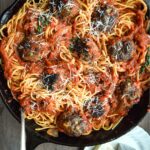
Sweet and savory get a whole new meaning with these Sweet Paprika Meatballs simmered in a hearty red sauce. This is classic comfort food!
- Prep Time: 20 minutes
- Cook Time: 30 minutes
- Total Time: 50 minutes
- Yield: 15 meatballs 1x
- Category: Main Dish
- Method: Stovetop
- Cuisine: Italian American
Ingredients
For the Meatballs:
- 1 1/2 lbs. of ground beef
- 1/4 cup raisins, chopped
- 1 tbs. capers plus caper juice, chopped
- 1 tbs. peach preserves (if you don't have peach preserves, you can use apricot or marmalade)
- 1/4 cup Italian-style bread crumbs
- 2 tbs. fresh cilantro or Italian parsley, stems removed and chopped
- 1 tsp. salt
- 1 tsp. black pepper
- 1 tsp. sweet paprika
- 3 cloves of garlic, grated
- 1 stalk of celery, sliced thin
- 1 slice of white bread, crumbled
- 1 egg
- Olive oil, for drizzling the frying pan
For the Sauce:
- 2 sweet onions, sliced thin
- 4 cloves of garlic, chopped fine
- 2 tbs. raisins, chopped
- 1 1/2 tsp. salt
- 1/2 tsp. black pepper
- 1 tsp. sweet Paprika
- 1 tsp. sugar
- 29 oz. can of crushed tomatoes
- 8 - 10 fresh basil leaves
- Olive oil for drizzling
- 1 lb. of your favorite pasta (I used spaghetti)
Instructions
For the Meatballs:
- Combine all of the ingredients in a medium sized bowl and mix together.
- Heat a large cast iron frying pan with a drizzle of olive oil.
- Form the meat into medium sized balls and place in the heated frying pan. Do Not Overcrowd the pan.
- When the meatballs form a nice golden char, carefully turn over and cook on the other side.
- Do Not have the heat too high.
For the Sauce:
- Heat a large cast iron frying pan.
- Add the sliced onions, chopped garlic and seasonings to the frying pan.
- Sauté in the dry pan for a minute or two, then drizzle with olive oil and continue to sauté until the onions are nice and softened.
- Add the crushed tomatoes and toss.
- Carefully, add the meatballs and the scrapings from the bottom of the pan the meatballs were in, this has all the flavor!
- Simmer the sauce at a very gentle heat for at least an hour, the longer it simmers the better.
- Take the fresh basil leaves and place in a small pan heated with a drizzle of olive oil and toss with a sprinkle of salt, then add to the sauce.
- Prepare the spaghetti as directed and drain.
- Remove the meatballs from the sauce and toss the spaghetti with the sauce.
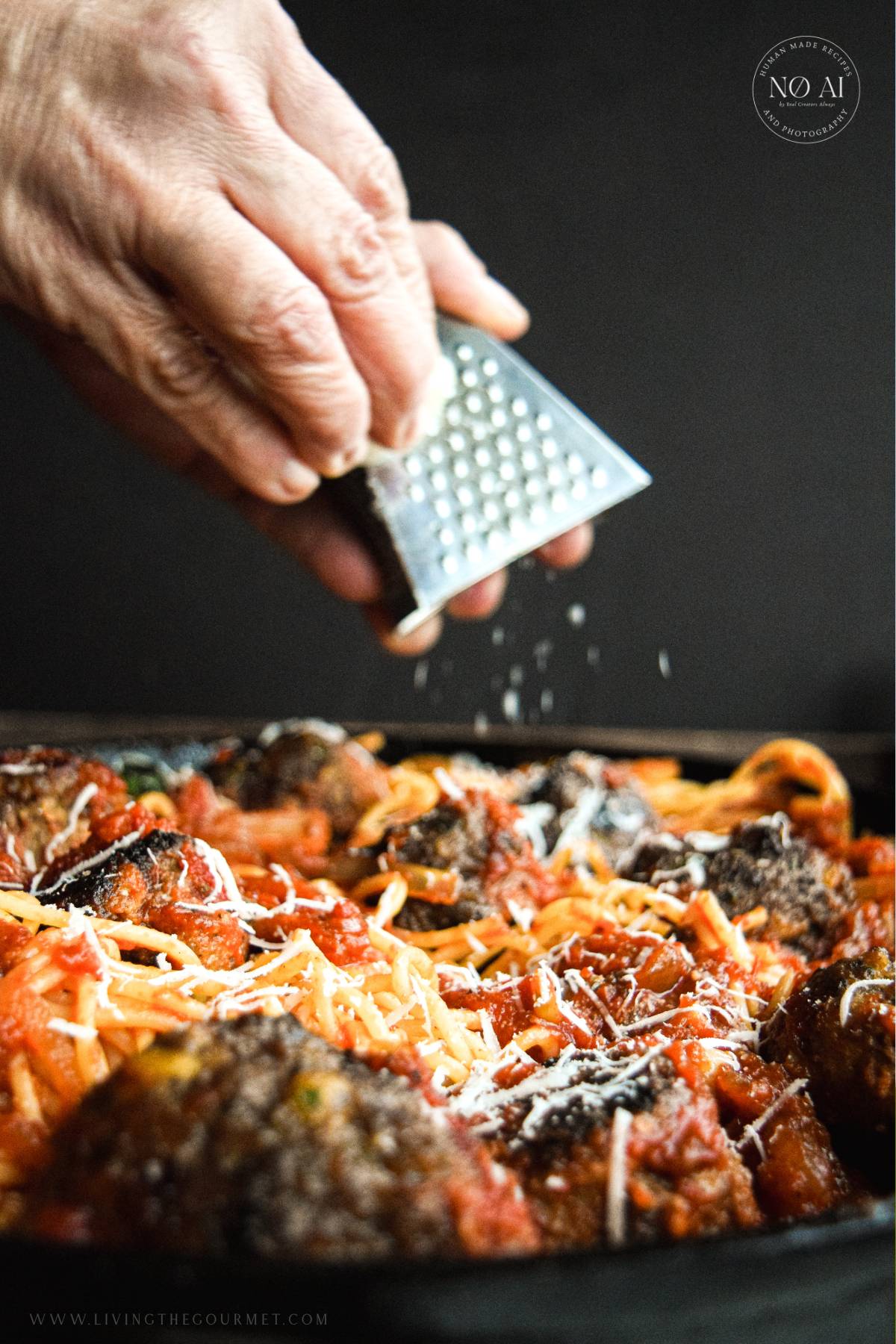
- Top with the meatballs.
- Serve with fresh grated Romano or Parmesan cheese.
More Meatball Goodness
- Fried Greek Meatballs: Greek meatballs are quite different from their more familiar Italian-American counterparts. Greek meatballs (keftedes) differentiate themselves by combining ingredients like raisins, cinnamon, and oregano, and sometimes nutmeg, mint, and honey into the ground meat. As you might expect, this creates a sweeter meatball, while also lending the meatball notable earthy and herbal undertones.
- Asian Style Meatballs: These crispy, tiny meatballs combine seared ground beef with Teriyaki, soy sauce, chili paste, sesame oil, and plenty of garlic, and are then garnished with scallions.
- Basil and Garlic Meatballs: These are what I consider to be 'the' quintessential meatball. That means a decadently moist interior, a crispy exterior, and a flavor profile that's equal parts 'meaty' and savory, while bursting with fennel and basil goodness.
- Chorizo Meatballs: Our chorizo meatballs combine the spicy-smoky goodness of chorizo sausage with grilled garlic and the bold chili goodness of a quality banana pepper sauce. These chorizo meatballs are smoky, spicy, and deliciously moist, with a crispy brown exterior.
And that's our Sweet Paprika Meatballs Recipe. If you enjoyed today's recipe, or have any questions or suggestions, be sure to let us know in the comments below. We always love hearing from you.
**Note: If you buy something through our links, we may earn an affiliate commission, at no cost to you. We recommend only products we genuinely like. Thank you so much.
1
Catalina says
I made these meatballs for dinner and the paprika flavor was amazing. They stayed juicy inside and paired perfectly with rice!
Amy says
I tried making these the other night, and that sweet paprika adds such a warm, smoky depth! They came out super tender, and the sauce is so good I ended up wiping my plate clean with a piece of crusty bread. Definitely switching up my usual dinner routine with this one.
Ben says
Holy cow. I will never look at meatballs the same way again. OR spaghetti sauce, for that matter. I love these creative flavors.
Terri says
I love the wonderful flavors of this one! I have never had paprika meatballs, and raisins in red sauce was a new one for me, too. It's yummy!
Beth says
I love the blend of smokiness from the paprika in the meatballs, and the sauce is wonderful.