This post has been brought to you by Henri Bardouin. All opinions expressed are my own. The following message is intended for those 21+. Please enjoy responsibly.
Stroll a sunny sidewalk in Provence, or sit at a streetside café in Marseille, and chances are you'll encounter locals and tourists alike engaging in a classic early-evening ritual: a tall glass of golden spirit, a sweating jug of water, and a mix of salty apéro snacks served across conversation that lingers into the twilight.
That drink is pastis, which has become the undisputed king of the French apéritif.
Pastis comes to us from the port city of Marseille in the wake of the Absinthe Ban. This bold, anise-flavored liqueur is a refreshing and deeply herbal spirit that is steeped in tradition. However, despite its simple ingredients, serving it properly requires adhering to a few simple steps. Pour the water too fast, skip the exact ratio, or - worst of all - add the ice at the wrong moment, and you risk ruining the drink's delicate botanical oils, which are the source of the spirit's signature silky mouthfeel, aromatics, and anise-licorice flavor.
So, whether you're opening a bottle of artisanal Herni Bardouin or sticking to a classic pub pastis, read on for the exact ratios, proper glassware, the crucial assembly rules, and savory pairing suggestions. Follow this guide, and you'll be serving pastis like a pro in no time.
Jump to:
- How to Serve Pastis (At a Glance)
- Step-by-Step Guide: How to Serve Pastis Correctly
- The Essential "Ice Order" Mistake to Avoid
- Traditional Ratios and Glassware
- Popular Variations: French Pastis Syrups (Les Sirops)
- Best Food Pairings for Pastis
- What Is Pastis? (History, Louche Effect, and Origin)
- Henri Bardouin Pastis: Tasting Notes and Review
How to Serve Pastis (At a Glance)
Ingredients and Tools:
- Pastis: 1 ounce
- Chilled Water: 4 to 5 ounces
- Ice: 1 to 2 large cubes
- Glassware: Highball, balloon glass, or traditional pastis tumbler
Step-by-Step Method
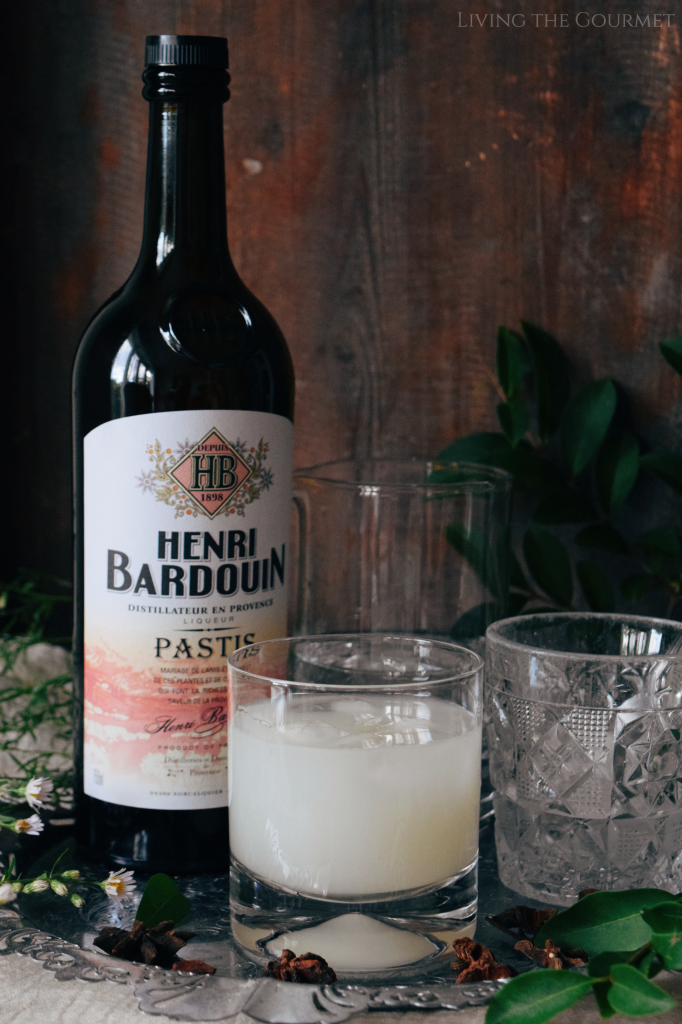
- Pour the Pastis: Measure 1 ounce of pastis into a clean glass. At room temperature, the spirit should look clear with an amber hue.
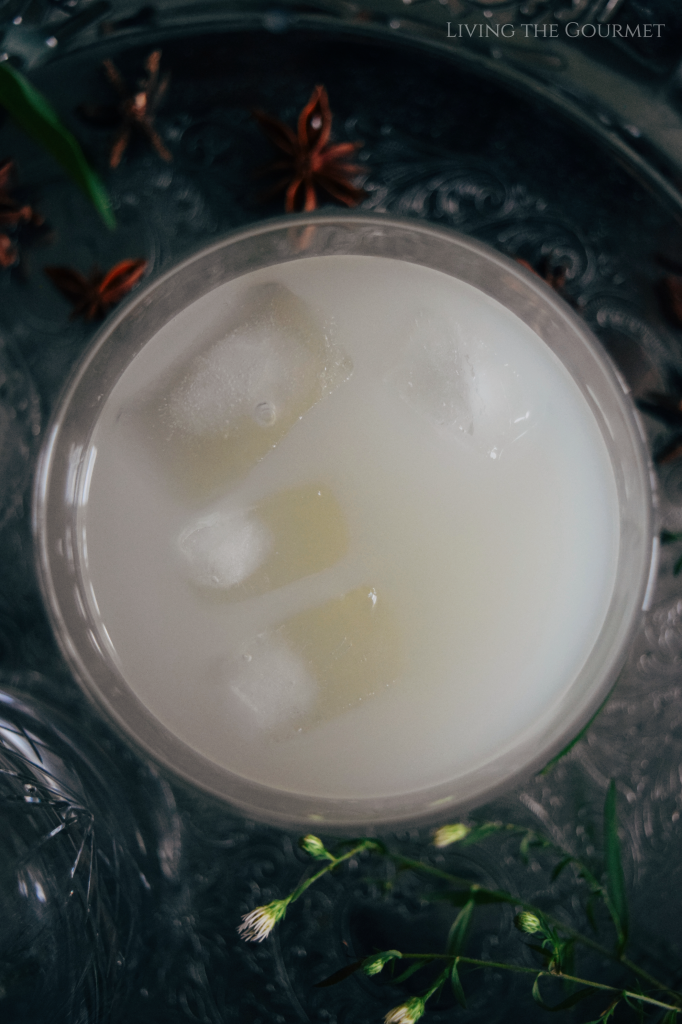
- Dilute with Water: Slowly pour 4 to 5 parts chilled water over the pastis for the standard 1:5 ratio. The drink should turn cloudy and milky. This natural clouding is called the louche effect.
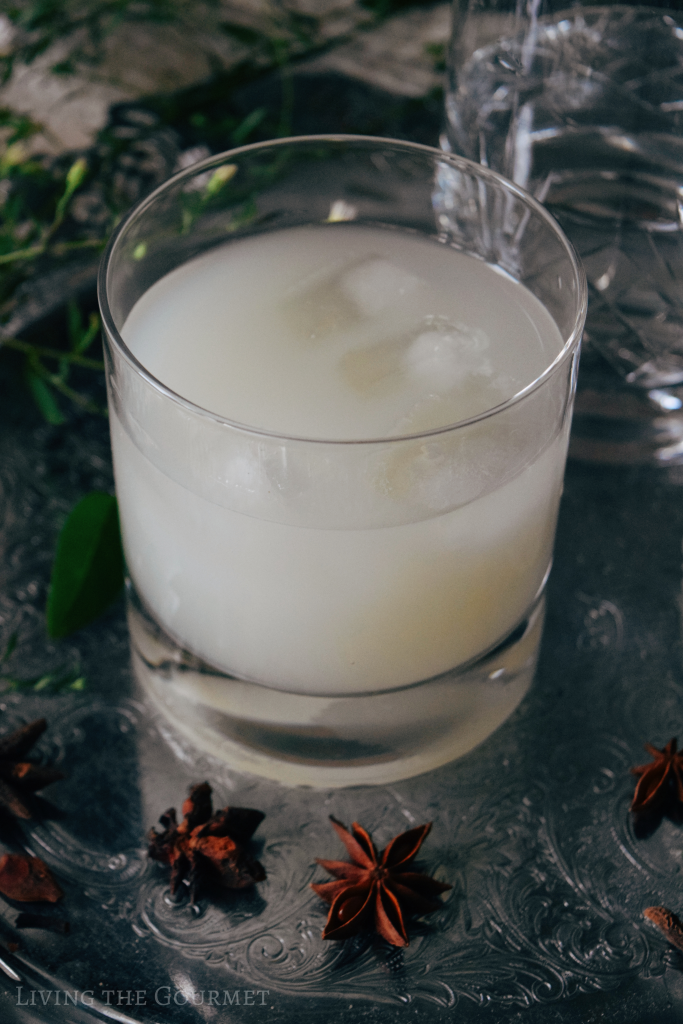
- Add Ice LAST: Drop 1 or 2 ice cubes into the diluted pastis. It is crucial that the ice be added last or the aromatic essential oils in the pastis will freeze and crystallize.
- Stir and Serve: Give the pastis a gentle swirl and serve immediately alongside salty apéro snacks such as tapenade, charcuterie, crusty bread, or green olives.
Step-by-Step Guide: How to Serve Pastis Correctly
Serving pastis is less about mixing a cocktail and more about honoring a ritual. To properly experience this classic Provençal aperitif at its best, and to avoid one key pitfall, you need only follow a simple five-step process.
- Step 1: Start with the right glassware. We want to serve the pastis in a simple highball glass, a small balloon glass, or a traditional pastis tumbler. Basically, you need a glass with enough room to hold five to six ounces of cocktail (pastis + water) plus ice.
- Step 2: Pour the Pastis itself. Measure and pour one ounce of room-temperature pastis into the glass. Nothing should be chilled at this point. The glass 'and' pastis should both be room temperature. Uncut, the pastis will appear clear, with an amber or gold tint.
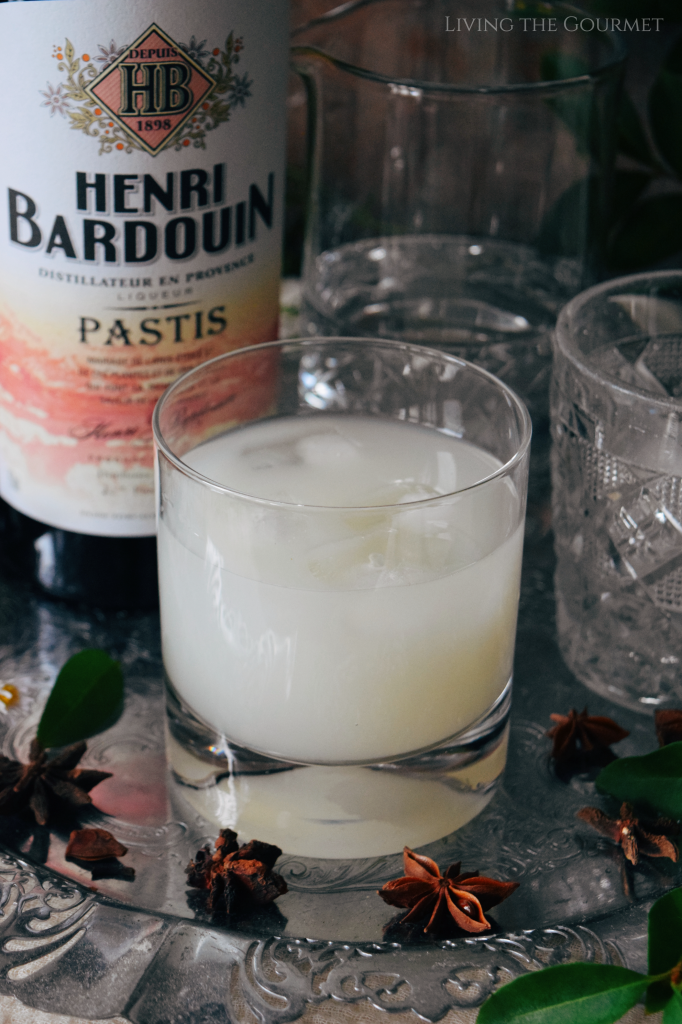
- Step 3: Slowly pour in cold water to dilute and emulsify the pastis. We want to use four to five ounces of chilled water to achieve a traditional 1:5 ratio of pastis-to-water. Once the water meets the pastis, the pastis will shift from clear amber to opaque and milky yellow. This clouding is known as the 'louche effect,' and works to release the liqueur's deeply aromatic herbal bouquet.
- Step 4: Drop in the ice last. We finish the drink by adding one or two ice cubes into the freshly diluted pastis. This MUST come last, or the pastis oils will freeze and crystallize.
- Step 5: Stir and serve. Stir the drink gently a few times, and then enjoy.
The Essential "Ice Order" Mistake to Avoid
When serving pastis, the order of how you prepare it matters - yes, I'm trying to hammer this point. The single biggest mistake people make is pouring the pastis over the ice cubes. This ruins the pastis. While it might seem like standard bartending or mixology logic to simply pour over the ice, adding ice before the water ruins not only the flavor but also the texture of the drink.
The Chemistry of Prepping Pastis
The signature flavor and aroma in pastis comes from anethole. Anethol is an essential oil from star anise and licorice root. Anethol dissolves readily in high-proof alcohol (or about 40% ABV and above). This keeps pastis clear while undiluted in the bottle.
- What happens when you add ice first: The sudden drop in temperature causes the anethole to solidify and crystallize. If neat pastis (undiluted pastis) comes into contact with ice cubes, the anethole freezes into tiny, waxy micro-crystals before it can blend with the water. This leaves unpleasant floaters on the surface of the drink, and strips away the spirit's smooth, botanical flavor (since the essential oils that give the pastis its flavor and aroma have become trapped in crystals).
- Why the water must come first: Adding chilled water lowers the overall alcohol percentage, which in turn forces the essential oils out of the pastis solution to form tiny droplets that suspend in the liquid via a spontaneous emulsion known as "the louche effect." This creates the drink's signature milky soft yellow cloudiness, and allows the pastis to release its full flavor and aromatic bouquet.
Traditional Ratios and Glassware
Serving good pastis is all about getting the ratio right, because neat pastis - as we covered above - has not released its full flavor and aromatic bouquet via the louche effect. The idea behind getting the ratio right is balancing the intense and bittersweet anise profile of pastis. While it is true that French cafés will often serve pastis with a small carafe (doyenne) of water to allow guests to adjust the pastis to their taste, it is often better to stick to proven ratios to guarantee the best drink possible.
The Essential Ratios
- The Classic French Standard (1:5): An almost universally accepted sweet spot for pastis is 1 part pastis and 5 parts water, meaning 1 ounce of pastis per 5 ounces of water. This has the effect of diluting the high alcohol content (around 40-45% ABV) down to a more refreshing, sippable aperitif, that enhances - rather than thins - the spirit's herbal bouquet.
- The Strong Pour (1:4): Popular with those who prefer a heavier, bolder, licorice flavor and a slightly richer mouthfeel. That said, that heavy licorice is almost all you will taste or smell from the pastis at this ratio.
- The Heat-Wave Dilution (1:6 or 1:7): Reserved for blistering summer afternoons in Provence, a longer pour dilutes the alcohol even further, creating a crisp, refreshing drink that lasts longer while also being somewhat milder.
Selecting the Right Glassware
- Traditional Pastis Tumbler
- Ideal For: The authentic French café experience.
- Why It Works: These are small, narrow, heavy-bottomed glasses specifically designed for the traditional 1:5 ratio.
- Highball or Collins Glass
- Ideal For: Casual serving and syrup variations.
- Why It Works: These glasses feature tall sides, leaving plenty of room for extra water, ice, and syrup such as orgeat or grenadine.
- Small Balloon or Snifter
- Ideal For: Premium pastis (such as Henri Bardouin)
- Why It Works: The rounded bowl traps the pastis aromas, funneling complex notes of thyme, sage, and verbena with each sip.
Popular Variations: French Pastis Syrups (Les Sirops)
All of these variations follow a very simple prep format. Pour 1 ounce of pastis, add a half ounce of (a barspoon or splash) of syrup, then dilute with 4 to 5 ounces of chilled water, and top with the ice last. The ice 'must' come last.
- La Mauresque (The Moorish): Pastis and Orgeat (Almond Syrup)
- Profile: Nutty, sweet, and slightly creamy. The bouquet is floral, with distinct almond and orange blossom essences. The orgeat blends beautifully with the anise in the pastis, softening the spirit's bite and turning the drink a soft off-white color. This is easily the most popular pastis variation throughout Southern France.
- La Tomate (The Tomato): Pastis and Grenadine Syrup
- Profile: Fruit forward with slight tartness. The sweet pomegranate flavors cut right through the botanical oils and become a very upfront flavor and aroma. Meanwhile, the drink takes on a distinct blue-pink hue, hence the name "tomato."
- Le Perroquet (The Parrot): Pastis and Green Mint Syrup (Sirop de Menthe)
- Profile: Very refreshing, with an herb-forward or strong herbal profile. The mint pairs deliciously with the star anise from the pastis, which combines to give the drink a pale green hue that (as the name implies) is reminiscent of a parrot's wings.
- Le Feu de Bois aka Le Pitchoun: Pastis with Orgeat and Grenadine
- Profile: Complex, rich, and deliciously layered. By combining both almond and pomegranate syrups, we create a sweet, sunset-coral hued drink with a taste reminiscent of marzipan.
Best Food Pairings for Pastis
Traditionally, pastis is rarely consumed on an empty stomach in France. Instead, it is the undisputed star of l'apéritif (or l'apéro), as the centerpiece of the early evening ritual of sipping drinks paired with light savory bites before dinner.
With that said, however, we need to be mindful that pastis has an intense botanical bouquet, with a star anise and licorice root-forward flavor profile, driven by notes of Provence herbs. As such, pastis will completely overwhelm delicate dishes. Instead, pair pastis with salty, garlic-rich, fatty, or briny Provençal foods that reset the palate between sips.
Here are my top four choices for pairing pastis:
- Olive Tapenade and Crusty Baguette
- An olive tapenade, perhaps blended with roasted garlic, capers, and premium olive oil, is, in my personal opinion, the ultimate match for pastis. The high salt and acidity in the olive blend works deliciously to slice through the herbal sweetness and licorice essences of the pastis.
- Salted Nuts and Roasted Snacks
- A staple of café pairings for pastis. Consider salted pistachios, Marcona almonds, or roasted chickpeas. This pairing works especially well as the dry saltiness of the tapenade encourages slow sipping, while simultaneously working to temper the spirit's natural bite.
- Briny Seafood and Anchovies
- Pastis originated in the port city of Marseille, and that makes seafood, especially briny seafood, a natural pairing. Salted-cured anchovies on crostini or toasted baguette are my personal favorite. Grilled sardines, marinated octopus, or shrimp are all excellent, as they cut through the mouth-coating essential oils of the pastis, and complement, rather than overwhelm, the spirit.
- Garlic Aïoli and Fresh Vegetables
- Pastis with a traditional Provençal mayo (aioli), served with raw radishes, bell peppers, fennel slices, and breadsticks, is a match made in heaven.
*Hosting Tip: Avoid pairing pastis with heavy cheeses or sweet fruit or jams. Dairy fat coats the tongue in a way that actually clashes with the essential anise oils. Meanwhile, sugar amplifies the spirit's natural sweetness in a way that risks becoming cloying.
What Is Pastis? (History, Louche Effect, and Origin)
To understand pastis, we need to first appreciate how a banned green spirit, strict French liquor laws, and a quirk of organic chemistry combined to give us Provence's most quintessential drink.
The Absinthe Ban and the Birth of Pastis
1914 saw the start of the Great War, and the banning of "The Green Fairy," aka Absinthe. While the primary causes of the Great War (a conflict no one actually wanted) are debated to this day, the reasons behind the absinthe ban are pretty cut and dry. A misunderstanding of wormwood (absinthe's main ingredient), and the fears of its hallucinogenic properties (no, you cannot hallucinate from consuming absinthe), led French officials to ban absinthe throughout France - setting the stage for the birth of pastis.
Once deprived of their anise-flavored adult beverage of choice (absinthe was a national sensation at the time), drinkers in France, particularly the southern regions, began brewing illicit 'home remedies' to sate their desire for anise-flavored alcoholic beverages. Remember that absinthe itself began as a 'remedy' for malaria.
The gaping hole left in the French alcohol market by the absinthe ban provided an obvious opportunity for something else to satiate the French public's love affair with anise. Paul Ricard rose to the moment, and commercialized a wormwood-free anise liqueur in Marseille in 1932. He named this spirit 'pastis,' the name deriving from the Provencal word 'pastiss,' meaning "blend" or "mishmash."
While pastis never reached the heights of the Green Fairy, either commercially or culturally, it nevertheless remains synonymous with French summer culture.
The Strict French Legal Definition
As pastis rose in fame throughout France, regulators decided to set to law the precise composition of the drink. Today, a bottle of pastis must the following guidelines:
- Alcohol Content: Pastis must be bottled at a minimum of 40% ABV, with premium Pastis de Marseille needing to be bottled at 45% ABV.
- Sugar Content: Pastis can contain no more than 100 grams of sugar per liter, so that the spirit is crisp rather than cloying.
- Core Botanicals: All pastis must be flavored with licorice root extract, alongside either star anise or green anise.
The Science of the Louche Effect
Pouring cold water into pastis results in "The Louche Effect," better known as the "Ouzo Effect". This is the process of spontaneous emulsification by which pastis (and other similar spirits) turn milky yellow when combined with cold water. This process also is key to allowing the aromatics to bloom and the flavor to fully materialize.
Pastis contains anethole, an organic essential oil extracted from anise plants. It is this compound that provides pastis with its defining licorice aroma. However, anethol dissolves completely in high-proof alcohol, remaining totally invisible in the bottle.
Anethol, however, cannot remain dissolved in water. Thus, when the drink is diluted with water, the alcohol percentage drops rapidly. As this happens, the anethole oils are forced out of solution, forming microscopic droplets that remain suspended throughout the liquid. These droplets scatter light, turning the clear liquid into an opaque, iridescent yellow mist while releasing volatile aromatic compounds.
Henri Bardouin Pastis: Tasting Notes and Review
Henri Bardouin stands out as an artisanal pastis, as it does not rely heavily on star anise or added sugar to carry the palate and aromatics similar to commercial giants. Produced in Forcalquier, the heart of Haute-Provence, Henri Bardouin is crafted from a proprietary blend of some sixty-five herbs and spices, ranging from locally sourced thyme, sage, and rosemary to imported cinnamon, cardamom, tonka bean, and nutmeg.
Tasting Profile and Notes
- Aroma (Nose): This pastis introduces itself with warm black licorice and tarragon off the top of the glass. On second whiff, there are notes of fresh garden herbs, especially tarragon and basil, with soft spices laced throughout, along with notes of star anise and nutmeg, with trace notes of verbena and cardamom rounding out the bouquet.
- Flavor (Palate): Rich and crisp are the words to come to mind, and very well balanced. This pastis greets the palate with sweet licorice root laced with peppery, earthy, and background citrusy undertones.
- Mouthfeel: When diluted, this pastis is creamy and round, without any of the heavy or cloying syrupy sweetness that often characterizes cheaper pastis brands.
- Finish: Clean, lingering, and crisp are the words I would use to describe the finish, with a subtle bitter-herbal tail that leaves the palate thoroughly refreshed.
How to Serve Henri Bardouin Specifically
The thing to understand about Henri Bardouin pastis is that it is far more aromatic than cheaper, mass-produced brands, and so it deserves a slightly elevated pour. Here's how to serve Henri Bardouin pastis.
- Use a Snifter or Balloon Glass: Since Henri Bardouin is so aromatic, it deserves a snifter or balloon glass. The rounded bowl shape will beautifully capture the delicate and volatile aromas of cardamom, verbena, and thyme, channeling these aromas directly into your senses. Beautiful.
- Keep the Ratio Long (1:5 or 1:6): I recommend diluting one ounce of Henri Bardouin with 5 to 6 ounces of crystal-clear, chilled spring water. This slightly longer pour will allow the roughly 65 individual botanicals room to blossom on the palate, as opposed to being overwhelmed by alcohol.
- Skip the Syrups: I'll be the first to say syrups work wonders on cheaper, mass-market pastis. But Henri Bardouin is something much more than that. Instead, enjoy Henri Bardouin pure with water to really let its intricate spice profile shine through. Seriously, there's no need to smother this botanical gem with syrups.
And that's our answer to the question "How to Serve Pastis?" as well as our review of Henri Bardouin's pastis. If you enjoyed this article, or have any questions or suggestions, be sure to let us know in the comments below.
Cheers!
Laura Schwormstedt says
Oh wow this sounds really cool, I hadn't actually heard of Pastis before so thanks for sharing your knowledge with us
Laura x